


Views: 222 Author: Leah Publish Time: 2026-01-12 Origin: Site


Content Menu
● Understanding Electric Golf Cart Range
● Typical Range by Battery Type
● How Voltage and Capacity Affect Range
● Real-World Range of a 48V Electric Golf Cart
● Key Factors That Influence Range
● Terrain and Driving Conditions
● Weight, Load, and Accessories
● Tires, Pressure, and Rolling Resistance
● Temperature and Weather Effects
● Battery Age, Health, and Maintenance
● How to Maximize Electric Golf Cart Range
● Use Cases: Course, Community, and Utility
● OEM Considerations for International Buyers
● Charging Practices and Daily Planning
● FAQ
>> 1. How far can a standard electric golf cart go on a full charge?
>> 2. Does a lithium battery really increase electric golf cart range?
>> 3. What is the range of a 48V 100Ah electric golf cart?
>> 4. How much do hills and heavy loads reduce electric golf cart range?
>> 5. What can I do daily to extend my electric golf cart range?
The range of an electric golf cart typically falls between about 15 and 60 miles on a single charge, depending mainly on battery type, capacity, terrain, load, and driving habits. With the right configuration and good maintenance, a modern lithium-powered electric golf cart can reliably deliver 30–50+ miles per charge for real-world use.[1]
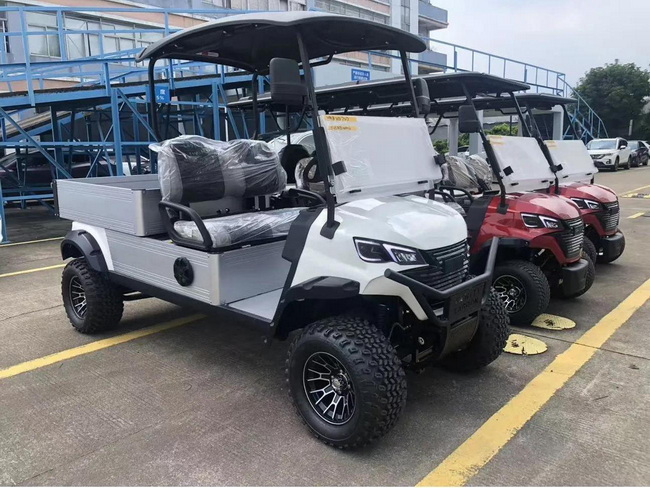
For most standard electric golf cart setups, the practical range is usually given as a mileage interval instead of a single number because real use varies greatly. Many 48‑volt electric golf carts with lead‑acid batteries will run roughly 15–25 miles, while upgraded carts with lithium packs often reach 30–50 or even more miles per charge.[1]
A typical 48‑volt lithium battery golf cart is often rated to travel about 25–40 miles per charge, but larger-capacity packs and efficient driving can extend this toward 50–60+ miles. When customers ask about range, manufacturers normally quote figures based on flat ground, moderate speed, and a light to medium load, which means aggressive use in real conditions can reduce those advertised distances.[2]
Battery chemistry is one of the most important determinants of how far an electric golf cart can travel on one charge. Lead‑acid batteries remain common in older and budget models, while lithium packs dominate high‑performance and longer‑range applications thanks to their higher energy density and lower weight.[1]
Flooded lead‑acid batteries are usually associated with an electric golf cart range in the 15–25 mile band on a full charge, assuming normal course or community use. Absorbed glass mat (AGM) lead‑acid batteries can offer a slight improvement, sometimes reaching around 18–30 miles due to better efficiency and lower maintenance requirements.[3]
Lithium iron phosphate (LiFePO₄) batteries, now widely adopted in premium electric golf cart platforms, frequently deliver 30–50+ miles per charge in everyday driving. Because lithium systems tolerate deeper discharges and maintain voltage better under load, a lithium electric golf cart often feels stronger and more consistent across the full charge compared with a lead‑acid version.[4]
The total energy stored in the battery pack, expressed through voltage and amp‑hours (Ah), strongly influences the range of an electric golf cart. Higher‑voltage systems, such as 48‑volt or 72‑volt configurations, can generally deliver more efficient performance and longer distance than 36‑volt systems when matched with suitable motors and controllers.[2]
Manufacturers often offer several pack sizes, for example 48V 60Ah, 48V 100Ah, and 48V 160Ah, each stepping up the expected mileage. A 48V 60Ah lithium setup might reach about 20–30 miles, a 48V 100Ah pack roughly 35–45 miles, and a 48V 160Ah pack around 45–60+ miles in typical conditions on mixed terrain.[3]
A 48‑volt electric golf cart with lead‑acid batteries is often rated for about 15–25 miles, although some sources cite 25–40 miles under optimal conditions, highlighting how strongly terrain, load, and driving style change outcomes. When the same 48‑volt cart is upgraded to lithium batteries, owners commonly report 30–40+ miles, with high‑capacity packs reaching toward or beyond 50 miles.[1]
For many users, the “real‑world” expectation for a lithium electric golf cart is around 25–50 miles per charge, depending on the chosen battery pack and operating environment. Flat neighborhood roads at moderate speeds with one or two passengers often allow the upper end of this range, while heavy loads and long hills may pull the result closer to the lower end.[4]
Many customers are surprised that two identical electric golf carts can produce different ranges simply because of how they are used. Several practical factors combine to define the real distance you can travel on one full charge, even if the nominal battery specifications look similar on paper.[5]
Major influences include:[5]
- Battery type and chemistry
- Battery capacity (Ah) and age
- Terrain and elevation changes
- Vehicle weight and carried load
- Speed, acceleration, and driving style
- Tire selection and pressure
- Ambient temperature and weather
- Accessories such as lights, sound systems, and lift kits
Even a high‑end lithium electric golf cart can lose a substantial portion of its rated range when driven at full throttle up hills with multiple passengers and large off‑road tires. On the other hand, a modestly equipped electric golf cart on flat courses at moderate speed can exceed nominal estimates, especially when the pack is new and well maintained.[2]
Terrain often makes one of the largest differences between theoretical and actual range. On smooth, flat fairways or residential streets, an electric golf cart tends to operate close to its maximum advertised range because the motor works at a lower load and rolling resistance remains low.[2]
Hilly courses, rough paths, and off‑road hunting trails can noticeably reduce how far the electric golf cart can go on one charge, since constant climbing and uneven ground demand more power. Strong headwinds, deep grass, sand, or mud also increase rolling resistance and energy consumption, further shortening range compared with ideal test conditions.[6]
Total vehicle weight, including passengers and cargo, directly affects energy consumption per mile. A fully loaded electric golf cart carrying four or six passengers with bags, tools, or hunting gear needs more power to accelerate and climb, shortening range compared with a lightly loaded cart.[5]
Additional accessories such as lift kits, large off‑road tires, heavy utility boxes, canopies, and powerful audio systems can further increase weight and sometimes worsen aerodynamics or rolling resistance. For buyers who require maximum distance, a relatively light, streamlined electric golf cart with efficient tires and minimal unnecessary add‑ons is often the best configuration.[4]
Driving behavior significantly shapes how far an electric golf cart travels on a single charge. Repeated hard acceleration, high cruising speeds, and frequent stop‑and‑go patterns all waste energy, pushing the battery to deliver more current and reducing overall efficiency.[5]
Many experts suggest that an efficient speed window around roughly 12–18 mph often gives the best compromise between time and range for an electric golf cart. Smooth, consistent throttle inputs and planning ahead to avoid unnecessary stops can noticeably extend the distance from each full charge, especially on routes with frequent intersections or course transitions.[7]
Tire choice and maintenance also influence how far an electric golf cart can travel. Under‑inflated tires increase rolling resistance, forcing the motor and batteries to work harder for the same speed and cutting range in everyday use. Regular pressure checks are one of the simplest ways to protect range.[8]
Aggressive off‑road tread patterns and oversized tires may look attractive and add capability on mud or sand, but they usually trade some efficiency for traction and style. When the priority is maximum range on pavement or fairways, a narrower, smoother tire with the correct pressure gives the electric golf cart a clear efficiency advantage.[2]
Ambient temperature, especially cold weather, can temporarily limit the effective capacity of both lead‑acid and lithium battery packs. In low temperatures, chemical reactions slow down, internal resistance rises, and the electric golf cart may feel less powerful while delivering fewer miles per charge.[4]
Hot conditions can also stress batteries if charging and storage are not managed correctly, potentially accelerating long‑term degradation. Manufacturers usually recommend storing and charging the electric golf cart in moderate temperatures and avoiding extreme heat or cold where possible, helping preserve both peak range and battery life.[3]
Battery age and overall health are crucial for maintaining the original range of an electric golf cart. Over time, all chemistries lose some capacity; lead‑acid packs particularly suffer if they are frequently deeply discharged, overcharged, or left in a low‑charge state for long periods.[9]
Good maintenance practices include:[1]
- Charging after use rather than leaving the pack low
- Avoiding consistent deep discharges when not necessary
- Following recommended water‑level checks for flooded lead‑acid batteries
- Keeping terminals clean and connections tight
- Using the correct charger profile for the battery chemistry
Lithium packs generally require less routine care and maintain usable range for more cycles, although they still benefit from appropriate charging and storage. When cared for correctly, a lithium battery system can support thousands of cycles with relatively modest loss in the electric golf cart's day‑to‑day range.[1]
Owners can take several practical steps to get more distance from each charge of an electric golf cart, many of which involve habits rather than hardware. Improving efficiency often costs very little compared with upgrading batteries or motors.[5]
Helpful practices include:[4]
- Driving at moderate speeds instead of full throttle whenever possible
- Accelerating smoothly and anticipating stops rather than braking hard
- Keeping tire pressure at recommended levels and inspecting tread wear
- Limiting unnecessary weight and heavy accessories on the vehicle
- Charging fully and regularly, following the charger's instructions
- Scheduling periodic checks of the battery system and cables
In some cases, upgrading from lead‑acid to lithium packs or increasing amp‑hour capacity can provide a substantial jump in usable range. This approach is especially valuable for demanding applications such as multi‑round golf operations, sightseeing routes, resort shuttles, or hunting trails, where the electric golf cart must run for long hours each day.[10]
The required range of an electric golf cart depends strongly on how the vehicle is used and how often it can be charged between trips. On a typical golf course, 18 holes usually require significantly fewer miles than even an entry‑level pack can deliver, leaving a comfortable margin for driving to and from storage or parking.[2]
In gated communities, resorts, or tourism operations, electric golf carts may need enough range to complete multiple loops per day without recharging, so operators often select larger or lithium packs to ensure reliability. For hunting or multi‑purpose utility use across large rural properties, extra capacity and robust terrain capability allow the electric golf cart to cover long distances away from charging points while carrying gear and passengers.[4]
Brand owners, wholesalers, and overseas manufacturers sourcing OEM electric golf cart products often need range configurations tailored to specific markets and regulations. Operators in flat resort islands may prioritize comfortable 30–40 mile performance with smaller packs, while hillier or colder regions might request larger lithium packs and reinforced drivetrains for more demanding routes.[11]
When planning an OEM electric golf cart lineup that includes golf course vehicles, sightseeing shuttles, low‑speed neighborhood carts, hunting units, and multi‑purpose utility models, it is common to offer several battery options and performance packages. Clear labeling of nominal and real‑world range helps distributors and end users choose the right configuration for their daily operations, reducing complaints and improving long‑term satisfaction.[3]
Charging strategy plays a central role in how consistently an electric golf cart can achieve its rated range across weeks and months of use. Many operators follow a “top‑off” approach in which the cart is charged after every shift or round instead of waiting for the battery to become deeply discharged.[1]
For fleets in resorts, factories, or tourist attractions, scheduling regular charging windows—such as overnight or between operating shifts—ensures that each electric golf cart starts its route near a full state of charge. Planning routes so that high‑load segments, like hill climbs or heavy cargo trips, occur earlier in the discharge window can also help the cart maintain better performance and protect the pack against deep depletion.[3]
Managing range is not only about convenience but also about safety and reliability for drivers and passengers. Running an electric golf cart battery down to the point where the vehicle stops far from charging infrastructure can be inconvenient and may require towing or on‑site charging solutions, especially in remote areas.[5]
Many modern electric golf cart systems provide state‑of‑charge indicators, low‑battery warnings, and, in some lithium systems, more advanced battery management features. Teaching drivers to respond promptly to low‑charge alerts, avoid “just one more trip” when the pack is nearly empty, and respect recommended charging cycles goes a long way toward stable daily range and long component life.[1]
In everyday use, the range of an electric golf cart spans roughly from 15 miles for basic lead‑acid setups up to 60+ miles for high‑capacity lithium systems, with many mainstream carts delivering 25–50 miles per charge. Battery type, pack size, terrain, load, and driving habits together determine how far a single charge will carry you, making it important to match the vehicle configuration to your specific course, community, or utility needs. With thoughtful selection, proper maintenance, sensible charging practices, and efficient operation, a modern electric golf cart can provide reliable, quiet, and eco‑friendly transport for a wide variety of applications around the world.[1]
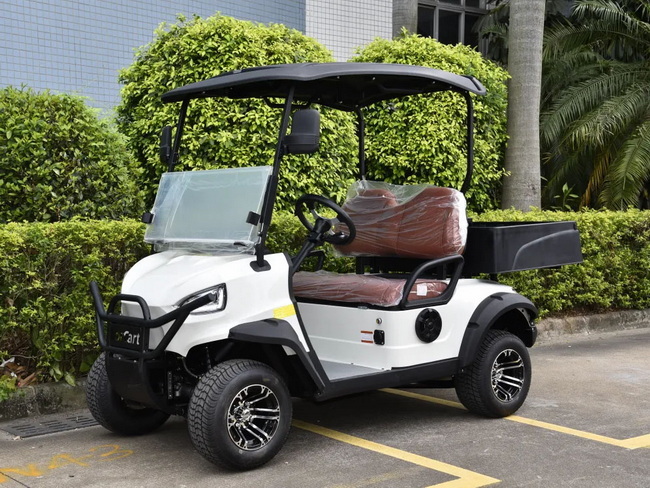
Most standard electric golf carts with lead‑acid batteries can travel around 15–25 miles on a single charge, though some well‑maintained 48‑volt setups may reach 25–40 miles under ideal conditions. Lithium‑equipped versions of the same vehicles typically increase this into the 30–50+ mile range, especially with higher amp‑hour packs.[1]
Yes, switching from lead‑acid to lithium batteries almost always increases the usable range of an electric golf cart because lithium packs are lighter, more efficient, and allow deeper discharge without damage. Many 48‑volt lithium configurations deliver roughly 25–50 miles on a charge, and larger amp‑hour options can extend even farther for demanding routes.[4]
A 48‑volt electric golf cart fitted with a 100Ah lithium battery is often estimated to run about 35–45 miles in mixed real‑world driving, depending strongly on terrain, load, and speed. Heavy passengers, steep hills, and aggressive driving can pull that figure down, while light loads on flat ground at moderate speed may allow the higher end or slightly more.[3]
Hilly terrain and heavy payloads increase the power required for each mile, cutting into the distance an electric golf cart can cover on one charge compared with flat, lightly loaded operation. In demanding conditions with steep grades and full passenger capacity, some users may see range drop by 30 percent or more relative to the manufacturer's nominal values.[2]
To extend daily range, operate the electric golf cart at moderate speeds, accelerate smoothly, and avoid unnecessary stops and hard braking as much as possible. Keep tire pressure at the recommended level, reduce excess weight and drag from accessories, and charge the battery fully and regularly following the manufacturer's instructions to preserve long‑term capacity.[5]
[1](https://luxeelectriccar.com/golf-cart-range-how-far-can-your-electric-cart-go-on-a-charge/)
[2](https://centralcoastcarts.com/central-coast-carts/how-far-can-an-electric-golf-cart-go-on-a-full-charge/)
[3](https://www.golf-energy.com/how-long-will-a-48-volt-golf-cart-run-on-a-full-charge/)
[4](https://boltenergyusa.com/how-much-range-can-i-get-from-my-lithium-golf-cart-battery/)
[5](https://bslbatt.com/blogs/key-factors-that-influence-golf-cart-battery-range/)
[6](https://hartvillegolfcarts.com/how-many-miles-will-a-48v-golf-cart-go/)
[7](https://www.facebook.com/groups/483721695935629/posts/1440181626956293/)
[8](https://solanaev.com/electric-golf-cart-range/)
[9](https://www.ask.com/lifestyle/understanding-factors-affect-battery-powered-golf-cart-range)
[10](https://manlybattery.com/how-far-can-a-golf-cart-go-with-a-48-volt-lithium-battery/)
[11](https://taraelectricvehicles.com/blog/2025/11/11/how-to-evaluate-the-electric-golf-carts-actual-range/)


