


Views: 222 Author: Leah Publish Time: 2026-01-23 Origin: Site


Content Menu
● Understanding the Beast Buggy Brand
● So, What Brand Golf Cart Does Beast Buggy Use?
● Key Features of a Beast Golf Buggy
● Beast 48 and Beast Hunter Highlights
● Why Beast Buggy Chooses a Purpose‑Built Platform
● How Beast Buggies Compare to Standard Golf Buggies
● The Role of Electric Power in Hunting Golf Buggies
● How OEM Golf Buggy Manufacturers Fit In
● About BorCart as a Golf Buggy OEM Partner
● Inside a Typical BorCart Golf Buggy Platform
● BorCart's Advantages for Global Golf Buggy Brands
● How a Brand Like Beast Could Work with an OEM
● Benefits of Electric Hunting Golf Buggies for End Users
● Why the Golf Buggy Platform Still Matters
● FAQ
>> 1. What brand golf cart does Beast Buggy use?
>> 2. Is a Beast hunting buggy still considered a golf buggy?
>> 3. How does a hunting golf buggy differ from a standard course golf buggy?
>> 4. What role do OEM manufacturers like BorCart play in the golf buggy market?
>> 5. Can an overseas brand create its own hunting‑style golf buggy without building a factory?
Beast Buggy uses its own branded hunting‑style golf buggy platform sold under “The Beast” name rather than rebadging a mainstream course cart. These vehicles are purpose‑built electric utility and hunting buggies engineered for rugged, off‑road use instead of ordinary clubhouse transportation.
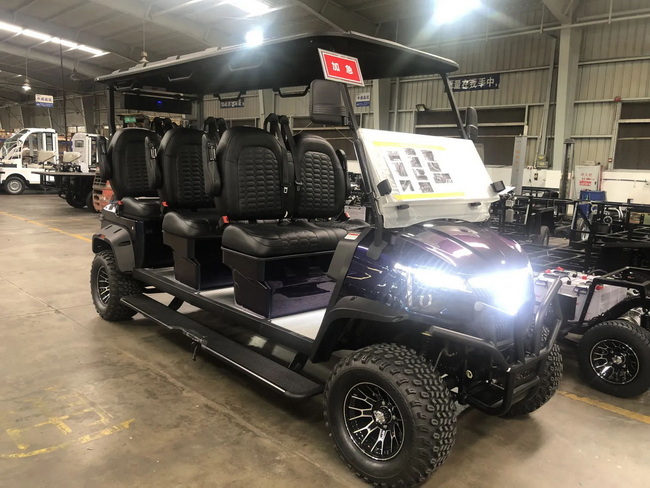
The Beast Buggy concept grew out of a specialist builder that spent years producing custom electric and gas buggies for dealers before launching a dedicated Beast line. This heritage explains why a Beast golf buggy focuses on torque, durability, and quiet operation more than on traditional golf‑course styling.
The Beast brand emphasizes rugged electric hunting carts that combine golf buggy DNA with ATV‑like capability for mud, hills, and forest trails. These vehicles are usually described as electric hunting buggies or electric utility carts, but they still share core golf buggy architecture such as low‑speed drivetrains, compact wheelbases, and open seating layouts.
Beast Buggy vehicles are not simple rebranded mainstream golf carts; they are proprietary buggies produced under The Beast trademark with their own design language and specifications. Instead of taking a standard club car and adding accessories, Beast builds a dedicated hunting golf buggy platform around the needs of serious outdoor users.
Modern Beast buggies are assembled with frames, suspension, and bodywork configured specifically for off‑road and hunting use. This structure allows the brand to engineer a golf buggy platform tailored for bow hunters, rifle hunters, landowners, and outdoor enthusiasts who need more capability than a standard course‑only golf buggy can offer.
A Beast golf buggy is built around a high‑torque electric drive system focused on pulling power and climbing ability rather than maximum speed on flat fairways. Many Beast configurations use 48‑volt systems paired with powerful controllers that can be tuned for hill‑climbing, towing, and deep‑woods traction.
Typical standard or optional features on a Beast hunting buggy include:
- Heavy‑duty front brush guards with winch plates and receiver hitches
- Camo‑dipped bodies with hardened matte finishes to resist fading and peeling
- Gun racks, lockable storage compartments, and rear cargo beds for gear
- High‑back custom seats with marine‑grade vinyl for weather resistance
- LED headlights and taillights for pre‑dawn and after‑dark trips
These elements transform a basic low‑speed golf buggy layout into a versatile hunting and utility vehicle that feels closer to a compact UTV while retaining the simplicity and quietness of a traditional golf buggy. As a result, a Beast golf buggy can move comfortably between private hunting land, farms, and large rural properties where low noise and low impact are important.
Two of the best‑known Beast models that illustrate the concept are the Beast 48 and the Beast Hunter. The Beast 48 electric utility cart is marketed as a tough buggy designed to handle both road and off‑road use, with lifted suspension, aggressive tires, and a camo‑dipped body configured for outdoor work and hunting.
The Beast Hunter series pushes the hunting focus even further with a 48‑volt system, a high‑capacity controller, and all‑terrain tires matched to a lifted chassis. Specifications such as ground clearance around the mid‑teens in inches, payloads in the hundreds of kilograms, and towing capacities suitable for trailers and game carts show how far this golf buggy platform has been optimized for real hunting scenarios.
Beyond raw numbers, these models showcase details that hunters appreciate, such as integrated gun racks, padded headrests, durable canopies, and easy‑to‑read meters for battery and speed. That combination of quiet, electric power with purpose‑built hunting features is what sets a Beast golf buggy apart from a standard resort cart.
Using a purpose‑built electric hunting cart rather than a generic course golf buggy gives Beast Buggy far better control over quality and performance in harsh environments. Off‑road duty introduces much higher stresses to suspension, steering, body mounts, and frames than normal course use, so designing from the ground up around those requirements leads to better long‑term durability.
A dedicated hunting golf buggy platform also makes it easier to integrate features such as:
- 4x4 or dual‑motor systems for deep mud and steep grades
- Specialized lighting for low‑light woods travel
- Oversized all‑terrain tires with plenty of sidewall for rough ground
- Custom camo finishes and practical storage for hunting gear
These components are simpler to engineer into the structure of a purpose‑built buggy than to retrofit onto a fleet cart originally designed only for manicured grass and paved paths. From a brand point of view, having its own golf buggy identity helps The Beast stand out in a crowded electric buggy market dominated by conventional course vehicles.
On the surface, a hunting golf buggy and a course golf buggy might look similar: both are compact, low‑speed electric vehicles with open seating and simple controls. Under the skin, however, the priorities are very different.
A typical hunting golf buggy such as a Beast model features:
- Lifted suspension and extra ground clearance
- Heavy‑duty frames and reinforced mounting points
- High‑torque motors tuned for hills and towing
- Aggressive tread tires designed for dirt, mud, and rock
A course‑focused golf buggy, by contrast, tends to have:
- Lower ground clearance optimized for stability on fairways
- Turf‑friendly tires that minimize damage to grass
- Powertrains tuned for smooth acceleration and controlled top speed
- Styling and comfort features suited to clubhouse and resort environments
For golfers who only use their buggy on courses and smooth paths, a standard golf buggy is usually enough. For hunters, farmers, and rural property owners, investing in a specialized hunting golf buggy like a Beast model delivers more capability, safety, and versatility in demanding terrain.
One of the defining traits of a modern hunting golf buggy is its electric powertrain. Electric systems are naturally quiet, produce no tailpipe emissions, and require less routine maintenance than traditional fuel engines.
Key advantages of electric golf buggies for hunting and utility use include:
- Quiet operation that reduces the risk of spooking game in the woods
- Lower operating costs thanks to simple charging instead of fueling and oil changes
- Instant torque at low speeds, which is valuable for hill starts and towing
- Fewer moving parts, often leading to longer intervals between major services
With newer 48‑volt and 72‑volt systems, electric golf buggies have closed much of the performance gap with small gasoline‑powered vehicles in terms of acceleration and gradeability. When configured correctly with quality batteries and chargers, a hunting golf buggy can cover many miles of trails on a single charge while still returning to camp with usable range in reserve.
Behind many well‑known golf buggy and utility cart brands are specialist OEM manufacturers that design and build electric platforms for overseas customers. These OEMs can supply complete rolling chassis, full driveline systems, or finished golf buggies that foreign partners customize with their own bodies, accessories, and branding.
Such manufacturers enable local brand owners, wholesalers, and fleet operators to bring high‑quality golf buggies to market without investing in their own factories and engineering teams. For niche segments like hunting and estate management, an OEM partner can adapt a base golf buggy platform into a rugged, multi‑purpose vehicle similar in spirit to what Beast offers, but tailored to different regions and regulations.
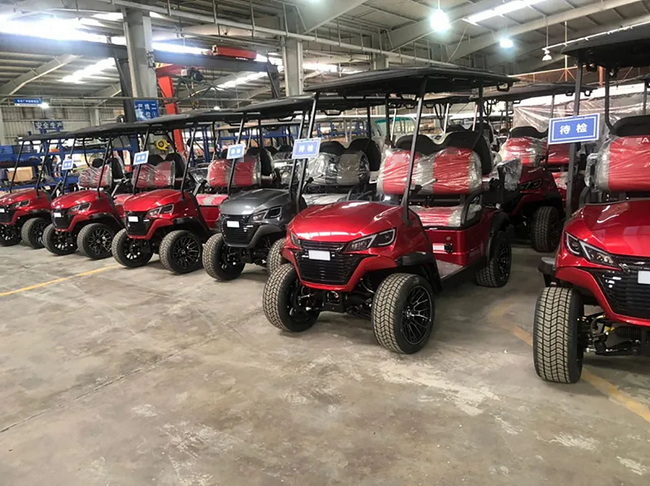
BorCart is a Chinese manufacturer that focuses on research and development, production, and global export of electric golf carts, sightseeing buses, low‑speed vehicles, hunting vehicles, and multi‑purpose vehicles. The company positions itself as a dedicated OEM and ODM partner for overseas brands that want customized electric vehicles built on proven golf buggy platforms.
Instead of offering only fixed catalogue products, BorCart works with partners to create local buggy brands and unique configurations. Its portfolio covers everything from compact two‑seat golf buggies and lifted utility buggies to eight‑seat people movers and sightseeing shuttles, all based on electric drivetrains designed for low‑speed environments.
For foreign clients, BorCart can integrate:
- Different motor and voltage options
- Custom body colors and trim
- Bespoke seating layouts and accessories
- Branding elements such as logos, decals, and steering‑wheel emblems
This OEM flexibility makes BorCart an attractive choice for companies that want to sell their own golf buggy line in markets such as North America, Europe, or Southeast Asia without building manufacturing capacity from the ground up.
Looking at a representative BorCart golf buggy model helps illustrate how an OEM platform can serve many different end uses, from resort transport to hunting and utility. A typical BorCart electric buggy uses an AC motor around 5 kW, combined with a 48‑volt or 72‑volt electrical system and an intelligent charger designed for overnight charging.
Standard engineering features often include:
- Independent front suspension for a smoother ride
- Hydraulic disc brakes, sometimes on all four wheels, for strong stopping power
- A robust trapezoidal metal frame with anti‑corrosion treatments
- IP‑rated LCD instruments and multimedia systems for vehicle status and infotainment
- Comfortable molded seats with high‑quality vinyl or leather surfaces
Performance figures such as maximum speeds in the mid‑20s (km/h or mph depending on configuration), climb ratings around a quarter gradient, and ranges of 50–70 miles on normal roads show how well these buggies can handle both golf‑course duty and general campus or resort transportation. By adjusting suspension setups, tire types, and accessories, the same platform can also be turned into a capable hunting‑style golf buggy for private land.
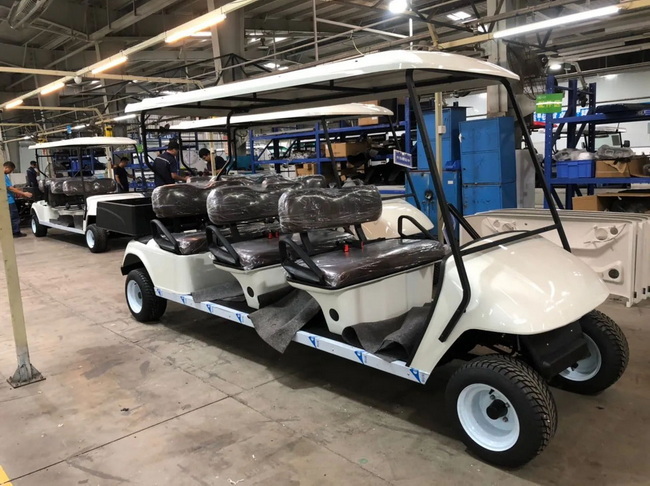
BorCart's strengths for international golf buggy and golf buggy‑based product lines include comprehensive product families, flexible customization, and export‑oriented support. The company offers various seating capacities, including two‑seat, four‑seat, six‑seat, and eight‑seat buggies, as well as lifted, multi‑purpose, and sightseeing versions built on proven platforms.
For OEM customers, BorCart can:
- Configure different wheelbases, passenger capacities, and cargo areas
- Provide a wide palette of body colors and upholstery options
- Include factory‑installed accessories such as windshields, roofs, mirrors, and lighting
- Supply documentation and certifications required for multiple regions
Engineering support allows the company to adjust golf buggy designs to specific climates, terrains, and regulatory environments. For example, suspension and braking systems can be tuned for hilly resort towns, while body and roof designs can be optimized for sun‑intense coastal areas or rainy, forested regions. This level of flexibility is vital for brands that want to stand out in their local golf buggy markets.
A hunting‑focused brand that wants to expand its golf buggy offering can collaborate with an OEM to develop a family of models with different seating, cargo, and drivetrain configurations. An OEM can supply base golf buggy chassis with specified wheelbases, motor outputs, and battery systems, while the brand designs body kits, accessories, and cosmetic details in line with its outdoor identity.
In such partnerships, the OEM provides the core electric golf buggy engineering, manufacturing capacity, and quality assurance. The brand, in turn, adds value through deep knowledge of its customers, building hunting‑specific or utility‑specific packages: camouflaged panels, specialized racks, lighting bars, winch systems, and interior storage solutions that make each golf buggy uniquely suitable for its mission.
For niche hunting golf buggy brands, this combination of OEM engineering and local market insight can accelerate growth and ensure that each buggy's performance and durability keep pace with customer expectations.
End users choosing an electric hunting golf buggy rather than a conventional vehicle or ATV enjoy a blend of comfort, stealth, and practicality. The low‑noise character of an electric golf buggy helps maintain a calm environment in the woods, which is especially valuable during early morning or late‑evening stalks.
Other user‑level benefits include:
- Easy operation with simple controls and automotive‑style steering
- Lower vibration and smoother ride compared with many small off‑road machines
- The ability to carry multiple passengers and gear in a single trip
- A more approachable driving experience for family members or guests who may not be comfortable on motorcycles or large ATVs
Because most hunting golf buggies are based on proven golf buggy architectures, parts, service, and troubleshooting are familiar to technicians experienced with course fleets. This helps keep downtime low and ensures that the buggy remains ready for use throughout the hunting season and beyond.
Even when a hunting vehicle looks aggressive and heavily accessorized, the underlying golf buggy platform still determines how it drives, how it charges, and how long it will last. Key platform decisions—such as voltage, motor type, controller capacity, frame design, and suspension layout—have a direct impact on range, hill‑climbing performance, towing ability, comfort, and maintenance needs.
Brands like Beast, and OEMs like BorCart, operate in the same broad ecosystem of low‑speed electric vehicles built on golf buggy principles. Whether the final product is marketed as a tough hunting machine or a refined resort shuttle, success depends on matching the platform's strengths to the customer's daily reality: terrain, distances, payload, climate, and styling expectations.
Understanding that Beast Buggy uses a dedicated Beast‑branded golf buggy platform, rather than an off‑the‑shelf cart, helps dealers and buyers appreciate why its hunting models look and perform differently. It also highlights how OEM manufacturers give global partners the tools to create similarly specialized golf buggy solutions for their own markets.
Beast Buggy builds its vehicles on a proprietary electric hunting cart platform marketed under The Beast name, instead of simply attaching its logo to a mainstream third‑party golf buggy. By focusing on torque, rugged construction, and hunting‑specific features such as camo finishes, gun racks, and lifted suspensions, the brand transforms the traditional golf buggy concept into a specialized off‑road tool for serious hunters and landowners.
In the wider low‑speed electric vehicle market, OEM specialists like BorCart provide the engineering backbone and manufacturing capacity that allow overseas brands to launch their own golf buggy lines. From quiet course carts and resort shuttles to multi‑purpose hunting and utility buggies, these OEM platforms can be customized to fit different terrains, regulations, and branding stories.
For dealers, distributors, and end users, understanding the link between brand identity and underlying golf buggy platform makes it easier to choose vehicles that genuinely match their needs. Whether the goal is stealthy hunting access, efficient resort transport, or reliable estate management, a well‑chosen golf buggy—built either by a dedicated brand like Beast or in cooperation with an OEM like BorCart—can deliver years of quiet, capable service.
Contact us to get more information!
Beast Buggy uses its own branded hunting and utility buggies sold under The Beast name. These vehicles are purpose‑designed electric hunting carts with dedicated frames, suspensions, and accessories instead of rebadged mainstream golf buggies. This approach gives Beast more control over performance, durability, and styling in demanding off‑road conditions.
Yes, a Beast hunting buggy is still considered a golf buggy because it shares the core low‑speed electric vehicle architecture used on courses. It uses similar steering layouts, seating positions, and drive systems, but layers on extra clearance, stronger components, and hunting‑specific accessories, which make it better suited for trails and fields than a standard course‑only golf buggy.
A hunting golf buggy typically has higher ground clearance, more aggressive all‑terrain tires, reinforced frames, and features such as brush guards, winch mounts, and gun racks. A standard course golf buggy, by contrast, emphasizes turf‑friendly tires, low‑profile suspension, and simple storage for clubs and bags, since it spends its life on manicured fairways and paved paths rather than in mud and brush.
OEM manufacturers design and build electric golf buggies and related low‑speed vehicles that other companies can customize and sell under their own brands. They handle R&D, testing, production, and export logistics, while providing flexible options in motors, batteries, seating, colors, and accessories. This allows foreign partners to focus on marketing and customer service while relying on the OEM for technical expertise and manufacturing scale.
Yes, many overseas brands create hunting‑style golf buggies by partnering with OEM manufacturers that supply the base platforms. The OEM provides tested golf buggy chassis and drivetrains, and the brand adds localized body kits, camo finishes, storage solutions, and hunting accessories. In this way, a company can launch a distinctive hunting golf buggy line without building a full factory, yet still offer products tailored closely to its customers' terrain and usage habits.
1. Beast Electric Hunting Vehicles – Beast 48 and brand overview: https://beast48.com
2. Beast 48 Electric Utility Cart product details: https://golfcarts.com/product/beast-48/
3. Beast 48 hunting buggy specs and 4x4 information: https://southernmud.com/beast-electric/
4. Beast Hunter model specifications and features: https://beast48.com/beast-hunter/
5. Carolina Sportsman feature on Beast 48 Ultimate Hunting Buggy: https://www.carolinasportsman.com/hunting/the-beast-48/
6. Hunting golf cart benefits and usage scenarios: https://golfcarts.com/hunting-golf-carts/
7. Advantages of electric golf carts in general use: https://www.bennelsongolfcars.com/blog/advantages-of-electric-golf-carts--19723
8. BorCart OEM golf cart product data and specifications: https://m.made-in-china.com/product/Borcart-OEM-ODM-Manufacturer-Electric-Golf-Car-Newly-Golf-Cart-2088633095.html
9. BorCart overview of golf carts product line: https://www.borcart.com/golf-carts.html
10. BorCart article on OEM and ODM services for global partners: https://www.borcart.com/top-golf-carts-manufacturers-and-suppliers-in-thailand.html
11. BorCart introduction as a Chinese electric golf buggy manufacturer: https://www.borcart.com/top-10-electric-golf-buggy-manufacturers-in-china.html
12. BorCart information on multi‑seat golf cart OEM capabilities: https://www.borcart.com/top-10-8-seater-golf-cart-manufacturers-in-china.html


