


Views: 222 Author: Leah Publish Time: 2026-01-11 Origin: Site


Content Menu
● Indonesia's Evolving Golf Cart Market
● Global Brands Present in Indonesia
>> Club Car
>> Other International Manufacturers
● Local Distributors and Solution Providers
>> Metrocar Indonesia (PT Cawang Mitra Sejati)
● China OEM Golf Carts Manufacturers and Suppliers Serving Indonesia
>> Guangzhou BorCart Electric Vehicle Co., Ltd.
● How Indonesian Buyers Evaluate Golf Carts Manufacturers and Suppliers
● Trends Shaping the Future of Golf Carts in Indonesia
● Working Effectively with OEM Partners
● FAQ
>> 1. How many types of golf carts are commonly used in Indonesia?
>> 2. What are the advantages of sourcing from China OEM Golf Carts Manufacturers and Suppliers?
>> 3. How should Indonesian buyers choose between lead‑acid and lithium batteries?
>> 4. What service arrangements are recommended when purchasing fleets in Indonesia?
Indonesia's golf, resort, and industrial sectors are rapidly upgrading their internal mobility, creating strong demand for reliable Golf Carts Manufacturers and Suppliers that can support fleets across the archipelago. This demand covers not only golf courses, but also hotels, theme parks, airports, factories, and gated communities that rely on low‑speed electric vehicles for safe, quiet transportation.
As the market matures, Indonesian buyers increasingly combine local distributors with international OEM partners, especially from China, to secure cost‑effective, customizable electric golf carts that meet global standards while fitting local operating conditions. This article explores the main categories of Golf Carts Manufacturers and Suppliers serving Indonesia, the role of OEM factories such as BorCart, and the key factors buyers should evaluate when planning new or replacement fleets.
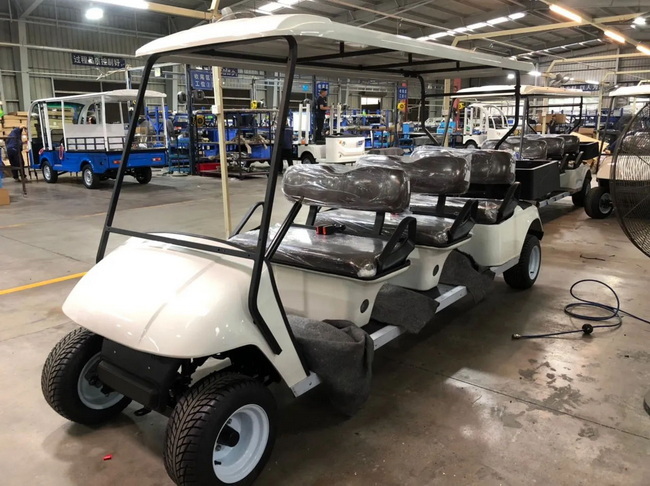
Indonesia is developing new golf courses and integrated resorts in tourism hubs such as Bali, Batam, and greater Jakarta, driving a steady need for modern golf carts and related low‑speed vehicles. At the same time, industrial parks, campuses, government facilities, and logistics operators are adopting similar vehicles for internal transport, security patrols, and VIP movement.
This broadening usage means that Golf Carts Manufacturers and Suppliers must deliver more than standard two‑seat golf cars. Operators now look for multi‑passenger shuttles, luggage‑carrying carts, ambulance‑type configurations, and utility models fitted with cargo beds, tool boxes, or specialized equipment. As a result, the Indonesian market is moving toward modular product families that can share common platforms but support diverse applications.
Electric carts are gaining preference thanks to lower running noise, reduced local emissions, and the ability to operate indoors or in semi‑enclosed environments such as resorts and airports. Lithium‑ion battery options are becoming more attractive as operators realize that higher upfront cost can be offset by longer life, faster charging, and improved energy efficiency compared with traditional lead‑acid packs.
Several international Golf Carts Manufacturers and Suppliers play a central role in Indonesia's premium golf and resort projects. These brands typically work through authorized local distributors that provide sales, financing, spare parts, and technical service. Their long-standing reputations and proven technology reassure high‑profile buyers who prioritize uptime and brand image.
Yamaha has built a strong presence across Asia with dedicated golf and utility vehicles, supported in Indonesia by an official sales and service network. Its product range includes gasoline and electric golf carts designed for course fleets, as well as multi‑purpose models suitable for resorts and commercial operations.
Buyers often favor Yamaha for its engineering reliability, extensive parts availability, and the fact that many technicians are already familiar with the brand's systems. For operators running mixed fleets of golf carts, motorcycles, and other Yamaha products, this shared ecosystem can simplify maintenance and training.
Club Car is another widely recognized brand among international Golf Carts Manufacturers and Suppliers and has a dedicated presence serving Indonesian customers. Beyond standard two‑seat golf cars, the brand offers utility models, hospitality shuttles, and remanufactured vehicles for budget‑conscious buyers.
In Indonesia, Club Car's local representation helps customers specify fleet configurations, arrange financing, and install accessories such as enclosures, coolers, bag holders, and lighting packages. The brand is often chosen by prestige resorts and championship courses that want to emphasize quality and guest experience.
The global ecosystem supplying Indonesia also includes manufacturers associated with Textron's E‑Z‑GO, and a range of specialized electric vehicle producers from Europe, North America, and Asia. Many of these Golf Carts Manufacturers and Suppliers participate indirectly through export to Indonesian distributors, who then brand, package, or configure vehicles for local needs.
These manufacturers often provide advanced options such as AC motor drivetrains, regenerative braking, onboard diagnostics, and telematics systems. For large fleets, such features can improve energy efficiency, reduce maintenance costs, and allow managers to track usage patterns to optimize cart allocation and replacement cycles.
Indonesian distributors form the bridge between global production and local operations. They import vehicles, manage homologation where required, and provide after‑sales support in Bahasa Indonesia and English. Choosing the right local partner is as important as selecting the right global Golf Carts Manufacturers and Suppliers.
Metrocar Indonesia has been supplying golf carts and similar vehicles in the country for more than two decades, positioning itself as a trusted mobility solution provider. Its experience ranges from prestigious golf courses to luxury resorts, government institutions, and large industrial clients that require customized fleets.
The company's value proposition typically combines competitive specifications, tailored configurations, and solid after‑sales support. By understanding local terrain, climate, and user behavior, Metrocar can advise clients on motor power, gearing, battery selection, and protective features like canopies and weather enclosures that matter in Indonesia's tropical environment.
Online B2B platforms listing Golf Carts Manufacturers and Suppliers in Indonesia give buyers quick access to multiple quotes and product lines. These platforms often include both local distributors and regional manufacturers, allowing comparisons of technical data, prices, and minimum order quantities.
For smaller resorts, property managers, or facility owners who may only need a handful of units, such platforms can be an efficient way to discover suppliers without attending trade shows or conducting extensive travel. Buyers still need to scrutinize warranties, service capabilities, and references, but digital platforms shorten the initial research phase.
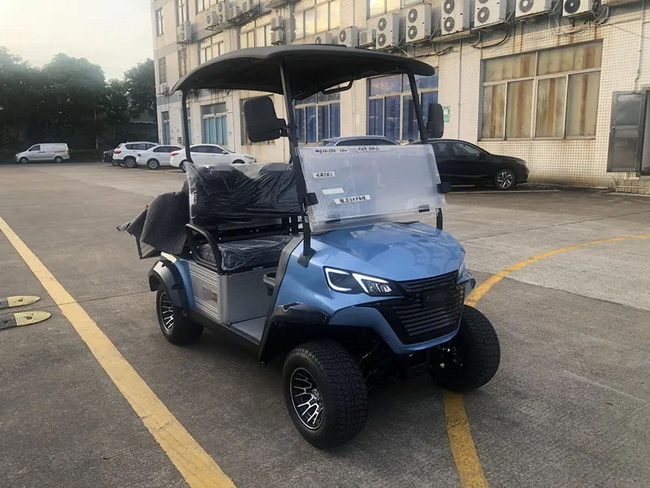
China has become a central hub for electric vehicle production, and this includes a wide spectrum of Golf Carts Manufacturers and Suppliers specializing in OEM and ODM services. Indonesian importers, foreign brands, and large wholesalers frequently work with these factories to obtain cost‑effective fleets that can be sold under local trademarks or co‑branded arrangements.
Guangzhou BorCart Electric Vehicle Co., Ltd. stands out among Chinese Golf Carts Manufacturers and Suppliers for its focus on electric golf carts and a broad portfolio of related low‑speed vehicles, including sightseeing buses, hunting carts, and multi‑purpose utility models. The company operates large industrial facilities with multiple production lines, supporting high‑volume export capability.
BorCart's product range covers:
- Two‑seat and four‑seat golf carts for classic course use.
- Six‑seat and eight‑seat shuttles for resorts, campuses, and airports.
- Lifted and off‑road style models for hunting, estates, and rugged environments.
- Multi‑purpose utility carts with cargo beds or tool configurations for industrial users.
A key strength of BorCart is its emphasis on customization. As an OEM and ODM supplier, the company collaborates closely with overseas brands, wholesalers, and manufacturers that require specific body styling, seating upholstery, color schemes, and branded elements such as badges or decals. This allows Indonesian partners to offer differentiated products while leveraging BorCart's underlying engineering and production scale.
Technically, BorCart integrates well‑known components such as AC motors from reputable suppliers, programmable controllers, and smart chargers optimized for both lead‑acid and lithium battery packs. Combined with structured quality control processes at incoming inspection, in‑process checks, and final testing, this approach helps ensure that carts meet demanding export market expectations.
For Indonesia‑focused projects, BorCart can tailor gearing, speed limits, lighting sets, and corrosion‑resistant treatments to suit coastal resorts, humid climates, and local usage patterns. Indonesian brands and distributors can therefore position themselves as strong Golf Carts Manufacturers and Suppliers in their own right, supported by BorCart's engineering and factory resources.
Beyond BorCart, numerous Chinese electric vehicle manufacturers actively export golf carts and similar low‑speed vehicles suitable for Indonesia. Many specialize in complete golf cars, while others focus on utility and sightseeing vehicles that share components with golf carts but are optimized for passenger transport or cargo handling.
These OEMs often emphasize:
- Energy‑efficient designs that balance motor power and battery capacity.
- Options for lithium batteries with battery management systems for enhanced lifespan.
- Flexible seating layouts and modular cargo systems.
- Compliance with various international standards that may be relevant to large resort operators or multinational industrial clients.
Indonesian importers typically evaluate several Chinese Golf Carts Manufacturers and Suppliers before committing to a long‑term relationship. Criteria include factory audit results, responsiveness of engineering teams to customization requests, production lead times, and ability to provide technical documentation and training materials in clear English.
With many choices available, Indonesian buyers need a structured approach when selecting the right Golf Carts Manufacturers and Suppliers for their fleets. The decision process often involves collaboration between operations managers, finance teams, and maintenance supervisors.
Key evaluation dimensions include:
- Application and vehicle type: Golf courses focus on classic two‑seat or four‑seat golf cars, while resorts, campuses, and industrial parks often prioritize multi‑passenger shuttles and utility carts. Buyers should map each route and task to the appropriate vehicle category.
- Powertrain and range: Electric carts must provide sufficient range for a full shift, considering terrain, load, and climate. Lithium batteries are attractive for high‑utilization fleets, while lead‑acid may be adequate where usage is lighter and upfront cost is the main concern.
- Performance and safety: Motor power, climbing ability, braking performance, and stability on slopes are critical for hilly courses or resorts. Safety features such as lights, mirrors, seat belts, speed limiters, and parking brakes should align with internal policies and any applicable local regulations.
- Durability and materials: Frames, body panels, and fasteners must withstand humidity, salt air in coastal areas, and frequent washing. Powder‑coated frames, corrosion‑resistant hardware, and UV‑stable plastics or fiberglass improve long‑term appearance and structural integrity.
- After‑sales and parts: A technically strong product can still be problematic if spare parts are hard to obtain or service teams are under‑trained. Buyers should verify service coverage, response times, and the availability of training for in‑house maintenance staff.
By scoring potential partners—both local distributors and overseas OEM Golf Carts Manufacturers and Suppliers—against these criteria, Indonesian operators can build a balanced supplier portfolio that controls cost without sacrificing reliability.
The landscape for Golf Carts Manufacturers and Suppliers serving Indonesia continues to evolve as technology and customer expectations change. Several trends are likely to shape purchasing decisions over the coming years.
First, there is growing interest in fleet connectivity and basic telematics. Some manufacturers now offer systems that track vehicle usage, state of charge, and fault codes in real time. For large resorts or industrial camps, this data can help optimize charging schedules, prevent unexpected downtime, and plan preventive maintenance more effectively.
Second, sustainability goals are influencing procurement policies. Many hotels, resorts, and industrial groups have corporate commitments on emissions and energy consumption. Electric golf carts already support these goals, but buyers may increasingly favor manufacturers that can document eco‑friendly production processes, recyclable materials, and low‑impact paints or coatings.
Third, customization and branding are becoming more important as properties compete for guests and tenants. Carts with unique color schemes, upholstery, lighting, and branding can enhance a resort's visual identity and guest experience. OEM partners like BorCart, along with other flexible Golf Carts Manufacturers and Suppliers, are well positioned to deliver such tailored solutions at scale.
Finally, safety and regulation may tighten over time. As golf carts and low‑speed vehicles venture beyond fairways into mixed‑use environments, authorities may introduce clearer rules on lighting, signaling, and permitted operating zones. Suppliers who proactively design vehicles with robust safety features will stand out as reliable long‑term partners for Indonesian clients.
For Indonesian importers, private brands, and even established distributors looking to expand their product lines, collaborating with OEM Golf Carts Manufacturers and Suppliers requires structured project management. Successful cooperation usually involves several stages.
During the concept phase, the local partner defines target applications, desired capacities, and branding requirements. This includes specifying seat counts, body style, approximate speed and range targets, and key visual elements. The OEM then proposes suitable base platforms and outlines customization possibilities.
In the engineering phase, both sides agree on technical specifications: motor power, controller settings, battery type, charger configuration, lighting standards, and any special features such as rain curtains, stereos, or GPS mounts. Clear technical drawings and bills of materials reduce the risk of misunderstandings later.
The prototyping stage allows Indonesian partners to test vehicles under local conditions—heat, humidity, terrain, and actual loads. Feedback from drivers and maintenance staff helps fine‑tune performance, ride comfort, and serviceability before moving into volume production.
Once production starts, communication remains important. Regular updates on lead times, quality metrics, and field performance build mutual trust. Over time, the partnership can expand to cover new models or market segments, turning both companies into stronger Golf Carts Manufacturers and Suppliers within their respective roles in the value chain.
Indonesia's golf cart and low‑speed vehicle ecosystem is increasingly sophisticated, supported by an interlinked network of global brands, local distributors, and China‑based OEM Golf Carts Manufacturers and Suppliers. For golf courses, resorts, industrial parks, and gated communities, this diversity of supply makes it possible to assemble fleets that are technically robust, visually distinctive, and financially competitive.
Manufacturers such as Yamaha and Club Car provide proven, premium solutions with strong brand equity, while local players like Metrocar Indonesia deliver on‑the‑ground service and project expertise. OEM specialists such as BorCart and other Chinese factories, in turn, give Indonesian partners the ability to build private‑label or co‑branded product lines tailored precisely to local operating conditions.
By carefully evaluating application requirements, powertrain options, durability, safety features, and after‑sales support, Indonesian buyers can select Golf Carts Manufacturers and Suppliers that support long‑term mobility strategies. As the market continues to grow and sustainability becomes more central to corporate decision‑making, those suppliers that combine technical innovation, customization, and dependable service will be best placed to lead Indonesia's next generation of golf cart deployments.
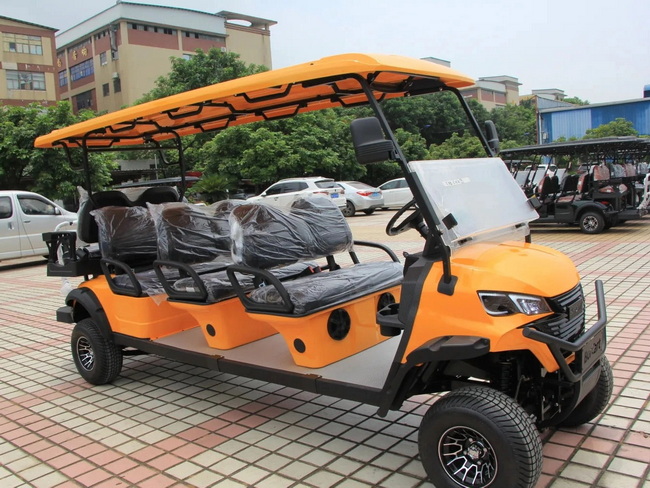
Most Indonesian operators use four main categories: classic two‑seat golf carts, four‑seat or six‑seat passenger shuttles, utility carts with cargo beds, and specialized models such as lifted hunting carts. Golf courses tend to prioritize the first category, while resorts and industrial parks rely more on multi‑passenger and utility configurations.
Working with Chinese OEM factories allows Indonesian brands and distributors to obtain highly customizable vehicles at competitive prices, often with flexible minimum order quantities. When managed properly, this approach combines global‑scale manufacturing efficiency with local branding and service, creating a strong value proposition for end users.
Lead‑acid batteries typically offer lower upfront cost and may be suitable for fleets with modest daily usage and ample charging time. Lithium batteries, while more expensive initially, provide longer cycle life, lighter weight, faster charging, and better performance under high‑demand conditions, making them attractive for intensive operations or premium venues.
Buyers should negotiate clear service agreements covering response times, preventive maintenance schedules, training for in‑house technicians, and guaranteed availability of key spare parts. For large fleets, it is wise to plan periodic technical audits with the supplier and to maintain basic diagnostic tools and spare components on site to minimize downtime.
Yes, many Indonesian companies develop private brands by partnering with OEM Golf Carts Manufacturers and Suppliers that offer ODM services, including customized body designs and branding. By combining imported vehicles with strong local marketing and service, these companies can position themselves as credible manufacturers in the eyes of customers, even though production remains abroad.


