


Views: 222 Author: Leah Publish Time: 2026-01-18 Origin: Site


Content Menu
● Why golf carts fit DRC needs
● Main applications of golf carts in DRC
● Types of golf carts demanded in DRC
● Local versus international suppliers in DRC
● Role of global brands in Africa
● Growing importance of Chinese OEM manufacturers
● Example capabilities of large Chinese factories
● Why OEM partnerships matter for DRC importers
● How suppliers support African customers end‑to‑end
● Impact of new EV regulations on golf carts
● Environmental benefits of electric golf carts
● Key buying considerations for DRC businesses
● Strategic role of a Chinese OEM partner like BorCart
● FAQ
>> 1. What makes DRC attractive to Golf Carts Manufacturers and Suppliers?
>> 2. How do Chinese OEM factories support DRC importers?
>> 3. Which sectors in DRC use golf carts the most?
>> 4. What should buyers in DRC check before ordering from Golf Carts Manufacturers and Suppliers?
>> 5. Can golf carts be customized for challenging DRC terrain?
Golf Carts are becoming increasingly important in the Democratic Republic of Congo (DRC) as tourism, mining, logistics, and private estates seek safe and efficient low‑speed transport solutions. For international and regional Golf Carts Manufacturers and Suppliers, the DRC market now represents a promising, early‑stage opportunity to build long‑term partnerships with dealers and fleet operators.
The DRC sits at the heart of Africa's e‑mobility story, supplying key battery minerals while gradually opening its own market to electric vehicles of all sizes. In this context, golf carts and related low‑speed vehicles often provide a faster, more realistic entry point than full‑scale passenger EVs, especially in private or semi‑private environments with controlled routes.

The broader African golf cart market is expected to grow steadily over the coming years, supported by tourism development, infrastructure investments, and the spread of gated communities and industrial parks. Regional studies of Middle East and Africa point to a positive compound annual growth rate for golf carts, reflecting rising demand for both on‑course and off‑course applications.
Within this regional trend, DRC is positioning itself as an important e‑mobility player thanks to its cobalt resources and its participation in joint EV roadmaps with neighboring countries. Government and international agencies are working on frameworks that support local value‑addition and encourage cleaner transport solutions, creating a favorable context for Golf Carts Manufacturers and Suppliers that can align with new standards.
Golf carts and low‑speed vehicles offer a practical response to some of the constraints still affecting the wider EV market in DRC, such as limited public charging infrastructure and diverse terrain conditions. Their relatively low energy consumption, compact size, and short‑range duty cycles make them easier to deploy inside controlled sites like campuses, mining operations, or resorts.
For operators, golf carts provide:
- Quiet, low‑emission transport for guests, staff, and light cargo over short distances.
- Simplified maintenance compared with larger road‑going vehicles.
- Flexible body configurations that can be adapted to specific business models, from tourism to industrial support.
Because many of the key routes inside these facilities are private, low‑speed vehicles also reduce regulatory complexity compared with traditional road traffic solutions.
Demand in DRC spans several sectors where Golf Carts Manufacturers and Suppliers can offer specialized models and configurations. The applications go far beyond golf courses and now include:
- Hospitality and tourism
Resorts, lodges, and hotels use golf carts for guest transfers, luggage handling, and guided tours. Quiet electric carts enhance the visitor experience and support eco‑tourism positioning.
- Mining and industrial sites
Mining camps and industrial parks deploy utility carts and personnel carriers to move staff, tools, and parts across large sites. Configurable cargo beds and robust suspensions are especially valuable in these environments.
- Residential compounds and gated communities
In high‑end residential areas, golf carts serve as internal shuttles for residents and security teams, providing convenient, low‑cost mobility without the noise or emissions of conventional vehicles.
- Educational and healthcare campuses
Universities, training centers, and large hospitals use low‑speed vehicles to connect buildings, move patients or visitors with limited mobility, and support facility management operations.
- Sports and leisure facilities
Golf courses remain a core segment, but sports complexes and recreational parks are also adopting carts for staff and visitor movement.
Because road surfaces, climate, and use‑cases vary widely across DRC, buyers look for a broad range of models from Golf Carts Manufacturers and Suppliers. Some of the most popular categories include:
- Standard golf carts
Two‑ to four‑seat electric golf carts remain the classic choice for golf courses, resorts, and private estates. They prioritize comfort, quiet operation, and smooth handling on landscaped surfaces.
- Sightseeing and shuttle buses
Multi‑row electric shuttles are ideal for airports, parks, campuses, zoos, and tourist attractions. These vehicles tend to offer 8–23 seats with easy access, sun‑shade roofs, and panoramic views.
- Hunting and off‑road style carts
Lifted suspensions, all‑terrain tires, protective body kits, and roof racks make these vehicles suitable for private game reserves, lodges, and rural estates where tracks are rough and often unpaved.
- Utility and cargo carts
Flatbeds, cargo boxes, and tow hitches turn basic golf cart platforms into versatile workhorses for maintenance teams, landscaping crews, and warehouse staff.
- Multi‑purpose and low‑speed vehicles
Road‑capable low‑speed vehicles (LSVs) and neighborhood electric vehicles (NEVs) can be configured for security patrols, campus shuttles, and light municipal tasks where regulations permit.
For DRC buyers, the ability to mix these categories across a single fleet is especially useful, as one mining camp or resort may need passenger shuttles, cargo units, and specialized service carts at the same time.
At present, DRC still relies heavily on imported vehicles across most automotive segments, and golf carts are no exception. Local distribution and service partners are emerging, but international Golf Carts Manufacturers and Suppliers remain the primary source for vehicles, parts, and technology.
Typical sourcing patterns include:
- Direct import by large end‑users such as mines, resorts, or institutions that purchase whole fleets from overseas factories.
- Regional dealers based in neighboring African countries who distribute multiple golf cart brands, often combining sales, rental, and service.
- Private‑label brands that import OEM‑built carts from Asia or other regions and sell them under localized brand identities.
For DRC operators, the key is to balance purchase price with reliability, after‑sales support, and the ability to obtain spare parts within reasonable timeframes.
Several established global brands have shaped expectations around quality and performance of golf carts in African markets. Although their physical presence may be concentrated in countries with more mature golf or tourism sectors, their influence extends across the region.
These brands often:
- Set benchmarks for comfort, ergonomics, and safety features such as braking performance and lighting.
- Offer comprehensive accessories catalogs including windshields, enclosures, seating options, and utility attachments.
- Work with regional distributors who can sometimes extend coverage to DRC through cross‑border supply and technical support.
Their long experience with fleet management and leasing can also help African customers design smarter deployment strategies, from rotation and charging schedules to maintenance planning.
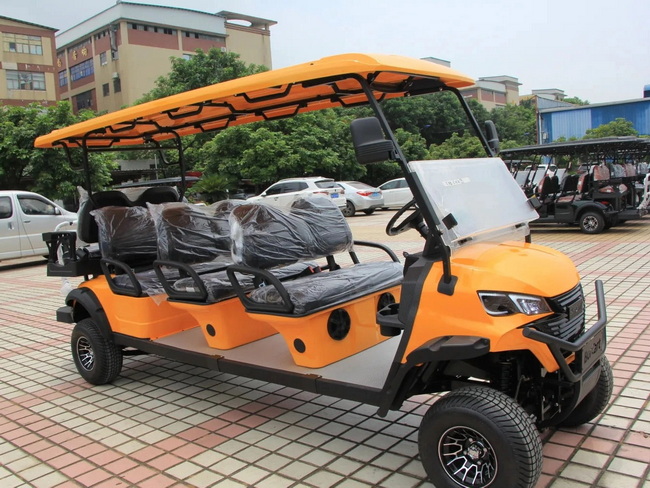
Chinese Golf Carts Manufacturers and Suppliers now play a central role in the global golf cart ecosystem, especially for emerging markets seeking high value at competitive pricing. Many Chinese factories concentrate specifically on electric golf carts, sightseeing buses, low‑speed vehicles, hunting carts, and utility carts, giving them deep expertise in this segment.
Key strengths of leading Chinese OEM suppliers include:
- Broad product portfolios that cover everything from basic two‑seat carts to large tourist shuttles and specialized off‑road variants.
- Mature OEM and ODM capabilities, allowing foreign partners to define exterior styling, seat layouts, branding, and performance parameters.
- Integration of major subsystems such as frames, axles, motors, controllers, and bodywork within the same production groups, improving cost control and quality consistency.
For DRC importers and brand owners, this combination makes Chinese OEM partners especially attractive for building private‑label solutions and customized fleets.
Large‑scale manufacturers in China illustrate what DRC buyers can expect when partnering with top‑tier Golf Carts Manufacturers and Suppliers:
- Manufacturing scale
Multiple production lines, extensive welding and painting workshops, and automated assembly processes support consistent quality and shorter lead times even for sizable orders.
- Engineering and R&D
Dedicated engineering teams work on chassis design, battery integration, control systems, and ergonomics, ensuring continuous improvements in range, durability, and user comfort.
- Quality control and certifications
Structured quality systems incorporate incoming material inspection, process‑quality checks, and final vehicle testing. International certifications (such as ISO9001 and CE) support export to numerous markets and ease regulatory approvals.
Such capabilities are especially relevant when supplying vehicles into challenging environments like DRC, where reliability and robustness are non‑negotiable.
For distributors, rental companies, and industrial operators in DRC, OEM partnerships with Golf Carts Manufacturers and Suppliers provide more than just access to vehicles. They enable local stakeholders to shape products around real operating conditions on the ground.
Main OEM advantages include:
- Branding and positioning
Importers can launch or strengthen their own brands while maintaining control over logos, colors, trims, and optional equipment. This helps build long‑term customer loyalty in local markets.
- Technical customization
Ground clearance, suspension travel, drivetrain calibration, tire types, and protective accessories can be matched to typical roads and climate in DRC, from city centers to remote mining sites.
- Commercial flexibility
OEM factories can often adjust packaging, documentation, and warranty options to align with local financing arrangements, leasing models, or seasonal demand patterns.
Over time, successful OEM relationships can evolve into joint ventures, local assembly projects, or dedicated product lines designed specifically for Central African conditions.
International Golf Carts Manufacturers and Suppliers active in Africa typically provide end‑to‑end support that goes well beyond the initial sale. This is particularly important for DRC buyers who may be importing EV fleets for the first time.
Support often includes:
- Pre‑sale consulting
Suppliers help customers evaluate terrain, daily mileage, passenger capacity, and charging capabilities to choose suitable models and battery configurations.
- Compliance and documentation
Exporters prepare technical files, user manuals, and certifications that assist with customs clearance and compliance with local EV regulations, including any new rules on battery safety or emissions.
- After‑sales service
Training materials, remote technical support, spare‑parts catalogs, and recommended maintenance schedules help local technicians keep vehicles in service longer and reduce downtime.
When combined with competent local partners, this approach allows DRC operators to scale up from small pilot deployments to fully fledged electric fleets.
As DRC updates its rules for electric vehicle imports, Golf Carts Manufacturers and Suppliers must ensure that their products and documentation meet evolving standards. Regulations can cover several areas that indirectly affect golf cart imports:
- Environmental and lifecycle criteria
Even for low‑speed vehicles, authorities may request evidence of responsible battery sourcing, recycling measures, and compliance with general hazardous materials guidelines.
- Age limits for used vehicles
New rules on the age of imported EVs can limit the availability of older second‑hand golf carts, pushing the market toward newer, more efficient models.
- Pre‑shipment inspection and labeling
Mandatory inspections and detailed labeling requirements mean exporters and importers have to coordinate closely to avoid delays and additional costs.
Staying ahead of these changes requires close communication between DRC buyers and their chosen Golf Carts Manufacturers and Suppliers so that technical specifications and paperwork remain aligned with current law.
Electric golf carts are inherently aligned with the global push toward cleaner and more sustainable transportation. Their advantages are especially visible in the settings where they operate most frequently:
- Emission reduction on sensitive sites
Unlike fuel‑powered vehicles, electric carts do not emit exhaust gases at point of use, helping preserve air quality in resorts, campuses, and residential areas.
- Protection of green spaces
The absence of fuel and oil leaks reduces soil and water contamination risk on golf courses, parks, and landscaped estates, maintaining healthier turf and vegetation.
- Lower noise pollution
Quiet operation supports a more pleasant environment for guests and residents, and it can be particularly important around medical facilities and wildlife areas.
These environmental benefits can also support marketing messages for DRC resorts, eco‑lodges, and residential projects that want to highlight green credentials.
Choosing the right Golf Carts Manufacturers and Suppliers and specifying appropriate models is essential for long‑term success in DRC. Before placing orders, buyers should carefully review:
- Powertrain and range
Battery type, capacity, and estimated range must match daily operations, taking into account charging opportunities, expected loads, and temperature.
- Durability and protection
Chassis strength, corrosion resistance, and suspension design should suit local terrain and weather, especially in regions with heavy rain or unpaved roads.
- Serviceability and parts
Access to spare parts, diagnostic tools, and training materials determines how quickly vehicles can be repaired and returned to service.
- Safety and ergonomics
Reliable braking systems, lighting, seating, and driver visibility are crucial for both personnel safety and user comfort.
- Total cost of ownership
Upfront price, energy consumption, maintenance costs, and residual value together determine true lifetime cost and profitability.
A structured evaluation process reduces risk and ensures that DRC operators realize the full benefits of their electric fleets.
A professional Chinese manufacturer such as BorCart is well positioned to serve the needs of DRC dealers, wholesalers, and fleet owners. By focusing on electric golf carts as a core product line while also producing sightseeing buses, low‑speed vehicles, hunting vehicles, and multi‑purpose carts, such a supplier can cover the full range of applications found in DRC.
For international brand owners, wholesalers, and even other manufacturers, an OEM‑oriented partner like BorCart can:
- Develop tailor‑made golf carts and low‑speed vehicles under the client's brand for specific sectors such as resorts, mining camps, and universities.
- Integrate reliable electric drivetrains, braking systems, and automotive‑grade components designed for long‑term performance in challenging climates and on rough surfaces.
- Provide flexible order quantities, from pilot batches to large fleets, while maintaining stable quality and competitive delivery times.
By combining engineering expertise, OEM flexibility, and export experience, such partners help DRC stakeholders accelerate their entry into the electric mobility space with minimal technical friction.
The Democratic Republic of Congo is at the beginning of a significant transition toward electric and low‑emission mobility, and golf carts are among the most practical vehicles to lead this shift on private and semi‑private sites. They provide quiet, efficient, and adaptable transport for hospitality, mining, residential, and institutional applications, fitting the country's immediate needs better than many heavier vehicle classes.
For dealers, brand owners, and operators in DRC, collaborating with experienced Golf Carts Manufacturers and Suppliers—particularly OEM‑focused factories in China—offers a clear pathway to tailored, reliable, and cost‑effective electric fleets. By paying close attention to regulatory changes, technical specifications, and long‑term service support, DRC stakeholders can turn golf carts and low‑speed vehicles into a powerful foundation for the country's growing e‑mobility ecosystem.
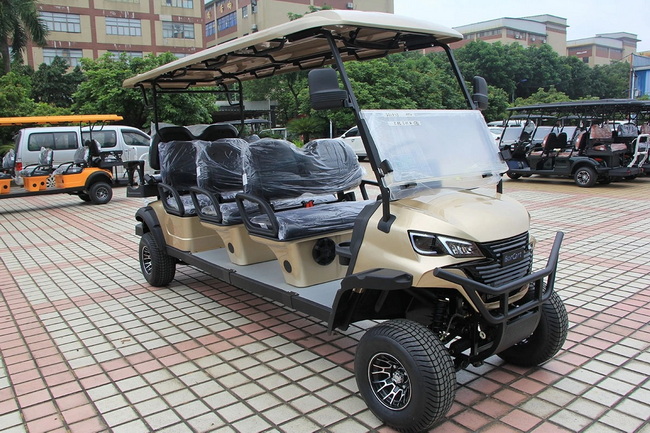
DRC plays a central role in the global battery supply chain thanks to its large reserves of cobalt and other critical minerals, which naturally draws attention from e‑mobility stakeholders. At the same time, expanding tourism projects, mining operations, and urban developments are creating steady demand for low‑speed electric transport solutions such as golf carts and utility vehicles.
Chinese OEM‑focused Golf Carts Manufacturers and Suppliers support DRC importers by offering customizable designs, flexible branding, and tailored technical configurations. They also provide export documentation, logistics coordination, and technical training resources so that local partners can manage fleets confidently over the long term.
The main sectors using golf carts in DRC include hospitality and tourism, where resorts and lodges operate guest shuttles and luggage carts. Mining, industrial parks, residential communities, universities, and hospitals also deploy low‑speed vehicles for internal mobility, maintenance tasks, and security patrols across large sites.
Buyers should verify certifications, warranty terms, and compliance with any local EV or import regulations before confirming orders. It is equally important to review after‑sales arrangements—such as spare‑parts availability, training, and service support—to ensure that carts remain safe and reliable throughout their operational life.
Yes, experienced Golf Carts Manufacturers and Suppliers can adapt vehicles for challenging terrain by adjusting suspension height, choosing heavy‑duty tires, reinforcing frames, and adding protective bodywork. For sites with long routes or steep gradients, they can also recommend enhanced battery configurations, stronger motors, and auxiliary safety features to ensure dependable performance.
1. https://www.ev24.africa/buy-electric-cars-in-congo-kinshasa-2025-guide-to-prices-models-delivery/
2. https://www.uneca.org/stories/with-eca-support,-morocco,-the-drc-and-zambia-outline-joint-e-mobility-roadmap
3. https://www.reuters.com/world/africa/costs-ev-battery-material-cobalt-hydroxide-jump-congo-export-restrictions-2025-12-09/
4. https://www.ev24.africa/8-key-regulatory-updates-in-congos-ev-import-rules-for-2025/
5. https://www.hnxunhu.com/golf-carts-for-sale/
6. https://www.hnxunhu.com/it/africa-golf-cart-market-analysis/
7. https://www.marshell.net/gcsp/
8. https://www.marshell.net/CompanyProfile/
9. https://www.golfs-cart.com/aboutus.html
10. https://www.clubcar.com
11. https://www.technavio.com/report/golf-cart-market-industry-analysis
12. https://www.polarismarketresearch.com/industry-analysis/golf-cart-market
13. https://www.cognitivemarketresearch.com/regional-analysis/middle-east-and-africa-golf-carts-market-report
14. https://www.alliedmarketresearch.com/press-release/mena-golf-cart-market.html
15. https://evtitan.com/are-electric-golf-carts-eco-friendly-a-breakdown-of-their-environmental-impact/
16. https://www.6wresearch.com/industry-report/south-africa-golf-carts-market-2020-2026
17. https://www.linkedin.com/pulse/middle-east-africa-single-seat-golf-cart-market-tqzmf
18. https://www.grandviewresearch.com/horizon/outlook/golf-cart-market/mea


