


Views: 222 Author: Loretta Publish Time: 2025-12-22 Origin: Site


Content Menu
● Market Outlook: Why Golf Carts Matter More Than Ever
● From Gas to Electric: The Dominance of Electric Golf Carts
● Battery Revolution: Lithium and Solar‑Supported Golf Carts
>> Why Lithium Golf Cart Batteries Are Becoming Standard
>> Solar‑Assisted and Hybrid Roof Systems
● Smart Golf Carts: Connectivity, GPS, and Automation
>> Connected and App‑Enabled Golf Carts
>> Autonomous and “Follow Me” Modes
● Design and Comfort Trends in Modern Golf Carts
● Multi‑Purpose Low Speed Vehicles: Beyond the Golf Course
● Data Snapshot – Global Golf Cart and Battery Growth
● Practical Checklist for Upgrading Your Golf Cart Fleet
>> Step‑by‑step upgrade checklist
● OEM and Private‑Label Opportunities with BorCart
>> Why global buyers partner with an OEM manufacturer
● Customization and Personalization: From Standard Carts to Lifestyle EVs
● Sustainability and Regulation: Preparing for Future Standards
● Call to Action for Buyers and Partners
● FAQs
>> Q1: Are electric golf carts cheaper to run than gasoline carts?
>> Q2: Why are lithium batteries recommended for new golf carts?
>> Q3: Can golf carts be used legally on public roads?
>> Q4: What smart features should a modern golf cart include?
>> Q5: How can an OEM manufacturer help my golf cart business grow?
Golf carts are transforming from simple course vehicles into smart, electric low‑speed vehicles used in golf clubs, resorts, gated communities, industrial parks, airports, and campuses worldwide. For global buyers working with OEM manufacturers like BorCart, understanding the latest golf cart innovations and trends is essential for planning future fleets, product lines, and private‑label solutions.[1][2][3]

The global golf cart market is expanding as carts move beyond golf courses into communities, resorts, and industrial applications. Electric models are leading this shift, supported by sustainability goals and lower operating costs.[3][5][6][2]
- One recent forecast values the broader golf cart market at around USD 2.6–2.8 billion in 2024, with growth expected through 2033–2034.[5][6]
- Electric golf carts account for the majority of new demand, posting the fastest growth among propulsion types.[2][3]
For OEM buyers and brand owners, this means strong long‑term demand for differentiated, feature‑rich electric golf carts and low speed vehicles (LSVs).[3][2]
Electric golf carts have shifted from niche to mainstream as operators prioritize emissions, noise, and lifecycle cost.[1][3]
Key advantages of modern electric golf carts:
- Zero local emissions and lower overall carbon footprint compared with gasoline carts.[7][3]
- Quieter operation, creating a better experience for golfers, resort guests, and residents.[1][3]
- Lower maintenance thanks to fewer moving parts and simplified drivetrains.[7][1]
Recent industry data show that electric models captured more than 80% share of the golf cart market in 2024, driven by cost savings and sustainability mandates. This shift is also accelerating in Asia, where manufacturers like BorCart export electric golf carts globally.[5][2][3]
One of the most important future golf cart trends is the transition from lead‑acid to lithium‑ion batteries.[8][7]
Reasons operators are switching to lithium:
1. Longer lifespan and higher cycle life reduce replacement frequency and total cost of ownership.[9][8]
2. Lighter weight, which improves acceleration, hill‑climbing, and overall efficiency.[10][9]
3. Faster charging and opportunity‑charging flexibility for busy fleets.[11][9]
The global golf cart battery market is projected to grow strongly, led by lithium technology as operators factor in downtime, maintenance, and environmental impact. OEMs that design frames, controllers, and BMS around lithium packs can deliver premium performance golf carts for resorts, clubs, and communities.[4][9][8][7]
Solar‑powered and solar‑assisted golf carts are emerging in sun‑rich regions to extend range and cut grid demand.[3][1]
- High‑efficiency photovoltaic roofs can extend driving range by up to around 20%–22% in favorable conditions.[1][3]
- Resorts and golf clubs use solar roofs to lower electricity bills and showcase green branding to guests.[3][1]
For OEM buyers, specifying solar‑ready roof structures and wiring allows future upgrades without redesigning the vehicle platform.[1][3]
Smart golf carts integrate digital features that improve safety, management, and the rider experience.[12][1]
Typical smart golf cart features include:
- Touchscreen displays for navigation, performance data, and entertainment.[12][7]
- App connectivity to check battery status, lock/unlock, or locate the cart remotely.[12][7]
- GPS routing for course management, speed control in sensitive zones, and pace‑of‑play optimization.[13][7]
Course managers and resort operators increasingly expect these capabilities when purchasing new electric golf cart fleets.[13][12]
Leading manufacturers and technology providers are testing autonomous golf carts that can navigate predefined routes in golf resorts, campuses, and gated communities.[14][1]
Emerging functions include:
- Self‑driving shuttles that move guests around large properties without dedicated drivers.[14][7]
- Follow‑me modes, where carts automatically trail a walking golfer within a safe distance while carrying clubs.[1]
- Advanced obstacle detection using sensors and cameras to avoid people, vehicles, and course features.[12][1]
While fully autonomous fleets are still in pilot phases, future‑ready OEM golf carts designed with modular sensor mounts and CAN‑bus architecture will be easier to upgrade as regulations and technology mature.[14][1]

Contemporary golf carts increasingly resemble compact, luxury EVs rather than simple utility buggies.[15][1]
Notable design and comfort innovations:
- Automotive‑style styling with LED lighting, alloy wheels, and aerodynamic bodywork.[15]
- Premium interiors featuring upgraded seats, digital dashboards, and integrated sound systems.[15][1]
- Weather protection such as enclosed cabins, doors, heaters, and AC for all‑season use in communities and resorts.[15]
These features make golf carts attractive as personal neighborhood vehicles and hospitality shuttles, broadening OEM market demand beyond traditional golf applications.[4][2]
The original article notes that carts now operate in resorts, gated communities, airports, and industrial complexes—this has become a defining global trend.[2][1]
Typical non‑golf applications for electric golf carts and LSVs:
- Resorts and hotels: Guest shuttles, luggage transport, room‑service support.[4][1]
- Residential communities: Neighborhood mobility for seniors, families, and security patrols.[5][2]
- Industrial and logistics sites: On‑site personnel transport, light cargo movement, maintenance rounds.[2][1]
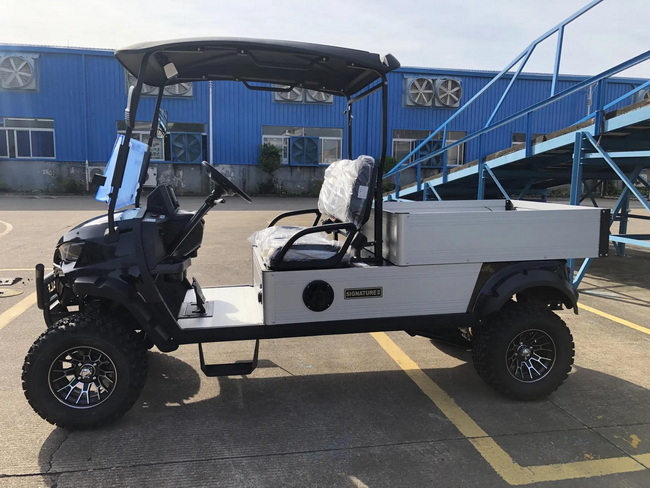
For OEMs like BorCart, this creates demand for specialized platforms: sightseeing shuttles, hunting carts, utility beds, and low speed vehicles that comply with local regulations.[4][2]
To support purchasing and OEM planning, decision‑makers increasingly rely on data‑driven market forecasts.[16][9]
Segment | 2023–2024 Baseline Value | 2030 Projection (Approx.) | CAGR Range |
Overall golf cart market | ~USD 2.6–2.8 bn in 2024 | ~USD 2.8–3.0+ bn by 2030 | ~6–8% (mid-term) |
Electric golf carts | ~USD 2.1 bn in 2024 | USD 3.0 bn by 2030 | ~5.9% |
Golf cart batteries (overall) | USD 1.49 bn in 2024 | USD 2.21 bn by 2030 | ~6.8% |
These trends confirm that electric and lithium‑powered carts will dominate new investments, making them the logical focus for OEM collaborations and R&D.[9][2]
For course owners, resort managers, and community operators, upgrading to future‑proof electric golf carts can be approached step by step.[10][7]
1. Clarify primary use cases
Identify whether carts will serve golf, resort shuttle, residential, hunting, or industrial roles.[2][1]
2. Decide on powertrain and battery
- Prioritize lithium‑ion for intensive or hilly routes needing fast charging and long range.[10][9]
- Add solar roofs where sunlight is abundant and daily range requirements are high.[1]
3. Define capacity and configuration
Choose between 2, 4, 6, 8‑seater or utility bed layouts depending on guest and cargo requirements.[2][1]
4. Select smart and safety features
Decide which of the following are mandatory versus optional: GPS, speed limiting, geofencing, app connectivity, lights, seatbelts, and backup cameras.[13][12]
5. Plan for maintenance and lifecycle
Confirm local service support, spare parts availability, battery warranty, and diagnostic tools.[9][7]
Working with an experienced OEM manufacturer makes it easier to bundle these choices into a consistent, branded fleet specification.[8][4]
As a Chinese manufacturer specializing in electric vehicles, BorCart produces golf carts, sightseeing buses, low speed vehicles, hunting carts, and multi‑purpose utility vehicles for international markets.[1]
- Custom configurations: Seat layouts, cargo beds, lift kits, and hunting or resort packages tailored for local regulations and customer profiles.[2][1]
- Branding and private label: Body colors, logos, dashboards, and digital interfaces aligned with the buyer's brand identity.[4][1]
- Technology integration: Lithium battery systems, solar roofs, smart dashboards, and telematics pre‑installed at the factory.[7][10]
For wholesalers, distributors, and importers, collaborating with an OEM like BorCart enables a complete product line: from standard golf course carts to high‑end resort shuttles and rugged hunting vehicles on a shared platform.[4][2]
The original article highlights how customization transforms golf carts into lifestyle products, a trend that has accelerated with EV adoption.[15][1]
Popular customization options include:
- Exterior: Unique paint schemes, wraps, alloy wheels, lift kits, and off‑road tires.[11][15]
- Interior: Premium seats, custom upholstery, steering wheels, lighting, and infotainment.[15][1]
- Functional add‑ons: Coolers, bag attachments, rear seats that flip to cargo decks, gun racks for hunting carts, and utility boxes.[2][1]
OEM‑grade customization ensures that carts remain structurally safe and compliant, unlike some aftermarket modifications that may affect stability or warranty.[11][15]
Sustainability is no longer a marketing bonus; it is increasingly linked to regulation and access to premium tourism and residential projects.[7][3]
- Municipalities and gated communities often prefer or mandate electric low speed vehicles for internal mobility.[5][2]
- Resorts and golf clubs use electric and solar carts to support corporate ESG goals and green certifications.[16][3]
OEM manufacturers that design with battery recycling, energy efficiency, and lightweight materials in mind will have an advantage as environmental regulations tighten in key markets.[16][8]
As the future of golf carts becomes more connected, electric, and multi‑purpose, now is the right time for fleet owners and brand partners to re‑evaluate their product strategies.[7][2]
- If you are a golf course operator, consider upgrading to lithium‑powered, GPS‑enabled carts with solar roofs for a quieter, greener, and more profitable operation.[10][3]
- If you are a wholesaler, distributor, or brand owner, work with an experienced OEM like BorCart to create your own private‑label golf cart range for golf, resorts, communities, and utility applications.[4][2]
Contact BorCart's OEM team to discuss your specifications for golf carts, sightseeing buses, low speed vehicles, hunting carts, and multi‑purpose utility vehicles, and build a future‑ready portfolio that matches your market.[1]
Yes. Electric golf carts typically offer lower energy costs per round and reduced maintenance because they eliminate fuel systems and many mechanical components, which can cut operating expenses significantly.[3][2]
Lithium batteries are lighter, charge faster, and last longer than traditional lead‑acid units, which improves performance, extends range, and reduces total cost of ownership over the vehicle lifespan.[9][10]
In some regions, specially equipped low speed vehicles with lighting, mirrors, and safety features can operate on designated roads, but eligibility depends on local regulations and speed limits.[5][2]
Common smart features include GPS navigation, app‑based locking and tracking, touchscreen dashboards, speed limit settings, and sometimes geofencing to manage where carts can be driven.[13][12]
An OEM manufacturer can design and build custom carts under your brand, integrate the right batteries and smart technology, ensure regulatory compliance, and deliver scalable production for regional or global distribution.[8][4]
[1](https://intermountaingolfcars.com/the-2025-golf-cart-technical-revolution/)
[2](https://www.strategicmarketresearch.com/market-report/electric-golf-cart-market)
[3](https://www.mordorintelligence.com/industry-reports/golf-cart-market)
[4](https://leochlithium.us/the-growing-market-for-lithium-golf-cart-batteries-in-the-usa-trends-and-outlook/)
[5](https://straitsresearch.com/report/golf-cart-market)
[6](https://www.gminsights.com/industry-analysis/golf-cart-market)
[7](https://evtitan.com/the-future-of-electric-golf-carts/)
[8](https://www.wiseguyreports.com/reports/lithium-golf-cart-batteries-market)
[9](https://www.strategicmarketresearch.com/market-report/golf-cart-battery-market)
[10](https://boltenergyusa.com/switching-lithium/)
[11](https://www.vatrerpower.com/blogs/news/golf-cart-lithium-battery-upgrade-2025)
[12](https://intermountaingolfcars.com/the-rise-of-smart-golf-carts-in-2025/)
[13](https://www.tagmarshal.com/the-top-golf-trends-for-2025-golf-cart-gps-personalized-experiences-and-more/)
[14](https://adventuregolfcars.com/revolutionizing-mobility-the-future-of-golf-cart-technology/)
[15](https://evtitan.com/the-evolution-of-golf-cart-designs-whats-new-in-this-year/)
[16](https://www.vynzresearch.com/press-release/golf-cart-market)
[17](https://www.youtube.com/watch?v=wmeSiISmHCA)
[18](https://centralcoastcarts.com/central-coast-carts/2025-golf-cart-technology/)
[19](https://mossandfog.com/the-future-of-golf-carts-trends-in-design-technology-and-sustainability/)
[20](https://www.techsciresearch.com/report/north-america-golf-cart-market/4255.html)


