


Views: 222 Author: Leah Publish Time: 2026-01-04 Origin: Site


Content Menu
● Basic Similarities Between a Golf Car and a Car
● Important Differences: Golf Car vs Car
>> Weight, Size, and Stability
>> Safety Features and Protection
● Where Golf Cars Are Allowed to Drive
● How Golf Car Driving Compares as a Learning Tool
● Types of Golf Cars and Low-Speed Vehicles
● Safety Best Practices for Driving a Golf Car
● OEM Golf Car Manufacturing and Customization
● How a Modern Golf Car Fits into Sustainable Mobility
● FAQ About Driving a Golf Car
>> 1. Is driving a golf car the same as driving a car?
>> 2. Do you need a driver's license to drive a golf car on the road?
>> 3. Can a golf car be used on highways?
>> 4. Are golf cars safe for children and elderly passengers?
>> 5. How long does an electric golf car typically run on a full charge?
Driving a golf car can be surprisingly familiar for anyone who has handled a regular automobile. The steering wheel, pedals, and forward-reverse controls make the transition simple, but the lower speed, lighter body, and limited safety systems mean a golf car behaves and protects you very differently than a full-size car.[3][1]
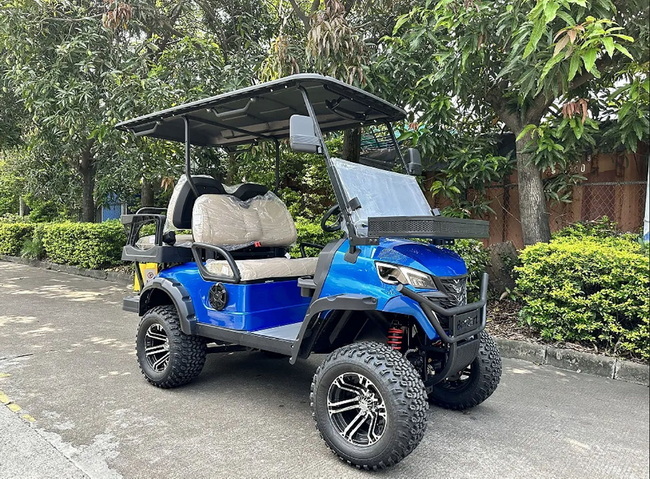
At a glance, a typical golf car looks like a small, simplified car built for low-speed travel. That design is intentional because it helps drivers adapt quickly and focus on their surroundings instead of struggling with unfamiliar controls.[2][1]
- A golf car usually has a steering wheel just like a passenger car, turning the front wheels left or right in a predictable way.[1]
- The accelerator pedal on a golf car is commonly on the right, with a separate brake pedal on the left, mirroring the layout of a standard automatic car.[3]
- Most electric golf cars do not require gear shifting; you set a simple forward, neutral, or reverse selector and then use the pedals to move and stop.[4]
- Many modern golf cars feature automotive-style dashboards, with basic indicators for battery, speed, or mode, which helps drivers feel more confident behind the wheel.[5]
Because of these shared elements, someone experienced with a car can drive a golf car within minutes, and many beginners use a golf car to learn basic steering and pedal control in a calm, low-traffic setting.[4]
Despite the similar controls, a golf car is designed for very different conditions than an everyday automobile. Understanding these differences is essential for safe operation and realistic expectations from your golf car.[2][3]
Golf cars are low-speed vehicles by design, while cars are engineered for much higher performance.[6]
- Typical golf car top speeds are in the range of 15–20 mph in standard configurations.[2]
- Some upgraded or street-legal golf car-type low-speed vehicles (LSVs) can reach about 20–25 mph when compliant with local rules.[6]
- Passenger cars, by comparison, are built to operate safely at highway speeds and often cruise comfortably at 65 mph or more.[7]
This speed gap means a golf car is ideal for short trips on courses, campuses, resorts, and neighborhoods, while a car is necessary for commuting, long-distance travel, and high-speed traffic.[5]
The compact size of a golf car is a big advantage for maneuverability, but it also affects stability and crash performance.[7]
- A golf car is much lighter than a car, so it accelerates and stops differently, and it may be more easily affected by bumps or sudden steering inputs.[4]
- The narrower track and taller seating on some lifted golf cars can increase the risk of tipping if turns are taken too quickly, especially on slopes or uneven ground.[8]
- The small footprint makes it easier to park and turn in tight spaces, but also means golf cars offer less physical protection during impacts with heavier vehicles.[7]
Drivers should keep these traits in mind and avoid driving a golf car as aggressively as a car, even if the steering wheel and pedals feel familiar.[9]
Safety engineering is an area where golf cars and passenger cars differ most.[7]
- Cars are typically equipped with seat belts, airbags, reinforced frames, crumple zones, and advanced safety technologies to protect occupants in high-speed collisions.[7]
- Many basic golf cars used on courses or private property may lack seat belts and doors, and they do not usually offer airbags or crash-tested body structures.[2]
- Street-legal LSV-type golf cars often add headlights, turn signals, mirrors, seat belts, and a windshield to meet regulations, but they still cannot match the crash protection of an enclosed car.[6]
- Because golf cars are often open-sided, occupants are more exposed to ejection or injury in a rollover if they stand, lean out, or ride improperly while moving.[8]
Drivers should treat a golf car as an open, low-speed vehicle and insist that everyone remains seated properly, even at modest speeds.[9]
One major difference between driving a golf car and a car involves where each can legally go. Laws vary widely by region, but some general patterns exist for golf car and LSV use.[10][6]
- On golf courses and private property, golf cars are often permitted on designated paths, fairways, and service roads according to the facility's rules.[8]
- Many local governments allow golf cars or LSV golf cars on certain public streets, typically where posted speed limits are 25–35 mph or lower.[11]
- To be allowed on public roads, a golf car often needs to meet the legal definition of a low-speed vehicle, including a maximum speed of around 25 mph and required safety equipment.[6]
- In some communities, specific “golf cart zones” are defined, allowing residents to use golf cars for short trips to shops, amenities, or neighbor visits.[12]
Because regulations differ by state, province, and country, owners should always verify local traffic codes and registration requirements before driving a golf car on public streets.[10]
For many people, a golf car acts as a friendly entry point into vehicle operation. However, there are clear limits to how much a golf car can teach compared to a full-size car.[4]
- A golf car is excellent for practicing smooth steering, pedal pressure, and basic spatial awareness at low speed without the pressure of busy roads.[1]
- Learners can focus on gentle starts and stops, cornering, and respecting right-of-way on paths or closed environments.[8]
- Driving a car, on the other hand, involves merging into faster traffic, lane changes, highway ramps, and defensive techniques that never arise in typical golf car scenarios.[3]
- Weather, night driving, and complex intersections also challenge car drivers differently than the short, low-speed trips common with a golf car.[9]
Golf car driving is best viewed as a supplement for confidence and basic control rather than a replacement for proper driver education and supervised car experience.[3]
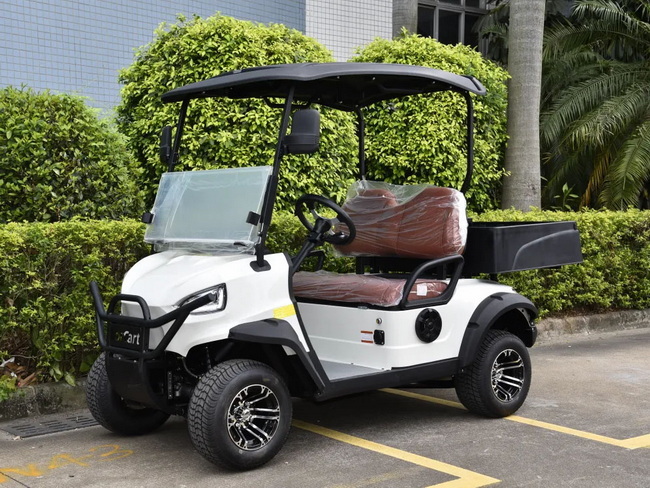
The role of the golf car has expanded far beyond the traditional fairway. Today, many industries and communities rely on the golf car as a flexible low-speed mobility solution.[5]
- Resorts and hotels use golf cars to move guests, luggage, and staff around large properties efficiently and quietly.[5]
- Industrial parks, factories, and warehouses deploy utility-style golf cars with cargo beds to carry tools and materials.[13]
- Universities and corporate campuses use golf cars for maintenance teams, security patrols, and shuttle services.[13]
- Residential communities and retirement villages often allow residents to use golf cars for local errands, social calls, and recreation within designated routes.[11]
- Hunters and outdoor enthusiasts adopt lifted, off-road-ready golf cars to navigate trails and fields in a quiet, low-impact way.[4]
These wide-ranging applications have pushed manufacturers to offer many golf car body styles, seating layouts, and power options to fit different tasks.[14]
Golf cars have evolved into a family of specialized low-speed vehicles that include several categories.[6]
- Traditional two- or four-seat golf cars for course and community use remain the most familiar type.[2]
- Sightseeing or shuttle golf cars add extra rows of seating to carry more passengers in parks, scenic areas, or tourist zones.[5]
- Utility golf cars come with flatbeds, tool racks, or cargo boxes for maintenance and light industrial work.[13]
- Hunting and off-road golf cars may feature higher ground clearance, rugged tires, and reinforced frames for trails and uneven surfaces.[4]
- Low-speed vehicle variants can be built on golf car platforms but outfitted with all the equipment needed for legal road use under LSV rules.[6]
This variety makes “golf car” a flexible category that can be tailored for leisure, work, or mixed environments where full-size cars would be impractical.[5]
Most modern golf cars are electric, but some still use gasoline engines. Each choice affects driving feel, maintenance, and suitability for specific locations.[2]
- Electric golf cars are quiet, produce no tailpipe emissions at the point of use, and offer smooth, instant torque, which is very comfortable in resorts and communities.[2]
- Battery-powered golf cars require charging infrastructure and proper battery care, but they typically have fewer moving parts and lower noise compared with gas models.[14]
- Gas golf cars can be refueled quickly and may handle heavy loads or long days without lengthy charging breaks, making them useful for demanding work sites.[5]
- Some areas with strict noise or emissions rules prefer electric golf cars, while remote hunting areas or large ranches still use gas golf cars where charging is difficult.[4]
Choosing between electric and gas golf cars depends on operating distances, terrain, noise expectations, and local environmental policies.[14]
Even at modest speeds, a golf car requires careful, responsible driving. Safe habits dramatically reduce the risk of rollovers, collisions, and passenger injuries.[9]
- Wear seat belts whenever available, and insist that all passengers stay fully seated with arms and legs inside the golf car while moving.[9]
- Reduce speed before turning, especially on slopes, wet grass, or uneven surfaces, to prevent skids and tip-overs.[8]
- Do not overload the golf car with more passengers or cargo than the manufacturer's rating allows.[15]
- Avoid sudden acceleration, harsh braking, or sharp steering inputs that can upset the balance of a lightweight golf car.[8]
- Never allow children to drive a golf car unless they meet age requirements and are authorized under local rules.[15]
- Keep the golf car's brakes, tires, steering components, and lights in good condition with regular inspections and maintenance.[9]
Treating a golf car with the same seriousness as any other vehicle helps protect everyone on board and those sharing paths or roads.[15]
Behind every successful golf car brand in global markets, there is often an original equipment manufacturer (OEM) providing the underlying vehicles and parts. Specialized OEM producers design and build electric vehicles and components for international partners in need of custom golf car solutions.[14][5]
- Dedicated OEM factories can manufacture golf cars, sightseeing buses, low-speed vehicles, hunting buggies, and multi-purpose vehicles in large volumes.[14]
- OEM golf car services include customized body styling, branding, colors, seat layouts, and accessories to match different foreign markets and price segments.[5]
- Professional OEMs can help partners configure golf car platforms that are compatible with local safety, LSV, and performance requirements, making global compliance easier.[6]
- By relying on experienced OEM suppliers, overseas brands, wholesalers, and final assemblers can offer complete golf car product lines without building their own full-scale production facilities.[14]
This cooperative model lets local companies focus on marketing, distribution, and after-sales support, while the OEM handles engineering, manufacturing, and continuous product improvements.[5]
Sustainability has become an important topic in transportation, and electric golf cars play a growing role in greener mobility ecosystems.[2]
- Electric golf cars use battery power instead of gasoline, reducing direct emissions in resorts, campuses, and communities.[2]
- By providing short-trip mobility for errands or internal transport, a golf car can replace many short car trips that are inefficient and more polluting.[5]
- Golf car fleets can be integrated with solar-assisted charging or off-peak charging strategies to reduce their environmental footprint.[14]
- In car-free or low-car master-planned communities, golf cars offer comfortable access while supporting quieter, safer, and more pedestrian-friendly streets.[11]
As urban planners and property developers seek new ways to cut noise and emissions, the versatile golf car has become a practical tool in low-speed transport networks.[16]
Driving a golf car feels familiar because it shares fundamental controls with a car, such as the steering wheel, pedals, and simple forward-reverse operation. However, a golf car is a low-speed, lightweight vehicle with very different limits in speed, stability, safety equipment, and legal use, so it cannot be treated exactly like a full-size car. When drivers respect those differences—staying within designated areas, driving slowly, keeping passengers seated, and maintaining the vehicle properly—a golf car becomes a safe, comfortable, and efficient solution for golf courses, communities, resorts, work sites, and more. With support from specialized OEM manufacturers that supply golf cars and related low-speed vehicles to global partners, the golf car continues to evolve as a flexible, sustainable part of modern mobility.[1][3][9][14][5]
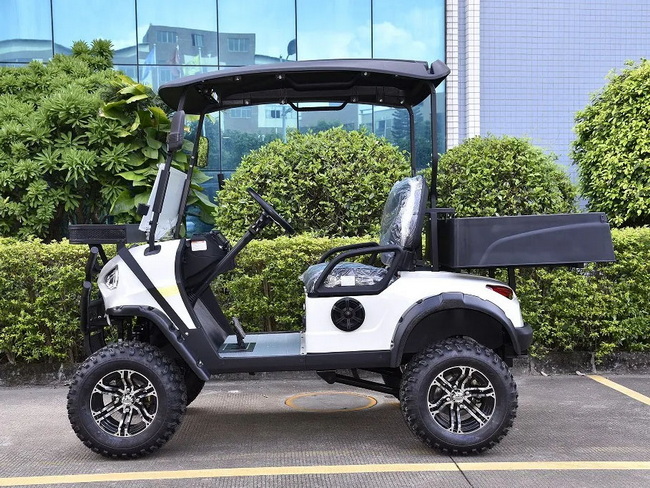
Driving a golf car uses similar steering and pedal controls, so the basic feel is familiar, but the speed, stability, and protection level are very different. A golf car is easier to handle at low speeds, yet it does not offer the crash safety of a full-size automobile and must be driven more cautiously.[1][3][7]
In many regions, a valid driver's license is required to operate a street-legal golf car or LSV on public roads. On private property or golf courses, rules are set by the owner or management, but age limits and safety guidelines often still apply.[8][6]
Golf cars are not designed for highways and are usually prohibited from roads with high speed limits. Even LSV-type golf cars that meet legal equipment standards are typically restricted to streets posted around 25–35 mph or less, depending on local law.[10][11][6]
Golf cars can be safe for children and older adults when operated slowly, with everyone seated properly and supervised appropriately. The driver must avoid sharp turns, sudden stops, and distractions, and should always follow local rules for passenger age, seating, and restraint use.[15][9][8]
The driving range of an electric golf car depends on battery capacity, load, terrain, and driving style, but many standard golf cars can cover a typical 18-hole round plus additional short trips on one charge. Fleet and utility golf cars with larger battery packs or efficient driving patterns can often last through a full workday before needing to be recharged.[14][2]
[1](https://destingolfcartbikerentals.com/blogs/how-difficult-is-it-to-drive-a-street-legal-golf-cart)
[2](https://guildgolfcarts.com/is-driving-a-golf-cart-like-driving-a-car/)
[3](https://taraelectricvehicles.com/blog/2025/06/30/is-driving-a-golf-cart-like-driving-a-car-key-differences-and-similarities/)
[4](https://jsgolfcarts.com/blog/are-golf-carts-easy-to-drive/)
[5](https://www.glennsgolfcar.com/blog/golf-cart-vs-car-which-one-is-right-for-you)
[6](https://www.gregorypoolelift.com/blog/what-is-the-difference-between-low-speed-vehicle-and-a-golf-cart/)
[7](https://www.golfcartattorney.com/the-key-differences-between-golf-cart-and-car-accident-cases/)
[8](https://amtrustfinancial.com/getmedia/32675e10-b562-4dbd-8da9-086b1fd34a90/Golf_Cart_Safety_Fundamentals.pdf)
[9](https://www.statefarm.com/simple-insights/auto-and-vehicles/golf-cart-safety-tips)
[10](https://evtitan.com/golf-cart-laws-regulations-state-by-state-guide/)
[11](https://1800lionlaw.com/laws-for-driving-golf-carts-on-roads-in-the-us/)
[12](https://golfcartresource.com/washington-golf-cart-low-speed-vehicle-laws/)
[13](https://www.wlu.edu/campus-life/safety-and-security/university-driver-training/powered-carts-motorized-vehicles-and-low-speed-vehicle-safety-program-(golf-carts))
[14](https://www.gemcar.com/low-speed-vehicles/)
[15](http://www.golfcartsafety.com/safety-fundamentals)
[16](https://303cartbarn.com/what-is-an-lsv-understanding-low-speed-vehicles/)


