


Views: 222 Author: Leah Publish Time: 2025-12-29 Origin: Site


Content Menu
● Understanding UK Rules for a Golf Buggy
● Step 1: Decide the Role of Your Golf Buggy
● Step 2: Technical Requirements for Road Use
>> Lights, Indicators, and Visibility
● Step 3: Type Approval or Individual Approval
● Step 4: VIN, Registration, and Number Plates
● Step 5: Tax, Insurance, and Ongoing Testing
● Step 6: Where a Road-Legal Golf Buggy Can Drive
● Driver Licensing and Age Requirements
● Practical Tips to Convert a Golf Buggy
● Enhancing Safety for On-Road Golf Buggy Use
● Is Conversion or Factory Road-Legal Better?
● Using a Golf Buggy in Resorts, Parks, and Private Estates
● Environmental Benefits of an Electric Golf Buggy
● FAQ
>> 1. Can any golf buggy be made road legal in the UK?
>> 2. Do road-legal golf buggies need insurance and tax?
>> 3. Can a golf buggy drive on UK motorways?
>> 4. Do I need a car licence to drive a road-legal golf buggy?
>> 5. Is it easier to buy a factory road-legal golf buggy than convert one?
Using a golf buggy on UK public roads is possible, but it requires meeting strict technical standards, passing approval, and completing full registration, insurance, and tax just like any other motor vehicle. Golf buggy owners must treat the process as a complete vehicle compliance project rather than a casual modification if they want to drive legally and safely among other road users.
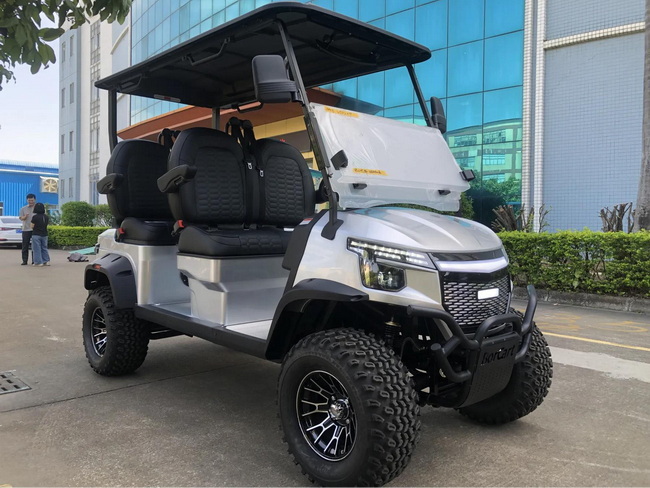
Golf buggies are usually designed for private land and leisure use, so in standard form they do not meet UK road-vehicle construction rules. To be used on public roads, a golf buggy must be reclassified into an appropriate light vehicle category and comply with Department for Transport standards.
A compliant golf buggy is generally treated as a light utility or quadricycle-type vehicle once modified, not as a toy or simple course vehicle. This means it becomes subject to normal obligations such as registration, insurance, and roadworthiness rules. Many owners are surprised to learn that a road-ready golf buggy is legally very close to a small city car in terms of paperwork and obligations.
The UK classifies vehicles by construction and intended use, and an unmodified golf buggy is considered off-road equipment rather than a road vehicle. When built or converted for road use, it must fit a defined category such as a light quadricycle-type vehicle and be approved accordingly.
Some specialist models are sold already as road-legal golf buggy products that comply with low-speed quadricycle or similar categories and can be driven on certain public roads. These factory-built road-legal options can avoid much of the individual testing burden faced by conversions. For foreign OEMs and manufacturers, designing a golf buggy platform from the start to meet these categories can be a strong market advantage.
Before investing in changes, clarify how and where the golf buggy will be driven on UK roads. Many owners only need a short connection between home, caravan park, or holiday park and a golf course along low-speed local streets. Others may want to operate a golf buggy within private resorts that connect to public roads, or use the golf buggy as a utility vehicle in tourist areas.
If your aim is only to move around a golf course, resort, or industrial site, keeping the golf buggy as an off-road vehicle may be simpler and cheaper. However, if you plan for any regular use on public roads, the golf buggy must be treated as a fully road-going vehicle. Using a golf buggy on pavements and to cross roads can sometimes be achieved by classifying a specialist model as a mobility-type vehicle, but that is only possible if it meets strict speed and design limits and is marketed for that use. Standard golf course buggies do not automatically qualify as mobility scooters and cannot be treated as such purely by choice.
To make a golf buggy road legal in the UK, it must be upgraded to meet fundamental safety and construction standards. These typically include braking, lighting, tyres, mirrors, structural features, and additional equipment for mixed-traffic use. Converters must look at the golf buggy not as a simple cart but as a light car that happens to be open and low-speed.
A road-legal golf buggy needs efficient service brakes on all wheels plus a reliable parking brake that holds the vehicle on an incline. The braking system should be capable of repeated stops without fade and must meet performance levels referenced in UK Construction and Use Regulations. Hydraulic systems or well-engineered mechanical brakes are often required for consistent performance.
Suspension and steering need to provide predictable handling at the design speed so the golf buggy remains stable on tarmac rather than only on manicured fairways. Poor stability, excessive body roll, or weak steering geometry can prevent the vehicle from passing approval tests. Many OEM-grade golf buggy platforms use independent suspension, stronger steering linkages, and lower centres of gravity to improve stability on road surfaces.
A golf buggy intended for public roads requires proper front and rear position lamps, brake lights, indicators, and a rear registration-plate lamp. Many course-only golf buggy models lack these features or only have basic lighting that does not comply with road standards in terms of brightness, colour, and mounting height.
Adequate rear-view mirrors on both sides are required to give a clear view behind, and a central mirror may also be fitted if the design allows. Adding a windscreen, wiper, and washer is strongly recommended and may be required for certain categories, especially if the golf buggy will be used in poor weather or at night. Some road-legal golf buggy designs also include hazard warning lights and high-mounted rear lights for extra visibility in traffic.
Standard turf tyres designed only for grass rarely meet the tread and speed-rating requirements for road use. To make a golf buggy road legal, these must be replaced with road-legal tyres of appropriate load index and speed specification, matched to the weight and top speed of the golf buggy. Using approved tyres improves braking distances and grip on wet tarmac.
Other basic equipment such as a horn, reflectors, and possibly a reverse warning sound is also expected on a road-going golf buggy. Any accessories must be fitted securely so they do not detach during normal driving on rougher urban surfaces. Mudguards, wheel coverings, and safe battery enclosures are also important so that the golf buggy does not throw debris or expose live components on the road.
In the UK, a golf buggy requires some form of approval to confirm it meets safety and environmental standards before registration. The approval process checks whether the golf buggy, as built or converted, matches the category under which it will be registered.
For series-produced road-legal golf buggy models, the manufacturer usually obtains type approval for the design, and buyers simply register each unit using that certification. For one-off conversions, an Individual Vehicle Approval (IVA) test or similar inspection route is typically required. The IVA inspector examines brakes, lights, mirrors, projections, and often documentation regarding components.
Passing approval involves demonstrating braking performance, lighting compliance, structural soundness, and, where applicable, emissions standards for petrol or diesel golf buggy models. Electric golf buggy versions avoid tailpipe emissions tests but must still satisfy all construction and safety requirements, including high-voltage safety where applicable. For a manufacturer, designing a golf buggy platform specifically to meet IVA or type approval from the beginning can greatly streamline international sales.
Every road-legal golf buggy must have a Vehicle Identification Number (VIN) that uniquely identifies the frame or chassis. If the original golf buggy does not carry an acceptable VIN, it is possible to apply for a DVLA-issued number and affix it in a permanent, tamper-resistant way on the chassis.
The DVLA typically requires a completed registration form for a new or used golf buggy, alongside proof of identity, proof of purchase, and the approval certificate. The more clearly the golf buggy's origin and specification are documented, the smoother the registration process tends to be.
Once DVLA registration is successful, the golf buggy receives a UK registration mark and can display front and rear number plates like other vehicles. At that point, the converted golf buggy is officially recognised as a road vehicle, and the owner must keep address and keeper details up to date.

A road-legal golf buggy must be taxed in the correct vehicle tax class, which depends on how it has been approved and classified. Electric golf buggy models often enjoy lower or zero-rated vehicle excise duty, but this does not remove the need to register and tax the vehicle in the system.
Specialist motor insurance is essential, and many UK golf facilities already require liability cover for golf buggy use on their premises. For on-road use, a policy must at minimum satisfy compulsory third-party insurance requirements and should explicitly state that the vehicle is a road-legal golf buggy. Over time, a registered golf buggy may also become subject to periodic MOT testing once it reaches the relevant age threshold for its category, so keeping service records and maintenance logs is valuable.
Even when fully road legal, a golf buggy remains a low-speed vehicle and is likely to be restricted from faster roads. Local limitations or national rules can prohibit use on motorways and some high-speed dual carriageways where minimum performance levels are expected. Operators should always check local signage and conditions before planning routes.
A road-legal golf buggy is best suited to short trips on local roads with lower speed limits, such as 20 mph or 30 mph residential streets around golf clubs, parks, or resorts. Drivers must obey all normal Highway Code rules, including speed limits, give-way signs, and pedestrian priority. Some areas such as private estates or gated communities may have additional internal rules for golf buggy operation.
Some pavement-capable mobility-type golf buggy models can legally use pavements at low speeds and roads only in limited circumstances where no pavement exists or to cross between pavements. Those models are not allowed simply to travel along carriageways among cars at general traffic speeds, and they are generally quite different from performance-oriented golf buggy designs.
The licence needed to drive a road-legal golf buggy depends on its approved category and maximum design speed. Certain light quadricycle and low-power vehicle categories can be driven with lower-tier licences, but only when the golf buggy remains within weight and speed limits. If the vehicle exceeds those limits, a standard category B car licence is typically required.
Age also matters when operating a road-legal golf buggy on public roads. Younger drivers might be allowed to drive certain light quadricycles under specific conditions, but parents and operators must ensure the licence entitlements actually cover the exact category and configuration of the golf buggy. Allowing an unlicensed person to drive a road-legal golf buggy in public can lead to penalties and insurance problems.
Converting an existing golf buggy rather than buying a factory road-legal model can be done, but it requires careful planning and specialist support. Owners should anticipate costs for upgrades, testing, and documentation that can exceed the initial purchase price of a basic course buggy. In many cases, using OEM-quality components and professional wiring is more cost-effective than experimenting with improvised parts.
Working with a manufacturer or conversion specialist that already produces road-legal golf buggy or light electric vehicle models often makes the process smoother. Such partners understand which lighting, braking, and control components are likely to pass approval, and they can design harnesses and mounting brackets specifically for the golf buggy chassis. For overseas manufacturers targeting the UK, offering a “road-legal specification” golf buggy package with pre-approved parts can be a strong selling point for importers and wholesalers.
Even after meeting minimum legal standards, extra safety features can make a road-legal golf buggy more visible and robust in mixed traffic. Features such as high-visibility paint, reflective strips, daytime running lamps, and flags can help other drivers see the golf buggy sooner, especially in poor light. A well-designed seat-belt system can also improve occupant safety if the golf buggy is involved in a collision.
Many golf clubs already emphasise safe operation of buggies on their own access roads, requiring drivers to follow rules of the road and to avoid interfering with pedestrians or other vehicles. Carrying those habits onto public streets helps reduce collision risk when using a road-legal golf buggy beyond the course. Simple steps such as signalling early, avoiding sudden manoeuvres, and not overloading the golf buggy can significantly improve safety for passengers and other road users.
Several recurring mistakes can delay or prevent successful registration of a road-legal golf buggy. One common error is fitting non-approved lighting or mixing incompatible bulbs and lenses, which can fail inspection even if they seem bright enough in casual use. Another issue is ignoring weight distribution and stability, leading to a golf buggy that feels fine at 10 mph on grass but becomes unstable at 25 mph on tarmac.
Neglecting documentation is another major problem in the road-legal golf buggy journey. Owners sometimes forget to keep receipts, spec sheets, or test reports for critical components, making it hard to prove compliance during approval. Planning the project like a professional build, with folders for paperwork and clear photos of each step, gives inspectors confidence that the golf buggy has been prepared properly.
Choosing between converting an existing golf buggy and purchasing a factory road-legal golf buggy depends on goals, budget, and technical capability. Conversion might be attractive if you already own a high-quality electric golf buggy with a strong chassis and want to keep its character. However, if the original golf buggy is old, rusted, or built only for gentle course use, conversion could become an expensive and uncertain project.
Factory road-legal golf buggy models are designed from day one to meet regulations, which means they usually include compliant brakes, tested lighting, and documented wiring layouts. Importers and brand owners can work with established manufacturers to private-label such road-legal golf buggy platforms under their own brand while keeping approval documentation intact. For many business buyers, this route offers lower risk and faster access to the UK market.
In some resorts, holiday parks, and private estates, management may allow limited golf buggy use on shared or internal roads. Even when those areas are not strictly public highways, operators often follow UK road standards to protect visitors and reduce liability. A road-legal golf buggy is usually more welcome in such environments because it shows that the vehicle meets recognised safety standards.
Estate managers and golf club owners sometimes develop fleets of branded golf buggies for guest transport, luggage movement, and maintenance tasks. Choosing a road-legal golf buggy platform gives them flexibility to cross public roads or connect multiple sites without changing vehicles. Manufacturers who specialise in electric golf buggy and low-speed vehicle production can tailor seating layouts, cargo beds, and weather protection to suit resort operations while still preserving compliance.
Electric golf buggy models offer clear environmental benefits compared with small petrol vehicles. They produce zero tailpipe emissions at the point of use and can be charged using low-carbon electricity where available. For short urban or resort trips, a road-legal electric golf buggy can reduce noise and local air pollution while still providing practical mobility.
Battery technology also makes the modern golf buggy more attractive for mixed-use environments. With sufficient capacity and smart charging, a road-legal electric golf buggy can complete multiple short journeys per day without strain. Manufacturers and fleet operators can optimise battery packs and charging infrastructure to balance range, cost, and lifetime, helping the golf buggy become a sustainable part of local transport.
Making a golf buggy road legal in the UK involves treating it as a fully fledged low-speed vehicle rather than leisure equipment, which means upgrading construction and safety features to meet official standards. Once the golf buggy passes approval, carries a VIN, is registered, taxed, insured, and operated by a correctly licensed driver on suitable roads, it can offer a practical, low-emission way to travel between home, course, resort, and nearby destinations. For manufacturers, importers, and fleet owners, planning a golf buggy platform specifically for road legality from the outset opens new opportunities in tourism, urban mobility, and last-mile transport.
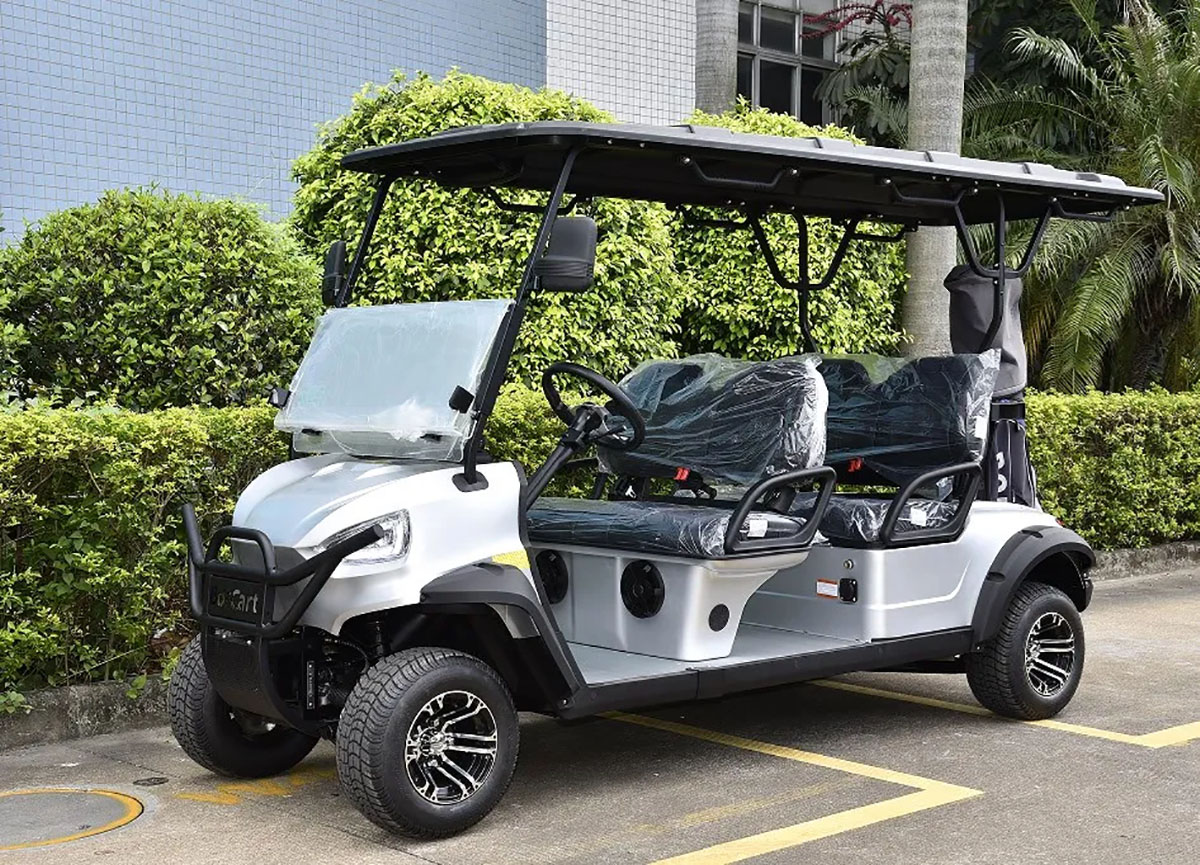
Not every golf buggy is an ideal candidate for road conversion, because some frames, brakes, or suspension systems are too light or basic to meet road-vehicle standards. A professional assessment is important to decide whether upgrading a specific golf buggy is realistic or whether a factory-built road-legal model with documented compliance is a better choice.
Yes, a road-legal golf buggy must be properly insured and taxed like other registered vehicles in the UK. Even if the golf buggy is used only for short local trips, it still shares space with other traffic, so third-party insurance and correct tax class registration are essential.
A golf buggy is a low-speed vehicle and is not suitable for motorway conditions, where minimum practical speeds and high-speed traffic apply. In practice, a road-legal golf buggy should be restricted to local streets and lower-speed routes near courses, parks, residential areas, or resorts where its speed and size fit naturally.
The licence requirement depends on the approved category and design speed of the golf buggy, so some light quadricycle-type models may be driven with lower-tier entitlements. However, heavier or faster configurations will usually require a full category B car licence, and owners should always confirm the correct licence with official guidance before driving.
Buying a golf buggy that is already designed and approved for road use is often simpler because it comes with type approval, compliant components, and clear documentation. Converting an existing golf buggy can work, but arranging modifications, inspections, and registration usually takes more time, requires expert input, and may cost more than purchasing a purpose-built road-legal golf buggy.


