


Views: 222 Author: Leah Publish Time: 2026-01-22 Origin: Site


Content Menu
● Understanding Golf Buggy Speed
● Legal and Safety Limits for a Faster Golf Buggy
● Core Performance Upgrades for a Faster Golf Buggy
>> Electric golf buggy upgrades
● Wheels, Tires, Gearing, and Aerodynamics
>> Wheels, tires, and gear ratios
>> Aerodynamics and weight reduction
● Balancing Speed and Torque in a Golf Buggy
● Maintenance for Sustained Golf Buggy Speed
● Safety Tips for a Faster Golf Buggy
● OEM, Branding, and Product Positioning for Faster Golf Buggies
● FAQ
>> 1. How fast can a golf buggy safely go?
>> 2. What is the cheapest way to make a golf buggy faster?
>> 3. Do lithium batteries really make a golf buggy faster?
>> 4. Is it safe to change the gear ratio on a golf buggy?
>> 5. Will making a golf buggy faster void the warranty?
This in‑depth guide explains how to make a golf buggy faster by upgrading motors, controllers, batteries, tires, and gearing while staying safe and legal. Learn practical tuning ideas, maintenance tips, and content strategies for high‑performance golf buggy builds.
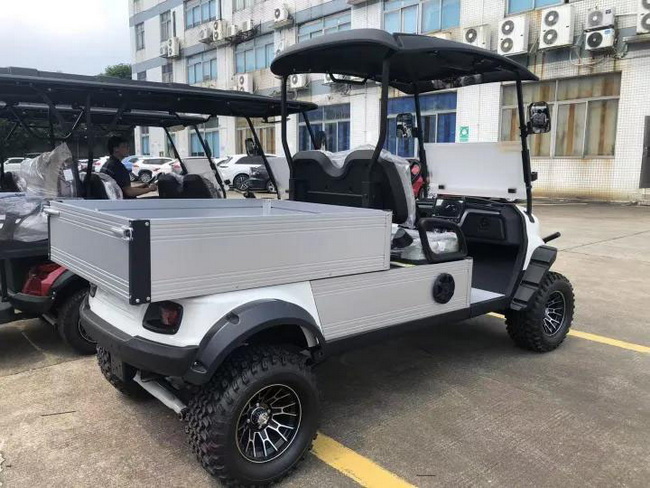
A standard electric golf buggy is usually designed to cruise at about 15 mph on flat ground, which is adequate for most golf courses and resorts. Many communities and golf facilities allow golf buggy models configured up to about 20–25 mph, provided they meet safety and usage rules.
Key baseline facts about golf buggy speed:
- Most stock golf buggy models run roughly 15–19 mph from the factory.
- Street‑oriented golf buggy setups often target 20–25 mph to match neighborhood traffic while remaining in a low‑speed vehicle category.
- Pushing a golf buggy much beyond 25 mph usually requires extensive upgrades and may change its legal classification in some regions.
Speed is always a trade‑off. When a golf buggy goes faster, stress on the frame, suspension, brakes, steering, and tires all increase. Before chasing top speed, it is important to decide whether the priority is hill‑climbing torque, flat‑ground speed, or a balanced setup that works for both.
Before modifying any golf buggy for more speed, owners should understand local regulations and the physical limits of the chassis. Many jurisdictions cap golf buggy or neighborhood electric vehicle speeds at 20–25 mph on public roads, and they often restrict use to streets posted 25–35 mph or lower.
Typical legal and safety considerations for a faster golf buggy:
- Top speed limits: In many areas, a golf buggy at or above about 20–25 mph must meet low‑speed vehicle rules, including lighting, mirrors, and sometimes registration and insurance.
- Usage zones: A golf buggy may only be allowed on golf courses, gated communities, resorts, or low‑speed residential streets, not on high‑speed roads designed for full‑size vehicles.
- Safety equipment: As speed increases, headlamps, brake lights, turn signals, reflectors, mirrors, and sometimes seat belts become strongly recommended or legally required.
- Handling and stability: Higher cornering loads and braking distances make rollover risk and loss of control more likely if a golf buggy suspension, tires, and steering remain stock.
A sensible approach is to define a safe, legal target speed first (for example, 22–24 mph), then plan golf buggy upgrades around that goal instead of chasing extreme performance numbers.
The heart of making a golf buggy faster lies in the powertrain and energy system. For electric golf buggy models, that means the motor, controller, batteries, cables, and drivetrain. For gas‑powered designs, that means the engine tune, clutch, gearing, and exhaust.
Several well‑proven changes can noticeably increase speed and responsiveness in an electric golf buggy:
- High‑performance motor: Replacing the stock motor with a higher‑power unit can significantly increase top speed and torque, especially when paired with a matched controller.
- Upgraded controller: The speed controller regulates current and voltage to the motor; raising its capability and adjusting its programming can deliver higher speed and stronger acceleration.
- Higher‑voltage battery system: Moving from 36 V to 48 V or similar, using compatible components, can unlock more power and raise the golf buggy's speed potential.
- Lithium battery conversion: Lithium packs weigh far less than comparable lead‑acid batteries, often reducing total weight by 200–300 lb, which improves both acceleration and top speed in a golf buggy.
- Heavy‑duty cables and connectors: As power levels rise, proper high‑current cabling and clean connections are necessary to reduce loss and prevent overheating in a fast golf buggy.
With a carefully matched motor and controller, a well‑set‑up electric golf buggy can realistically reach 20–24 mph for many use cases while remaining reliable when maintained properly.
Gas‑powered golf buggy models use a different set of tools to gain speed:
- Performance clutch: An aftermarket clutch can optimize the torque‑to‑horsepower transfer, improving both acceleration and top‑end speed.
- Tune‑up and carburetion: Adjusting carburetor settings, ensuring proper ignition timing, and replacing worn plugs and filters can restore or enhance speed in a gas golf buggy.
- Exhaust and intake: Freer‑flowing intake and exhaust systems can help the engine breathe better, improving power at higher rpm for a sportier golf buggy feel.
In either configuration, correct matching of components is essential so that every system in the golf buggy works together instead of fighting against the new speed goal.

Beyond raw power, several “multiplier” upgrades can make a golf buggy feel much faster by reducing drag and optimizing how power reaches the ground.
- Taller tires: Larger‑diameter tires cover more distance per rotation, which can raise top speed in a lifted golf buggy when the motor has enough torque to pull them.
- Tire type and pressure: Low‑rolling‑resistance tires and correct pressure reduce drag, allowing a golf buggy to maintain higher speeds with less energy.
- Gear ratio changes: Adjusting differential or axle gear ratios can trade some torque for higher top speed on flat ground, or trade some speed for better hill‑climbing golf buggy performance.
A balanced configuration usually combines moderate tire size, suitable gear ratios, and adequate motor torque to maintain the target speed without straining the golf buggy's driveline.
Wind resistance increases rapidly with speed, so streamlining and weight control matter once a golf buggy moves beyond golf‑course pace.
- Weight reduction: Removing unnecessary accessories, heavy onboard tools, or old batteries can make a golf buggy lighter, improving acceleration and helping it reach a higher top speed.
- Aerodynamic tweaks: Subtle changes like smoother body panels, a tidy windshield angle, and minimized protruding racks can reduce drag and help a golf buggy maintain speed more easily.
Weight reduction is one of the least expensive and most effective steps for nearly any performance‑oriented golf buggy build, and it works well in combination with motor and controller upgrades.
Every faster golf buggy must balance two competing goals: more speed and enough torque. Speed focuses on how fast a golf buggy can move on flat ground, while torque determines how well it launches, climbs hills, or carries heavy loads.
Important points about the speed‑torque balance:
- High‑speed motors typically trade some low‑end torque for more top‑end rpm, which suits a golf buggy that runs mainly on flat streets or fairways.
- High‑torque motors sacrifice some maximum speed but make a golf buggy much stronger on hills, rough terrain, and when towing or carrying several passengers.
- Tire size, total weight, and gear ratio all influence whether a golf buggy feels lively at low speed or relaxed at higher speed.
When owners want both brisk acceleration and higher top speed, the solution is usually a matched package: an upgraded motor, controller, battery voltage, and drivetrain, tailored to the terrain where the golf buggy spends most of its time.
Many owners overlook basic maintenance, yet a well‑maintained golf buggy often runs noticeably faster and more consistently than a neglected one.
Essential maintenance points for a faster golf buggy:
- Battery care: Proper charging routines, clean terminals, and periodic checks for weak cells help preserve voltage and power delivery for an electric golf buggy.
- Brake inspection: Dragging brakes or misadjusted parking mechanisms can quietly rob speed and range from a golf buggy.
- Lubrication and bearings: Fresh grease and healthy wheel bearings reduce friction so the golf buggy rolls more freely at higher speeds.
- Suspension and alignment: Correct toe settings and healthy bushings prevent scrub and vibration, allowing a golf buggy to track straight at elevated speeds.
- Electrical checks: Loose lugs, corroded connections, and undersized wires create voltage drop that slows an electric golf buggy and generate heat that can damage components.
Good maintenance provides the foundation that allows every other performance upgrade to work properly. Without it, a golf buggy may feel inconsistent, slow, or unreliable, no matter how powerful the motor or controller may be.
As a golf buggy becomes faster, safe operation becomes more important. Higher speed multiplies kinetic energy, so mistakes have greater consequences.
Key safety habits for a tuned golf buggy:
- Respect stopping distances: A faster golf buggy needs more distance to stop, especially on wet grass, loose gravel, or steep slopes.
- Keep speeds appropriate: Slow down in crowds, near tee boxes, in parking areas, and in tight resort lanes, even if the golf buggy can go much faster.
- Avoid sharp turns at speed: Sudden steering inputs can cause loss of grip or rollover, particularly in lifted golf buggy builds with a higher center of gravity.
- Use restraints where available: Seat belts, handholds, and secure seating positions reduce the risk of occupants being thrown from a fast‑moving golf buggy.
- Inspect regularly: Before any high‑speed run, check tires, brakes, steering play, and suspension components so the golf buggy remains predictable.
Treat a tuned golf buggy with the same respect as a small road vehicle, especially when carrying passengers, children, or valuable equipment.
For manufacturers and OEM suppliers, performance content about a fast golf buggy is not only educational; it is also a powerful branding tool. Readers want to see that a supplier understands both speed and safety.
Ways to highlight OEM capabilities around golf buggy performance:
- Show platform versatility: Explain how the same core chassis can support different golf buggy configurations, from standard course use to lifted hunting vehicles and resort shuttles.
- Emphasize engineering depth: Describe testing for motors, controllers, and braking systems that ensures every faster golf buggy remains stable, durable, and quiet.
- Offer tailored packages: Present pre‑engineered performance kits for specific markets, such as a hill‑climbing golf buggy, a neighborhood cruiser golf buggy, or a commercial shuttle golf buggy.
- Highlight global quality: For export‑focused manufacturers, stress international standards, quality checks, and compatibility with regional regulations in key markets.
Strong technical explanations, combined with clear visuals and case studies, position a brand as a knowledgeable partner for distributors who want reliable, faster golf buggy solutions.
Making a golf buggy faster is a structured engineering task, not just a single bolt‑on trick. Owners should first clarify their desired top speed and use case, then combine upgrades to the motor, controller, batteries, tires, gearing, and aerodynamics while respecting local speed and safety regulations. With solid maintenance, smart safety practices, and carefully matched components, a modern golf buggy can move from basic course transport to a versatile, faster low‑speed vehicle that still feels stable, safe, and enjoyable to drive.
Contact us to get more information!
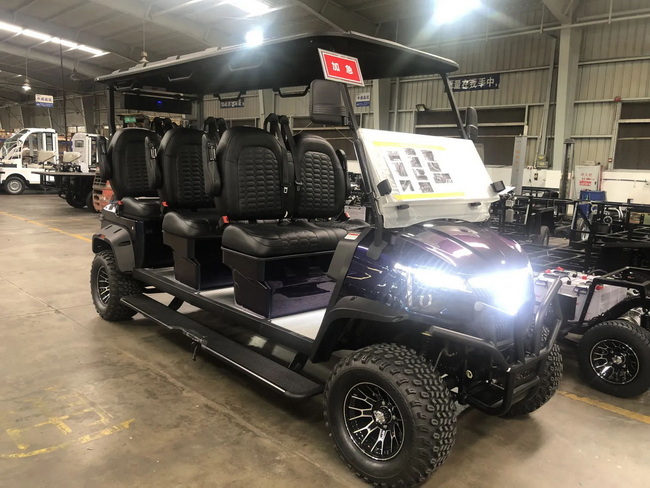
Most standard golf buggy designs are intended to operate around 15 mph, but upgraded configurations can typically reach about 20–25 mph while staying within common legal and safety guidelines. Exceeding those speeds tends to require specialized components and may push the golf buggy into a different regulatory category, with stricter requirements for safety equipment and registration.
The lowest‑cost gains usually come from basic maintenance, weight reduction, and tire optimization in an existing golf buggy. Properly inflated, low‑resistance tires, clean electrical connections, and removal of unnecessary cargo or accessories can often free several mph without major new hardware.
Lithium batteries are significantly lighter than traditional lead‑acid packs and can deliver power more consistently, which helps a golf buggy accelerate harder and maintain speed more easily. A lithium conversion can cut substantial weight from the golf buggy, increasing both speed and range when paired with a suitable motor and controller.
Changing gear ratios can safely improve top speed or torque when the rest of the golf buggy is prepared for the new loads. However, gear changes that demand too much torque at low speed or raise rpm too high can strain the motor, controller, or engine, so most owners should plan gear work with professional guidance and appropriate testing.
Many manufacturers limit warranties if the golf buggy is modified beyond factory specifications, especially in ways that increase speed or power. Before upgrading motors, controllers, or batteries, owners should review warranty terms and consider whether a golf buggy‑specific performance package supplied or approved by the brand can protect coverage.
1. https://www.kandiamerica.com/electric-golf-cart-speed-tips/
2. https://blog.buggiesunlimited.com/how-to-make-your-golf-cart-faster/
3. https://www.golfcarttiresupply.com/blog/how-to-make-a-club-car-faster/
4. https://taraelectricvehicles.com/blog/2025/05/26/understanding-golf-cart-top-speed-regulations-and-safety/
5. https://spacecoastcartrentals.com/a-guide-to-street-legal-golf-cart-laws-and-regulations/
6. https://evtitan.com/boosting-the-speed-and-performance-of-your-electric-golf-cart-what-you-should-know/
7. https://wheelzllc.com/blogs/golf-cart-news/48131713-how-can-i-get-my-golf-cart-to-have-more-speed


