


Views: 222 Author: Leah Publish Time: 2025-12-28 Origin: Site


Content Menu
● Why the Year of Your Club Car Golf Car Matters
● Quick Overview: How to Find the Year
● Where to Find the Serial Number on a Club Car Golf Car
>> Serial Number Location on DS Golf Cars
>> Serial Number Location on Precedent, Tempo, and Onward Golf Cars
>> Serial Number Location on Older Caroche and Early Models
● How to Decode a Club Car Golf Car Serial Number
>> Standard Serial Pattern for Modern Golf Cars
>> Decoding 1970s Caroche Serial Ranges
● Using Model Appearance to Support Year Identification
>> DS Versus Precedent Golf Car Styling
>> Tempo and Onward Design Characteristics
● Step‑by‑Step Guide to Finding the Year of a Club Car Golf Car
>> Step 1: Verify the Brand and Model Line
>> Step 2: Locate the Serial Number Label or Tag
>> Step 3: Decode the Serial Number Structure
>> Step 4: Consult Online Lookup Tools and Charts
>> Step 5: Use Visual and Structural Clues When Labels Are Missing
● Common Mistakes When Identifying the Year of a Club Car Golf Car
>> Confusing Registration Year with Build Year
>> Judging Only by Cosmetic Upgrades
>> Reading Engine Codes Instead of Vehicle Serial
● When to Contact a Dealer or OEM Partner
● FAQ
>> 1. How can I quickly tell what year my Club Car golf car is?
>> 2. My Club Car golf car has a faded label. What should I do?
>> 3. Is the serial number format the same for gas and electric Club Car golf cars?
>> 4. Can the body style alone tell me the year of my Club Car golf car?
>> 5. Why do parts suppliers always ask for the serial when I order for my Club Car golf car?
Knowing the correct year of a Club Car golf car is essential for sourcing compatible parts, planning upgrades, and accurately valuing the vehicle in the global market for electric golf cars and low‑speed vehicles. The year is usually encoded in the serial number, but body style, frame details, and historical model timelines also provide valuable backup clues when labels are missing or modified.[1]
The exact year of a Club Car golf car determines which controllers, chargers, body panels, steering components, and suspension parts will fit without modification. When ordering OEM or aftermarket components for fleets of golf cars, especially for export or commercial use, having the correct year avoids costly returns, downtime, and safety risks.[1]
For operators of resorts, golf courses, communities, and industrial facilities, the year of each Club Car golf car also guides maintenance intervals, recall eligibility, and upgrade paths such as lithium battery conversions or road‑legal lighting kits. On the resale side, buyers expect accurate information, so the right year improves trust, pricing, and overall marketability of a golf car.[2][3]
Most Club Car golf cars built after 1981 display a serial number on a sticker or metal tag, and the year is encoded in the first digits after the model letters. For older Caroche‑era golf cars from the 1970s, the year can be identified by comparing serial ranges and confirming visual cues such as pedal layout and frame style.[4][1]
In practice, the process to find the year of a Club Car golf car looks like this.[5]
- Locate the serial number sticker or tag on the golf car frame or dash.
- Decode the characters: letters indicate model type, numbers indicate year and build week.
- Cross‑check with model‑year charts and visual features like cowl shape and roof supports.
When labels are damaged or missing, owners look more closely at body style, frame construction, and historical changes between DS, Precedent, Tempo, and Onward golf cars to estimate the year range.[3]
The serial number is the primary identifier for the year, model, and configuration of a Club Car golf car. Different generations and model lines place this serial in slightly different locations, but in most consumer golf cars it remains on a readily accessible section of the dash or frame.[6][1]
On Club Car DS golf cars produced from 1981 onward, the serial number decal is most commonly found on the frame just below or behind the passenger‑side glove box. Some DS golf cars may also display the label above the accelerator pedal on the frame rail, visible when looking up under the dash of the golf car.[6][1]
The DS golf car serial is typically a printed decal with both human‑readable digits and a barcode, attached to a painted metal surface that may accumulate dirt over years of use on golf courses or industrial sites. Carefully cleaning this area with a mild cleaner or dry cloth helps expose the full serial number of the golf car without damaging the label.[7][5]
On newer Precedent, Tempo, and Onward golf cars, the serial number has been relocated higher up into the dash area. Owners should look under or behind the passenger‑side cup holder or dash insert, where a white or silver label shows the serial of the golf car along with a barcode.[6]
In many Precedent‑style golf cars used in commercial fleets, this label remains visible when the dash panel is slightly lifted or when the passenger‑side storage pocket is removed. Because Precedent, Tempo, and Onward golf cars are often upgraded with accessories like storage consoles and audio systems, owners may need to move aftermarket components aside to see the factory serial label.[8][3]
For 1970s Caroche‑era Club Car golf cars and certain early models, the serial number is stamped on or attached to the frame under the seat. Typically, the tag sits on the driver‑side I‑beam near the battery tray, visible when lifting the seat and looking down into the chassis of the golf car.[9][4]
On these classic golf cars, the plate may be worn or corroded, so reading the serial may require gentle cleaning and strong lighting. If the tag is missing entirely, owners must rely on serial charts, frame design, and pedal configuration to approximate the year of the golf car instead of retrieving an exact build date.[4][9]
After finding the serial, the next step is converting its letters and numbers into a clear model and year for the golf car. Club Car uses a structured pattern where initial letters describe model family and subsequent digits describe the production year and week of the golf car.[5][9]
For most modern Club Car golf cars, the serial number follows a structure similar to: XXYYWW‑XXXXXX.[5]
- First two letters (XX): Model code indicating type of golf car (for example, DS electric, DS gas, Precedent, Tempo, or Onward).[5]
- Next two digits (YY): Model year of the golf car (for example, 13 = 2013, 22 = 2022).[9]
- Next two digits (WW): Production week within that calendar year.[6]
- Last six digits: Sequential production number for that golf car on the assembly line.[5]
For example, a serial such as PH2225‑987654 on a Club Car golf car would decode as follows.[9]
- “PH” = Precedent‑series electric golf car.
- “22” = built in year 2022.
- “25” = built during the 25th week of the year.
This structure gives both the exact year and approximate build date within that year, which is particularly helpful when a golf car model receives mid‑year changes in controllers, motors, or wiring.[5]
Before the standardized YYWW format, the Caroche‑era golf cars used serial ranges which correspond to individual years instead of explicit date codes. Charts available from Club Car reference documents and parts suppliers list serial intervals, such as the range for 1970, 1975, or 1979 Caroche golf cars.[9]
For instance, a Caroche golf car with a serial number in the lower range might map to around 1970, while higher serial ranges correspond with later years of the decade. Since many components for these vintage golf cars have been superseded or replaced, identifying the approximate year helps restorers and collectors choose compatible steering, brake, and body parts.[9]
While the serial number remains the most reliable reference point, body design and model appearance provide important supporting evidence for the year of a Club Car golf car. This is useful for verifying that the decoded serial makes sense for the shape and style of the golf car sitting in front of you.[2][3]
Club Car DS golf cars, introduced in the early 1980s, feature a more angular and traditional cowl with a distinct two‑piece seat back and straightforward roof posts. In contrast, Precedent golf cars, launched in 2004, display a rounded front cowl, integrated bumper, and a slightly more curved canopy and frame.[3][2]
If the serial suggests a 1995 model but the golf car clearly shows Precedent‑style bodywork, this mismatch may hint at a swapped body kit or an incorrect serial. Many custom golf car builders retrofit Precedent‑style or aftermarket cowls onto older DS golf cars, so appearance alone cannot define the year but can confirm or question the serial decoding.[10][3]
Tempo golf cars are based on the Precedent platform but often provide updated styling and technology for modern golf fleets. They may have different headlight designs, steering wheels, and dashboards while still sharing many components with earlier golf cars.[11][3]
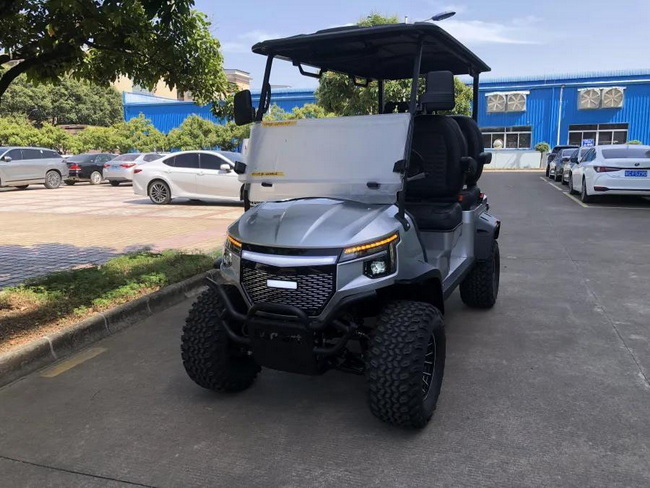
Onward golf cars focus more on lifestyle and personal transportation, frequently appearing as lifted golf cars with off‑road tires, premium seats, and enhanced lighting. Because Onward golf cars entered the market in the late 2010s, a serial indicating the early 2000s on an Onward‑styled golf car would signal either extensive customization or a misread serial.[10][11]
The following process works for individual owners, fleet managers, and international buyers who want a repeatable method to identify the year of any Club Car golf car.[1]
First, confirm that the vehicle is indeed a Club Car golf car, not another manufacturer that might share similar styling. Look for the Club Car badge on the front cowl, steering wheel, or side emblems, then visually identify the general model family such as DS, Precedent, Tempo, Onward, or a utility variant.[3][10]
This step prevents confusion when a fleet includes multiple brands of golf cars and low‑speed vehicles that may use different serial formats. It also helps in choosing the correct reference chart for decoding the serial later in the process.[2][3]
Once the brand is confirmed, systematically search the usual serial locations for that model family of golf car.[1]
- DS golf cars: Check below the passenger‑side glove box, on the frame above the accelerator, or on the lower dash crossmember.[6]
- Precedent/Tempo/Onward: Look under the passenger‑side cup holder, inside the dash recess, or near the passenger storage area.[6]
- Caroche and older: Lift the seat and inspect the I‑beam frame on the driver‑side near the batteries.[4]
If the label is dirty, use a soft cloth or gentle brush to clean around it so that all digits of the golf car serial number are readable. Avoid harsh solvents that might remove ink from older decals on vintage golf cars.[5]
With the serial fully visible, write it down exactly as shown, including letters, digits, and hyphens. Identify the first two letters to determine the model family of the golf car, such as a DS electric model or Precedent electric or gas model.[5]
Next, read the four digits that follow the letters.[6]
- The first two of these digits indicate the year (for example, 09 for 2009, 17 for 2017, 21 for 2021).[9]
- The next two digits identify the production week, which can help distinguish mid‑year design changes.[6]
The remaining six digits after the hyphen uniquely identify that specific golf car in the production run and can be useful when checking warranty or detailed build information. Comparing your decoded year with a Club Car model timeline ensures that the golf car's appearance matches its production period.[3][5]
Many parts distributors and service providers publish online tools where owners can enter their Club Car golf car serial number to receive a clear summary of the model and year. These tools often combine official data and practical field experience to interpret serials from different generations, including older DS and utility golf cars.[7][1]
If a serial seems unusual or is missing characters, entering what you can read into a lookup tool sometimes yields suggested matches or clarifications. For fleet operators managing dozens of golf cars, keeping a spreadsheet of serials and decoded years derived from these tools streamlines maintenance and bulk ordering.[12][7]
If the serial label is missing, damaged, or painted over, visual inspection becomes essential for estimating the year of the golf car. Look at the shape of the front body, the design of the roof struts, the style of the dash, and the pedal configuration, then compare these to known model‑year changes.[4][3]
For 1970s Caroche golf cars, the presence of two brake pedals and one accelerator pedal, along with an under‑seat serial tag mount, is a distinctive indicator of that era. For DS and Precedent golf cars, subtle differences in steering column, cowl lines, and rear body shape across decades provide further hints about the production period.[2][4]
Because many Club Car golf cars stay in service for long periods and often receive aftermarket upgrades, there are some common errors people make when trying to identify the year.[13]
In some regions, the registration document for a street‑legal or low‑speed golf car shows the year it was first registered rather than the year it rolled off the production line. This can be misleading if a 2012 golf car was first registered in 2015, causing owners to mislabel it as a 2015 model.[13]
For accurate parts compatibility and resale value, always rely on the serial number of the golf car rather than registration dates or local license documents. The serial reflects the manufacturing year as defined by Club Car, which is what parts catalogs and technical manuals use.[1][5]
Custom paint jobs, new seats, aftermarket cowls, and lifted suspensions can make an older Club Car golf car look much newer than it actually is. While these upgrades are popular for personal and hunting golf cars, they obscure the age of the core chassis and electrical system.[10][3]
Relying solely on the external appearance of a golf car to estimate its age can result in choosing the wrong controller, charger, or wiring harness. Always confirm the serial number before assuming a golf car is from a recent model year.[2][1]
Gasoline Club Car golf cars have engine codes stamped or stickered on the engine, but those codes may not match the chassis year, especially if the engine has been replaced. Using an engine build date to order body or suspension components can therefore lead to incorrect parts for the golf car.[14]
The official reference for model year is the vehicle serial, not the engine‑only code or component dates. This distinction is particularly important when maintaining mixed fleets of gas and electric golf cars from different eras.[13]
Sometimes, despite best efforts, the serial is unreadable or missing and visual clues only narrow the range of years rather than pinpointing a specific model year. In those cases, involving an experienced dealership or OEM manufacturing partner is the best next step.[15][4]
Technicians who regularly service Club Car golf cars often recognize small details in the frame, dash, or axle design that suggest a particular year range. Providing them with clear photographs of the golf car from multiple angles, along with any partial serial tags, helps them identify the most accurate year possible.[15][4]
For large orders of OEM parts or new electric golf cars, working directly with a supplier that understands serial structures and global market requirements ensures that components match the actual year and specification of the customer's golf car fleet. This is especially valuable for international buyers and distributors supporting golf cars in varied environments such as resorts, campuses, and industrial parks.[16]
Finding the year of a Club Car golf car starts with locating the serial number label or tag on the dash or frame, then decoding its letters and digits using standard patterns and lookup charts. For most post‑1981 DS, Precedent, Tempo, and Onward golf cars, the first two letters identify the model and the following four digits specify the year and production week, allowing owners to match parts and accessories precisely to that golf car.[1][5]
For older Caroche and early models, serial‑range tables and structural cues such as pedal configuration and frame design help narrow down the decade and approximate build year. Combining serial decoding with visual inspection and, when necessary, expert input from dealers or OEM partners gives owners, fleet operators, and distributors confidence that each Club Car golf car is described—and serviced—according to its true production year.[15][4]

The fastest way is to find the serial number sticker on the frame or dash and read the first two letters and the next four digits. Those four digits show the year and build week, so a code like 1910 means the golf car was built in 2019 during the 10th week.[1][5]
If the serial label is partially faded, clean it gently and use a flashlight to reveal as many characters as possible, then compare them against known patterns for Club Car golf cars. When only part of the serial can be read, a dealer or experienced OEM supplier may still be able to confirm the year using photos and partial codes.[15][4]
In most modern generations, both gas and electric Club Car golf cars follow the same basic serial pattern, with letters for model and digits for year and production week. The key difference is that engine codes on gas golf cars are not used to determine the official model year, so always reference the vehicle serial instead.[14][5]
Body style can suggest an era—for example, DS vs Precedent vs Onward—but it cannot guarantee the exact year because many golf cars receive aftermarket body kits. Always treat appearance as a confirmation tool, not as the primary method, and rely on the serial to determine the actual year of the golf car.[3][2]
Parts suppliers request the serial because different years of the same Club Car golf car model might use different controllers, axles, or body panels, even if they look similar from the outside. The serial ensures the parts catalog matches your exact golf car configuration, reducing returns, downtime, and compatibility problems.[7][1]
[1](https://www.golfcartgarage.com/what-year-is-my-club-car-club-car-serial-number-lookup/)
[2](https://golfcartstuff.com/pages/club-car-model-year)
[3](https://aceofcarts.com/what-year-is-my-golf-cart/)
[4](https://www.rmigolfcarts.com/blogs/news/7414130-how-to-identify-the-year-of-your-club-car-golf-cart)
[5](https://www.buggiesunlimited.com/club-car-serial.asp)
[6](https://golfcartpartsdirect.com/Form/serialnumber)
[7](https://golf-car-ranch.myshopify.com/blogs/how-to-and-best-practices/club-car-serial-number-look-up)
[8](https://www.youtube.com/watch?v=fKiRvTrgTlk)
[9](https://www.vatrerpower.com/blogs/news/complete-guide-to-determining-the-year-of-your-club-car-golf-cart-based-on-serial-numbers)
[10](https://www.golfcartgarage.com/blog/club-car-golf-cart-models-in-depth-guide/)
[11](https://countryclubcontent.com/club-car-golf-cart-models-year-by-year-guide-since-2010/)
[12](https://www.golfcarttiresupply.com/what-year-is-my-club-car-serial-number-look-up/?srsltid=AfmBOopabniahT6jUdQS8S_eJLTs6MI3mlM1IuGpg_4CcZprW6FAwAkt)
[13](https://www.partsncarts.com/faq-club-car-serial-number/)
[14](https://jsgolfcarts.com/blog/club-car-serial-number/)
[15](https://www.clubcar.com/en/resources/faq)
[16](https://www.clubcar.com/en-us/resources/faq)


