


Views: 222 Author: Leah Publish Time: 2026-02-05 Origin: Site


Content Menu
● What the Governor on a Club Car Does
● Safety, Warranty and Legal Notes
● Step‑by‑Step: Console‑Type Governor Adjustment (Club Car Gas)
● Step‑by‑Step: Throttle Rod and Cable Adjustment (Gas Club Car DS / Precedent)
>> Locating the Throttle Rod and Governor Cable
>> Adjusting for Slightly More Speed
● Electric Club Car Speed Control (Non‑Mechanical Governor)
● Pros and Cons of Adjusting a Club Car Governor
● FAQ About Club Car Golf Car Governors
>> 1. How much faster can my Club Car golf car go after a governor adjustment?
>> 2. Is it legal to remove the governor from my Club Car golf car?
>> 3. Will adjusting the governor void my golf car warranty?
>> 4. Are there safer alternatives to governor adjustment for more performance?
>> 5. Should I adjust the governor myself or hire a professional?
Adjusting the governor on a Club Car golf car can increase top speed, but it must be done carefully to avoid safety risks and mechanical damage. This guide walks you through safe, practical ways to fine‑tune governor settings on gas and electric Club Car golf cars while keeping control and reliability in mind.

The governor is a mechanical or electronic device that limits the maximum speed of your Club Car golf car for safety and engine protection. On gas models it controls engine RPM, while on many electric models speed is limited by a controller instead of a traditional governor.
Manufacturers like Club Car explicitly warn owners not to tamper with the governor, because excessive speed can cause severe injury, death, or serious vehicle damage. Still, many fleet and private owners adjust the governor slightly to gain a few extra mph for use on private property, trails, or large golf facilities.
You can see typical governor locations, linkages, and warning decals in many repair and maintenance videos for Club Car gas golf cars.
Club Car owner's manuals clearly state that owners should not tamper with engine governor adjustment, warning that excessive speed can cause severe injury or death. Many gas Club Car golf cars even carry a dedicated governor warning decal to reinforce this safety message.
Adjusting the governor on your golf car can void the powertrain warranty, and most professional shops will refuse engine warranty work if they detect governor tampering. In some regions, modifying a golf car for higher speed may change its legal classification and require additional registration, insurance, or safety equipment.
Before attempting any adjustment, review the official Club Car safety and recall information for your model and follow all recommended limits for speed and load. Always test your golf car in a controlled area after changes and keep children and bystanders away during any high‑speed testing.
You can adjust the governor on most gas Club Car golf cars with basic hand tools and a few minutes of careful work. The process typically involves access to the throttle linkage, the differential‑mounted governor, or an adjustment T‑lever on the console.
Common tools and preparations include:
- Screwdrivers appropriate for seat and panel screws
- 10 mm wrenches for linkage and cable nuts
- Gloves and eye protection for working around moving parts
- Parking brake engaged and wheels chocked
- Battery disconnected on electric models before working near wiring
Watching one or two detailed governor‑adjustment videos for Club Car gas golf cars is helpful, because they show the exact location of nuts, cables, and levers on the engine side.
Some Club Car gas golf cars use a simple console‑mounted governor control that can be gently biased for a modest speed increase. This method does not remove the governor but keeps it from engaging as early.
Follow these steps:
1. Sit in the driver's seat of the golf car and locate the small plastic plate on the forward console, usually held in place with two small screws.
2. Use a correctly sized screwdriver to remove the screws, then store them safely so you do not lose them during the governor adjustment.
3. Lift off the plastic plate to expose a metal T‑shaped piece underneath, which works with the governor to limit speed on your Club Car golf car.
4. Loop a strong rubber band around the top of the T near the thicker portion, gently pulling it to one side so the governor engages later in the throttle range.
5. Hold the T in the new position, secure the rubber band so it stays under light tension, then reinstall the plate and tighten the screws.
After reassembly, drive the golf car on level ground to test the new top speed and throttle response. If the golf car does not feel faster, the T may have been biased in the wrong direction and should be reset more conservatively.
Many Club Car DS and Precedent gas golf cars use a governor built into the differential, controlled by a cable and throttle rod running from the pedal to a black control box. On these models you can slightly adjust the rod or cable to allow a bit more throttle before the governor pulls back.
On typical gas DS and Precedent golf cars:
- The throttle rod runs under the golf car and connects the gas pedal to the black box near the engine.
- A governor cable then runs from the black box to the differential‑mounted governor arm at the rear axle.
- Adjuster nuts (often 10 mm) are fitted at the ends of these linkages for small travel changes.
Use this cautious method to keep the governor active while gaining a modest increase in golf car speed:
1. Park the golf car on level ground, set the parking brake, and switch the key off.
2. Crawl under the side of the golf car and identify the rod that runs from the gas pedal to the black control box.
3. Loosen the locking nut at one end of the rod or cable using a 10 mm wrench, noting the factory position so you can return to it if needed.
4. Lengthen the rod slightly (or draw the cable adjuster out) to allow more pedal travel before the governor pulls back on the throttle.
5. Retighten the locking nut carefully and ensure there is no binding when the pedal is fully depressed.
6. Test drive the golf car and monitor engine sound; if the golf car hits the rev limiter constantly, back off the adjustment to protect the engine.
A good practice is to make very small changes, drive the golf car, and repeat until you find a reasonable balance between top speed and smooth throttle response.
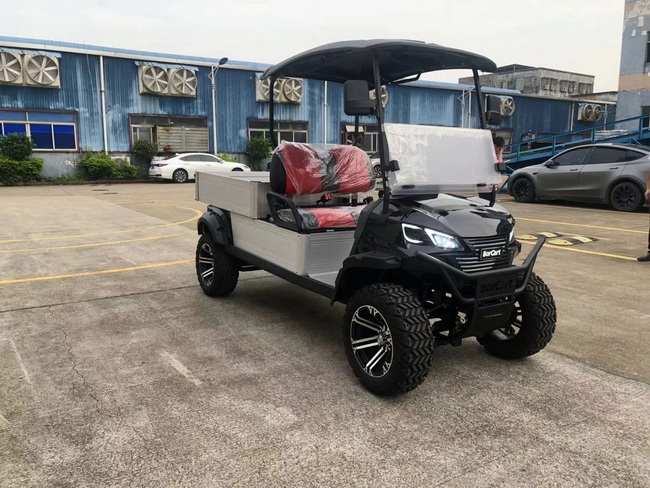
On many modern electric Club Car golf cars, there is no traditional mechanical governor; instead, a speed controller, motor, and sensors work together to limit speed. Adjusting these systems often requires software programming, controller replacement, or motor upgrades rather than a simple cable tweak.
Basic steps for responsible adjustment on an electric Club Car golf car include:
- Confirming model year and drive system (36 V, 48 V, AC or DC) before planning any changes
- Checking tire pressure and size, because under‑inflated or oversized tires can mimic poor speed performance or alter gearing
- Using appropriate programmer tools or upgraded controllers designed for your specific Club Car golf car model
Guides on adjusting electric Club Car speed controls emphasize careful testing in a safe area and regular monitoring for heat or error codes after any performance change. As with gas models, you must consider warranty, local laws, and the original design limits of your golf car.
Adjusting the governor on a Club Car golf car can be attractive for owners who want more speed on large properties, resorts, or hunting areas. However, the trade‑offs are significant and should be weighed carefully before modifying the system.
- Higher top speed on private roads and trails, reducing travel time around large facilities.
- More responsive acceleration when climbing gentle hills or carrying light cargo in a golf car.
- Ability to tailor performance to specific use cases, such as hunting vehicles, utility golf cars, or resort shuttles.
- Immediate loss or limitation of warranty coverage on many golf cars once the governor has been altered.
- Increased risk of engine damage, excessive RPM, and overheating when a gas golf car is driven flat‑out after aggressive governor adjustment.
- Higher chance of rollovers, crashes, or loss of control, especially if a lifted Club Car golf car runs faster than its brakes and suspension were designed to handle.
Manufacturers design most golf cars for a typical speed range of about 12–15 mph, and pushing much beyond this can be dangerous without other upgrades. For owners who need genuinely higher performance, upgraded controllers, better brakes, and purpose‑built high‑speed golf cars are a safer long‑term solution.
Adjusting the governor on a Club Car golf car is possible with simple tools and careful, incremental changes, especially on gas DS and Precedent models that use cable‑driven systems. Small tweaks to console‑type T‑levers or throttle rods can safely unlock a little extra speed, but aggressive adjustments or complete governor removal can void warranties, stress the engine, and compromise safety.
Electric Club Car golf cars rely more on programmable speed controllers than mechanical governors, so meaningful changes normally require professional‑grade components and configuration. For long‑term reliability, always respect factory limits, consult official Club Car guidance, and test your golf car in a controlled environment after every governor or controller adjustment.
Contact us to get more information!

Small adjustments typically add only a few mph, keeping the golf car close to its original 12–15 mph design range. Pushing far beyond that range risks excessive engine RPM on gas models and can quickly reduce engine life or cause component failures.
Legality varies by region, but removing the governor can cause a golf car to exceed the speed at which it is classified as low‑speed equipment, triggering new legal requirements. Always check local regulations on modified golf cars and low‑speed vehicles before changing speed‑limiting systems.
Most manufacturers and dealers treat any governor tampering on a Club Car golf car as grounds to deny engine or drivetrain warranty claims. This policy is often reinforced with warning labels and manual statements that specifically prohibit changing the governor setting.
Yes, upgrading controllers, motors, or gear ratios with matched kits designed for Club Car golf cars provides more controlled performance gains. These upgrades usually come with documentation, tested limits, and sometimes their own warranty coverage when installed correctly.
Confident DIY owners can follow step‑by‑step guides and videos to perform mild governor adjustments on their Club Car golf cars. If you are unsure about linkage layout, legal limits, or desired top speed, a professional technician familiar with Club Car products can deliver safer, more predictable results.
1. https://www.golfcartgarage.com/blog/how-to-adjust-a-golf-cart-governor/
2. https://cartaholics.com/threads/how-do-i-adjust-the-governor-on-my-club-car.2719/
3. https://www.youtube.com/watch?v=-ZxZbhLo8Jg
4. https://carinterior.alibaba.com/buyingguides/adjusting-electric-club-car-speed-control
5. https://www.youtube.com/watch?v=oQrO4qbmh9s
6. https://mygolfbuggy.com/maintenance/manuals/clubcar/Club%20Car%20Precedent%20Owners%20Manual.pdf
7. https://buggiesgonewild.com/showthread.php?t=95491
8. https://carts-and-parts.com/how-to-take-the-governor-off-a-golf-cart/
9. https://gcartparts.com/oem-club-car-governor-warning-decal-gas-car/
10. https://www.golfcartsforum.com/articles/frequently-asked-questions/how-do-i-how-often-do-i/42479-remove-the-governor-and-rev-limiter-on-a-gas/
11. https://www.facebook.com/groups/GolfCartsModified/posts/2371883306418044/
12. https://www.clubcar.com/en/safety
13. https://www.youtube.com/watch?v=Ll69BSLxQtE
14. https://www.youtube.com/watch?v=AL66xoUtU44
15. https://www.youtube.com/watch?v=LuLpsr5XfSk


