


Views: 222 Author: Leah Publish Time: 2025-12-24 Origin: Site


Content Menu
● Average Electric Golf Cart Price in 2025
● Main Factors That Affect Electric Golf Cart Cost
>> Motor Power, Controller, and Performance
>> Seating Capacity and Vehicle Type
>> Brand, OEM Source, and Market Positioning
● New vs. Used Electric Golf Cart Pricing
>> Price Range for New Electric Golf Carts
>> Price Range for Used Electric Golf Carts
● Extra Costs to Consider Beyond Sticker Price
>> Battery Replacement and Charging Equipment
>> Accessories, Customization, and Street-Legal Upgrades
>> Maintenance, Service, and Operating Costs
● Why Many Buyers Choose OEM Electric Golf Carts from China
>> About BorCart as an Electric Golf Cart OEM
>> OEM, ODM, and Branding Options
>> Export-Focused Quality and Capacity
● How to Choose the Right Electric Golf Cart for Your Budget
>> Step-by-Step Selection Checklist
● FAQ
>> 1. What is the average price of a new electric golf cart?
>> 2. How much does it cost to replace electric golf cart batteries?
>> 3. Is a lithium electric golf cart worth the extra money?
>> 4. How much does a used electric golf cart usually cost?
>> 5. Why do some electric golf carts cost over 20,000 USD?
Electric golf cart prices in 2025 typically range from about 7,000 to 15,000 USD for most mainstream new models, with basic fleet carts at the lower end and fully loaded personal carts at the higher end. Premium and luxury electric golf cart models with high-end finishes, lithium batteries, and advanced electronics can exceed 20,000 USD, while OEM factory-direct orders from manufacturers like BorCart offer more flexible wholesale pricing.[1][2][3][4]

New mainstream electric golf cart models from popular brands usually fall between 9,000 and 11,000 USD, based on analysis of current 2–4 seat lithium and lead-acid models. Entry-level basic electric golf cart models with 2 seats often start around 7,000–9,000 USD, while 4-seat versions commonly range from 9,000–11,000 USD.[2][5][1]
- Typical new electric golf cart price range: about 7,000–15,000 USD for most buyers.[1][2]
- Lowest common prices for new electric golf carts are around 5,500–7,000 USD, while premium, customized or luxury models can exceed 20,000 USD.[5][1]
A key reason for this spread is that electric golf cart platforms now serve multiple roles beyond the golf course, including neighborhood transportation, resort shuttles, campus vehicles, hunting buggies, and multi-purpose work carts. As usage scenarios have expanded, manufacturers have introduced more diverse trim levels and configurations, each with its own pricing structure.[6][7]
Several technical and commercial factors explain why one electric golf cart may cost 7,000 USD while another surpasses 15,000 USD. Understanding these variables helps buyers work out a realistic budget and choose appropriate configurations for personal, resort, fleet, or hunting use.[7][6]
Battery chemistry is one of the biggest cost drivers in an electric golf cart, because it directly affects range, charging time, maintenance, and lifetime. Most electric golf cart models use either traditional flooded lead-acid packs or modern lithium-ion packs at voltages such as 36 V, 48 V, or 72 V.[8][9][6]
- Lead-acid battery sets for a 48 V electric golf cart typically cost about 800–1,300 USD, while lithium packs of the same voltage often range from about 1,500–2,000 USD or more.[9][10]
- Although lithium batteries increase the upfront price of the electric golf cart, they offer longer cycle life, lighter weight, faster charging, and reduced maintenance, which can lower total cost of ownership over several years.[6][8]
Capacity and configuration also matter, because a higher amp-hour rating or a higher voltage system can support heavier loads and longer daily routes. Fleet buyers who require extended range often specify larger battery packs, which raises the initial purchase price but can reduce downtime and charging frequency.[7][8][6]
The power rating of the traction motor, the sophistication of the controller, and the available drive modes also influence electric golf cart pricing. High-torque systems designed for lifted hunting electric golf carts, hilly resorts, or multi-passenger shuttles often require higher-rated motors and controllers than basic 2-seat fleet carts.[6][7]
- More powerful electric golf cart configurations, especially lifted 4×4-style or off-road oriented vehicles, command a higher price due to upgraded motors, controllers, and driveline parts.[7][6]
- Manufacturers like BorCart use branded components such as American KDS motors and Curtis controllers, which improve reliability and export compliance but add some cost to the electric golf cart chassis.[3][11]
Performance tuning can include regenerative braking, programmable speed modes, selectable torque curves, and hill-hold functions. These features appeal to resort operations, residential communities, and safety-conscious users, and they are often included in mid-tier and high-tier electric golf cart price levels.[6][7]
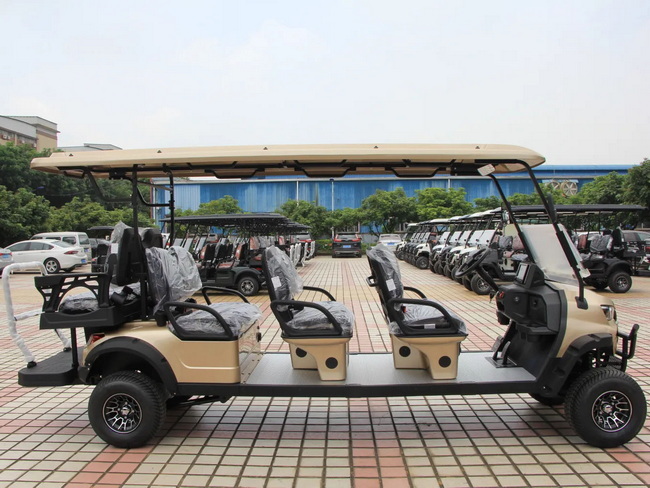
Electric golf cart prices scale with size and passenger capacity because of the longer frame, heavier duty suspension, and additional features required. A simple 2-seat electric golf cart for golf course use costs less than a 4-seat or 6-seat low-speed vehicle built for resorts, hotels, or gated communities.[2][1]
- For new vehicles, basic 2-seat electric golf carts commonly start around 7,000–9,000 USD, 4-seat carts around 9,000–11,000 USD, and 6-seat carts around 11,000–14,000 USD.[2]
- Specialized sightseeing buses, hunting vehicles, and multi-purpose electric vehicles built on golf cart platforms cost more due to extended frames, extra rows, and added safety and comfort features.[12][3]
Body style also shapes cost, because low-speed vehicle versions may include automotive lighting, mirrors, seat belts, and reinforced structures to comply with regulations. These items push the electric golf cart into a higher category, both in perceived value and in actual component and certification costs.[7][6]
Brand positioning and supply chain structure also influence the final price of an electric golf cart. Premium Western brands often price carts higher due to established dealer networks, marketing costs, and brand equity, while OEM manufacturers in China can offer more aggressive ex-factory pricing and flexible configurations.[3][5][1]
- Studies of popular electric golf cart brands show that many mainstream 4-passenger lithium models cluster between about 9,000 and 12,000 USD, while high-end lifestyle brands charge significantly more.[5][1]
- BorCart, founded in 2000 in Guangzhou and operating large-scale electric vehicle workshops and multiple production lines, focuses on OEM and ODM electric golf cart manufacturing for global brand owners and wholesalers.[11][3]
Market positioning determines how much margin dealers add on top of OEM cost. Entry-level brands focus on simple, reliable electric golf cart models at competitive price points, while lifestyle brands highlight design, premium materials, and technology to justify higher retail prices.[1][5][7]
New electric golf cart prices are higher but include full warranty, latest technology, and the ability to customize specifications at order. Used units cost less up front but may require battery replacement and mechanical repair, which can significantly change the “true” cost over the first years of ownership.[1][2]
New electric golf cart prices depend heavily on whether the vehicle is a basic golf course spec, a street-legal low-speed vehicle, or a fully customized neighborhood or commercial unit. Current market guides indicate that many new electric models from well-known brands fall between 9,000 and 11,000 USD, though entry-level and premium outliers exist above and below that band.[5][1][7]
- Market-wide, new electric golf carts generally start around 5,500–7,000 USD for the simplest configurations and rise beyond 20,000 USD for luxury or heavily customized versions.[5][1]
- OEM suppliers like BorCart offer competitive factory pricing for overseas brand customers, who may then add margin for local marketing, distribution, and aftersales service.[12][3]
Buyers who want a particular color scheme, seating layout, or performance package often choose new electric golf cart orders so they can specify every detail from the factory. This also allows fleet managers to standardize their electric golf cart fleets across multiple locations, improving maintenance efficiency and parts management.[11][3]
Used electric golf carts offer a lower entry price but can vary widely depending on age, battery condition, and whether any refurbishment work has been done. Common used price ranges run roughly from 2,000 to 8,000 USD depending on brand, year, and upgrades.[2][1]
- A used electric golf cart with older lead-acid batteries might cost only 3,000–5,000 USD, but a necessary battery replacement can easily add 800–1,500 USD or more.[10][9]
- Refurbished electric golf cart units with fresh batteries, new paint, and updated seats will sit at the top of the used market but can still be cheaper than comparable new models.[1][2]
When evaluating used offers, buyers should check service records, age of batteries, tire condition, and evidence of corrosion or frame damage. A used electric golf cart with verified low hours and recent maintenance may be a better value than a cheaper but heavily worn unit requiring immediate repairs.[2][1]
When budgeting for an electric golf cart, it is crucial to consider the full lifecycle costs rather than just the initial purchase price. Operating costs are still low compared with fuel vehicles, but batteries, maintenance, and accessories can significantly shape the total investment.[9][6][7]
Battery replacement is the single largest periodic expense for most electric golf cart owners. Lead-acid batteries usually last several years depending on use and maintenance, while lithium packs offer longer lifespans and higher energy efficiency but at a higher initial cost.[8][10][9][6]
- Typical 36 V electric golf cart battery packs cost around 500–1,000 USD, with 48 V packs often at 800–1,300 USD for lead-acid and 1,500–2,000 USD or more for lithium systems.[10][9]
- Advanced lithium conversion kits or high-capacity lithium packs for performance electric golf cart builds can reach 1,800–3,800 USD, often including a dedicated charger and battery management system.[13][8]
Buyers must also account for charging infrastructure, including dedicated chargers, possible electrical upgrades, and safe charging locations. While home users often plug their electric golf cart into a standard outlet through a supplied charger, commercial operators may invest in multiple chargers or centralized charging bays to support fleets.[8][6][7]
Many buyers choose to customize their electric golf cart with accessories for comfort, safety, and style. Optional items can include upgraded wheels, lift kits, windshields, lighting, infotainment systems, rain enclosures, or cargo solutions.[6][7]
- Adding accessories and customization can easily add several hundred to several thousand dollars to the price of an electric golf cart, depending on complexity and brand.[7][6]
- Street-legal conversions for low-speed vehicle use often require lighting packages, mirrors, seat belts, and sometimes additional certification steps, increasing the total price of the electric golf cart platform.[6][7]
Lifestyle-focused buyers might prioritize seating comfort, entertainment systems, and paint finishes so that their electric golf cart matches their home or community aesthetic. Commercial users, by contrast, may invest more heavily in cargo beds, racks, towing hitches, and weather protection to keep the electric golf cart productive in all conditions.[1][7][6]
Routine maintenance for an electric golf cart is generally cheaper than for a gas-powered cart because there is no engine oil, fuel system, or exhaust system. However, owners must schedule regular safety checks, brake inspections, and—for lead-acid packs—watering and cleaning of the batteries.[10][7][6]
- Annual operating costs for electricity and basic service on an electric golf cart remain relatively low, making these vehicles cost-effective for daily short-range mobility.[7][6]
- Choosing quality components from established OEM manufacturers helps reduce unexpected failures, improving uptime and lowering lifetime cost per kilometer for fleets of electric golf carts.[3][11]
Owners who follow the manufacturer's maintenance schedule can extend the life of the motor, controller, and suspension components of their electric golf cart. This is particularly important for resort and industrial fleets where each electric golf cart is used intensively and downtime directly affects business operations.[11][3][6][7]
Global buyers, especially brand owners, distributors, wholesalers, and fleet operators, increasingly source electric golf cart platforms directly from experienced OEM manufacturers in China. This approach blends competitive ex-factory pricing with advanced customization capability and large-scale production capacity.[4][3][11]
BorCart is one of the earlier high-tech electric vehicle manufacturers in China and has evolved into a leading supplier of golf carts, sightseeing buses, low-speed vehicles, hunting vehicles, and multi-purpose vehicles. The company operates large workshops in Guangzhou with multiple production lines and a significant engineering and technical workforce.[3][11]
- BorCart's product portfolio centers on electric golf cart platforms, with both standard models and tailor-made solutions for international clients in different application scenarios.[12][3]
- The factory integrates internationally recognized components such as KDS motors, Mahle motors, Curtis controllers, and Delta-Q chargers to ensure reliability, compliance, and performance for export electric golf cart markets.[11][3]
BorCart also emphasizes test procedures such as braking tests, hill climbing tests, range tests, and durability runs on its electric golf cart models. These engineering processes help brand partners gain confidence in the long-term performance of their private-label electric golf cart lines in overseas markets.[3][11]
For overseas brands, wholesalers, and local assemblers, partnering with an OEM supplier offers flexibility and cost advantages compared to developing an electric golf cart platform from scratch. BorCart provides OEM and ODM services, supporting customers to customize body styling, seating layout, powertrain, and branding elements according to local market preferences.[4][11][3]
- OEM cooperation allows overseas customers to source rolling chassis or fully finished electric golf carts and apply their own brand identity, local accessories, and marketing positioning.[4][3]
- By using a dedicated electric golf cart OEM, partners can shorten development cycles, reduce tooling costs, and leverage mature engineering and testing processes while focusing on sales, distribution, and service.[11][3]
Brand customers can choose from multiple golf cart body designs, paint colors, seating trims, and accessory packages that suit their target users. This makes it possible to launch a differentiated electric golf cart lineup quickly, with consistent quality and competitive pricing across models.[12][3][11]
Export-oriented electric golf cart factories must meet diverse regulations and customer expectations from North America, Europe, Asia-Pacific, and emerging markets. BorCart designs electric golf carts and related vehicles to satisfy overseas standards, using certified components and robust testing procedures.[3][11]
- The company's large production workshops and multiple lines can support high-volume orders, including fleet-level electric golf cart projects for resorts, golf courses, residential communities, and industrial campuses.[12][3]
- Consistent quality control, combined with strong R&D capacity, enables BorCart to adapt electric golf cart designs to unique project themes and functional requirements in different regions.[11][3]
Logistics support is also important, because electric golf cart shipments must be packed, loaded, and transported securely over long distances. BorCart works with international logistics partners to manage container loading, documentation, and coordination with overseas warehouses for electric golf cart deliveries.[3][11]
Selecting an electric golf cart involves balancing initial budget, usage scenario, performance expectations, and long-term operating costs. A structured approach helps individual users and fleet buyers maximize value and avoid overspending on unnecessary features.[8][6][7]
1. Define main usage
- Decide whether the electric golf cart will be primarily used on golf courses, inside a resort, in a gated community, on a farm, or as a hunting or utility vehicle.[6][7]
- Clarify expected daily range, typical terrain, and passenger capacity to guide power and battery choices.[7][6]
2. Set realistic budget
- For most personal users, plan for 7,000–12,000 USD for a new electric golf cart, adjusting upward if you need 6 seats, lifted suspension, or premium accessories.[2][1]
- Fleet and commercial buyers may prioritize durability and serviceability over cosmetic upgrades to keep per-unit costs under tight control.[6][7]
3. Choose battery and performance
- Compare lead-acid versus lithium options and estimate long-term savings from lower maintenance and longer life in a lithium electric golf cart.[8][6]
- Verify that the motor and controller combination can handle hills and loads typical of your operating environment.[7][6]
4. Evaluate OEM and brand support
- Consider whether to purchase directly from an OEM like BorCart as part of an OEM/ODM program or buy from a local branded dealer with immediate aftersales support.[4][3]
- Check warranty terms, availability of spare parts, and technical documentation for your electric golf cart models.[11][3]
5. Plan for lifecycle cost
- Estimate battery replacement intervals, maintenance needs, and energy consumption so the long-term cost of the electric golf cart stays within your budget.[8][6]
- If configuring a fleet, standardize models and components to simplify training, spare parts storage, and service schedules for every electric golf cart in operation.[3][11]
For most buyers in 2025, the realistic price of a new electric golf cart ranges from roughly 7,000 to 15,000 USD, depending on seating capacity, battery type, performance, and brand positioning. Basic 2-seat models on lead-acid packs sit at the lower end of the spectrum, while multi-passenger, lithium-powered, and heavily customized lifestyle or commercial electric golf cart builds can exceed 20,000 USD.[5][1][2]
When total cost of ownership is considered, high-quality batteries, reliable motors, and proven OEM platforms deliver better value over time than cheaper, under-engineered alternatives. Global partners looking for scalable, customizable solutions often turn to Chinese OEM manufacturers such as BorCart, which specializes in electric golf cart platforms, sightseeing buses, low-speed vehicles, hunting vehicles, and multi-purpose vehicles for international clients.[8][11][3][6]
By understanding the main cost drivers and matching specification to real-world usage, buyers can select an electric golf cart that fits both their budget and long-term performance expectations. Whether purchasing a single personal electric golf cart or building a fleet for a resort or community, careful planning and cooperation with an experienced manufacturer or dealer produces the best balance of price, quality, and support.[11][3][6][7]
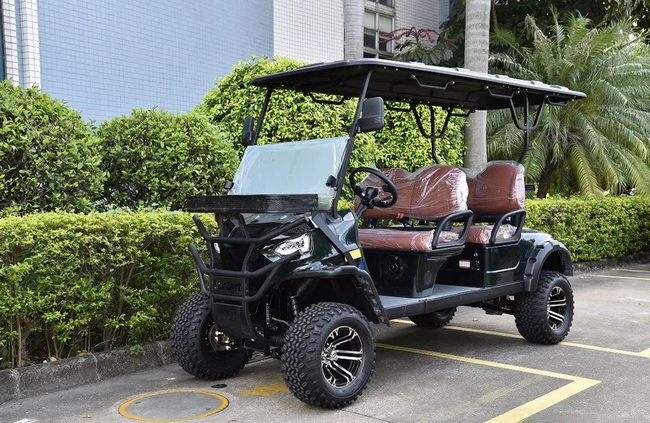
The average price of a new electric golf cart from mainstream brands typically falls between 9,000 and 11,000 USD for 2–4 seat models with standard equipment. Budget models can start closer to 7,000 USD, while high-spec and luxury electric golf carts often cost significantly more.[5][1][2]
For a typical 48 V electric golf cart, a replacement lead-acid battery pack generally costs around 800–1,300 USD, depending on brand and capacity. Lithium battery packs for the same type of electric golf cart usually range from about 1,500 to 2,000 USD or higher, but they offer longer lifespan and less maintenance.[9][10][8]
A lithium electric golf cart costs more upfront but often provides better long-term value through longer battery life, reduced maintenance, faster charging, and improved efficiency. For frequent or commercial use, the total cost per kilometer over the battery lifetime usually favors lithium-equipped electric golf carts, especially where range and uptime are critical.[13][8][6]
Used electric golf carts frequently sell in the range of about 2,000 to 8,000 USD, depending on age, brand, condition, and included accessories. Buyers should always factor in the potential need for battery replacement, which can add 800–2,000 USD or more to the effective price of a used electric golf cart.[9][10][1][2]
High-end electric golf carts can exceed 20,000 USD when they include luxury finishes, advanced electronics, powerful motors, lithium batteries, and extensive customization. Street-legal low-speed vehicles, sightseeing models, and multi-row resort shuttles built on electric golf cart platforms also command higher prices due to their size, safety equipment, and specialized components.[12][1][5]
[1](https://thecartfinder.com/2024/06/30/how-much-is-a-golf-cart/)
[2](https://petesgolfcarts.com/general-golf-cart-ownership/how-much-is-a-golf-cart/)
[3](https://borcart.en.made-in-china.com)
[4](https://www.borcart.com)
[5](https://ecoplaneta.com/how-much-does-a-golf-cart-cost/)
[6](https://evtitan.com/what-factors-influence-the-price-of-electric-golf-carts/)
[7](https://evtitan.com/how-much-does-an-electric-golf-cart-cost/)
[8](https://leochlithium.us/golf-cart-battery-prices-what-affects-cost-and-how-to-choose-the-best-option-for-your-cart/)
[9](https://bslbattery.us/Golf-Cart-Battery-Prices-Revealed-The-Real-Cost-for-Top-Brands.html)
[10](https://hartvillegolfcarts.com/how-much-are-golf-cart-batteries/)
[11](https://www.borcartev.com)
[12](https://www.borcart.com/golf-carts.html)
[13](https://extremekartz.com/blogs/lithium-knowledge-center/the-true-cost-of-lithium-batteries-for-golf-carts-initial-investment-vs-long-term-savings)


