


Views: 222 Author: Leah Publish Time: 2026-01-10 Origin: Site


Content Menu
● What Determines Golf Buggy Charging Cost?
● Typical Energy Use for a Golf Buggy
● Electricity Prices and Local Tariffs
● Basic Formula to Estimate Golf Buggy Charging Cost
● Worked Examples for a Golf Buggy
● Lead‑Acid Batteries in a Golf Buggy
● Lithium Batteries in a Golf Buggy
● Cost Per Mile and Per Round of Golf
● Electric Golf Buggy vs Gas Cart
● Usage Scenarios for a Golf Buggy
● Daily Charging Practices for a Golf Buggy
● Lifetime Cost and Battery Replacement for a Golf Buggy
● Design and OEM Choices that Affect Golf Buggy Efficiency
● FAQ
>> 1. How much does it usually cost to charge a golf buggy once?
>> 2. How often should a golf buggy be charged in normal use?
>> 3. Does a lithium battery really lower the cost of running a golf buggy?
>> 4. Is an electric golf buggy cheaper to run than a gasoline cart?
>> 5. What is the best way to reduce the charging cost of a golf buggy fleet?
Charging a Golf Buggy is usually very economical, often costing less than a few units of local currency per full charge in many markets. The exact charging cost for a golf buggy depends on battery size, electricity rates, charger efficiency, and how the buggy is used throughout the day.
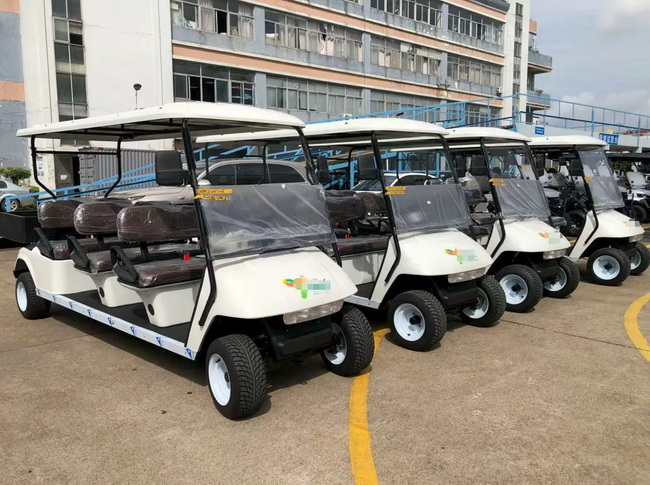
Several technical and usage factors combine to shape the real‑world cost of charging a golf buggy. Understanding these elements helps owners, fleet managers, and OEM buyers plan operating budgets more accurately.
- Electricity price per kWh in the local area.
-Battery capacity and usable energy of the golf buggy pack.
-Charger efficiency and total charging time per cycle.
-Daily mileage, terrain, passenger load, and driving behavior.
-Battery type and age, including lead‑acid versus lithium designs.
A small personal golf buggy with a modest battery and light daily mileage will naturally consume less energy than a large multi‑seat buggy used all day at a resort. At the same time, an efficient modern charger and a well‑maintained battery pack can keep energy losses low, supporting lower total charging cost over the life of the golf buggy.
Most mainstream golf buggy models draw only a few kilowatt‑hours of electricity for each full charge. In many cases, the total consumption for a standard charge cycle falls roughly in the 3 to 7 kWh range, depending on configuration and how deeply the battery is discharged between charges. This is far less than the energy required for a full‑size electric car, which is one reason a golf buggy remains such a low‑cost mobility solution.
A conventional 36 V golf buggy using deep‑cycle batteries can consume around 3 to 4 kWh for an 18‑hole round under typical conditions. A 48 V golf buggy or a higher‑capacity pack might require somewhat more energy, but the increase in consumption is generally proportional to the extra range and performance offered. For heavy‑duty applications, such as multi‑seat sightseeing or utility use, larger capacity packs can extend runtime while still keeping per‑mile energy cost low.
Electricity prices are a major component of the cost to charge a golf buggy, yet they are often relatively stable compared to fuel prices. Many regions experience residential and commercial tariffs in a range that makes electric mobility attractive for both individual owners and large fleets. Even when local tariffs are higher than average, the small battery size of a golf buggy keeps the total charge cost low in absolute terms.
Some operators take advantage of time‑of‑use tariffs by charging golf buggy fleets overnight during off‑peak hours. Lower off‑peak rates can significantly reduce the effective cost per charge when many units are charged simultaneously. For OEM and wholesale buyers planning large fleets, the ability to align charging schedules with off‑peak tariffs is a strategic advantage of choosing an electric golf buggy platform.
The cost of charging a golf buggy can be estimated using a simple method similar to that used for other electric vehicles. This approach uses two core parameters and can be applied to almost any configuration of golf buggy battery and charger.
-Determine the battery's usable energy or approximate kWh consumption for a full charge.
-Confirm the local electricity rate in cost per kWh from utility bills or contracts.
-Multiply the usable energy (in kWh) by the rate (per kWh) to estimate full‑charge cost.
Because golf buggy batteries are relatively small, even higher‑than‑average electricity rates still yield a modest total cost per charge. For example, a battery consuming 6 kWh of energy charged at a rate that is considered mid‑range in many developed markets still produces a total cost that is typically less than what a gas cart would spend on fuel for an equivalent distance. In this way, a golf buggy often offers a strong value proposition in both residential and commercial settings.
Considering a hypothetical golf buggy with moderate capacity helps illustrate the formula in practice. Assume a buggy uses about 6 kWh of energy for a full charge and is powered from a supply with a typical residential tariff. Multiplying these figures shows that the total charge cost remains comfortably below the level of comparable fuel expenses for a small combustion vehicle.
A smaller golf buggy used primarily for short community trips might use only 3 to 4 kWh per charge, which further reduces the per‑charge cost. Conversely, a larger multi‑seat buggy or a unit used for long sightseeing routes could use 7 kWh or more per cycle, but this additional consumption will usually be offset by the greater distance covered and additional passengers carried. In each scenario, the golf buggy's cost per mile or per passenger remains highly competitive.
Traditional golf buggy designs frequently rely on lead‑acid deep‑cycle batteries to provide traction power. These systems typically use multiple 6 V or 8 V batteries connected in series to achieve 36 V or 48 V, providing enough energy for standard golf rounds and short‑distance travel. Lead‑acid packs are often chosen for their relatively low initial cost, especially in price‑sensitive markets and entry‑level golf buggy models.
However, lead‑acid batteries are heavier and less energy dense than modern lithium packs, which affects both vehicle weight and operating efficiency. Over time, their cycle life and efficiency gradually decline, and they require regular watering, cleaning, and equalization charges to stay in good condition. As a result, the long‑term cost per cycle for a golf buggy may be higher when lead‑acid systems are not properly maintained.
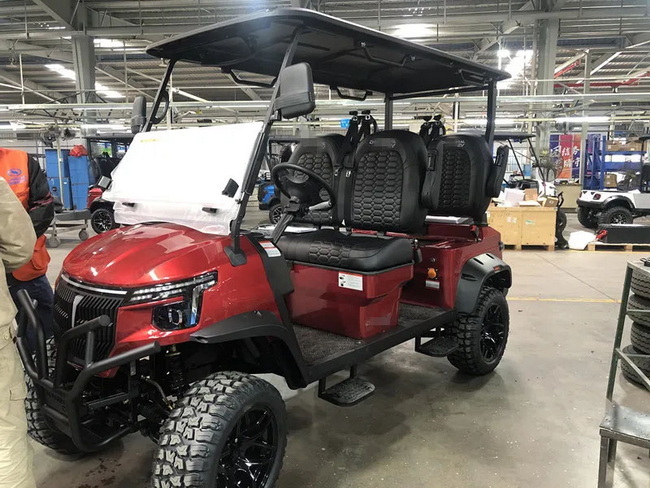
Lithium battery technology has become a popular upgrade choice for many golf buggy platforms, especially in premium and high‑utilization applications. Lithium packs offer higher energy density, lighter weight, and much longer cycle life than comparable lead‑acid configurations, allowing a golf buggy to deliver more range, better acceleration, and improved overall efficiency. These benefits are particularly valuable for resorts, golf courses, and communities that rely on a fleet of buggies operating throughout the day.
Because lithium packs can maintain a more consistent voltage and performance curve, a lithium‑equipped golf buggy often experiences fewer drops in power toward the end of a charge. Many lithium systems integrate a battery management system that monitors cell health, balances charge levels, and helps protect the pack from over‑charging or deep discharging. Over thousands of cycles, this additional management and extended lifespan can reduce the effective cost per charge and make the golf buggy more economical over its full service life.
Golf buggy owners and operators frequently think in terms of cost per round or cost per mile rather than just cost per charge. Calculating cost per mile is relatively straightforward once energy usage and electricity price are known. Dividing the total charge cost by the typical range achieved on that charge provides a simple metric that can be compared with other vehicles.
For example, if a golf buggy uses around 6 kWh per charge, with local electricity priced at a moderate level, and the buggy delivers a realistic range of 30 to 50 miles, the cost per mile becomes extremely low. Similarly, when a golf buggy consumes roughly 3 to 4 kWh to complete an 18‑hole round, the cost per round often remains a small fraction of the total operating expenses of a course or resort. This is one reason electric buggies have become standard in many golf operations around the world.
A key advantage of an electric golf buggy is its ability to deliver lower and more predictable operating expenses than a gas‑powered cart. Fuel prices can fluctuate significantly over time, affecting the total running cost of a gas cart, while electricity prices tend to be more stable in many markets. This stability simplifies budgeting for both individual owners and fleet operators, especially when managing many units.
In addition to fuel cost, gas carts require regular engine maintenance, oil changes, and more complex mechanical work compared to an electric golf buggy. Electric drivetrains have fewer moving parts and generally experience less wear and tear, further reducing long‑term operating costs. When energy savings, maintenance savings, and longer component lifetimes are considered together, an electric golf buggy often provides a clear economic advantage over gas alternatives.
Modern golf buggy models serve multiple roles beyond traditional fairway use, including community transport, resort shuttles, hunting vehicles, and light utility tasks. Each scenario has distinct energy demands, which influence charging patterns and costs. Understanding these use cases helps align golf buggy specifications with real‑world requirements.
On a golf course, a typical buggy might handle one to three rounds per day, returning to a central charging station each evening. In a gated community or resort, a multi‑seat golf buggy could operate as a shuttle, running many shorter trips and drawing more frequent partial charges. In each scenario, careful selection of battery capacity and charging strategy helps keep overall energy cost low while ensuring the golf buggy remains reliable and convenient for users.
Charging habits play a significant role in battery health and long‑term cost for any golf buggy fleet. Many operators prefer to charge each golf buggy overnight, giving the vehicle ample time to reach full charge at low current levels. This approach is convenient for staff and keeps the fleet ready for early‑morning use.
For lithium‑equipped models, partial top‑ups during the day can be used without the same concerns about memory effects that apply to some older technologies. Lead‑acid systems may benefit from deeper charge cycles but still require regular full charges to avoid sulfation and capacity loss. In both cases, establishing a consistent charging routine reduces stress on the battery and keeps the cost per charge predictable.
Beyond the cost of electricity, long‑term planning for a golf buggy must include the price of eventual battery replacement. Battery packs have finite cycle life, typically measured in hundreds or thousands of full charge‑discharge cycles. As the pack ages, capacity gradually decreases, and the golf buggy's range per charge can decline.
Lithium packs generally offer far higher cycle life than lead‑acid equivalents, giving them an advantage in intensive fleet applications. For a golf buggy used every day, a pack with several thousand cycle capacity can remain serviceable for many years before replacement is needed. When the cost of the pack is distributed over those cycles, the effective cost per charge and per mile can be surprisingly low, especially when combined with the savings on fuel and maintenance associated with electric operation.
For manufacturers and OEM partners, design choices have a direct impact on the efficiency and operating cost of each golf buggy model. Selecting the correct system voltage, battery size, and drivetrain layout can significantly influence energy consumption per kilometer. Lightweight frames and efficient tire choices also help minimize rolling resistance and improve overall performance.
In addition, pairing the right charger with the chosen battery chemistry ensures that each golf buggy achieves consistent charging behavior and long battery life. High‑quality controllers, motors, and electrical components contribute to better energy use and smoother operation. By optimizing these elements, an OEM can deliver a golf buggy that not only feels refined to drive but also offers very low cost per charge, making it highly attractive to international brand owners, wholesalers, and fleet buyers.
In practical terms, charging a golf buggy is remarkably affordable, with each full charge typically consuming only a few kilowatt‑hours of electricity and costing significantly less than the fuel required by comparable gas carts. The exact amount depends on local tariffs, battery capacity, charger efficiency, and daily usage patterns, but the total remains low enough that energy costs rarely dominate the operating budget for a golf buggy.
Battery choices such as lead‑acid or lithium, as well as smart charging practices and efficient vehicle design, can further refine the cost per cycle and extend the usable life of the pack. When fuel savings, maintenance reductions, and improved reliability are all considered together, an electric golf buggy emerges as an efficient, cost‑effective solution for golf courses, resorts, communities, and multi‑purpose transport applications around the world.
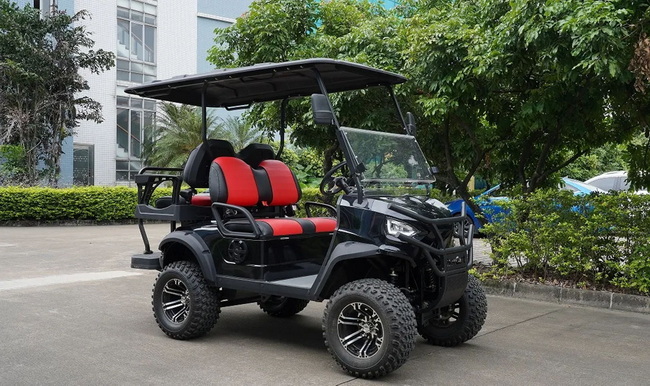
For most typical users, charging a golf buggy from low to full charge costs only a small amount, often well under the price of a single unit of local currency in many residential situations. The exact figure varies with the size of the battery in the golf buggy and the electricity rate set by the local utility provider.
Most owners charge a golf buggy after each day of use, especially on golf courses where a buggy completes one or more full rounds. In community or resort applications, some users may charge every night even if the battery is not deeply discharged, ensuring that the golf buggy is always ready for service the next day.
A lithium battery can reduce the effective running cost of a golf buggy because it usually offers higher efficiency and much longer cycle life than a comparable lead‑acid pack. Although the initial battery cost is higher, the extended lifespan and reduced maintenance often lower the total cost per charge and per mile over the life of the golf buggy.
Yes, an electric golf buggy is generally cheaper to run than a gasoline cart because electricity tends to be less expensive per unit of energy than fuel, and electric drivetrains need less regular maintenance. Over time, savings on fuel, oil changes, and engine repairs usually outweigh the initial investment in batteries and charging equipment.
To reduce charging cost for a golf buggy fleet, operators can schedule charging during off‑peak hours, choose efficient chargers, and keep batteries in good health through proper maintenance. Selecting an optimized battery configuration and ensuring each golf buggy is correctly matched to its daily workload also helps avoid unnecessary energy consumption and extends component life.


