


Views: 222 Author: Leah Publish Time: 2026-01-10 Origin: Site


Content Menu
● Understanding Golf Buggy Weight Terms
● Typical Golf Buggy Weights by Type
● Electric vs Gas Golf Buggy Weight
● How Batteries Influence Golf Buggy Weight
● Frame, Body, and Structural Design
● Seating Layout, Size, and Capacity
● Accessories and Customization
● Performance, Range, and Handling
● Weight Limits, Safety, and Durability
● Transporting and Shipping a Golf Buggy
● Choosing the Right Golf Buggy Weight for Your Needs
● How BorCart Approaches Golf Buggy Weight
● FAQ
>> 1. How much does an average golf buggy weigh?
>> 2. Why are electric golf buggies heavier than they look?
>> 3. Does converting to lithium batteries really reduce golf buggy weight?
>> 4. How much weight can a typical golf buggy safely carry?
>> 5. Do accessories and custom parts make a big difference to golf buggy weight?
Golf buggy weight is a key specification that influences performance, range, comfort, safety, and even shipping and logistics for international buyers and OEM customers. For most standard two‑seat models, a typical golf buggy weighs roughly 800–1,100 lb (about 363–499 kg), but the real number for any individual unit depends on its powertrain, seating layout, and accessories. Understanding what drives golf buggy weight helps golf courses, resorts, and professional buyers select exactly the right configuration for their use cases.[1][2][3][4]
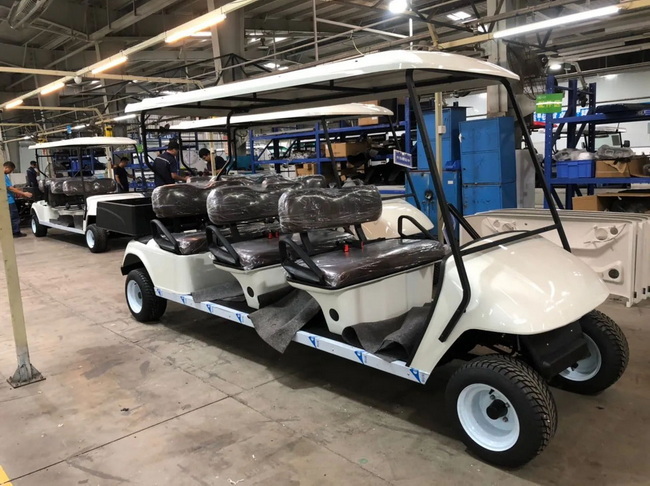
When discussing how much a golf buggy weighs, several related technical terms often appear in spec sheets and quotations.
- Curb weight: The weight of the golf buggy with standard equipment, batteries or fuel, and necessary fluids, but without passengers or cargo.[1]
- Dry weight: The weight of the buggy without consumables such as fuel or batteries, useful for comparing different chassis and body designs.[5]
- Gross vehicle weight rating (GVWR): The maximum allowed total of buggy weight plus passengers, cargo, and accessories, above which safety and durability can be compromised.[4][6]
Knowing whether a listed value is curb weight or dry weight is essential when evaluating how portable a golf buggy is or when planning transport and towing.[4][1]
Different styles of golf buggy serve different environments, and their weights vary accordingly.
- Standard 2‑seat electric golf buggy: Commonly between 900 and 1,100 lb with lead‑acid batteries installed.[2][7]
- Standard 2‑seat gas golf buggy: Often between 800 and 1,200 lb, depending on frame materials, engine size, and equipment.[3][5]
- Lightweight lithium electric golf buggy: In many cases, total weight drops by about 200–300 lb when switching from lead‑acid to lithium batteries.[7][8][1]
Larger multi‑row and specialty models can weigh considerably more. Four‑seat buggies, resort shuttles, and off‑road or hunting units may reach 1,500–1,800 lb when fully equipped.[9][3]
The choice between electric and gas power strongly shapes golf buggy weight and how that weight is distributed.
- Electric golf buggy: The traction battery pack is the heaviest single component, with typical lead‑acid systems adding roughly 300–500 lb, while motors and controllers add around 50–100 lb.[8][10][7]
- Gas golf buggy: Instead of a heavy battery pack, gas models carry an engine, fuel tank, and exhaust system, so their final weight can be similar to or slightly higher than some electric buggies.[3][5]
- Lithium variants: Lithium systems can be 50–70% lighter than conventional lead‑acid packs at comparable capacity, sharply reducing overall golf buggy weight.[7][8]
For fleet managers and OEM partners, clarifying whether a quoted weight refers to a lead‑acid or lithium golf buggy configuration is crucial when planning performance, logistics, and compliance.[3][7]
Battery choice is one of the most decisive factors in the total weight of an electric golf buggy.
- Lead‑acid batteries: A typical 6‑volt lead‑acid battery for a golf buggy weighs about 60–80 lb, and most 36–48 V systems use six or eight of these units, resulting in 300–640 lb of battery mass.[10][8]
- 8‑volt and 12‑volt variations: 8‑volt and 12‑volt blocks usually fall in a similar 55–85 lb range, and the total pack weight depends on how many units the buggy uses.[11][8]
- Lithium batteries: A lithium pack with similar usable energy can weigh less than half of a lead‑acid system, providing meaningful weight savings and better power‑to‑weight ratios for the golf buggy.[8][7]
For buyers who prioritize long range and strong hill‑climbing, a heavier high‑capacity pack may be appropriate, whereas customers focused on portability and nimble handling often prefer lighter lithium packs.[7][8]
The structural design of a golf buggy determines how weight is distributed and how much the chassis itself contributes to total mass.
- Frame materials: Steel frames maximize strength and robustness but are heavier, while aluminum frames reduce golf buggy weight and improve corrosion resistance at a higher material cost.[5][3]
- Body panels: Plastic and composite bodywork saves weight over full steel body shells, making the golf buggy easier to maneuver and helping to offset the mass of batteries or accessories.[4][3]
- Reinforcements: Utility or off‑road buggies may include reinforced frames, racks, and mounts that make the buggy heavier but increase load capacity and durability in tough environments.[3][4]
Balancing structural strength and golf buggy weight is at the heart of OEM design, especially for vehicles used as low‑speed transport, resort shuttles, or cargo carriers.[6][12]
How many passengers the golf buggy must carry has a direct impact on its base weight and on its rated capacity.
- Two‑seat golf buggy: Typically the lightest configuration, optimized for golfers and their bags with modest cargo capacity and compact dimensions.[2][5]
- Four‑seat and six‑seat buggies: Additional seating rows, support structures, and extended roofs significantly increase weight and often demand upgraded suspensions and brakes.[6][4]
- Payload ratings: Many two‑seat golf buggies support 800–1,200 lb including passengers and cargo, while larger models often carry 1,200–1,600 lb or more when designed for resort or multi‑purpose use.[6][4]
For professional operators such as golf clubs, hotels, and parks, matching golf buggy seating and payload to expected usage avoids both under‑specification and unnecessary excess weight.[12][6]
Accessories can transform a basic golf buggy into a premium, multi‑role vehicle, but they also add substantial weight.
- Wheels, tires, and lift kits: Larger off‑road tires, custom wheels, and lift kits commonly add 50–100 lb or more, and they increase both the static weight and rotating mass of the golf buggy.[1][4]
- Comfort and style upgrades: Roofs, windshields, upgraded seats, canopies, storage baskets, and audio systems can easily add another 100–200 lb when combined.[5][1][3]
- Utility equipment: Cargo beds, tool racks, rear flip seats, and hunting accessories can raise total golf buggy weight by 200–300 lb, converting a simple golf buggy into a true multi‑purpose vehicle.[4][3]
Before specifying additional accessories, fleet buyers should evaluate how each option contributes to final golf buggy weight, range, and braking distances.[13][3]
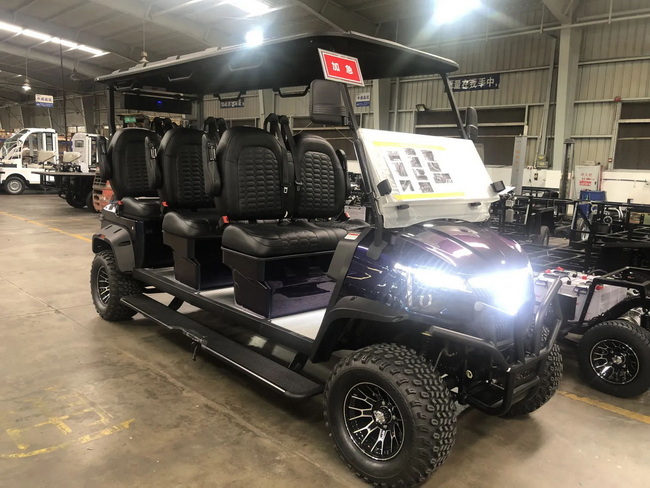
Golf buggy weight has a strong influence on real‑world performance, especially for electric models.
- Energy consumption and range: Heavier golf buggies demand more energy per mile, reducing how far they can travel on a single charge or tank, particularly in hilly areas or on soft ground.[13][3]
- Acceleration and hill‑climbing: Lower weight makes it easier for the motor or engine to accelerate the buggy and climb slopes, which matters on longer or more challenging courses.[13][7]
- Handling and braking: As weight increases, stopping distances lengthen, and excessive mass high above the center of gravity can affect stability, especially for lifted or heavily loaded golf buggies.[14][12][6]
Optimizing the weight of a golf buggy is therefore not just a technical detail but a major factor in creating a safe, responsive driving experience.[12][13]
Every golf buggy has a defined operating envelope, and staying within that envelope protects both passengers and components.
- Structural limits: Exceeding the rated weight capacity can overstress axles, frames, and suspension components, causing accelerated wear or sudden failures during operation.[12][6]
- Tires and traction: Overloading increases tire deformation, reduces traction, and extends braking distances, especially on wet grass or uneven ground.[6][12]
- Environmental conditions: Hot weather can soften tires and slightly change braking performance, while cold weather reduces battery output, making heavy loads more challenging for electric buggies.[12]
By respecting the manufacturer's stated maximum weight and payload, operators keep their golf buggies reliable for years of intensive use.[6][12]
Weight also matters whenever a golf buggy must be shipped from factory to customer or towed between sites.
- Towing requirements: The combined weight of golf buggy and trailer must remain below the towing capacity of the tow vehicle and hitch rating, especially for long‑distance road transport.[1][4]
- Loading and unloading: Heavier golf buggies require stronger ramps, winches, or lifting equipment, and operators must ensure that ground surfaces and storage areas can support the static loads.[1][4]
- International logistics: For OEM partners and importers, accurate curb and shipping weights are necessary to calculate freight costs, choose container configurations, and comply with customs documentation rules.[4][1]
Choosing a lighter golf buggy specification can reduce freight costs and simplify last‑mile logistics, particularly when moving multiple units in bulk.[1][4]
Selecting the ideal golf buggy involves balancing conflicting priorities such as range, capacity, comfort, and portability.
- Course and terrain: Flat courses with short distances may not require high‑capacity heavy packs, while mountainous or extended layouts may justify a slightly heavier but longer‑range golf buggy.[13][3]
- Usage profile: A dedicated golf course fleet may favor moderate weight and standard accessories, whereas resorts, industrial parks, and hunting operations need higher capacity and more rugged equipment.[3][4]
- Maintenance and lifecycle: Lighter lithium‑powered golf buggies may offer better long‑term efficiency and reduced wear on brakes and suspension components despite higher upfront costs.[8][5][7]
Understanding these trade‑offs allows professional buyers and OEM partners to configure each golf buggy with just the right weight and equipment for its job.[5][3][4]
As a professional manufacturer of electric vehicles and automotive components, BorCart focuses on optimizing golf buggy weight for global OEM clients across many application scenarios.
- Optimized structures: By using carefully engineered frames, selective use of lightweight materials, and streamlined body designs, BorCart aims to keep golf buggy weight competitive while maintaining durability and comfort.
- Flexible power options: Support for both traditional lead‑acid systems and modern lithium solutions allows each golf buggy to be customized for weight, range, and cost targets set by overseas brands and wholesalers.[7][8]
- Application‑specific designs: From course‑ready golf buggies to low‑speed multi‑purpose vehicles, hunting and utility units, and sightseeing shuttles, weight is tuned to match typical loads and terrain in each target market.[3][4]
This OEM‑oriented approach helps partners receive golf buggies that are not only reliable and attractive but also carefully balanced in weight, performance, and total cost of ownership.
Most standard two‑seat golf buggies weigh in the region of 800–1,100 lb, but real‑world figures vary according to powertrain, seating layout, frame materials, and the number of accessories fitted. Electric golf buggies with lead‑acid batteries tend to be heavier than equivalent lithium versions, while gas models trade battery mass for engines and fuel systems. Every extra seat, roof, lift kit, cargo bed, or comfort upgrade adds weight that changes range, handling, and braking, which is why understanding golf buggy weight is critical for safety, logistics, and long‑term operating costs. For professional users and OEM partners, carefully balancing golf buggy weight against capacity and performance ensures vehicles that are efficient, reliable, and perfectly matched to their working environment.[2][8][5][7][12][13][4][6][1][3]
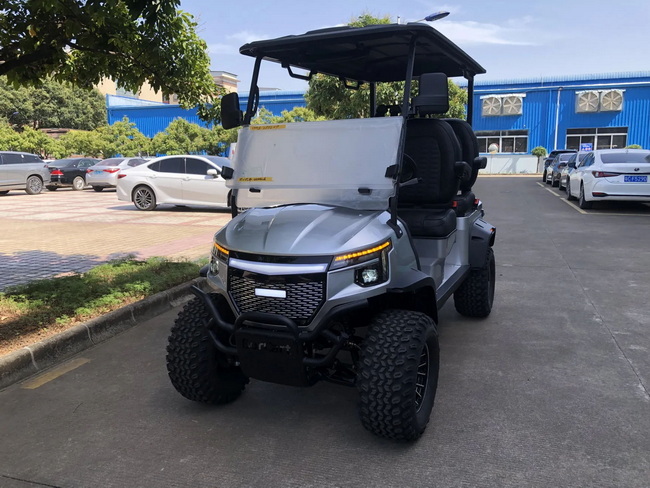
An average two‑seat golf buggy typically weighs about 800–1,100 lb, with electric models on lead‑acid batteries often near the higher end of this range and simpler configurations closer to the lower end.[2][1]
Electric golf buggies carry traction battery packs that can add 300–500 lb by themselves, plus motors and controllers, which means a significant portion of total weight is hidden under the seat and floor.[10][8][7]
Yes, converting a golf buggy from lead‑acid to lithium batteries can cut total weight by roughly 200–300 lb because lithium packs are often 50–70% lighter at comparable energy capacity.[8][7]
Many standard two‑seat golf buggies are rated to carry around 800–1,200 lb including passengers, clubs, and cargo, while four‑seat and utility models can often handle 1,200–1,600 lb or more when designed for heavier service.[4][6]
Accessories such as lift kits, large off‑road tires, extended roofs, rear flip seats, audio systems, and cargo boxes can collectively add 150–300 lb or more to a golf buggy, affecting range, braking, and overall handling.[1][3][4]
[1](https://www.golfcarttiresupply.com/blog/how-much-does-a-golf-cart-weigh/)
[2](https://centralvalleycarts.com/performance/how-much-does-a-golf-cart-weigh/)
[3](https://www.olelonenergy.com/how-much-does-a-golf-cart-weigh/)
[4](https://golfcartsearch.com/blog/how-much-does-a-golf-cart-weigh)
[5](https://www.puttersgolfcarts.com/blogs/putters-blogs/how-much-does-a-golf-cart-weigh-the-ultimate-guide-to-golf-cart-weight)
[6](https://extremekartz.com/blogs/extreme-blogging/understanding-golf-cart-weight-limits)
[7](https://golfcarts.com/how-much-does-a-golf-cart-weigh/)
[8](https://vovexgolf.com/blogs/golf/how-much-does-a-golf-cart-battery-weigh)
[9](https://ecoplaneta.com/how-much-does-a-golf-cart-weigh/)
[10](https://hartvillegolfcarts.com/how-much-do-golf-cart-batteries-weigh/)
[11](https://taraelectricvehicles.com/blog/2025/09/09/how-much-does-a-standard-12v-golf-cart-battery-weigh/)
[12](https://wis-tek.com/blogs/knowledge/the-importance-of-knowing-a-golf-cart-s-weight-limit)
[13](https://jsgolfcarts.com/blog/golf-cart-weight/)
[14](https://bighorngolfer.com/blogs/a/weight-distribution-in-electric-golf-push-carts)


