


Views: 222 Author: Leah Publish Time: 2026-02-04 Origin: Site


Content Menu
● Understanding Electric Golf Cart Towing Capacity
● Typical Towing Capacity of an Electric Golf Cart
● Key Factors That Affect How Much an Electric Golf Cart Can Tow
>> Battery Voltage, Capacity, and Health
>> Chassis, Suspension, and Brakes
>> Terrain, Gradient, and Surface Conditions
>> Hitch Design and Trailer Setup
● Safe Towing Guidelines for an Electric Golf Cart
>> Check the Official Towing Capacity
>> Load and Balance the Trailer Correctly
>> Use Proper Towing Mode and Pre‑Trip Checks
● Real‑World Use Cases for Electric Golf Cart Towing
>> Residential Communities and Private Estates
>> Industrial and Commercial Sites
● Designing and Selecting an Electric Golf Cart for Towing (OEM Perspective)
>> Matching Specifications to Application
>> Custom Hitches, Cargo Systems, and Accessories
● FAQ
>> 1. How much weight can a typical electric golf cart tow?
>> 2. Is towing with an electric golf cart bad for the batteries or motor?
>> 3. Can an electric golf cart tow another golf cart?
>> 4. What upgrades improve towing performance on an electric golf cart?
>> 5. How do I choose the right electric golf cart for my towing needs?
Most standard electric golf cart models can safely tow between 400 and 600 pounds, while some heavy‑duty versions can tow up to about 1,000 pounds under the right conditions. The exact towing capacity depends on the cart's motor, controller, batteries, chassis design, and how and where you tow.
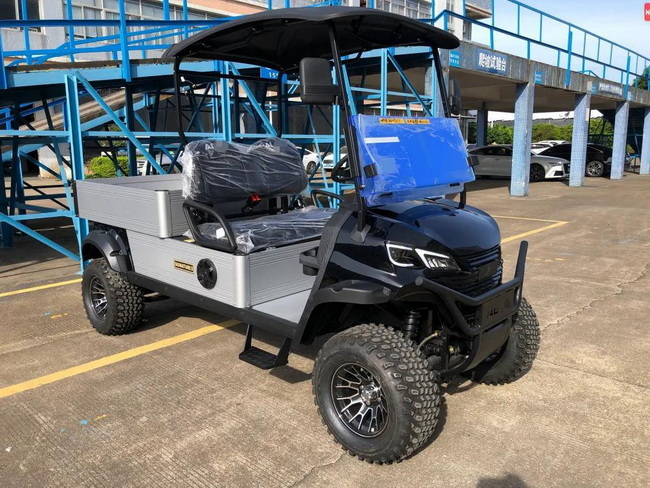
For modern utility users, the electric golf cart is no longer just a vehicle for the fairway; it is a compact tow vehicle for resorts, farms, industrial parks, and private estates. As a professional Chinese manufacturer like BorCart, which focuses on electric golf cart OEM production for overseas brands and wholesalers, towing performance is a core part of vehicle design and specification.
In this guide, we will explore how much an electric golf cart can tow, what affects its towing capacity, and how to tow safely in real‑world scenarios. The article uses examples and practical tips suitable for brand owners, dealers, and fleet managers who specify or resell customized electric golf cart solutions.
Most mainstream electric golf cart models are designed for light‑to‑medium towing tasks. In general, you can use the following ranges as a starting point when planning real‑world use:
- Many standard electric golf cart models tow around 400–600 pounds safely for light trailers, garden tools, or small loads.
- Some enhanced or utility‑focused electric golf cart designs can reach up to about 1,000 pounds of towing capacity on flat, controlled surfaces.
- Comparable gas golf carts often tow more, in the range of 800–1,500 pounds, because of higher horsepower, but they lose the low‑noise, zero‑emission advantages of an electric golf cart.
These values are general references; the actual number for any specific electric golf cart must come from the official specification sheet or owner's manual. Manufacturers rate towing capacity after testing motor torque, controller settings, chassis, and braking performance as a complete system.
The motor and controller are the heart of any electric golf cart towing system. Higher‑power motors with robust controllers generally deliver better low‑speed torque and more stable pulling ability.
Many popular electric golf cart platforms run motors in a range that gives practical towing capacity from about 400 to 1,000 pounds. Controller amperage directly influences how much current the motor can receive under load, which affects hill starts and acceleration with a trailer.
For OEM buyers, specifying a stronger controller and motor package for fleet or utility versions of an electric golf cart can significantly improve safe towing margins. When you match the motor and controller properly, the electric golf cart will feel more confident and responsive under load instead of struggling or overheating.
Battery packs determine how long an electric golf cart can tow and how well it holds torque over time. A higher‑voltage system with quality cells maintains better performance under continuous load.
Common configurations include 36 V, 48 V, or 72 V packs in lead‑acid or lithium chemistry, with higher‑end models often moving to 48 V or 72 V for stronger performance. Larger capacity (Ah) and good battery health reduce voltage sag when the electric golf cart pulls heavier loads, especially on inclines or during long duty cycles.
For fleets, upgrading to lithium batteries not only extends range but also stabilizes towing performance during repeated operations. Lithium packs usually deliver more consistent voltage, recharge faster, and reduce maintenance demands compared with traditional flooded batteries, which is a clear advantage for a work‑focused electric golf cart.
Towing is not just about torque; it is about control. A strong chassis and proper suspension help an electric golf cart stay stable with a loaded trailer.
Reinforced frames, independent front suspension, and quality rear axles support heavier draws and reduce sway. Four‑wheel braking systems with reliable parking brakes improve control when towing on slopes or in crowded environments.
A well‑engineered electric golf cart will always combine torque, structural strength, and braking capacity in its towing rating, not just advertise raw pulling numbers. When you compare models or specify an OEM configuration, always look at frame design, axle size, and braking hardware alongside the motor power rating.
Real‑world towing capacity always drops when conditions worsen. The same electric golf cart will tow more on flat, paved paths than on soft grass or gravel.
On moderate slopes, the effective safe towing limit may need to be cut significantly compared with the flat‑ground rating. Wet, muddy, or sandy surfaces increase rolling resistance, which can overheat motors and controllers if you try to tow at the maximum rated weight.
When calculating what an electric golf cart can tow, always consider the worst terrain the vehicle will encounter in normal operation. A conservative approach helps protect both the vehicle hardware and the safety of passengers and operators.
A strong, properly installed hitch is essential for safe towing with an electric golf cart. Many towing problems arise not from power limits but from poor hitch selection and installation.
Use a hitch and mounting kit rated above the maximum expected trailer weight and tongue weight. Balance the trailer so that tongue weight is typically around 10–15% of total trailer weight, reducing sway while avoiding excessive load on the rear axle of the electric golf cart.
A simple example: if a trailer and cargo weigh 600 pounds, a tongue weight in the 60–90 pound range is often recommended for stable towing. Proper hardware and setup allow the electric golf cart to tow smoothly, without excessive bouncing or fishtailing.
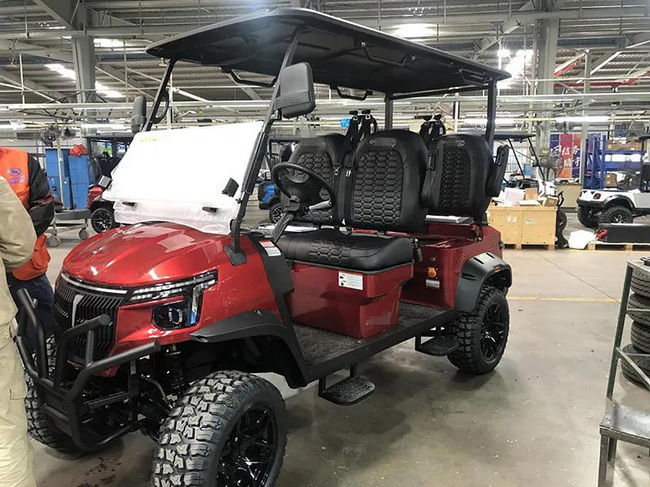
Even if an electric golf cart has enough rated capacity on paper, real‑world safety depends on operating habits. Simple checks and disciplined driving practices make a big difference in reliability and comfort.
Before attaching any trailer, confirm the manufacturer's specified towing capacity and maximum tongue weight for the electric golf cart model. These limits are based on tests that include motor thermal limits, braking distance, and structural strength.
Stay well below the published value if you expect steep gradients, high temperatures, or unpaved surfaces during operation. If your use case is near the limit, it may be better to select a dedicated utility‑type electric golf cart with reinforced design and higher tow ratings.
Poor loading can destabilize an otherwise capable electric golf cart. Distribute cargo evenly left to right and keep heavier items low and close to the trailer axle to maintain a low center of gravity.
Avoid stacking cargo high, which raises the center of gravity and makes the electric golf cart–trailer combination more prone to tipping, especially in turns. Secure the load with straps or netting so that nothing can shift suddenly when the cart accelerates, brakes, or crosses uneven ground.
Taking a few minutes to reorganize the trailer often improves safety more than any hardware upgrade. A well‑balanced trailer also feels lighter and easier to control from the driver's point of view.
Electric golf cart braking and steering geometry are tuned for low‑speed operation. When towing, the extra mass makes high speeds especially risky.
Many practical towing scenarios recommend staying under about 15 mph when towing a golf cart or towing with a golf cart, especially with passengers or heavy loads. Reduce speed further on slopes, in wet conditions, at night, or when visibility is poor.
Slower speeds protect the motor and controller, reduce brake heating, and provide more reaction time if the trailer begins to sway. A calm, measured driving style extends the life of the electric golf cart and keeps the experience comfortable for all users.
Some modern electric golf cart platforms include dedicated driving modes or settings that adjust torque and regenerative braking under heavy loads. When available, these modes should be used whenever a trailer is attached.
Before each towing shift, inspect tires for pressure and tread, check brake function, and verify that hitch bolts and safety chains are secure. Test acceleration and braking at low speed with the loaded trailer in a safe area before entering normal traffic or tight resort environments.
Routine checks significantly increase the reliability of an electric golf cart in daily towing work. For fleets and commercial sites, creating a simple checklist for operators helps standardize safe practices.
On golf courses and resorts, an electric golf cart is ideal for quiet, low‑impact towing tasks. Grounds teams often tow small maintenance trailers with tools, fertilizer, and sand bins within the 300–600 pound range.
Housekeeping or luggage units at resorts may use electric golf cart platforms to move baggage, linens, or supplies between buildings without disturbing guests. The quiet operation, compact size, and easy maneuverability of an electric golf cart are especially valuable in landscaped and pedestrian‑heavy environments.
Gated communities, farms, and private estates frequently adopt electric golf cart vehicles as internal logistics units. Residents tow small garden trailers, firewood, trash bins, or building materials around their property, comfortably staying inside the common 400–600 pound envelope.
Security and maintenance staff use utility‑style electric golf cart units with cargo beds and tow hitches for daily patrols and repair work. With suitable tires and suspensions, these carts handle gravel paths and gentle slopes reliably while remaining quiet enough for early‑morning or late‑night operation.
Industrial parks, factories, and warehouses also deploy electric golf cart platforms for towing, especially indoors or in emission‑sensitive zones. In these environments, low noise and zero exhaust are just as important as raw towing capacity.
Some commercial electric vehicles derived from golf cart architecture can tow significantly heavier loads, though these are specialized industrial units rather than standard course carts. For OEM and fleet clients, manufacturers can configure an electric golf cart with reinforced frames, higher‑voltage systems, and upgraded axles to meet site‑specific towing needs.
These applications show how far beyond traditional fairway use the electric golf cart segment has evolved. A single fleet of electric golf cart vehicles can cover passenger transport, cargo hauling, and light towing within the same facility.
For overseas brands and wholesalers working with an OEM like BorCart, aligning electric golf cart specs with real towing needs is critical. The goal is to balance performance, cost, and durability for the target market.
Key configuration choices typically include:
- Motor type and power, such as efficient AC motors sized for the required towing loads.
- Battery system voltage and chemistry, choosing between 48 V or 72 V, lead‑acid or lithium, and specifying capacity based on daily working hours.
- Frame, suspension, and brake package tuned for the expected maximum trailer and cargo weight, including safety margins.
Providing clear use‑case descriptions—terrain, maximum slope, daily hours, climate, and cargo type—allows the OEM to design an electric golf cart that tows safely within a generous margin. This reduces warranty issues and increases satisfaction for end users such as resorts, campuses, or farms.
OEM and ODM cooperation enables deeper customization around towing. Dedicated rear hitches, front receivers, or multi‑position mounting points expand how an electric golf cart can connect to trailers, sprayers, spreaders, or other implements.
Accessories such as reinforced cargo boxes, rear baskets, and utility racks allow the same electric golf cart to handle both towing and direct load carrying. Lighting upgrades, mirrors, and safety beacons can also be integrated for commercial or municipal users who operate at night or in mixed traffic.
For brand owners, this kind of customization becomes a product differentiator in markets such as hunting vehicles, multi‑purpose campus carts, and low‑speed utility vehicles. A well‑specified electric golf cart line‑up can include leisure models, workhorse units, and dedicated towing variants, all sharing a common platform.
An electric golf cart is a compact but capable tow vehicle when correctly specified, loaded, and operated. Most standard models safely tow in the 400–600 pound range, while stronger variants can approach about 1,000 pounds under controlled conditions, provided that motor power, controller settings, chassis strength, and braking systems are all appropriately matched.
For brands, wholesalers, and fleet operators, working closely with a specialized OEM manufacturer to define towing requirements ensures that each electric golf cart delivers reliable, safe performance in daily use. Whether deployed on golf courses, resorts, residential communities, or industrial sites, a well‑designed electric golf cart can become a quiet, efficient workhorse for light‑to‑medium towing tasks.
Contact us to get more information!
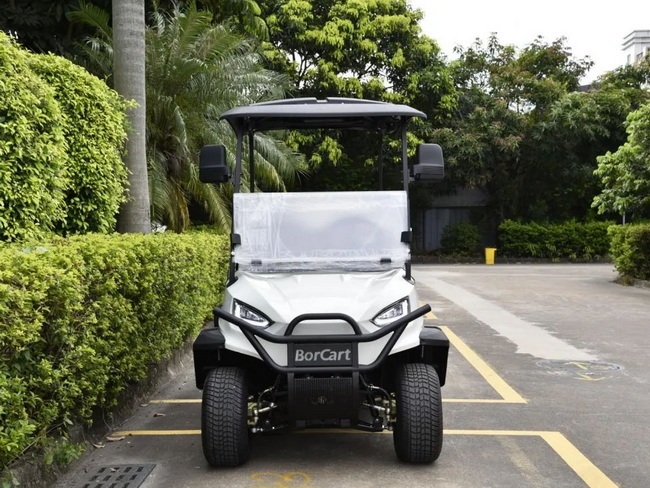
A typical electric golf cart can usually tow between 400 and 600 pounds on flat, firm ground, assuming the trailer is properly balanced and the cart is in good condition. Some enhanced or utility‑style models can tow up to about 1,000 pounds when the manufacturer's guidelines are followed and when speeds are kept low.
Towing within the rated capacity and using proper driving habits does not harm a quality electric golf cart; it is part of the intended design envelope. Problems typically occur only when operators exceed weight limits, tow up steep slopes for long periods, or neglect battery and brake maintenance.
Yes, many carts are capable of towing another similar unit using approved tow bars or dollies, as long as the combined weight stays inside the official capacity. Operators must ensure secure connections, maintain low speeds, and allow longer stopping distances when towing another golf cart to keep the combination stable.
Upgrades that help include a higher‑power motor, a stronger controller, higher‑voltage or higher‑capacity batteries, reinforced frame components, and better brakes. Quality hitches, appropriate tires, and well‑designed suspension systems further increase real‑world towing stability and safety for any electric golf cart.
Start by defining maximum trailer weight, terrain, slope, climate, and daily operating hours, then compare those requirements with rated towing specifications from manufacturers. For OEM cooperation or fleet procurement, share this data so the supplier can configure an electric golf cart with suitable motor, battery, chassis, and hitch systems tailored to your environment.
1. https://extremekartz.com/blogs/extreme-blogging/a-quick-guide-to-golf-cart-towing-capacity
2. https://taraelectricvehicles.com/blog/2025/06/12/how-much-weight-can-a-golf-cart-pull/
3. https://www.bennelsongolfcars.com/blog/a-quick-guide-to-golf-cart-towing-capacity--58011
4. https://www.langqinggolfcart.com/how-much-can-a-electric-golf-cart-tow.html
5. https://jsgolfcarts.com/blog/golf-cart-weight/
6. https://peachtreecitytowing.com/mastering-the-art-of-golf-cart-towing/
7. https://borcart.en.made-in-china.com
8. https://www.golfcaruk.com/golf-buggy-specifications/
9. https://taraelectricvehicles.com/blog/2025/06/10/how-to-tow-a-golf-cart-best-methods-and-tips-for-safe-towing/
10. https://borcart.en.alibaba.com
11. https://apacheelectricvehicles.com/blog/club-car-golf-cart-towing-capacity-everything-you-need-to-know/
12. https://georgiagolfcartsandtrailers.com/mastering-the-art-of-towing-5-essential-tips-for-safely-towing-your-golf-cart-behind-a-v
13. https://www.made-in-china.com/video-channel/borcart_ZFzTWfNOfLGI_Borcart-Factory-Custom-Golf-Cart-From-China-with-4-Wheel-Electr
14. https://www.alke.com/electric-car-golf
15. https://www.oreateai.com/blog/how-to-tow-a-golf-cart/d85355419b9f1771780bc870b7ee78af


