


Views: 222 Author: Leah Publish Time: 2026-02-04 Origin: Site


Content Menu
● Understanding Why Electric Golf Carts Have No CC
● What Does CC Mean for Gas Golf Carts?
● How Is Power Measured in an Electric Golf Cart?
● Typical Performance of an Electric Golf Cart
● Comparing Electric Golf Cart Power to Gas CC
● Key Specs to Look at Instead of CC
>> Controller Amperage and Torque
>> Battery Technology and Range
● Real‑World Example of Electric Golf Cart Power
● Choosing the Right Electric Golf Cart for Your Needs
● Maintenance Advantages of an Electric Golf Cart
● FAQ About Electric Golf Cart Power
>> 1. Do electric golf carts have CC like gas carts?
>> 2. How much horsepower does a typical electric golf cart have?
>> 3. What voltage is best for an electric golf cart?
>> 4. Is a higher kW rating always better for an electric golf cart?
>> 5. Can I upgrade the power of my existing electric golf cart?
Electric golf carts do not have “CC” at all, because they do not use gasoline engines; instead, their power is defined by voltage, kilowatts or watts, and horsepower, not cubic centimeters. To choose or compare an electric golf cart, you should look at battery voltage (36V, 48V, etc.), motor power (kW or HP), torque, and controller current, rather than asking how many CC it has.
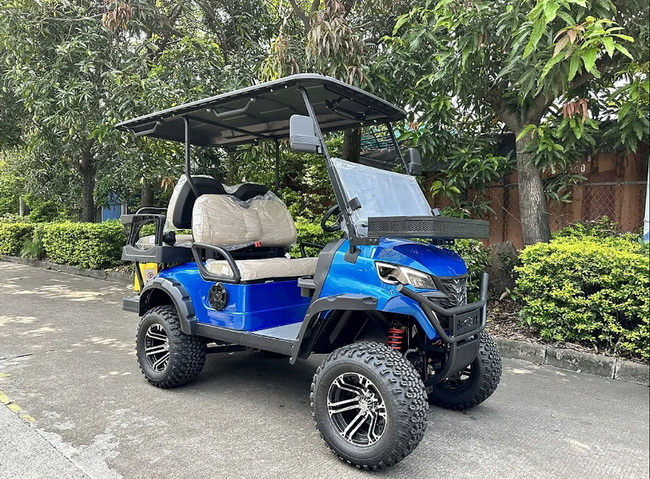
Unlike a gas cart, an electric golf cart has no combustion chamber, no pistons, and no displacement, so there is nothing to measure in cubic centimeters. CC is only meaningful for engines where fuel–air mixture is compressed and burned; in an electric motor, energy is converted electromagnetically, so we measure electrical power instead.
Most buyers ask “How many CC is an electric golf cart?” because they are used to gas specifications, but the correct questions are “What voltage is it?” and “How many kilowatts or horsepower does the motor produce?”. This shift in thinking is essential if you want to understand performance, range, and towing ability for modern electric golf carts.
On gasoline golf carts, CC (cubic centimeters) describes engine displacement, which strongly influences potential power and torque. For example, a common small gas golf-cart engine may be around 150 cc, using a single-cylinder, four‑cycle layout.
With gas models, higher CC typically allows more air–fuel mixture per cycle, which can mean more horsepower if the design supports it. However, even on gas carts, real‑world performance also depends on valve timing, fuel system, gearing, and overall weight.
When people cross over from gas carts to an electric golf cart, they often try to use CC as a mental shortcut for “how strong” the vehicle is. In reality, an electric golf cart with a modest horsepower rating can easily match or exceed the everyday usability of a higher‑CC gas model because of the way electric torque is delivered. This is why professional fleet buyers and resort operators focus on voltage, power, and battery capacity instead of CC.
Most standard electric golf carts use either 36‑volt or 48‑volt battery systems, while some high‑performance or utility models go even higher. Higher voltage systems can deliver more power and higher speed when paired with a suitable controller and motor.
A typical 36V system is enough for basic course use at moderate speeds, while a 48V system is preferred when you want stronger acceleration, better hill‑climbing, or heavier loads. In premium designs, advanced lithium battery packs with higher effective voltage give more consistent performance over the entire discharge cycle.
For a business customer or a brand owner sourcing OEM electric golf carts, understanding voltage is critical because it affects not only performance but also component selection, charger specifications, and long‑term operating costs. When you compare different electric golf cart models on a specification sheet, looking at battery voltage is often the first and simplest way to understand their performance tier.
Electric golf cart motors are usually rated in horsepower or kilowatts instead of CC. Many standard electric golf carts offer roughly 3–7 horsepower in continuous rating, with some designs and configurations reaching 10 horsepower or more at peak.
On average, manufacturers quote electric golf cart outputs in the range of about 5–15 horsepower for modern models, depending on application and tuning. High‑performance or modified carts can go well beyond these figures, delivering significantly higher peak power and much higher speeds than traditional golf‑course vehicles.
When you convert between units, 1 kilowatt is roughly equal to 1.34 horsepower, so a 5 kW motor corresponds to about 6.7 HP in simple terms. This makes it easier to compare the power of an electric golf cart to a small gasoline cart or even to compact cars and utility vehicles. The key is to remember that electric motors can maintain power over a wide rpm range and provide maximum torque almost instantly from standstill.
Because electricity is easy to quantify, many technical sheets state motor power in watts or kilowatts. A typical electric golf cart motor may be around 3,000–5,000 watts (3–5 kW), which corresponds to roughly 3–7 HP depending on efficiency and rating method.
Higher‑end or utility‑focused electric golf carts can use motors around 5–10 kW or more, designed to tow, haul, or climb steep terrain while maintaining good speed. Some kits for off‑road buggies and hunting vehicles list rated power of 10 kW with peak outputs up to 20 kW under short bursts.
For OEM buyers and wholesalers, the wattage rating is especially important because it must be matched carefully to controller capacity and battery configuration. Oversizing the motor without adequate current supply from the controller and batteries will not deliver the expected performance. A well‑balanced electric golf cart design aligns motor watts, controller amps, and pack voltage so that the whole system works efficiently and reliably.
A standard 48V electric golf cart with a motor in the 3–5 HP range usually delivers top speeds around 12–15 mph, suitable for golf courses and resorts. With upgraded controllers, higher voltage, or performance motors, speeds can increase into the 20–25 mph region or more.
Electric golf carts are known for strong low‑speed torque, which makes them feel very responsive even if the rated horsepower number seems modest compared with cars. For example, a high‑torque upgrade motor can boost pulling power significantly while maintaining typical golf‑course speeds around 14–15 mph.
In everyday use, this means an electric golf cart can smoothly carry several passengers, climb gentle hills, and handle frequent stop‑and‑go operation without noise, fumes, or frequent maintenance. For tourism operators using sightseeing buses or multi‑row buggies based on electric golf cart platforms, this combination of quiet power and reliability is especially valuable. It enhances the guest experience while keeping operating costs predictable.
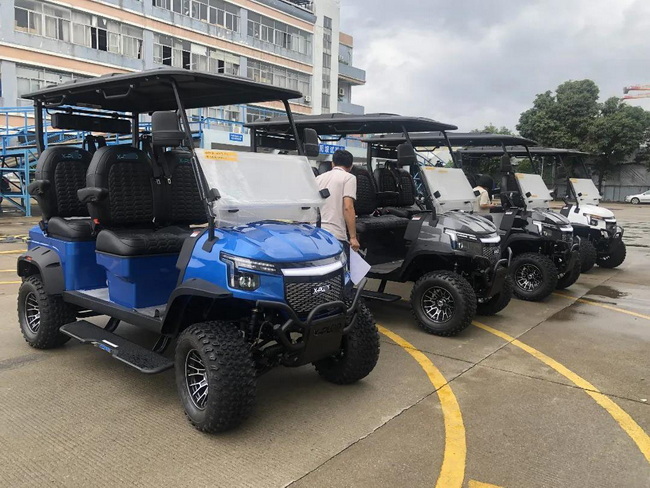
Even though it is not technically accurate, some owners try to compare an electric golf cart's electric horsepower to a gas cart's CC rating. One way to think about it is that an average gas golf-cart engine of around 150 cc might deliver about 10–12 HP, while a typical electric golf cart produces around 5–15 HP depending on model and configuration.
Due to instant torque and the way electric motors deliver power across a broad speed range, a smaller‑number electric horsepower rating can still feel very strong in real use. This is why a 5–7 HP electric golf cart can comfortably carry passengers, climb hills, and tow light trailers without needing any CC measurement at all.
If you are moving a fleet from gas to electric, a helpful rule of thumb is that an electric golf cart with a mid‑range motor and 48V system will match or exceed the everyday usability of a similarly sized gas cart. The driving experience also feels smoother, with less vibration and no gear shifts. For many commercial users, this upgrade in comfort and refinement is just as important as the raw numbers on a spec sheet.
When evaluating an electric golf cart, you should first identify the system voltage (36V, 48V, 56V, 72V, or higher) and motor design (AC or DC, series or shunt, brushless or brushed). Modern AC and brushless DC motors often provide higher efficiency, smoother control, and better high‑speed performance than traditional DC motors.
In practical terms, a higher voltage AC system with a suitable controller can offer stronger acceleration and better hill‑climbing than an older 36V DC cart, even if the basic horsepower rating appears similar. For fleet, resort, and multi‑purpose use, this combination gives a good balance of performance, reliability, and range.
For overseas brand owners and distributors, choosing the correct motor type in an electric golf cart also influences maintenance, spare parts, and service training. AC and brushless solutions may cost a bit more upfront, but they reduce brush wear and routine maintenance, which is especially attractive for high‑volume fleet operators.
The electronic controller regulates how much current goes from the battery pack into the motor, which directly affects torque and acceleration. Upgrading to a higher‑amp controller, when matched correctly to the motor and batteries, can increase torque substantially and improve real‑world drivability.
For example, performance torque motors paired with controllers in the 400–500 amp range can deliver both improved pulling power and higher potential speed compared with stock configurations. This is a major reason why enthusiasts can transform a standard electric golf cart into a capable hunting buggy or light utility vehicle without touching any engine displacement numbers.
From an OEM manufacturing perspective, controller selection is a key engineering decision. It must balance cost, thermal performance, expected duty cycle, and safety margins. A well‑designed electric golf cart platform gives buyers the option of several controller levels so that the same chassis can serve golf, resort, industrial, and off‑road applications simply by changing the controller and motor configuration.
Battery chemistry strongly influences how an electric golf cart behaves over a full day of use. Traditional lead‑acid packs are common and cost‑effective, but lithium systems provide lighter weight, more consistent voltage under load, and faster charging.
A well‑matched lithium battery and motor system helps an electric golf cart maintain strong acceleration even as the state of charge drops, which users notice as more stable performance over time. For commercial fleets and intensive resort use, this stability can be more important than any theoretical peak horsepower number.
Lead‑acid batteries still have a place in many markets because they are widely available and relatively affordable. However, for overseas partners building premium electric golf cart lines under their own brand, lithium power is quickly becoming the preferred choice. It supports higher‑end positioning, lower maintenance requirements, and better total cost of ownership across the full life of the cart.
Consider a common setup: a 48V electric golf cart with a 4–5 kW AC motor and a modern controller. Such a configuration typically produces continuous power of around 5–7 HP, with higher short‑term peaks for acceleration and hill climbs. In practice, this cart carries four passengers, reaches speeds around 14–20 mph depending on gearing and tires, and confidently handles moderate slopes.
Some aftermarket upgrade kits provide 10 kW rated motors and peak outputs up to 20 kW, targeted at off‑road and multi‑purpose applications beyond the golf course. These systems can push an electric golf cart to much higher speeds and torque levels, again without any reference to CC, only to voltage, kW, and controller current.
For OEM brands and wholesalers who focus on electric golf cart products, these examples show how flexible the platform can be. A single chassis design can be adapted into a golf course cart, a resort shuttle, a hunting vehicle, or a low‑speed utility truck simply by changing power configuration and body layout. When you discuss customization needs with a manufacturer, it is much more effective to specify desired voltage, kW, torque, load capacity, and range than to ask how many CC the vehicle has.
Different applications require different configurations, and understanding the core parameters of an electric golf cart makes selection much easier.
For golf courses, a quiet 36V or 48V electric golf cart with a 3–5 kW motor and durable body materials is usually sufficient. It offers enough torque for gentle slopes, comfortable speed for fairway movement, and easy control for players of all ages.
For resorts, hotels, and sightseeing parks, multi‑row or extended‑chassis vehicles based on electric golf cart platforms are popular. These often use 48V or higher systems with mid‑to‑high power motors to handle extra passenger weight and frequent stops. Operators also value strong braking systems, regenerative braking options, and smooth ride quality.
For hunting, industrial, or multi‑purpose use, buyers often select higher‑torque motors, upgraded controllers, and reinforced frames. The objective is to create a powerful electric golf cart that can climb steep paths, tow equipment, and handle rough surfaces while still remaining quiet and emissions‑free. In these situations, the CC question becomes irrelevant, and serious users focus directly on torque, ground clearance, suspension design, and payload.
If you are a brand owner or wholesaler working with an experienced OEM manufacturer, you can specify exactly how you want your electric golf cart products tuned. You might request a standard 48V golf model, a lifted off‑road version with heavy‑duty suspension, and a street‑legal low‑speed vehicle range. All of these start from the same fundamental electric golf cart concept but are configured and finished for different end markets.
Another reason CC does not apply to an electric golf cart is the very low mechanical complexity of its powertrain. Without fuel injectors, carburetors, oil pumps, and many other engine components, there are fewer points of failure.
Owners of electric golf carts typically spend less time and money on routine maintenance. There is no need for oil changes, spark plug replacements, or exhaust system checks. The main focus becomes battery care, brake inspection, tire condition, and periodic checks of the electrical connections.
For fleet operators, this translates into higher uptime and more predictable operating costs over the life of the electric golf cart. When you choose robust components and a reliable OEM partner, your carts can run all day with minimal unexpected downtime. This reliability is a strong selling point for overseas distributors who want to build a trusted local brand around electric golf cart products.
An electric golf cart has no CC specification because it does not contain a combustion engine, and its performance is defined entirely by electrical parameters. Voltage, kilowatts, horsepower, torque, controller amperage, and battery technology together determine how quickly and how far your electric golf cart can go, not engine displacement.
When you evaluate or customize an electric golf cart, focusing on system voltage, motor power, controller rating, and battery chemistry will give you a much clearer picture than trying to convert from gasoline CC. This approach helps you match each electric golf cart configuration precisely to its intended use, whether that is golf, sightseeing, hunting, or multi‑purpose transport.
For overseas brand owners, wholesalers, and manufacturers, partnering with a professional OEM supplier allows you to design electric golf cart models that fit your market perfectly, with powertrains tuned for local terrain, climate, and regulations. Instead of asking “How many CC is an electric golf cart?”, ask which combination of voltage, kW, torque, and range will best support your customers and your brand strategy.
Contact us to get more information!
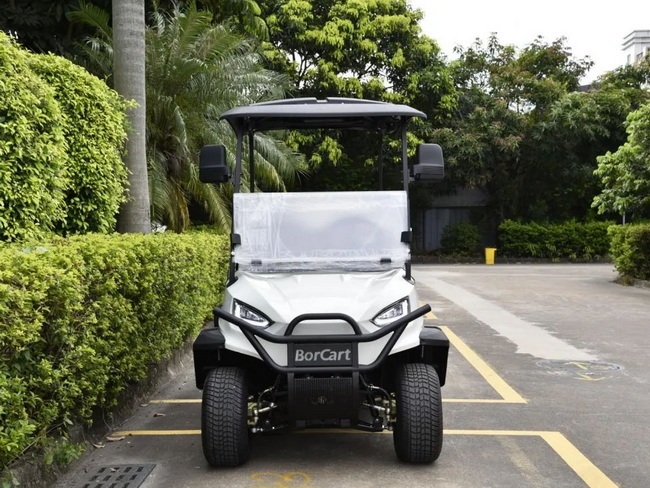
No, electric golf carts have zero CC because they use electric motors with no cylinders or displacement. Their specifications focus on voltage (like 36V or 48V), motor power in kW or HP, and battery capacity instead of CC.
A typical electric golf cart usually has around 3–7 horsepower in standard configurations, depending on the model and intended use. Many modern designs and upgraded carts fall in a wider band of about 5–15 horsepower, with performance and utility versions reaching even higher.
For basic course use, 36V electric golf carts offer adequate performance at a lower cost, while 48V systems provide stronger acceleration and better hill‑climbing capabilities. Higher‑voltage systems or more advanced battery packs are preferred when you need heavier towing, higher speeds, or longer daily duty cycles.
A higher kW motor can deliver more power and torque, but it must be matched with appropriate batteries, controllers, and driveline components to be reliable. For many golf courses and resorts, moderate kW ratings balanced with good range and durability can be more useful than extreme peak power.
Yes, many owners upgrade motors, controllers, and sometimes battery packs to increase power, torque, and top speed. It is important to ensure component compatibility and follow local safety regulations when modifying an electric golf cart, especially if it will be used on public roads or in commercial environments.
1. https://www.langqinggolfcart.com/how-many-cubic-centimeters-is-my-electric-golf-cart.html
2. https://www.youtube.com/watch?v=4qumcUI37gY
3. https://golf-faq.com/how-many-ccs-are-in-electric-golf-cart
4. https://guildgolfcarts.com/how-many-watts-is-a-golf-cart-motor/
5. https://ddmotorsystems.com/BeginnersGuideToMotors.php
6. https://www.langqinggolfcart.com/how-many-horsepower-is-an-electric-golf-cart.html
7. https://evtitan.com/electric-golf-carts-understanding-motor-power-and-performance/
8. https://www.oreateai.com/blog/how-much-horsepower-does-a-golf-cart-have/e59e9c0535f33c555730e4860ed8ee5f
9. https://petesgolfcarts.com/product/electric-motors-controllers-switches-and-solenoids/motors/club-car-golf-cart-electric-motor-torque-series
10. https://diversifiedgolfcars.com/gas-or-electric/


