


Views: 222 Author: Leah Publish Time: 2026-02-03 Origin: Site


Content Menu
● What Determines the Number of Batteries?
● Typical Battery Counts in Popular Electric Golf Carts
>> 36‑Volt Electric Golf Cart Setups
>> 48‑Volt Electric Golf Cart Setups
● Overall Range of Battery Counts
● How to Check How Many Batteries Your Electric Golf Cart Has
● Lead‑Acid vs Lithium: Does Battery Type Change the Count?
>> Lead‑Acid Electric Golf Cart Batteries
>> Lithium‑Ion Electric Golf Cart Batteries
● Performance Impact of Battery Count and Voltage
● Maintenance Considerations by Battery Count
● FAQ
>> 1. How many batteries are in a typical electric golf cart?
>> 2. Does a 48V electric golf cart always have more batteries than a 36V cart?
>> 3. Why do some electric golf carts use lithium packs with fewer batteries?
>> 4. How can I tell what voltage my electric golf cart uses?
>> 5. Do more batteries always mean more range in an electric golf cart?
An electric golf cart typically uses between 4 and 8 batteries, depending on its system voltage (36V or 48V) and whether it uses lead‑acid or lithium technology. Understanding how many batteries are in an electric golf cart helps you choose the right configuration, range, and performance for your course, resort, hunting, or utility application.
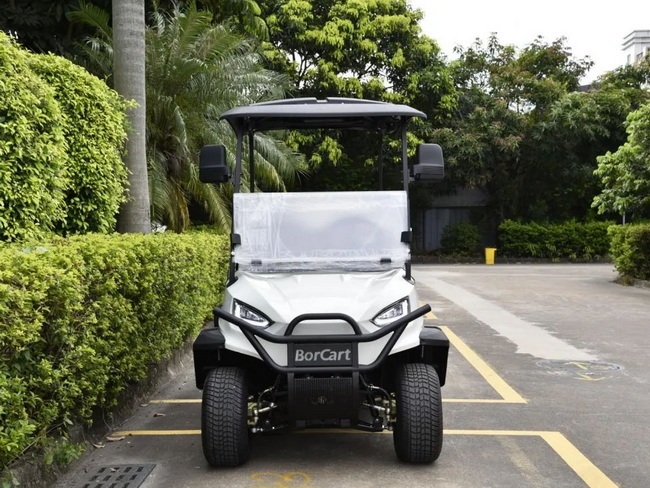
The number of batteries in an electric golf cart is driven mainly by the cart's total system voltage and the voltage of each individual battery. When engineers design an electric golf cart, they start from the target power, torque, and range, then choose a system voltage and battery layout that can deliver those requirements efficiently.
Most electric golf carts run on either a 36‑volt or 48‑volt system. A 36V configuration is common on older golf fleet models and simpler low‑speed vehicles, while 48V has become the mainstream choice for modern golf and multipurpose carts that need more torque and speed. Some heavy‑duty or specialty vehicles can even go higher, but 36V and 48V remain the dominant standards in the market.
Individual batteries are available in several nominal voltages, particularly 6V, 8V, and 12V for deep‑cycle lead‑acid designs. By wiring these batteries in series, manufacturers add up individual voltages to reach the desired system voltage. For example, six 6V batteries in series create a 36V electric golf cart pack, while six 8V batteries in series make a 48V pack.
Lithium technology changes the picture slightly because lithium modules can be designed directly at 36V or 48V nominal, or built from multiple cells in a more integrated case. This allows a 48V electric golf cart to run with fewer physical modules than an equivalent lead‑acid system, even though the overall voltage is the same.
Many classic or budget‑oriented electric golf carts use a 36V drive system, which is well‑suited for flat courses, gated communities, and moderate‑duty tasks. These carts prioritize simplicity and lower initial cost while still offering reliable electric performance.
The standard 36V configuration in a traditional lead‑acid electric golf cart is:
- Six 6‑volt deep‑cycle batteries connected in series (6 × 6V = 36V).
These batteries are usually flooded lead‑acid or AGM designs built for deep cycling, meaning they tolerate repeated discharge and recharge much better than typical automotive starter batteries. A 36V electric golf cart using this setup has enough power for leisurely driving, carrying two to four passengers, and covering a full round of golf on a single charge under normal conditions.
In some modern variations, lithium systems can replace the six 6V batteries with a smaller number of higher‑voltage lithium modules. For example, a pack might use three 12V‑equivalent lithium units in series or a single integrated 36V lithium case. The result is still a 36V electric golf cart, but with fewer physical battery units, lower weight, and improved efficiency.
A 48V system is now the most popular configuration for new electric golf carts because it delivers better performance and efficiency than 36V systems. With a higher voltage, the electric golf cart can achieve the same power using lower current, which reduces cable heating, allows smaller conductors, and improves overall system efficiency.
Common 48V lead‑acid battery configurations include:
- Six 8‑volt batteries in series (6 × 8V = 48V).
- Eight 6‑volt batteries in series (8 × 6V = 48V).
- Four 12‑volt batteries in series (4 × 12V = 48V), used in some compact or cost‑sensitive models.
A 48V electric golf cart with six 8V batteries is a very common layout, striking a good balance between pack size, cost, and capacity. Some manufacturers choose eight 6V batteries to increase total amp‑hours and range without changing system voltage, while others use four 12V units when they want to reduce the number of individual batteries and simplify wiring.
Lithium‑powered 48V electric golf carts often reduce the physical battery count even further. A lithium pack might consist of two or three high‑capacity 24V modules in series or a single sealed 48V unit. Despite having fewer batteries, these carts usually offer equal or better range and stronger acceleration compared with comparable lead‑acid versions.
Across the industry, an electric golf cart may have anywhere from 3 up to around 12 separate batteries, although the most frequent counts you will see are 4, 6, or 8. The extremes are usually associated with custom conversions, industrial platforms, or experimental designs, while standard golf and resort fleets stay within the more practical middle range.
For daily use on golf courses or in resorts, a typical electric golf cart uses:
- Six batteries for 36V or 48V packs.
- Eight batteries when the manufacturer wants extra capacity within a 48V system.
- Four higher‑voltage units in some compact 48V designs.
In specialized cases, especially with smaller‑voltage AGM or gel batteries, technicians might assemble larger strings or multi‑string packs that add up to a higher total count. However, such designs are less common for mainstream passenger‑carrying electric golf carts.
From the perspective of an overseas brand, wholesaler, or OEM customer, it is usually safe to assume that a standard 2‑seat or 4‑seat electric golf cart will contain six batteries, while lifted, high‑torque, or long‑range models might carry eight.
If you already own an electric golf cart or are inspecting a vehicle from a supplier, you can quickly confirm both battery count and system voltage through a simple visual check. This is especially important when you prepare for battery replacement, fleet maintenance planning, or specification comparison between different suppliers.
Use the following steps:
1. Open the battery compartment
Lift the seat base or open the rear service hatch, depending on the design of your electric golf cart. You will see multiple rectangular units connected by heavy cables.
2. Count the number of separate batteries
Each battery case typically has its own positive and negative terminals. Count each case as one battery to determine the total number installed in the cart.
3. Identify individual battery voltage
Look for a label or sticker indicating 6V, 8V, or 12V. If the label is missing on a flooded lead‑acid unit, count the number of cell caps or fill holes on top of the casing. Three caps normally indicate a 6V battery, four caps indicate 8V, and six caps indicate 12V.
4. Calculate system voltage
Multiply the voltage of one battery by the total number of batteries wired in series. For example, six 6V batteries equal a 36V system, while eight 6V batteries or six 8V batteries equal 48V.
5. Confirm configuration for future replacements
Once you know whether your electric golf cart is 36V or 48V and how many batteries it uses, you can order compatible replacement sets or plan a conversion to lithium while keeping the same nominal voltage.
This straightforward inspection helps fleet managers, golf course technicians, and international buyers verify whether a supplier is offering a six‑battery 48V electric golf cart, an eight‑battery long‑range model, or a simplified four‑battery configuration.
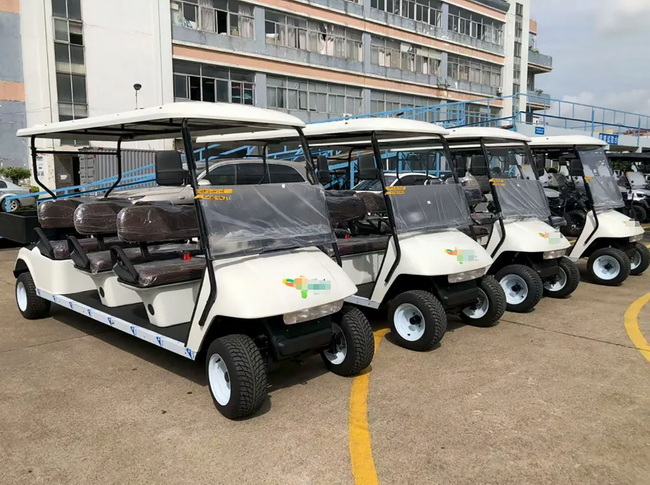
Battery chemistry has a major influence on how many batteries go into an electric golf cart, particularly when comparing conventional lead‑acid packs with modern lithium‑ion systems.
Traditional electric golf carts have long relied on deep‑cycle lead‑acid batteries because they are relatively inexpensive, widely available, and easy to service. They are designed to deliver sustained current over a long discharge, which matches the driving pattern of an electric golf cart on a golf course or in a resort.
Key characteristics of lead‑acid layouts include:
- Configurations based on 6V, 8V, or 12V units wired in series.
- Typical 36V packs made from six 6V batteries.
- Typical 48V packs built from six 8V, eight 6V, or four 12V batteries.
- High total pack weight, often exceeding 250–300 kg in heavy‑duty multi‑seat carts.
Because lead‑acid batteries are modular, designers can adjust the arrangement to make best use of the available tray space in the electric golf cart chassis. For example, an eight‑battery configuration may be split between front and rear compartments to balance weight and maintain stable handling.
The downside is that more lead‑acid batteries mean more individual cells, more interconnecting cables, and more points that require periodic maintenance. Watering, cleaning, and inspecting a pack of eight flooded batteries takes noticeably more time than looking after a compact four‑battery or lithium setup.
Lithium‑ion technology is reshaping how many batteries an electric golf cart really needs. Higher energy density, lighter weight, and flexible packaging allow manufacturers to deliver the same 36V or 48V output with a smaller number of modules.
Advantages of lithium layouts in an electric golf cart include:
- Fewer modules for the same voltage, such as two or three 24V blocks, or a single 36V/48V case.
- Weight reductions of 50–70% compared with a similar‑capacity lead‑acid pack.
- Much higher cycle life, often reaching several thousand cycles under proper charging.
- Built‑in battery management systems that monitor cells and help protect against over‑charge and over‑discharge.
Because each lithium module can hold far more usable energy than a single lead‑acid battery, the physical count of batteries in a lithium electric golf cart is typically lower. A 48V electric golf cart that once used eight 6V batteries might be upgraded to just one or two high‑capacity lithium units occupying the same space.
For OEM customers, distributors, and fleet operators, this means an easier installation process, fewer cable connections, and simpler logistics when ordering replacement packs or specifying vehicles for different markets.
The number of batteries in an electric golf cart is more than just a packaging detail; it has real consequences for performance, range, and driving experience. Voltage, amp‑hours, and chemistry all interact to determine how the vehicle behaves under load.
Some important relationships:
- Higher voltage, such as 48V instead of 36V, allows the controller and motor to deliver the same power with lower current. This improves efficiency, reduces heat in cables and components, and can enhance hill‑climbing and acceleration.
- The total energy capacity of the pack, often measured in watt‑hours, is a product of voltage and amp‑hours. Two carts may both be 48V, but the one with more amp‑hours will typically have longer range.
- Lead‑acid batteries experience more voltage sag under heavy load, so the electric golf cart can feel slower and weaker as the pack discharges. Lithium packs maintain a more stable voltage, helping the cart feel responsive until the battery is nearly empty.
In practical terms, a 48V electric golf cart with a robust pack of eight 6V lead‑acid batteries can comfortably handle hilly courses and heavier passenger loads, while a similar cart with a lighter lithium pack may provide even better climb performance and extended range with fewer physical batteries.
Battery count is closely tied to how much maintenance your electric golf cart will need over its lifetime. This is especially noticeable in large fleets used by golf courses, resorts, hotels, property developers, or industrial parks.
For lead‑acid electric golf carts:
- Every individual battery must be checked periodically for electrolyte level (if flooded), cleaned around the terminals, and inspected for corrosion or leakage.
- More batteries mean more cables and joints where loose connections or corrosion can cause voltage drops, heat, or intermittent failures.
- Equalization charges and careful charging schedules are important to keep all batteries in a large pack balanced and healthy.
A pack of eight 6V batteries demands more attention than a pack of four 12V batteries, and both demand much more attention than a compact lithium module. Over several years, the labor cost of maintaining a large lead‑acid pack can be significant for commercial operators.
For lithium electric golf carts:
- Routine maintenance is minimal, with no watering and reduced risk of terminal corrosion.
- Battery management systems often provide data on pack health, making it easier to schedule replacements at the right time.
- Fewer physical modules make visual inspection quick, even in a large fleet.
As a result, many operators of sightseeing buses, hunting carts, and multipurpose utility vehicles are now transitioning from high‑count lead‑acid setups to low‑count lithium packs, reducing both downtime and operating cost.
Most modern electric golf carts operate on either 36V or 48V systems and therefore use between 4 and 8 batteries, with six‑battery layouts especially common in both golf and utility applications. Traditional lead‑acid electric golf carts rely on multiple 6V, 8V, or 12V deep‑cycle batteries wired in series, while newer lithium electric golf carts can achieve the same voltage and significantly better performance with fewer, lighter modules. Selecting the right combination of battery type, system voltage, and battery count allows golf courses, resorts, hunting operators, and fleet managers to optimize cost, range, maintenance needs, and user experience across their entire electric golf cart line‑up.
Contact us to get more information!
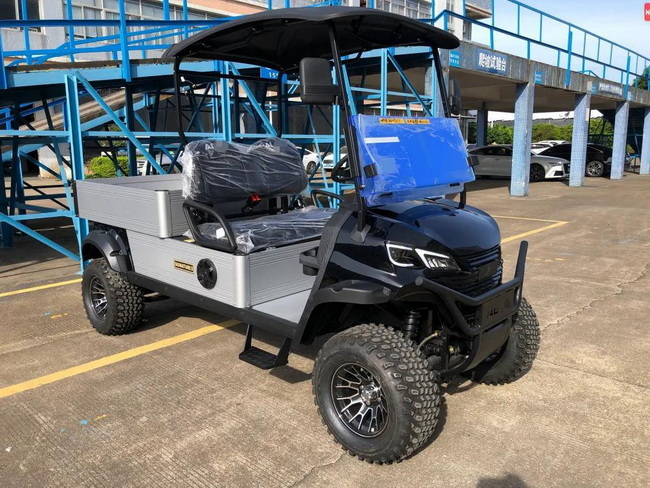
Most electric golf carts have either 4, 6, or 8 batteries, depending on whether they use a 36V or 48V system and on the voltage of each individual unit. For example, a common 36V electric golf cart uses six 6V batteries, while many 48V electric golf carts use six 8V or eight 6V batteries to reach the required system voltage.
A 48V electric golf cart does not necessarily have more batteries than a 36V model. Because manufacturers can use higher‑voltage batteries such as 8V or 12V units, a 48V cart may reach its voltage with the same or even fewer individual batteries than a 36V cart that relies solely on 6V units. The voltage of each single battery, not just the overall system voltage, determines the final battery count.
Lithium‑ion batteries have higher energy density and can be configured as larger modules, which allows a 36V or 48V electric golf cart to operate using fewer physical batteries. A lithium pack might consist of just one or two large‑capacity units instead of six or eight lead‑acid batteries, but still deliver equal or better range and stronger performance. This reduction in physical battery count simplifies installation and cuts maintenance requirements for fleet operators.
To determine the voltage of your electric golf cart, identify the voltage of a single battery and multiply it by the number of batteries wired in series. If each battery is labeled 6V and you have six in series, the system is 36V; if you have eight 6V units or six 8V units, it is 48V. This quick calculation helps you select the correct charger, plan replacements, and evaluate upgrade options.
More batteries can increase total energy capacity, but battery chemistry, voltage, and efficiency are just as important. A heavy pack of lead‑acid batteries with many units may offer similar or even less usable range than a lighter lithium pack with fewer units but higher usable capacity. In many cases, a well‑designed 48V lithium electric golf cart with fewer batteries can out‑perform a heavier 36V or 48V lead‑acid cart in both range and acceleration.
1. https://golfcarts.com/how-many-batteries-are-used-in-electric-golf-carts/
2. https://www.advantagegolfcars.com/blog/golf-carts-batteries-101-a-complete-guide--28027
3. https://www.golfcartgarage.com/what-is-my-golf-cart-battery-voltage-volts/
4. https://hookupmycart.com/tech-center/golf-cart-voltage-guide/
5. https://www.indianrivergolfcars.com/batteries-golf-carts-dealership--batteries
6. https://carts-and-parts.com/how-to-wire-golf-cart-battery-system/
7. https://www.golfcartmax.com/post/the-best-golf-cart-batteries-lithium-ion-vs-lead-acid
8. https://www.cartsgonewild.com/blog/everything-you-need-to-know-about-golf-cart-batteries--16173
9. https://www.batterystuff.com/files/1388-battery-saver-install-guide-24v-36v-48v-series.pdf
10. https://powerurus.com/blogs/news/nbsp-leadacid-vs-lithium-batteries-for-golf-carts-a-comprehensive-comparison-nbsp
11. https://manlybattery.com/ultimate-guide-to-golf-cart-lithium-battery/
12. https://www.propowenergy.com/news/how-many-batteries-in-a-golf-cart/
13. https://leochlithium.us/lithium-vs-lead-acid-golf-cart-batteries-which-one-is-right-for-you/
14. https://bslbatt.com/blogs/lithium-golf-cart-battery-prices-2025-current-price-range/
15. https://boltenergyusa.com/golf-cart-battery-voltage-explained/


