


Views: 222 Author: Leah Publish Time: 2026-01-10 Origin: Site


Content Menu
● What “Charging Time” Really Means
● Typical Charging Time Ranges for a Golf Buggy
● Lead‑Acid vs. Lithium Golf Buggy Batteries
● The Role of Voltage and Capacity
● How Chargers Influence Golf Buggy Charge Time
● Battery Age, Condition, and Depth of Discharge
● Environmental and Installation Factors
● Daily Charging Strategies for Golf Buggy Owners
>> For Individual Golf Buggy Owners
>> For Resorts, Courses, and Fleets
● OEM Golf Buggy Design Considerations (BorCart Perspective)
● Maintenance Tips to Keep Golf Buggy Charge Times Consistent
● Safety Considerations During Golf Buggy Charging
● How to Choose the Right Golf Buggy Charging Setup
● FAQ
>> 1. How long does it take to charge a golf buggy from empty?
>> 2. Can a golf buggy stay plugged in overnight?
>> 3. Does a lithium golf buggy charge faster than a lead‑acid golf buggy?
>> 4. How often should a golf buggy be charged?
>> 5. What can I do to make my golf buggy charge faster?
Charging a golf buggy usually takes between 4 and 10 hours, depending on battery type, charger output, and how deeply the battery has been discharged. Lead‑acid golf buggy packs commonly need an overnight charge, while lithium systems can often be turned around in just a few hours for continuous use and fleet operations.
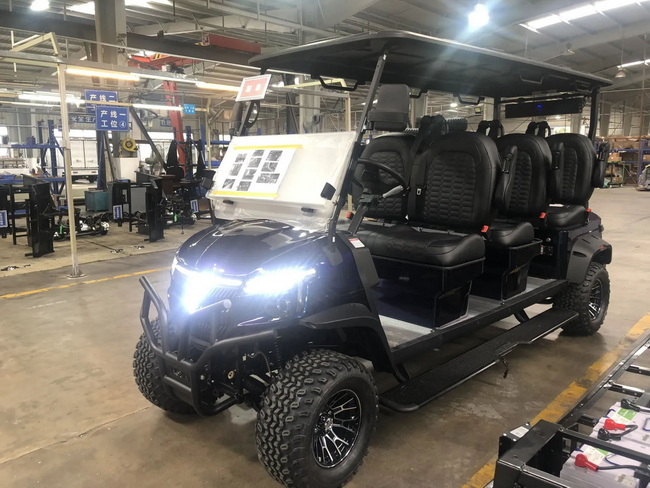
Charging time for a golf buggy is not a single fixed number but a range influenced by the real‑world conditions in which the vehicle operates. Owners, fleet managers, and OEM buyers need to think in terms of “typical scenarios” rather than ideal lab figures.
- For everyday recreational use, many golfers assume one full overnight charge is equal to a full day's operation for a golf buggy on a standard 18–36 hole course.
- In commercial environments such as resorts, hotels, and gated communities, a golf buggy may be used almost continuously throughout the day, so the available charging window becomes part of the operational planning.
- For OEM brands sourcing from manufacturers like BorCart, specifying the right battery and charger combination determines whether each golf buggy is optimized for daily leisure use, intensive fleet duty, or mixed scenarios.
Understanding how battery chemistry, charger technology, and user behavior interact is essential to predicting how long a golf buggy will actually stay on charge in daily use.
While exact figures depend on each setup, charging times for a modern golf buggy tend to fall within a fairly consistent range.
- A common guideline is 5–10 hours for a full charge from a low state of charge with standard chargers and typical lead‑acid golf buggy packs.
- Many 36V and 48V golf buggy systems used on golf courses or in residential communities are sized so that an overnight charge (usually 8–10 hours) restores the pack for the next day's operation.
- In some cases, a completely drained lead‑acid golf buggy battery pack may require up to 10–14 hours to reach full capacity, especially if the charger has a modest output or the batteries are aging.
- Where lithium batteries and higher‑output chargers are used, a golf buggy can often be charged in about 3–5 hours, with partial charges to 70–80% feasible in even shorter windows.
These ranges help owners and operators plan schedules, whether the golf buggy is a personal vehicle or part of a larger commercial fleet.
The single biggest factor affecting how long it takes to charge a golf buggy is the battery chemistry inside the pack. Lead‑acid and lithium systems behave very differently, both during charging and across their life cycle.
Lead‑acid batteries have been the traditional choice for golf buggy platforms for decades. They remain popular due to their relatively low purchase cost and wide compatibility with existing chargers.
- A typical lead‑acid golf buggy pack will require around 6–12 hours to charge from a deeply discharged state, depending on capacity and charger current.
- Because the charging process progresses through bulk, absorption, and float stages, the last 10–20% of the charge can take disproportionately longer, which is why “overnight charging” is still a standard recommendation.
- Lead‑acid golf buggy batteries are sensitive to under‑charging and chronic partial charging; cutting charge cycles short can reduce capacity, accelerate sulfation, and lengthen future charge times.
For budget‑conscious buyers or fleets with existing lead‑acid infrastructure, these packs can still be a strong option, but they require more disciplined charging habits to maintain performance.
Lithium‑ion or lithium iron phosphate (LiFePO₄) systems are increasingly specified for modern golf buggy models due to their superior energy density, cycle life, and charging efficiency.
- A lithium‑powered golf buggy typically charges in about 2–5 hours with a suitable dedicated charger, even from a relatively low state of charge.
- Some premium lithium systems can bring the golf buggy battery to around 80% capacity within roughly 1–2 hours, making fast turnaround feasible between rental sessions or shifts.
- Lithium packs tolerate partial charging far better than lead‑acid, so “top‑up” charging throughout the day does not harm the golf buggy battery and can actually streamline operations.
Although the initial cost is higher, lithium golf buggy systems often deliver lower total cost of ownership and more flexible charging strategies, especially in high‑utilization fleets.
Voltage and amp‑hour (Ah) capacity define how much energy a golf buggy battery pack can store and how quickly it can theoretically absorb charge from a given charger.
- Many traditional golf buggy designs use 36V systems, while newer or higher‑performance models increasingly favor 48V or even higher voltages.
- A higher‑voltage golf buggy can often deliver more power and slightly shorter charging times when paired with an appropriate charger, because the system can handle higher wattage without excessively increasing current.
- Capacity, usually measured in amp‑hours, represents how much energy the golf buggy pack can hold; a higher‑capacity pack will take longer to charge if the charger amperage is unchanged.
In OEM projects, choosing the right combination of pack voltage and capacity allows brands to position each golf buggy model for specific range and charging expectations.
The charger is the piece of hardware that directly determines how much current flows into the golf buggy batteries. Charger specifications, quality, and configuration all matter.
- A standard, entry‑level charger typically delivers moderate current and is tuned for smooth, battery‑friendly charging over several hours, which is why many golf buggy setups are designed around an 8–10‑hour nightly charge.
- High‑output or “fast” chargers can significantly reduce the time a golf buggy spends on charge, but must be carefully matched to the battery type and thermal management limits to avoid damage.
- Smart chargers adjust current and voltage throughout the cycle, shifting from bulk charging into more controlled stages as the golf buggy battery approaches full. This protects the pack, avoids overcharging, and can extend long‑term capacity.
For fleet installations, multiple golf buggy chargers might be configured in a dedicated charging area, sometimes with timers or energy‑management features to balance utility costs and turnaround times.
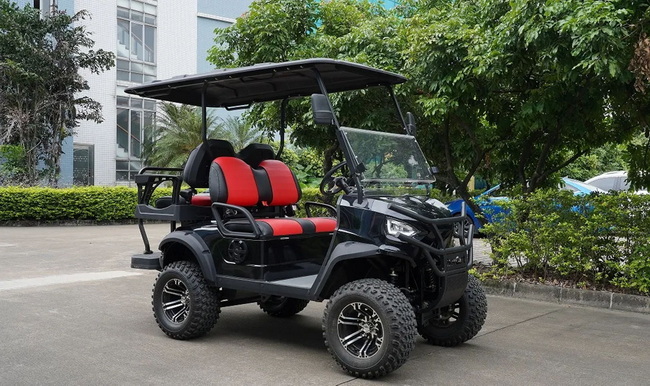
Two golf buggy vehicles with identical hardware can show very different charge times simply because their batteries are at different points in their life cycles.
- As batteries age, internal resistance tends to increase, which can reduce effective capacity and lengthen charging time; a well‑used golf buggy pack might stay on charge noticeably longer than a fresh one.
- Repeated deep discharges take a toll, especially on lead‑acid golf buggy batteries, where going down to very low state of charge can accelerate sulfation and diminish usable capacity.
- Depth of discharge directly affects how long it takes to refill the pack: topping up a golf buggy that has used only 30–40% of its energy will naturally be much faster than recharging a pack that has been nearly exhausted.
Routine maintenance and sensible operating practices can mitigate many of these effects and keep charge times more predictable over the life of the golf buggy.
Charging a golf buggy is not just about the battery and the charger; the surroundings also influence how efficiently energy moves into the pack.
- Extreme temperatures, whether hot or cold, reduce charging efficiency and can extend the time it takes to reach a full charge; most golf buggy systems perform best in moderate temperatures.
- Poor ventilation around the charging area can be especially problematic for lead‑acid golf buggy packs, which may release gases during charging and need adequate airflow for safety.
- Corroded cables, loose terminals, or damaged connectors introduce resistance into the system, causing heat buildup and slower, less efficient charging for the golf buggy.
Creating a clean, dry, and well‑ventilated charging zone, with periodic inspections of cables and connectors, supports both safety and consistent charge times.
Effective charging strategies differ between personal owners and fleet operators, but the goals are similar: keep the golf buggy ready to use while preserving battery life.
Private users typically have a relatively simple pattern and can build a consistent routine around it.
- Plug in the golf buggy after each day's use rather than waiting for the batteries to become fully drained, which helps keep depth of discharge moderate.
- Allow the charger to complete its full cycle; skipping the last phase over and over can reduce capacity over time, especially in lead‑acid systems.
- Schedule major maintenance checks—water levels for flooded lead‑acid batteries, terminal tightening, and visual inspections—to coincide with seasonal changes or usage milestones.
With these habits, a personal golf buggy can deliver reliable performance for years, and charging time remains reasonably stable.
Commercial operations often manage a large number of vehicles and must match golf buggy availability to peaks in demand.
- Many fleets rely on scheduled overnight charging, where each golf buggy returns to a central depot and is plugged in for a predefined window.
- For lithium‑equipped fleets, quick top‑ups between rounds or shifts allow each golf buggy to stay in circulation longer without running the pack deeply down.
- Fleet managers can track rotation and utilization so that no single golf buggy is consistently pushed to extreme depths of discharge, helping keep charge times uniform across the fleet.
In this context, planning and monitoring become just as important as the technical specifications of the golf buggy hardware.
BorCart, as a professional Chinese manufacturer of electric vehicles and automotive components, approaches golf buggy platforms with OEM clients in mind. When designing and supplying golf buggy chassis, powertrains, and battery systems for foreign brands, several charging‑related factors are considered.
- Target markets shape the specification: a golf buggy intended for high‑end resorts may prioritize fast‑charging lithium configurations, while an entry‑level golf buggy for residential communities might use cost‑effective lead‑acid packs.
- Brand owners and wholesalers often request specific charger types and connectors so that each golf buggy aligns with local standards and customer expectations in their regions.
- The same engineering base used for golf buggy products can be adapted to low‑speed vehicles, sightseeing buses, hunting buggies, and multi‑purpose utility vehicles, giving OEM partners a consistent charging and maintenance philosophy across their entire range.
By tailoring voltage, chemistry, and charger options, BorCart supports OEM customers in building coherent product lines where every golf buggy behaves predictably on the charger.
Proper maintenance has a direct impact on both how long it takes to charge a golf buggy and how much usable energy the pack can deliver after each session.
- For flooded lead‑acid golf buggy batteries, regularly check electrolyte levels and top up with distilled water as recommended, avoiding overfilling.
- Keep terminals clean and free from corrosion; a build‑up of oxidation increases resistance and can slow down charging or waste energy as heat.
- Inspect cables, connectors, and charging ports on the golf buggy for signs of wear, cracking, or looseness, and replace or repair components promptly.
- Follow manufacturer guidelines for equalization charging or balancing when applicable, as these processes help keep cells aligned, which can indirectly stabilize charging times.
Maintenance is not only about avoiding breakdowns; it is a key part of preserving efficient, predictable charging behavior for every golf buggy in a fleet or household.
Charging any high‑capacity battery system comes with safety responsibilities. For a golf buggy, observing simple precautions can prevent accidents and protect both equipment and property.
- Always charge the golf buggy in a dry location away from open flames, sparks, or flammable materials, especially if using lead‑acid batteries that can vent gases.
- Use only chargers specifically rated for the golf buggy's voltage and battery type; mismatched equipment can overheat, undercharge, or damage the pack.
- Avoid running extension cords across walkways or areas where golf buggy traffic and foot traffic are heavy, reducing the risk of tripping or cable damage.
- Monitor new installations carefully for the first several cycles; unusual smells, excessive heat, or inconsistent charge times should be investigated immediately.
When safety measures become routine, they fade into the background, allowing owners and operators to focus on efficient usage and customer experience.
Selecting a charging solution is part technical decision, part business strategy, particularly for companies branding and selling golf buggy models under their own names.
- Start by defining usage patterns: occasional personal use, daily course duty, heavy commercial rental, or multi‑shift industrial support; each scenario implies different charging requirements.
- Choose a battery chemistry that aligns with those requirements; a premium lithium golf buggy system may be ideal for intensive fleets, while a lead‑acid setup might suit lower‑duty applications.
- Match chargers to both the chemistry and the desired turnaround time; smart chargers and higher‑amperage units can significantly reduce downtime for each golf buggy but require appropriate infrastructure.
- For OEM and branding projects, coordinate housing design, connector choices, and labeling so that each golf buggy provides a consistent and user‑friendly charging experience across markets.
Taking a structured approach to these decisions leads to more predictable charge times and better customer satisfaction over the life of the product line.
In practice, most golf buggy models require between 4 and 10 hours to achieve a full charge, with traditional lead‑acid systems occupying the longer end of the scale and modern lithium configurations significantly reducing downtime. Battery chemistry, pack voltage, capacity, charger design, and environmental conditions all interact to determine how long a golf buggy must stay connected to mains power before returning to service. For private owners, a simple overnight routine is often enough; for golf courses, resorts, and fleets, careful planning and the right hardware can keep every golf buggy available when needed. Manufacturers and OEM partners, including BorCart, engineer their golf buggy platforms around these realities, combining the right batteries, chargers, and maintenance guidance to deliver reliable performance and efficient charging for customers around the world.
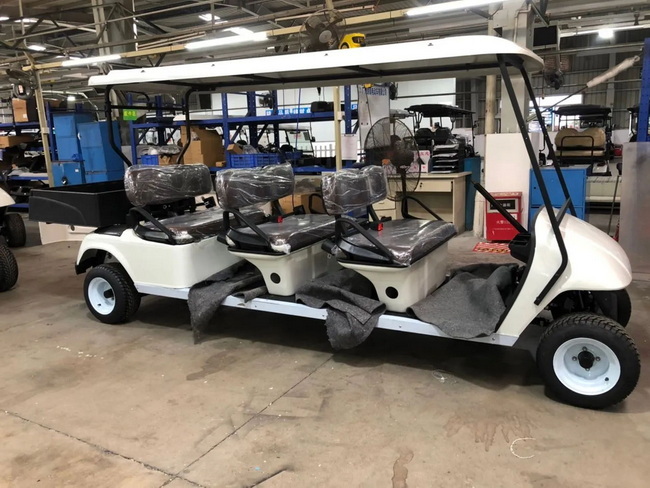
When a golf buggy battery pack is deeply discharged, a traditional lead‑acid system will often need about 8–12 hours on a standard charger to reach full capacity. Lithium‑equipped golf buggy models usually charge much faster, with typical full‑charge times ranging from about 3–5 hours when using a properly matched, higher‑output charger.
Yes. Most modern golf buggy systems are designed so that leaving the vehicle plugged in overnight is not only safe but recommended, especially with automatic or smart chargers. These units taper off the current and switch to maintenance or float modes once the golf buggy battery reaches full, helping to prevent overcharging while ensuring maximum readiness for the next day.
Lithium golf buggy batteries almost always charge more quickly than comparable lead‑acid packs when using the correct charger. A lithium‑powered golf buggy commonly reaches full charge in 2–5 hours, whereas a similar lead‑acid golf buggy may require 6–12 hours under normal conditions. Lithium systems also tolerate frequent partial charges, allowing operators to “top up” the golf buggy throughout the day.
For most users, it is best to charge the golf buggy after each day's use rather than waiting for the batteries to become completely flat. Regular, full charging cycles help maintain performance and minimize stress on the battery, particularly for lead‑acid golf buggy packs. Fleet users running lithium golf buggy systems can also incorporate short top‑up sessions between shifts or rental periods to reduce deep discharges.
The most effective way to shorten charging time is to pair the golf buggy with a suitable lithium battery system and a charger capable of higher, well‑controlled current. Beyond hardware choices, keeping terminals clean, maintaining correct electrolyte levels in lead‑acid golf buggy batteries, and charging in moderate temperatures all help chargers operate efficiently. Avoiding repeated deep discharges and sticking to a consistent charging routine further supports stable, reasonable charging times for every golf buggy in service.


