


Views: 222 Author: Leah Publish Time: 2025-12-27 Origin: Site


Content Menu
● What Powers an Electric Golf Cart?
● Core Components Inside an Electric Golf Cart
>> Motor
>> Controller
>> Charger
● Step-by-Step: How an Electric Golf Cart Moves
>> Accelerator Input and Power Modulation
>> Motor Rotation and Vehicle Motion
>> Coasting, Slowing, and Stopping
● Motor, Controller, and Regenerative Braking in Detail
>> Motor Types and Performance
>> Controller Features and Upgrades
>> Regenerative Braking Operation
● Batteries, Charging, Range, and Lifespan
>> Factors Affecting Range and Life
● Driving Dynamics, Comfort, and Safety Systems
>> Electronic Safety and Control Features
● Applications and Advantages of Electric Golf Carts
>> Operational and Environmental Benefits
>> Maintenance and Lifecycle Costs
● FAQ About Electric Golf Carts
>> 1. How long can an electric golf cart run on a single charge?
>> 2. What is the difference between 36 V and 48 V electric golf carts?
>> 3. Do electric golf carts need a lot of maintenance?
>> 4. Can an electric golf cart be upgraded for more power or speed?
>> 5. How does regenerative braking help an electric golf cart?
An electric golf cart is a compact, battery-powered vehicle that converts stored electrical energy into smooth, quiet motion for golf courses, resorts, residential communities, and industrial sites. From the battery pack and controller to the motor, drivetrain, and braking system, every part is designed to move people efficiently while keeping noise, emissions, and maintenance requirements low.[1][2]
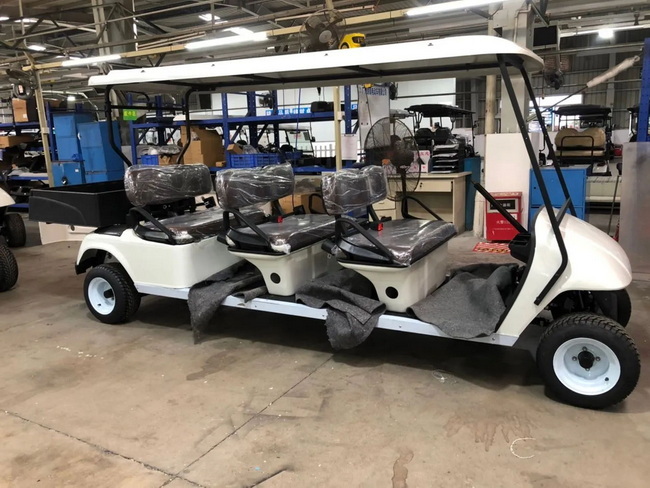
An electric golf cart is powered by a pack of rechargeable batteries that supply direct current (DC) to an electric motor through a smart electronic controller. Most modern electric golf carts use either 36-volt or 48-volt systems made by connecting multiple batteries in series to achieve the required operating voltage.[2][3]
Typical battery configurations support two main chemistry options for an electric golf cart. Lead-acid packs remain common because they offer a lower initial cost and are widely supported in the market, while lithium-ion packs are increasingly popular for higher performance, longer life, and reduced weight. The overall pack voltage and amp-hour capacity determine how far an electric golf cart can travel on a single charge, how quickly it accelerates, and how well it handles hills when fully loaded.[3][2]
Because electric golf carts often serve different roles—such as golf transport, sightseeing at resorts, low-speed vehicles in gated communities, or hunting and multi-purpose transport—battery selection is tailored to the operating environment. Fleets that run continuously through the day may choose higher-capacity or lithium packs to maximize uptime, while lighter-duty users can rely on traditional lead-acid setups.[4][5][2]
Although an electric golf cart looks simple from the outside, several core systems work together to produce reliable, controllable motion. Understanding these components is helpful for operators, technicians, and OEM buyers deciding on specifications for different applications.[5][1][4]
The battery pack is the energy reservoir of the electric golf cart and is typically located under the seat or in a dedicated compartment. Batteries are wired in series to increase voltage and sometimes in parallel strings to increase capacity, with heavy-gauge cables carrying high current to the controller and motor.[2][4]
Well-designed wiring harnesses include proper insulation, strain relief, and secure terminations to minimize resistance and prevent failures under vibration. For safety, fuses and main disconnects are used to protect the electric golf cart from short circuits and accidental current surges.[4][5][2]
The motor converts electrical energy into mechanical rotation, generating the torque needed to move the electric golf cart. Traditional carts often use series-wound DC motors that provide strong low-speed torque and straightforward control, while newer systems may use AC induction or permanent-magnet motors for higher efficiency and performance.[6][1][2]
Motor choice influences acceleration, hill-climbing ability, and maximum speed for an electric golf cart. Heavy-duty or off-road-oriented carts may be equipped with high-torque motors optimized for pulling power, while resort or street-legal low-speed vehicles can benefit from motors tuned for higher cruising speeds within legal limits.[5][6][2]
The controller is the electronic brain of the electric golf cart and manages how much power flows from the batteries to the motor. It interprets accelerator pedal signals and uses pulse-width modulation (PWM) to vary the effective voltage and current delivered to the motor, thereby controlling speed and torque.[7][8][9]
Controllers also monitor battery voltage, current draw, and temperature to protect the system from overloads or overheating. For many electric golf carts, programmable controllers allow technicians or manufacturers to adjust parameters such as acceleration rate, regenerative braking strength, top speed limits, and reverse speed settings depending on the application.[8][7]
The charger converts alternating current (AC) from the grid into appropriate DC charging current for the battery pack of the electric golf cart. Modern smart chargers use multi-stage charging profiles, typically including bulk, absorption, and float phases, to optimize battery health and reduce the risk of overcharging.[9][2]
Some chargers are integrated into the electric golf cart, while others are off-board units that plug into the cart via a dedicated port. Advanced chargers may communicate with battery management systems—especially in lithium-ion packs—to balance cells and monitor pack condition over time.[10][9][2]
The drivetrain transfers torque from the motor to the wheels of the electric golf cart. In most rear-drive designs, the motor connects to a reduction gearbox and differential, which multiplies torque and splits it between the left and right rear wheels.[2][4]
The simplicity of this single-speed transmission is a major advantage of the electric golf cart compared to combustion vehicles. There is no multi-gear gearbox or clutch; instead, speed and torque are adjusted electronically through the controller and motor, resulting in fewer mechanical parts and lower maintenance.[3][2]
When a driver operates an electric golf cart, a coordinated series of electrical and mechanical events turns stored energy into motion. This process is carefully managed to ensure smooth acceleration, safe stopping, and efficient use of the battery pack.[11][1][9]
When the key is turned on, low-voltage circuits are energized, and the controller and related electronics wake up. The controller performs internal checks, confirming that battery voltage is within allowable limits and that there are no faults before enabling propulsion.[9][11][4]
If everything is normal, the system closes a main contactor or solenoid that links the high-current battery circuit to the controller and prepares the electric golf cart for movement. This safety step prevents unintended operation if a fault is detected.[11][4][9]
Pressing the accelerator pedal sends a proportional signal (typically through a potentiometer or Hall-effect sensor) to the controller. The controller reads this signal as a request for torque and speed and responds by adjusting the duty cycle of PWM output, which effectively regulates the power sent to the motor.[7][8][9]
At low pedal positions, the controller supplies limited current, resulting in gentle movement of the electric golf cart. As the pedal is pressed further, current and voltage are increased within defined limits, providing stronger acceleration and higher speed.[8][7]
Once the motor receives power, its rotor begins to spin, producing torque that is transmitted through the reduction gears and differential to the rear wheels. Because electric motors provide high torque at low speed, an electric golf cart can start smoothly from rest and handle inclines without the need for a conventional transmission.[1][6][2]
The wheels turn and push against the ground, moving the electric golf cart forward or backward depending on the position of the direction selector. In DC systems, forward and reverse can be achieved by changing polarity, while in AC systems, the controller adjusts the phase sequence of the motor.[4][9]
When the driver eases off the accelerator, the controller reduces power output and the electric golf cart begins to coast. In carts equipped with regenerative braking, this phase may trigger the motor to act as a generator, feeding energy back into the battery pack while providing a gentle retarding force.[12][13]
To stop completely, the driver presses the brake pedal, which activates mechanical drum or disc brakes on the wheels. Regenerative braking can handle a portion of the deceleration, reducing wear on mechanical components, but the braking system is always designed so the physical brakes alone can safely stop the electric golf cart under all conditions.[13][12]
The character of an electric golf cart—how responsive it feels, how well it climbs hills, and how efficiently it uses energy—is largely determined by its motor and controller. When regenerative braking is included, these components also control how the vehicle slows down and how much energy is recovered.[12][7][8][9]
Series-wound DC motors have been widely used in electric golf carts because they offer robust low-end torque and a simple control interface. However, speed and torque are somewhat linked in these systems, and efficiency may be lower compared with modern AC alternatives.[6][2][4]
AC motors paired with sophisticated controllers allow independent control of torque and speed, improving hill-climbing and enabling smoother, more precise speed regulation. For fleets operating in hilly terrain or those requiring higher top speeds within regulatory limits, AC electric golf cart systems can provide a noticeable performance advantage.[6][2]
The controller's current limit, voltage rating, and software settings define the performance envelope of the electric golf cart. Higher-amp controllers can provide more torque and quicker acceleration, but they must be carefully matched to the motor, battery pack, and cabling to avoid damage.[10][7][8]
Many controllers offer diagnostic functions that report error codes, log events, and communicate via handheld programmers or software tools. For fleet operators, these capabilities make it easier to maintain electric golf carts, ensure consistent performance, and detect misuse or overloading.[5][7][8]
In electric golf carts equipped with regenerative braking, the controller instructs the motor to operate as a generator when the driver releases the accelerator or lightly applies the brake. The generated electrical energy is routed back into the battery pack, reducing net energy consumption and providing a smooth deceleration effect.[13][12]
While regenerative braking cannot fully replace mechanical brakes, it contributes to overall energy efficiency and helps extend pad and shoe life in heavily used electric golf carts. On long downhill stretches, regen control strategies can also improve stability by preventing overspeed and helping the vehicle maintain a controlled descent.[14][12][13]
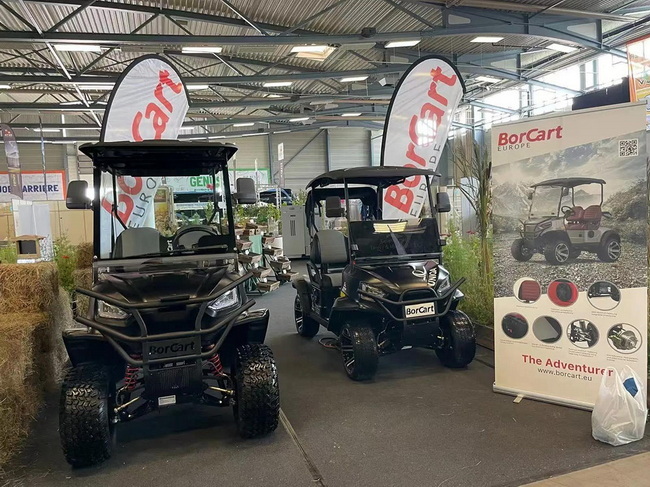
Battery systems are central to the economics and reliability of any electric golf cart fleet. Proper selection, charging, and maintenance practices have a direct impact on daily range, long-term capacity retention, and total cost of ownership.[3][2][5]
Flooded lead-acid batteries are cost-effective and widely available, but they require regular watering to maintain electrolyte levels and periodic cleaning to remove corrosion from terminals. If neglected, sulfation and acid stratification can reduce capacity and shorten the useful life of the battery pack in an electric golf cart.[2][3]
Lithium-ion batteries offer higher energy density, lighter weight, and more usable depth of discharge, allowing an electric golf cart to achieve longer range with fewer cells. They also support faster charging and typically deliver a longer cycle life, although the initial investment is higher and requires compatible chargers and battery management systems.[10][2]
Most electric golf carts are charged overnight, allowing sufficient time for full multi-stage charging cycles. For lead-acid packs, it is generally recommended to charge after each shift and avoid leaving batteries partially discharged for long periods, as deep neglect can accelerate degradation.[9][3][2]
High-utilization fleets sometimes adopt opportunity charging or fast charging approaches, particularly when using lithium-ion packs that can handle frequent partial charge events without significant memory effects. Following manufacturer guidelines for charging voltage, current, and ambient temperature helps maintain safe and reliable operation for every electric golf cart.[5][9][2]
The achievable range of an electric golf cart depends on battery capacity, driving style, terrain, vehicle weight, passenger load, ambient temperature, and accessories such as lights or HVAC. Gentle acceleration, moderate speeds, and proper tire inflation improve energy efficiency and allow more distance per charge.[3][5]
Over time, all batteries lose capacity, so monitoring real-world range and scheduling replacements before performance becomes unacceptable is important for fleet planning. Many operators use periodic load testing or state-of-health measurements to assess when an electric golf cart pack is nearing the end of its service life.[2][3][5]
Beyond the electrical powertrain, the handling and safety of an electric golf cart depend on steering, suspension, braking, and control features. These systems are particularly important in multi-passenger sightseeing carts, hunting vehicles, and commercial utility models that carry heavier loads.[15][4][5]
Most electric golf carts use rack-and-pinion steering or similar systems to provide accurate directional control with light steering effort. Proper alignment, lubrication, and inspection of steering linkages help keep the vehicle stable and responsive at operating speeds.[15][4]
Suspension systems range from simple leaf springs to more sophisticated independent or semi-independent setups, depending on the model and intended use. For off-road or lifted electric golf carts, upgraded shocks, bushings, and stronger components are often used to handle uneven terrain and increased loads.[15][4][5]
Mechanical brakes, typically drum or disc designs, provide the primary stopping force. Regular inspection of pads, shoes, cables, and hydraulic components ensures that the electric golf cart can stop safely under various conditions and loads.[12][13]
A parking brake, usually engaged by a pedal latch or lever, holds the electric golf cart stationary when parked or stopped on slopes. Some designs also integrate motor brakes that lock the motor shaft electronically when the vehicle is at rest, adding redundancy and safety on steep gradients.[13][4]
Directional switches allow the driver to select forward or reverse, and the controller enforces separate speed limits for each direction. Many electric golf carts include programmable speed caps for different operating zones, such as restricted speeds on golf greens and higher limits on main paths.[8][4][9]
Modern systems may also include features like hill-descent control, anti-roll-back on slopes, and on-board diagnostics visible through indicator lights or displays. For fleets, these electronic controls make it easier to manage safety, comply with regulations, and adapt electric golf cart performance to varied environments.[8][9][5]
Electric golf carts have evolved from simple course vehicles into versatile platforms used in many sectors. Golf models, sightseeing shuttles, low-speed vehicles, hunting buggies, and multi-purpose utility carts can all share common electric drivetrains.[4][3][5]
Electric golf carts operate quietly and produce no tailpipe emissions, making them ideal for golf courses, resorts, campuses, hospitals, and residential communities where noise and air quality matter. Their smooth, low-vibration ride improves passenger comfort and reduces fatigue for drivers who spend many hours per day in the vehicle.[3][2]
Energy costs per kilometer are generally lower than comparable gasoline carts, particularly when using efficient chargers and modern battery technology. When paired with renewable electricity sources, the overall environmental footprint of an electric golf cart fleet can be significantly reduced.[5][3]
Electric drivetrains have fewer moving parts, so routine maintenance is simpler and often less expensive than for combustion engines. There is no need for oil changes, spark plugs, or fuel system service, and wear items are largely limited to batteries, brakes, tires, and suspension components.[2][3]
By following recommended battery care, inspection schedules, and charging practices, operators can extend the life of their electric golf cart fleets and avoid unexpected downtime. For OEM customers and large buyers, this predictable lifecycle makes electric golf carts a compelling option for both performance and cost control.[3][5][2]
An electric golf cart is far more than a simple battery-powered trolley; it is a carefully integrated system where batteries, controller, motor, drivetrain, and safety components work together to provide efficient, quiet, and reliable transport. By understanding how energy flows from the battery pack through the controller to the motor—and back again during regenerative braking—owners and fleet managers can choose better configurations, maintain their vehicles properly, and plan smart upgrades.[1][9][12][2]
From traditional lead-acid designs to advanced lithium-ion systems, from basic course carts to specialized sightseeing and utility vehicles, the electric golf cart platform is flexible enough to support many applications while keeping operating costs and emissions low. With thoughtful design, high-quality components, and correct daily practices, an electric golf cart fleet can deliver long-term value for golf courses, resorts, property managers, and OEM partners around the world.[5][2][3]
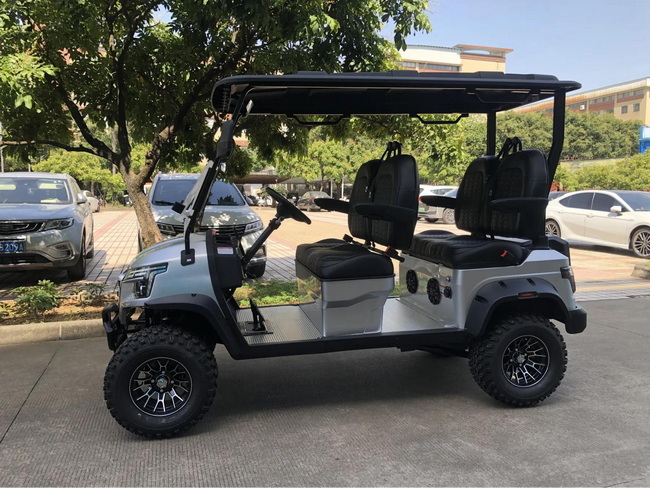
A typical electric golf cart with standard lead-acid batteries can often travel about 25–40 kilometers per charge under moderate load and terrain. With lithium-ion packs and efficient driving, some electric golf carts can extend their range significantly beyond this, especially in light-duty or flat environments.[2][3]
A 36-volt electric golf cart is generally suited to lighter-duty use, offering modest acceleration and lower top speeds that fit flat golf courses or short routes. A 48-volt electric golf cart can supply more power to the motor, resulting in better hill-climbing, stronger acceleration, and often improved efficiency when paired with a well-matched controller.[16][10][3]
Electric golf carts require regular inspections, tire checks, brake adjustments, and attention to battery condition, but they usually need less maintenance than gas-powered carts. Lead-acid systems demand watering and terminal cleaning, while lithium-ion systems focus more on monitoring, software updates, and correct charging practices.[10][3][2]
Many electric golf cart owners and fleet operators upgrade controllers, motors, cables, and sometimes battery packs to achieve greater torque, higher top speed, or improved range. Any upgrade must be engineered as a complete system—respecting voltage ratings, current limits, and safety margins—to protect components and maintain reliability.[17][8][10]
Regenerative braking allows the motor in an electric golf cart to act as a generator during deceleration, converting kinetic energy back into electrical energy stored in the battery pack. This process improves energy efficiency, reduces wear on the mechanical brake system, and can slightly extend the driving range between charges, especially in hilly areas.[12][13]
[1](https://golfcarts.com/how-do-electric-golf-carts-work/)
[2](https://trielectric.in/how-electric-golf-carts-work.php)
[3](https://www.kandiamerica.com/electric-vs-gas-golf-carts/)
[4](https://taraelectricvehicles.com/blog/2025/07/24/what-are-the-components-of-an-electric-golf-cart/)
[5](https://www.borcart.com/how-do-electric-golf-carts-work-a-complete-guide-for-modern-golf-courses-and-resorts.html)
[6](https://plumquick.com)
[7](https://www.puttersgolfcarts.com/blogs/putters-blogs/how-a-golf-cart-works-a-complete-guide-to-golf-cart-mechanisms-1)
[8](https://www.golfcarttiresupply.com/golf-cart-controller/)
[9](https://www.dragon-era.com/how-do-electric-golf-carts-work/)
[10](https://www.reddit.com/r/golfcarts/comments/16g5lel/best_electric_drivetrain_upgrade/)
[11](https://www.golfcartsforum.com/forum/lifted/-aa/1640-electric-golf-cart-tutorial)
[12](https://golfcartresource.com/regenerative-brakes-electric-golf-carts/)
[13](https://10l0l.com/blogs/blog/what-is-golf-cart-motor-brake)
[14](https://www.youtube.com/watch?v=JRtktAG3W8s)
[15](https://cartaholics.com/threads/question-about-newly-bought-97-club-car-48-volts.24258/)
[16](https://www.youtube.com/watch?v=3AH_eL3LmDs)
[17](https://www.buggiesunlimited.com/Golf-cart/motors-and-controllers/195)


