


Views: 222 Author: Leah Publish Time: 2026-01-05 Origin: Site


Content Menu
● What Is an Electric Golf Buggy?
● Key Components of an Electric Golf Buggy
● How Power Flows Through a Golf Buggy
● Battery Technology in a Golf Buggy
● Motor and Controller: The Heart and Brain
● Drivetrain, Steering, and Braking
● Charging Systems and Daily Use
● Safety Features in a Modern Golf Buggy
● Customization and OEM Golf Buggy Solutions
● Real-World Applications of a Golf Buggy
● Operating and Maintenance Tips for a Golf Buggy
● Environmental Benefits of an Electric Golf Buggy
● FAQ About Electric Golf Buggy
>> 1. How long does an electric golf buggy run on a single charge?
>> 2. How long does it take to charge a golf buggy?
>> 3. What is the difference between AC and DC motors in a golf buggy?
>> 4. How often should golf buggy batteries be replaced?
>> 5. Can an electric golf buggy be customized for non-golf applications?
An electric golf buggy works by drawing energy from a rechargeable battery pack, sending it through a controller to an electric motor, which then turns the wheels to move you smoothly around the course. Behind this simple driving experience is a compact, efficient powertrain engineered for quiet, low-maintenance operation in a wide range of environments.[1][2]
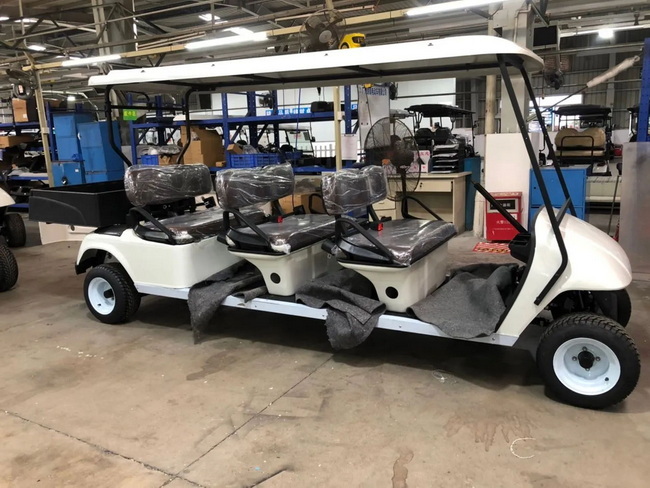
An electric golf buggy is a small battery-powered vehicle designed to carry players, clubs, and sometimes cargo around golf courses, resorts, estates, campuses, and industrial sites. Unlike gas models, an electric golf buggy relies entirely on electricity, making it quieter, cleaner, and easier to maintain for both private owners and fleet operators.[3][1]
Many modern golf buggy platforms are modular, so they can be configured as 2-seaters, 4-seaters, sightseeing shuttles, or light utility vehicles. Chinese OEM manufacturers such as Guangzhou BorCart focus on customizing electric golf buggy bodies, seating layouts, and accessories for overseas brands, wholesalers, and producers.[4][5]
Understanding the core components of an electric golf buggy makes it easier to select the right model, operate it efficiently, and communicate technical details to customers.
- Battery pack (lead-acid or lithium-ion)
- Electric motor (DC or AC)
- Motor controller (speed controller)
- Accelerator and braking system
- Drivetrain, axles, and wheels
- On-board or external charger
- Chassis, suspension, steering, and safety systems
These elements are integrated into a sturdy frame and body shell that protects the golf buggy powertrain while providing comfortable seating and storage.[6]
When a driver uses an electric golf buggy, electrical energy moves in a controlled loop from the battery pack to the motor and later back into the batteries during charging. The user experience feels effortless, but internally the system constantly regulates power for smooth performance.[1]
1. The driver turns the key or power switch to “ON,” activating low-voltage circuits, safety interlocks, and the controller in the golf buggy.
2. Pressing the accelerator pedal sends a low-voltage signal to the controller, indicating how much power the driver is asking from the golf buggy.
3. The controller draws current from the battery pack and modulates voltage and current, often using pulse-width modulation, to feed the electric motor inside the golf buggy.
4. The motor converts electrical energy into mechanical rotation, sending torque through a differential and axles to the wheels of the golf buggy.
5. A forward/reverse selector changes motor direction so the golf buggy can move backward when needed on tight paths or parking spots.
6. Releasing the accelerator or pressing the brake causes the controller to reduce or cut power, and mechanical brakes slow or stop the golf buggy.
Some advanced golf buggy models feature regenerative braking, where the motor briefly acts as a generator when you decelerate. In these golf buggy systems, part of the kinetic energy is converted back into electrical energy and stored in the batteries, improving overall efficiency.[7]
The battery pack is the energy reservoir of a golf buggy and directly affects range, acceleration, and long-term operating cost. Two main battery technologies dominate electric golf buggy designs: flooded or sealed lead-acid and lithium-ion.[1]
- Lead-acid batteries remain common in traditional golf buggy fleets due to their lower initial cost and mature supply chain.[6]
- Lithium-ion batteries are lighter, offer higher energy density, and support more charge cycles, making them attractive for premium golf buggy models and high-utilization fleets.[3]
Golf buggy battery systems are typically configured in series strings to produce nominal voltages such as 24 V, 36 V, 48 V, or higher in specialized units. Higher system voltage allows the golf buggy motor to deliver the same power with lower current, reducing cable size, heat, and stress on the controller.[1]
Proper care of golf buggy batteries includes:
- Avoiding deep discharges that repeatedly drain the pack close to zero state of charge.
- Keeping connections tight, clean, and free of corrosion to reduce resistance and heating.
- Storing the golf buggy with batteries at a partial or full charge, depending on chemistry recommendations.
For fleet operators, choosing the right battery chemistry and capacity for each golf buggy route and duty cycle can dramatically lower total cost of ownership.
The electric motor is the mechanical heart of the golf buggy, converting electrical energy into torque at the wheels. Traditional golf buggy designs often use DC motors, while newer high-performance or hill-climbing models increasingly adopt AC motors for greater efficiency and control.[8][4]
The controller is the electronic brain of the golf buggy, responsible for interpreting driver input and battery status to regulate motor power. It manages:[9]
- Acceleration and deceleration response of the golf buggy
- Maximum speed limits for safety and course regulations
- Torque output for hill climbing and towing in utility golf buggy applications
- Integration of regenerative braking where available
Basic controllers provide smooth takeoff and protect components from excessive current, which is crucial for long-term reliability of the golf buggy. Performance controllers increase allowable current and fine-tune maps for sportier or utility-oriented golf buggy use, such as transporting cargo on estates or in industrial parks.[9]
The drivetrain of a golf buggy is simpler than that of a typical car, which helps keep costs and maintenance requirements low. Power flows through a fixed gear ratio reduction and a differential that sends torque to the rear wheels of the golf buggy.[6]
- Most electric golf buggy models use a solid rear axle with drum or disc brakes and leaf-spring or coil-spring suspension.
- Steering is often rack-and-pinion, tuned for easy low-speed maneuvering on narrow golf paths and resort roads.[6]
Electric motors deliver maximum torque from zero RPM, so a golf buggy can pull away smoothly even when carrying four people or a load of clubs and luggage. Suspension systems in a golf buggy are usually soft to absorb bumps on turf and paved paths, improving comfort and reducing stress on the chassis and components.
Braking systems combine mechanical brakes with motor deceleration and, in some designs, regenerative braking. Regular inspection of pads, drums, cables, and hydraulic components keeps the golf buggy safe in daily use.

Charging practices strongly influence running costs and uptime for any electric golf buggy fleet. Most users plug the golf buggy into a dedicated charger after each day's operation so batteries can be fully replenished by the next shift.[10]
Modern smart chargers:
- Convert AC mains power into a DC charging profile tailored to the golf buggy battery chemistry and voltage.
- Monitor voltage, current, and temperature to optimize charging speed while protecting the batteries from overcharging.
- Switch to float or maintenance modes to keep the golf buggy ready for service during longer storage periods.[11]
Typical charge times for a standard golf buggy pack range from 6–8 hours from a low state of charge, though partial top-ups during the day are possible in some facilities. For lithium-ion golf buggy systems, opportunity charging can be more acceptable, as these batteries tolerate partial cycles better than lead-acid in many cases.[10]
To protect both batteries and chargers, operators should:
- Use only chargers rated for the specific golf buggy brand, battery voltage, and chemistry.
- Avoid regularly interrupting charge cycles unless the system is designed for it.
- Ensure adequate ventilation around charging golf buggy bays, especially with lead-acid batteries.
Safety is critical for golf courses, resorts, and industrial properties that deploy large numbers of electric vehicles. Modern golf buggy designs incorporate multiple safety features to protect passengers and infrastructure.
Common safety elements include:
- Keyed ignition or electronic authorization to prevent unauthorized golf buggy use.
- Speed limiters or programmable maximum speeds, especially around clubhouses and pedestrian areas.
- Automatic braking or warning systems when the golf buggy is left in gear without a driver.
- Lights, mirrors, and seat belts on street-legal or community-use golf buggy models.[6]
Some premium fleets also integrate telematics, enabling managers to track golf buggy location, battery status, and usage patterns in real time. This data helps identify misuse, schedule preventive maintenance, and even adjust routes to conserve energy.
The electric golf buggy platform is highly adaptable, which is why it is now used far beyond traditional golf courses. OEM manufacturers in China and other industrial hubs offer extensive customization to meet branding, regulatory, and functional requirements.[12]
Typical customization options for a golf buggy include:
- Seating layout: 2, 4, 6, or more seats, often with flip-down rear seats converting into a cargo platform.
- Body style: golf buggy, sightseeing bus, low-speed vehicle, hunting buggy, or utility vehicle with cargo bed and canopy.
- Accessories: windshields, enclosures, lighting upgrades, infotainment systems, coolers, and club racks.
- Powertrain variations: different battery capacities, motor power ratings, and controller profiles tailored to the golf buggy application.
BorCart and similar manufacturers collaborate with overseas brands and importers to develop private-label golf buggy lines that match local standards and customer expectations. This OEM approach lets foreign companies launch or expand a golf buggy product portfolio without building their own factories.[5]
The versatility of the electric golf buggy has opened up many use cases beyond 18-hole rounds.
Common applications include:
- Resorts and hotels: transporting guests, luggage, and housekeeping staff on sprawling properties.
- Theme parks and zoos: moving visitors and staff through large outdoor venues in quiet golf buggy shuttles.
- Campuses and hospitals: providing fast, low-impact mobility for staff and patients across multiple buildings.
- Industrial sites and warehouses: using utility golf buggy variants to carry tools, parts, and personnel.
- Residential communities: operating street-legal or low-speed vehicle versions of the golf buggy for neighborhood transport.[12]
In each of these roles, the electric golf buggy offers a balance of efficiency, quietness, and low emissions that aligns with sustainability goals and guest comfort.
Proper operation and maintenance help owners extract maximum value from every electric golf buggy in the fleet.
Best practices include:
- Training drivers to accelerate smoothly and avoid harsh braking, which reduces strain on the motor, controller, and batteries.
- Establishing daily checks: tire pressure, lights, and a quick visual inspection for any leaks, loose cables, or damage on the golf buggy.
- Scheduling regular service intervals for brake inspection, suspension lubrication, and steering adjustment.
- Monitoring battery health using onboard meters or external testers to identify underperforming golf buggy packs early.
Keeping accurate maintenance records for each golf buggy helps identify patterns, optimize spare parts inventory, and support warranty claims where necessary.
Electric golf buggy fleets provide multiple environmental advantages compared to gasoline-powered alternatives.[3]
Key benefits include:
- Zero tailpipe emissions where the golf buggy operates, improving air quality on courses, resorts, and campuses.
- Lower noise levels, which enhances the experience for golfers, guests, and nearby residents.
- Potential to run the golf buggy fleet on renewable electricity, further reducing the overall carbon footprint.
Additionally, the efficient use of energy in an electric golf buggy means less waste heat and smoother, more predictable driving patterns. These qualities help facilities meet environmental and sustainability targets while improving comfort for drivers and passengers.
An electric golf buggy is a compact, efficient vehicle that combines a battery pack, smart controller, and electric motor into a quiet, low-maintenance solution for short-range transport. By understanding its components, power flow, charging behavior, and customization options, owners and operators can choose the right golf buggy configuration for each environment and keep it running reliably for years. Whether used on fairways, resort paths, or industrial sites, a well-specified electric golf buggy delivers clean, flexible mobility that supports both practical operations and sustainability goals.
Run time depends on battery capacity, terrain, payload, and driving style, but many standard golf buggy models can comfortably cover 18–36 holes or roughly 30–60 km on one full charge. Lithium-ion-equipped golf buggy fleets often deliver more consistent range over time thanks to better cycle life and lower degradation.[3][1]
Most electric golf buggy chargers need about 6–8 hours to fully recharge a depleted battery pack, which fits well with overnight charging routines at clubs and resorts. Partial top-ups may be quicker, but operators should follow manufacturer recommendations to avoid stressing the golf buggy batteries.[11][10]
DC motors are common in traditional golf buggy designs because they are cost-effective and straightforward to control. AC motors in newer golf buggy models can provide higher efficiency, better hill-climbing performance, smoother acceleration, and stronger regenerative braking when paired with advanced controllers.[8][3]
Lead-acid batteries in a frequently used golf buggy fleet typically last about 3–5 years with proper maintenance and charging habits. Lithium-ion packs in a golf buggy can often remain serviceable for 7–10 years or more, especially when managed by a suitable battery management system.[3][6]
Yes, many manufacturers offer customizable golf buggy platforms with alternative bodies, cargo beds, seating layouts, and accessories for sightseeing, security patrol, maintenance work, or neighborhood transportation. OEM suppliers like BorCart cooperate with overseas brands to design private-label golf buggy models tailored to local regulations and market preferences.[5][12]
[1](https://trielectric.in/how-electric-golf-carts-work.php)
[2](https://golfcarts.com/how-do-electric-golf-carts-work/)
[3](https://www.rootsev.com/blog/how-do-electric-golf-carts-work/)
[4](https://www.puttersgolfcarts.com/blogs/putters-blogs/how-a-golf-cart-works-a-complete-guide-to-golf-cart-mechanisms-1)
[5](https://www.borcart.com/top-10-electric-golf-buggy-manufacturers-in-china.html)
[6](https://entertainment.howstuffworks.com/sports/golf/basics/golf-carts.htm)
[7](https://www.dragon-era.com/how-do-electric-golf-carts-work/)
[8](https://www.lexsong-ev.com/blog/how-electric-golf-carts-work-info)
[9](https://www.golfcarttiresupply.com/golf-cart-controller/)
[10](https://www.golfcartgarage.com/golf-cart-battery-chargers/)
[11](https://www.cloudelectric.com/Golf-Cart-Chargers-s/23762.htm)
[12](https://www.borcart.com)


