


Views: 222 Author: Loretta Publish Time: 2025-12-21 Origin: Site


Content Menu
● What Is an Electric Vehicle?
● Main Types of Electric Vehicles
>> Battery Electric Vehicles (BEVs)
>> Hybrid Electric Vehicles (HEVs)
>> Plug‑in Hybrid Electric Vehicles (PHEVs)
>> Fuel Cell Electric Vehicles (FCEVs)
● Low‑Speed EVs and Specialty Electric Vehicles
● Electric Golf Carts: Core Segment of Low‑Speed EVs
>> Market Growth and Applications
● Sightseeing Buses and Resort Shuttles
● Multi‑Purpose and Utility Electric Vehicles
● Electric Hunting Buggies and Off‑Road Vehicles
● Why Businesses Are Switching to Low‑Speed EVs
● Key Factors Influencing Electric Golf Cart and Buggy Pricing
● How to Choose the Right Type of EV for Your Application
● Frequently Asked Questions (FAQ)
>> Q1: What is the most common type of EV for golf courses and resorts?
>> Q2: Are electric hunting buggies powerful enough for steep or muddy terrain?
>> Q3: How long do batteries in low‑speed EVs usually last?
>> Q4: Can low‑speed electric vehicles be used on public roads?
>> Q5: What is driving growth in the electric golf cart market?
Electric vehicles (EVs) now cover everything from compact passenger cars to golf carts, sightseeing buses, hunting buggies and multi‑purpose low‑speed vehicles (LSVs), giving businesses and consumers cleaner and quieter mobility options. For OEM buyers, understanding the main EV categories and their use cases is essential when selecting the right platform or manufacturing partner.[1][2]
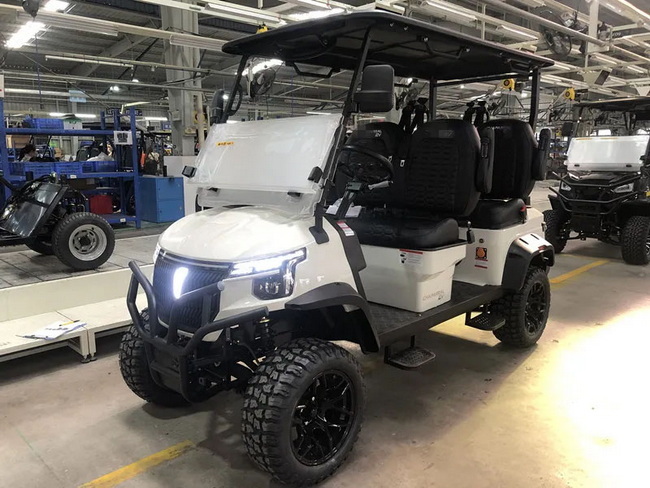
Electric vehicles use one or more electric motors for propulsion and draw energy from batteries or fuel cells instead of relying solely on internal combustion engines (ICEs). They reduce local emissions, cut operating noise and often deliver lower lifetime operating costs than comparable ICE vehicles.[2][1]
Key characteristics of modern EVs include:[1][2]
- High energy efficiency from battery to wheels
- Regenerative braking that recovers energy during deceleration
- Compatibility with a range of charging systems and speeds
The global EV ecosystem is usually divided into four core categories: BEV, HEV, PHEV and FCEV.[3][4]
Battery electric vehicles run 100% on electricity stored in rechargeable battery packs and do not have a combustion engine. They produce zero tailpipe emissions, which makes them highly attractive for cities, campuses and closed‑area applications.[4][3]
Typical features of BEVs:[3][4]
- Large traction battery and one or more electric motors
- Charging exclusively from the grid or on‑site power
- Very low drivetrain maintenance due to fewer moving parts
Passenger cars, electric buses and many electric golf carts and utility buggies fall into the BEV category.[5][1]
Hybrid electric vehicles combine an internal combustion engine with a small battery and electric motor that assist the engine but are not usually charged from the grid. The electric system is mainly charged through regenerative braking and engine power.[6][4]
Key points:[6][4]
- Improved fuel economy versus pure ICE vehicles
- No need for external charging infrastructure
- Limited or no pure‑electric driving range
HEVs are more common in passenger cars than in golf carts or low‑speed specialty vehicles.[4][1]
Plug‑in hybrids use a larger battery that can be charged from the grid and an engine that extends range when the battery is depleted.[7][6]
Their advantages:[7][6]
- Daily commuting can often be done in all‑electric mode
- Long trips are supported by switching to hybrid mode with the engine
- Flexibility where public charging is still developing
PHEVs remain rare in low‑speed or golf‑course applications, where simple BEV setups are usually more cost‑effective.[8][5]
Fuel cell electric vehicles generate electricity onboard by reacting hydrogen with oxygen in a fuel cell stack, emitting only water vapor. They typically offer fast refueling and long range but require a specialized hydrogen infrastructure.[3][4]
Today, FCEVs are mainly used for:[4][3]
- Pilot passenger car fleets
- Buses and heavy vehicles in regions with hydrogen networks
For golf carts, sightseeing buses in resorts, and industrial buggies, battery‑electric powertrains remain the dominant choice due to simpler infrastructure and lower cost.[5][8]
The table below summarizes how the main EV categories differ in key aspects.[9][10]
Feature | BEV | HEV | PHEV | FCEV |
Primary energy | Grid electricity | Fuel + regen | Grid + fuel | Hydrogen |
Tailpipe emissions | Zero | Lower than ICE | Low–standard | Zero |
External charging | Required | Not required | Required (for full benefit) | Hydrogen refueling |
Drivetrain complexity | Low | Medium | High | High |
Typical use | Cars, buses, golf carts, buggies | Cars | Cars, SUVs | Cars, buses |
Beyond standard road cars, there is a fast‑growing family of low‑speed electric vehicles (LSEVs) and specialty EVs, including golf carts, resort shuttles, hunting buggies and industrial utility vehicles.[11][5]
These vehicles typically operate:[11][5]
- At speeds up to around 25–40 km/h, depending on regulation
- On golf courses, residential communities, resorts, factories and campuses
- With compact, robust BEV powertrains optimized for short trips and frequent starts/stops
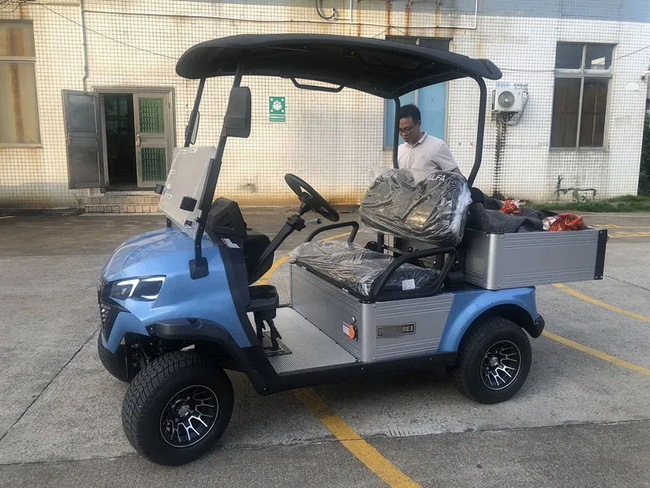
Electric golf carts are one of the most established low‑speed EV categories and have evolved from single‑purpose course vehicles into multi‑use transport platforms.[8][5]
The global electric golf cart market was valued at about USD 1.7 billion in 2024, with forecasts indicating sustained growth at around 6–9% annually toward 2033–2034. Demand is being driven by:[5][8]
- Expansion of golf courses and resort facilities
- Adoption in gated communities and retirement villages
- Use in industrial parks, campuses and airports for short‑distance transport
In many regions, small BEV carts are now used for:[11][5]
- Golf course fleet operations
- Guest shuttles in hotels and theme parks
- Internal logistics in factories and warehouses
Modern electric golf carts typically offer:[8][5]
- 2–8 seating configurations with modular bodies
- 48–72 V battery systems using lead‑acid or increasingly lithium‑ion packs
- Regenerative braking, hill‑hold functions and programmable speed settings
For OEM buyers, battery chemistry, controller quality and chassis design heavily influence performance, range and maintenance cycles.[5][8]
Electric sightseeing buses and resort shuttles are essentially larger‑capacity BEVs designed for slow, frequent‑stop routes in tourist and campus environments.[2][11]
Their advantages include:[2][11]
- Quiet, low‑vibration ride that improves passenger comfort
- Zero local emissions in dense tourist zones and parks
- Flexible body layouts with open‑side or fully enclosed cabins
Many resorts and industrial campuses now operate fleets of low‑speed electric buses alongside golf carts and utility buggies to cover different capacities and route lengths.[11][2]
Multi‑purpose electric vehicles (UTVs, utility carts and industrial buggies) focus on payload and towing rather than passenger comfort alone.[12][13]
Typical use cases:[13][12]
- Maintenance and security patrols in large facilities
- Material handling in factories, warehouses and ports
- Landscaping and groundskeeping in campuses and parks
Well‑designed electric utility vehicles combine:[12][13]
- Robust frames, cargo beds and optional tool racks
- High‑torque motors for inclines and rough surfaces
- Configurable seating for 2–6 occupants
Electric hunting buggies and off‑road UTV‑style EVs are specialized BEVs optimized for quiet operation and off‑road capability.[14][12]
Key benefits for hunters and landowners:[15][14][12]
- Stealth: Electric drivetrains produce far less noise than ICE engines, reducing disturbance to wildlife
- Instant torque for climbing hills, muddy tracks and uneven fields
- Lower running costs and less maintenance due to fewer moving parts
Many electric hunting buggies offer:[16][14]
- 4×4 or enhanced traction systems
- Lifted suspensions, off‑road tires and high ground clearance
- Accessory options such as gun racks, winches and LED light bars
For OEM customers, hunting and off‑road buggies are a growing niche segment that demands durable frames, sealed components and high‑capacity battery options.[14][16]
Across golf, hospitality, tourism, logistics and security, organizations are rapidly replacing small ICE vehicles with battery‑electric carts and buggies.[5][11]
Main drivers include:[11][5]
- Tightening environmental regulations and sustainability targets
- Pressure to reduce noise and emissions in residential and resort areas
- Desire to cut fuel and maintenance budgets in multi‑vehicle fleets
For fleet operators, standardizing on a common low‑speed EV platform simplifies training, parts management and safety procedures.[5][11]
Prices for electric golf carts, sightseeing buggies and utility vehicles vary widely depending on specification and brand positioning.[8][5]
Important price drivers:[8][5]
1. Battery capacity and chemistry
- Higher‑capacity packs deliver longer range but add cost.[5]
- Lithium‑ion batteries typically increase upfront price while reducing lifetime cost via longer life and lower maintenance.[8]
2. Seating and payload configuration
- 2–4 seat carts are generally more affordable than 6–8 seat shuttles or high‑payload utility vehicles.[11][8]
3. Customization and options
- Weatherproof enclosures, upgraded suspensions, infotainment systems, telematics or GPS tracking can significantly increase total price.[8][5]
4. Brand and after‑sales support
- Established global brands command higher prices but often provide stronger dealer networks and spare‑parts support.[17][5]
For fleet buyers, lifecycle cost per kilometer (including energy, maintenance and residual value) is usually more important than the initial purchase price.[5][8]
Selecting between a passenger EV, golf cart, sightseeing bus, hunting buggy or multi‑purpose utility vehicle depends on a few practical dimensions.[1][2]
Consider the following steps:[1][2][5]
1. Define the primary use case
- Golf course, resort shuttle, industrial logistics, campus security or hunting/off‑road.
2. Identify operating environment
- Enclosed campuses vs public roads, flat surfaces vs steep terrain, indoor vs outdoor usage.
3. Estimate daily driving distance and duty cycle
- Short repetitive routes favor smaller packs; long continuous operation may require higher capacity or opportunity charging.
4. Check regulatory requirements
- Local rules may define maximum speed, lighting, safety equipment and registration status for LSVs.
5. Set budget and TCO targets
- Balance upfront cost with expected lifetime energy and maintenance savings.
For organizations operating mixed fleets (for example, golf carts plus utility buggies and sightseeing buses), standardizing on compatible battery systems and charging interfaces simplifies operations.[11][5] Contact us to get more support for your applications.
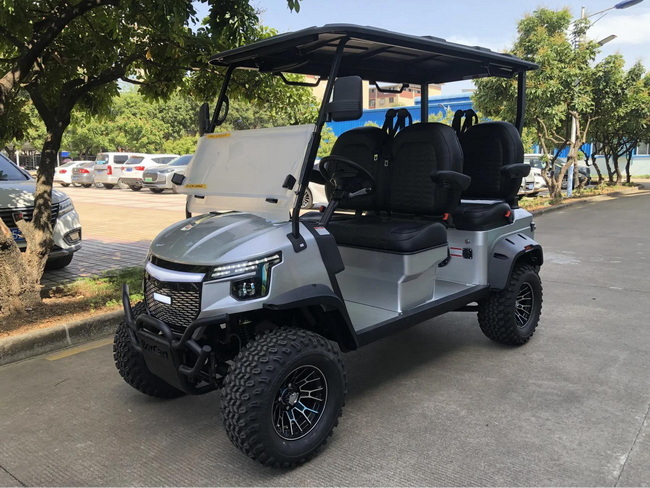
Most golf courses and resorts rely on battery electric golf carts and low‑speed shuttles, because they are quiet, emission‑free and relatively simple to maintain.[8][5]
Yes, many electric hunting buggies use high‑torque motors and off‑road suspensions that perform well on steep or muddy ground while remaining much quieter than ICE vehicles.[12][14]
Service life depends on chemistry and usage, but well‑maintained lead‑acid packs often last several years, while modern lithium‑ion systems can offer significantly longer life cycles.[5][8]
In some regions, properly equipped low‑speed EVs can operate on designated public roads, subject to local speed limits, lighting and safety regulations.[2]
Growth is driven by rising adoption in resorts, residential communities and industrial sites and by broader trends toward quiet, low‑emission transport options.[8][5]
[1](https://www.edmunds.com/electric-car/articles/types-of-electric-cars.html)
[2](https://www.transportation.gov/rural/ev/toolkit/ev-basics/vehicle-types)
[3](https://ecity.solarisbus.com/en/knowledge-base/ev-bev-hev-phev-fce)
[4](https://www.godigit.com/ev-guides/types-of-electric-vehicles)
[5](https://www.gminsights.com/industry-analysis/electric-golf-cart-market)
[6](https://www.acko.com/car-guide/types-of-electric-vehicles/)
[7](https://www.evgo.com/ev-drivers/types-of-evs/)
[8](https://www.grandviewresearch.com/industry-analysis/electric-golf-cart-market-report)
[9](https://emobility.academy/learn/types-of-electric-vehicles-explained-bev-hev-phev-and-fcev/)
[10](https://www.ev24.africa/types-of-electric-cars-bev-phev-hev-reev/)
[11](https://www.futuremarketinsights.com/reports/golf-cart-market)
[12](http://www.ecarmas.com/5-benefits-of-low-speed-electric-police-buggies/)
[13](https://www.ddmotorsystems.com/ATV-UtilityVehicleMotors.php)
[14](https://www.electricalv.com/best-electric-vehicles-for-hunting/)
[15](https://www.trailbuggy.us/blog/electric-hunting-buggies-the-silent-game-changer-in-outdoor-mobility)
[16](https://electronsx.com/electric-atv-directory.php)
[17](https://www.polarismarketresearch.com/industry-analysis/electric-golf-carts-market)
[18](https://e-amrit.niti.gov.in/types-of-electric-vehicles)
[19](https://www.fortunebusinessinsights.com/golf-cart-market-106337)
[20](https://yocharge.com/faq/the-different-types-of-electric-vehicles/)


