


Views: 222 Author: Leah Publish Time: 2026-01-27 Origin: Site


Content Menu
● What Powers an Electric Golf Cart?
>> Battery Pack: The Energy Tank
>> Motor Controller: The Electronic “Brain”
● Inside an Electric Golf Cart Motor
● DC vs AC Motors in Electric Golf Carts
>> AC Motors
● How the Driver Controls the Motor
● Performance Factors for Electric Golf Cart Motors
>> Voltage, Current, and Torque
>> Thermal Management and Efficiency
● Applications Beyond the Golf Course
>> Golf, Sightseeing, and Utility Use Cases
● OEM Perspective: Configuring Electric Golf Cart Motors
● Maintenance Tips for Electric Golf Cart Motors
>> Battery and Controller Care
● Future Trends in Electric Golf Cart Motors
● FAQ
>> 1. What type of motor is most common in an electric golf cart?
>> 2. How does an electric golf cart motor get its power?
>> 3. What is the difference between DC and AC motors in an electric golf cart?
>> 4. Can an electric golf cart use regenerative braking?
>> 5. How do I choose the right motor for a new electric golf cart project?
Electric golf cart motors turn stored battery energy into smooth, quiet movement, giving modern carts their efficient and low‑maintenance performance on and off the course. Understanding how these motors work helps fleet managers, brand owners, and OEM buyers choose the right power system for their applications and markets.
An electric golf cart is built around three core systems: the battery pack, the motor controller, and the traction motor driving the rear axle. When these three work together correctly, the electric golf cart accelerates predictably, climbs hills efficiently, and maximizes driving range for commercial or leisure use.
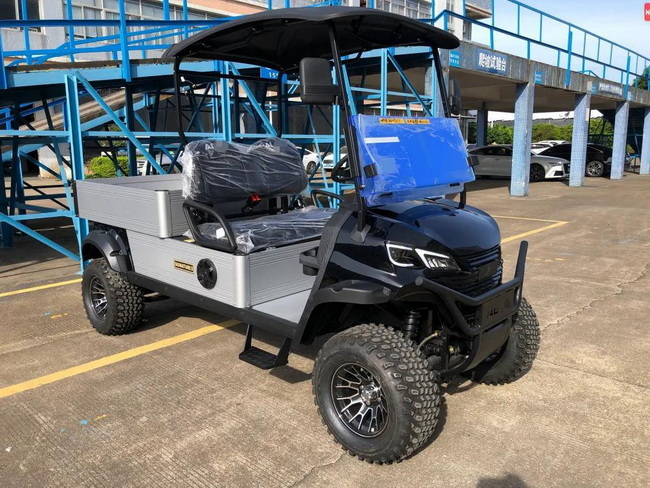
Most electric golf cart platforms use either 48 V or 72 V battery systems, with lead‑acid or increasingly lithium packs supplying DC power to the drivetrain. Higher voltage packs allow more power and better speed performance without dramatically increasing current, which helps limit heat and cable size in the system.
Typical electric golf cart configurations include sets of 6 V, 8 V, or 12 V batteries wired in series to reach the system voltage, or a single integrated lithium pack with built‑in battery management. Lithium systems provide lighter weight, faster charging, and longer cycle life, which is attractive for high‑utilization fleets and premium golf course applications.
Well‑designed battery compartments in an electric golf cart also allow for easy maintenance, cleaning, and periodic inspection. Good cabling, secure mounting, and proper venting or BMS monitoring support safe, long‑term operation in hot, cold, or humid climates.
Between the battery pack and the traction motor sits the electronic controller, which regulates how much power flows to the motor at any given time. This controller reads input from the accelerator pedal, speed sensors, and sometimes brake or direction switches, then modulates voltage and current to match the driver's demand.
On a modern electric golf cart, the controller delivers smooth acceleration by ramping power rather than sending a simple on/off signal, preventing wheel spin and protecting the drivetrain. Advanced controllers also manage regenerative braking on AC or sepex systems, feeding energy back to the battery pack when the driver releases the pedal or goes downhill.
Some controllers allow custom programming profiles for different users or markets. For example, a rental electric golf cart fleet can be set to modest acceleration and limited top speed, while a private hunting or utility vehicle can be tuned for stronger torque and slightly higher speed within legal limits.
The traction motor in an electric golf cart converts electrical energy into mechanical torque that turns the wheels through a gear set or axle assembly. Although designs vary, most motors share common building blocks that determine power, efficiency, and durability in everyday use.
Key components inside a typical electric golf cart motor include the stator, rotor, windings, and housing, with brushes and commutator present in traditional DC types.
- Stator: The stationary outer section carrying windings or permanent magnets that create the main magnetic field.
- Rotor: The rotating inner part mounted on a shaft that delivers torque to the drivetrain as magnetic fields interact.
- Windings: Coils of copper wire that carry current and generate magnetic fields, sized to handle the rated power and duty cycle of the electric golf cart.
- Brushes and commutator (DC): Surfaces that transfer current into the spinning rotor, gradually wearing over time and requiring periodic service.
In sealed AC motors, there are no brushes, which reduces maintenance and improves long‑term reliability for demanding commercial electric golf cart fleets. The motor housing is usually sealed against dust and moisture, and high‑quality bearings support the rotor shaft for thousands of hours of operation.
When the controller sends current to the motor windings, it creates magnetic fields that push and pull on the rotor, causing it to spin. The rotor shaft connects to a gear set or differential, multiplying torque and sending it to the drive wheels of the electric golf cart.
As motor speed increases, the controller dynamically adjusts voltage and current to balance acceleration, speed, and thermal limits, ensuring stable performance on flat fairways and hilly resort roads. In AC systems, field orientation and frequency control further optimize torque delivery and efficiency across the entire operating range.
This interaction happens many times per second, so the driver simply experiences smooth and predictable movement. Well‑matched motors and controllers make the electric golf cart feel responsive yet controlled, even when fully loaded with passengers or cargo.
Modern electric golf carts primarily use either DC series/sepex motors or AC induction motors, each with distinct performance and cost profiles. Selecting the right platform depends on terrain, payload, budget, and whether the cart targets golf courses, resorts, industrial parks, or hunting and utility use.
DC series motors have long been the standard in electric golf cart drivetrains due to their simple design and strong low‑speed torque. In these motors, the armature and field windings are wired in series, creating a powerful magnetic field when current flows, which is ideal for stop‑and‑go driving and hill starts.
Advantages include immediate torque response, straightforward control, and relatively low initial cost, making them suitable for basic fleet electric golf cart models. However, they rely on brushes and mechanical commutation, which increases maintenance requirements and can limit efficiency and high‑speed performance under heavy load.
For courses or communities with mostly flat terrain and moderate daily use, a DC series electric golf cart can be a cost‑effective and reliable choice. Regular inspection of brushes, cables, and connections keeps performance stable over the life of the vehicle.
Separately excited, or sepex, DC motors place the field winding on a separate circuit, giving the controller finer control over torque and speed. This architecture supports regenerative braking and improved speed regulation, valuable for urban‑style utility electric golf cart applications and more demanding routes.
Sepex systems typically cost more than simple series setups but offer better downhill control, smoother response, and the ability to recover energy when decelerating or descending slopes. They are often used where an electric golf cart must navigate mixed gradients safely while maximizing daily range.
These motors are common in higher‑end DC platforms where fleet operators want a balance between familiar DC technology and more modern control features. Programming flexibility allows different braking and acceleration maps for golf, sightseeing, or industrial electric golf cart operations.
AC motors are increasingly common in higher‑end and commercial electric golf cart platforms due to their efficiency, durability, and performance. These motors use an inverter‑type controller to convert DC battery power into variable‑frequency AC, precisely controlling speed and torque without brushes.
Benefits include higher energy efficiency, smoother power delivery, and better thermal behavior under sustained loads such as continuous shuttle or sightseeing service. AC electric golf cart systems often cost more but can deliver better hill‑climbing, higher top speed, and reduced lifetime maintenance, improving total cost of ownership for professional fleets.
In multi‑vehicle fleets, AC electric golf cart models help reduce downtime and servicing because there are no brushes to replace, and the motors handle heat and high‑duty cycles better. For many OEM buyers targeting demanding customers, AC powertrains are becoming the preferred solution.
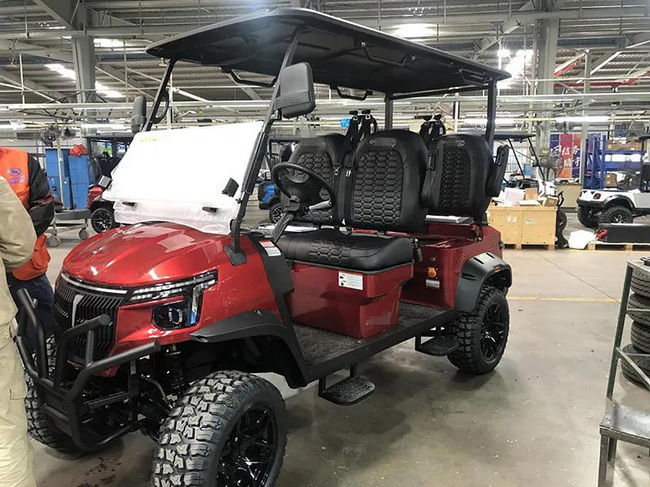
From the driver's perspective, operating an electric golf cart looks simple, but several subsystems coordinate in the background to control the motor. Pedal position, direction selection, braking input, and safety interlocks all feed into the controller logic.
The accelerator pedal in an electric golf cart usually connects to a throttle sensor, such as a potentiometer or Hall‑effect device, that converts pedal travel into an electrical signal. The controller reads this signal and proportionally increases or decreases the power sent to the motor, creating smooth, car‑like acceleration.
When the driver releases the pedal, the controller cuts or reduces current to the motor, allowing the electric golf cart to coast or slow, and in regenerative systems it can send power back into the battery pack. Carefully tuned throttle maps help maintain comfort for passengers on golf courses, resorts, campuses, and industrial facilities.
Some advanced systems offer different driving modes, such as “eco,” “standard,” and “sport,” which change how aggressively the electric golf cart responds to pedal input. This lets operators adapt the same vehicle to different users and environments without changing hardware.
A forward/reverse switch or selector on the dashboard tells the controller which direction the electric golf cart should move. The controller then reverses motor rotation electronically in AC or sepex systems, or redirects current paths in DC architectures to achieve reverse motion.
Braking can be purely mechanical, using drum or disc brakes at the wheels, or combined with regenerative braking where the motor resists rotation and converts kinetic energy to electrical energy. This approach improves control on descents, protects mechanical brakes from overheating, and extends range for heavily used electric golf cart fleets.
Parking brakes and safety interlocks ensure that the electric golf cart cannot move unintentionally. For example, many systems prevent drive engagement while charging or with specific doors or seats in an unsafe position, improving user safety in commercial environments.
Motor performance in an electric golf cart is not determined by motor design alone; it is the result of coordinated choices across the whole drivetrain. Voltage, current limits, gearing, and vehicle weight must align with the application and user expectations.
Voltage primarily influences potential speed, while current closely relates to torque output at the wheels. Higher voltage electric golf cart systems can reach better speeds without excessively high current, reducing resistive losses and heat in cables and components.
Torque at the wheel depends on motor torque multiplied by the gear ratio, which explains why electric golf cart drivetrains use reduction gearing to climb hills with passengers and cargo. Oversizing a motor or over‑currenting it without adequate cooling and appropriate gearing can lead to overheating and premature wear.
In practical terms, a carefully matched motor and axle ratio allow an electric golf cart to maintain acceptable speed on flat routes while still having enough pulling power for inclines. OEM engineers balance these factors based on the typical route profile and usage pattern.
Every electric golf cart motor converts some input power into heat due to winding resistance and magnetic losses. Good designs manage this with robust housings, proper ventilation, and efficiency optimization at typical operating speeds and loads.
AC motors tend to run cooler and more efficiently under varying loads, which is advantageous for electric golf cart fleets facing long duty cycles or frequent hill climbs. Efficient motors and controllers directly translate into longer range per charge, enabling more 18‑hole rounds or more shuttle trips between charges.
Routine inspection of wiring, terminals, and cooling paths helps maintain efficiency and avoid heat‑related failures. Keeping tires properly inflated and the electric golf cart correctly aligned also reduces rolling resistance, indirectly lowering the load on the motor.
The same motor and controller technologies used in a classic electric golf cart now serve a wider family of low‑speed vehicles such as sightseeing buses, hunting carts, and utility platforms. OEM buyers can configure powertrains to match specific roles, from quiet resort operations to rugged off‑road hunting and campus logistics.
For golf course use, priority is smooth, quiet operation, gentle acceleration, and safe controlled speeds on grass and paved paths. Electric golf cart motors in this scenario are typically tuned for comfort and efficiency rather than maximum speed.
Sightseeing buses and resort shuttles often require higher passenger capacity and more robust torque for repeated stop‑and‑go cycles on mixed terrain. Utility and hunting vehicles may need stronger electric golf cart powertrains with higher torque, reinforced axles, and off‑road gearing to handle cargo, gradients, and unpaved ground.
In industrial parks, airports, and campuses, electric golf cart style vehicles move staff, visitors, and tools between locations. Here, reliability, range, and low noise are essential, and fleets often favor AC or sepex systems with regenerative braking to reduce operating costs.
For overseas brand owners, wholesalers, and manufacturers, partnering with a specialized OEM allows customization of electric golf cart motors and drivetrains for different markets. This includes tailoring voltage levels, motor types, controllers, and battery technologies to meet local regulations and user expectations.
Typical OEM options for an electric golf cart project include choosing between DC or AC motors, specifying power ratings, and defining speed limits based on market rules. Customers may select lead‑acid for cost‑sensitive fleets or lithium packs for premium or high‑duty applications where long life and rapid charging are critical.
Further customization involves programming controller parameters such as acceleration curves, regenerative braking strength, and reverse speed caps to align the electric golf cart's driving feel with brand positioning. OEMs can also integrate displays, diagnostics, and telematics to help fleet managers monitor motor health and usage profiles over time.
Body style, seating layout, and utility accessories such as cargo beds, tow hitches, and racks can be combined with specific motor and battery packages. In this way, a single electric golf cart platform can be adapted to many roles, from luxury resort transport to robust multi‑purpose utility vehicles.
Although electric golf cart motors are more reliable and simpler than internal combustion engines, basic maintenance still protects performance and longevity. Most tasks focus on inspection, cleaning, and ensuring compatible settings across the electrical system.
Owners and fleet managers should regularly inspect cables, terminals, and connectors for corrosion, looseness, or damage. Clean and tight connections reduce resistance and help the electric golf cart motor receive stable power without excessive heat.
For DC motors with brushes, periodic inspection and replacement when worn ensure consistent torque and prevent sparking or uneven performance. It is also important to keep the motor area free from mud, dust buildup, and foreign objects that might interfere with cooling or rotation.
Because the motor depends on a healthy power supply, proper battery maintenance is essential. For lead‑acid packs, that means checking electrolyte levels (where applicable), cleaning terminals, and charging with the correct algorithm. For lithium systems, following the recommended chargers and avoiding deep over‑discharge helps protect the pack.
Controller settings should match the specific motor, battery, and application. Using inappropriate current limits or speed settings can over‑stress the electric golf cart motor or reduce range. When upgrading components, OEM guidance or professional technicians can reprogram the controller to ensure everything remains compatible.
Electric golf cart technology continues to evolve alongside broader electric vehicle development. Motor and controller improvements are making carts more capable, efficient, and connected.
Higher‑efficiency AC motors, advanced permanent‑magnet designs, and improved thermal materials are steadily increasing power density. At the same time, smart controllers with connectivity allow monitoring of every electric golf cart in a fleet, supporting predictive maintenance and real‑time diagnostics.
As lithium battery costs continue to fall and energy density rises, electric golf cart platforms will enjoy longer ranges, faster charging, and the ability to handle more accessories. This will push motors to deliver higher continuous power while staying compact and reliable.
The motor at the heart of every electric golf cart transforms battery energy into useful torque, working closely with the controller, battery pack, and gearing to deliver safe and comfortable mobility. Choices between DC and AC designs, voltage levels, and control strategies determine how well each electric golf cart matches its role, from classic golf fairways to sightseeing, hunting, and utility service. For OEM buyers and brands, understanding these fundamentals makes it easier to specify a reliable, efficient electric golf cart platform that aligns with market expectations and total cost‑of‑ownership targets.
Contact us to get more information!
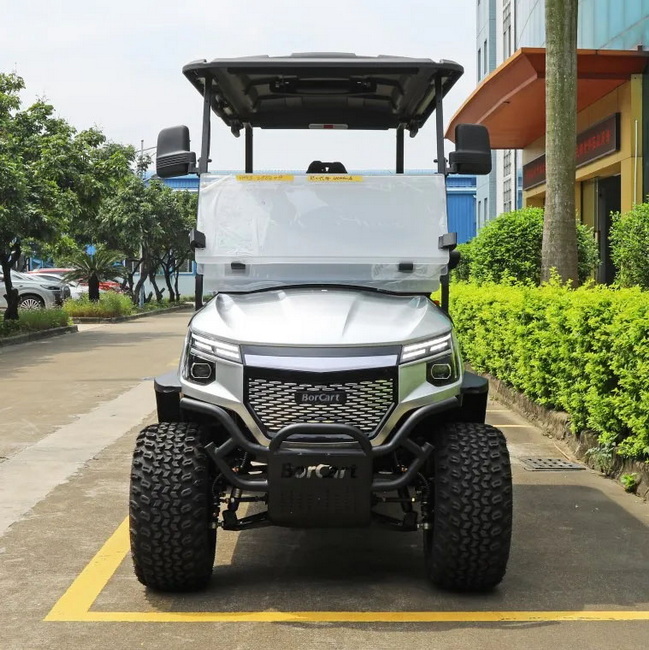
Traditional electric golf carts often use DC series motors because they deliver high torque at low speeds and have a straightforward design. Newer premium models increasingly adopt AC motors for higher efficiency, better hill performance, and reduced maintenance over the life of the vehicle.
The motor draws DC power from a multi‑battery pack or single lithium pack, routed through an electronic controller that regulates voltage and current. As the driver presses the accelerator, the controller increases the power flow, causing the motor in the electric golf cart to spin faster and produce more torque.
DC motors are simpler and usually cheaper, providing quick torque but requiring brush maintenance and offering lower efficiency under heavy loads. AC motors use an inverter controller, eliminate brushes, and offer smoother power, higher efficiency, and better high‑duty performance, which benefits demanding electric golf cart fleets.
Yes, electric golf carts equipped with AC or sepex DC systems can use regenerative braking to slow the vehicle while sending energy back into the battery pack. This feature improves downhill control, reduces wear on mechanical brakes, and slightly extends the range between charges.
Selection should consider terrain, passenger load, desired speed, daily mileage, and budget, since all of these affect motor power and type. For example, AC systems often suit hilly or intensive commercial routes, while DC platforms may be adequate for basic flat‑course electric golf cart applications in cost‑sensitive markets.
1. https://www.puttersgolfcarts.com/blogs/putters-blogs/how-a-golf-cart-works-a-complete-guide-to-golf-cart-mechanisms-1
2. https://golfcarts.com/what-type-of-motor-is-in-electric-golf-carts/
3. https://www.borcart.com/top-10-electric-golf-buggy-manufacturers-in-china.html
4. https://evtitan.com/electric-golf-carts-understanding-motor-power-and-performance/
5. https://ddmotorsystems.com/DCvsACGolfCarts.php
6. https://borcart.en.made-in-china.com/product/JQsYLZqyEjWz/China-Borcart-OEM-ODM-Manufacturer-Electric-Golf-Car-Newly-Golf-Cart.html
7. https://golfcarts.com/how-do-electric-golf-carts-work/
8. https://carts-and-parts.com/ac-vs-dc-golf-cart-motors/
9. https://www.borcart.com
10. https://www.youtube.com/watch?v=HLjQtOT0udA


