


Views: 222 Author: Leah Publish Time: 2026-01-27 Origin: Site


Content Menu
● Understand the Factory Speed of an Electric Golf Cart
● Safety and Legal Considerations Before You Modify an Electric Golf Cart
● Optimize Your Batteries for Better Electric Golf Cart Performance
● Upgrade the Motor and Controller in Your Electric Golf Cart
● Adjust Gear Ratios and Drivetrain Settings
● Improve Tires, Wheels, and Rolling Resistance
● Reduce Unnecessary Weight on the Electric Golf Cart
● Fine‑Tune Acceleration and Controller Settings
● Keep Your Electric Golf Cart in Good Mechanical Condition
● Comfort, Stability, and Braking for Faster Electric Golf Carts
● Work With an OEM Partner to Develop Faster Electric Golf Carts
● FAQ
>> 1. How fast can I safely make my electric golf cart go?
>> 2. Will upgrading to lithium batteries make my electric golf cart faster?
>> 3. Do I need a new motor to increase electric golf cart speed?
>> 4. Is it legal to drive a modified electric golf cart on public roads?
>> 5. Should I modify an existing electric golf cart or order a high‑speed version from an OEM?
An electric golf cart can be made noticeably faster by optimizing its batteries, motor, controller, gearing, tires, and overall weight while staying within safety and legal limits. For brands, wholesalers, and OEM buyers, working with a professional manufacturer like BorCart makes it easier to integrate these upgrades into factory‑built electric golf cart models for different markets and applications.
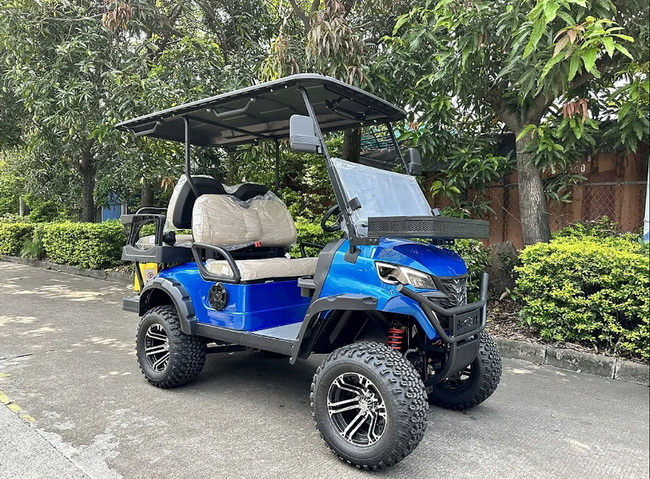
Most standard electric golf cart models are factory‑limited to around 12–15 mph for golf course and community use, with some high‑spec versions set closer to 20–25 mph depending on local rules. These limits protect the motor, batteries, and drivetrain, and they also help fleet owners manage safety and liability in crowded environments such as resort paths or residential roads.
Many controllers in an electric golf cart include programmable parameters such as speed maps, current limits, and acceleration ramps that can be adjusted by a technician or OEM. Before changing hardware, it is often smart to check whether the existing controller allows a higher safe top speed within the same voltage and battery configuration.
Before attempting to speed up an electric golf cart, it is essential to confirm local laws about maximum golf cart or low‑speed vehicle speeds on public roads. In many regions, golf carts are limited to about 20–25 mph when used on streets, and exceeding that range can move the vehicle into a different legal category that requires extra safety equipment and registration.
In addition to regulations, higher speeds increase braking distance, rollover risk, and component stress in any electric golf cart. This means upgrades should always be combined with checks on brakes, steering, suspension, tires, and frame strength, especially for heavily loaded utility or hunting versions of an electric golf cart.
Battery type and voltage have a huge impact on how quickly an electric golf cart can accelerate and how well it maintains speed under load. Higher voltage systems, such as moving from 36 V to 48 V or from 48 V to 72 V, can deliver more power to the motor when all other components are properly rated.
Upgrading from traditional lead‑acid batteries to lithium packs can reduce weight and keep voltage more stable throughout the discharge curve, which often makes an electric golf cart feel stronger and quicker. However, such a conversion requires a compatible charger and careful review of controller and motor limits to avoid overheating, wiring damage, or premature wear.
It is also important to size the battery pack correctly for both performance and range. A higher‑performance electric golf cart that frequently accelerates hard or climbs hills will draw more current, so it may need a battery pack with higher capacity and discharge rating to avoid voltage sag and short runtimes. Fleet operators should consider their route profiles and daily mileage when defining battery specifications.
One of the most direct ways to speed up an electric golf cart is to install a more powerful motor that can handle higher current and higher RPM. AC motors are increasingly used in premium electric golf cart designs because they offer better efficiency, regenerative braking options, and strong high‑speed performance, while DC motors remain common in cost‑sensitive markets for their simplicity and lower initial cost.
The electronic controller is the “brain” of an electric golf cart powertrain, managing how battery energy is delivered to the motor. A higher‑capacity controller with optimized programming can unlock more torque and speed, provided that the voltage, motor rating, and cabling are all matched to the new performance level.
When planning a motor and controller upgrade, it is wise to treat them as a matched pair instead of mixing unrelated components. A powerful controller driving a small, low‑rated motor can cause overheating and premature failure, while a strong motor paired with a limited controller may never reach its potential. OEM‑level engineering allows these combinations to be validated on test benches and in real‑world driving cycles.
Gearing plays a central role in the balance between acceleration, hill‑climbing power, and top speed in any electric golf cart. Installing high‑speed gears changes the final drive ratio so that the electric golf cart can reach a higher maximum speed at a given motor RPM, although this often reduces low‑speed torque and climbing ability.
For fleets operating mostly on flat ground, such as golf courses and resort paths, high‑speed gears can be a practical way to increase cruising speed without extreme electrical upgrades. In contrast, hunting or utility electric golf cart models that frequently drive off‑road may need a more torque‑oriented gear setup even after motor and controller upgrades.
During any drivetrain modification, alignment and lubrication are important details. Poorly aligned gearsets or under‑lubricated differentials add friction and heat, which eat away at performance. After installing high‑speed gears, test drives should check not only top speed but also noise levels, vibration, and temperature rise during extended runs.
Tires affect both safety and speed, because their diameter, tread pattern, and rolling resistance change how efficiently an electric golf cart moves. Larger‑diameter tires can increase theoretical top speed by covering more ground per wheel rotation, but they may also require more torque to start moving and may stress the motor if the rest of the system is not upgraded.
Low‑rolling‑resistance tires, correct tire pressure, and properly aligned wheels help an electric golf cart maintain speed with less power waste. For street‑focused or community electric golf cart configurations, smoother tread patterns can also reduce noise and vibration while improving efficiency compared to aggressive off‑road treads.
Rim size and weight are also worth considering. Heavier wheels increase rotating mass and can slightly slow down acceleration in an electric golf cart. Lightweight alloy rims combined with appropriate tires are often a better match for high‑speed or premium models that prioritize responsive handling and efficiency.
Weight reduction is a simple but powerful way to make an electric golf cart feel faster and more responsive. Every extra accessory, cargo box, or structural add‑on increases the load that the motor and batteries must move, which can reduce acceleration and top speed, especially on hills.
Owners can remove rarely used accessories, choose lighter seating or roof options, and organize cargo more efficiently to minimize dead weight on the electric golf cart. When combined with a battery upgrade, this weight reduction can deliver a noticeable improvement in real‑world performance without pushing components beyond their design limits.
From an OEM perspective, the frame, body, and interior materials of an electric golf cart can be selected for the best balance of strength and weight. High‑strength steels, aluminum, and engineering plastics can all be used strategically so that the electric golf cart remains durable while still supporting higher speeds and stronger acceleration.
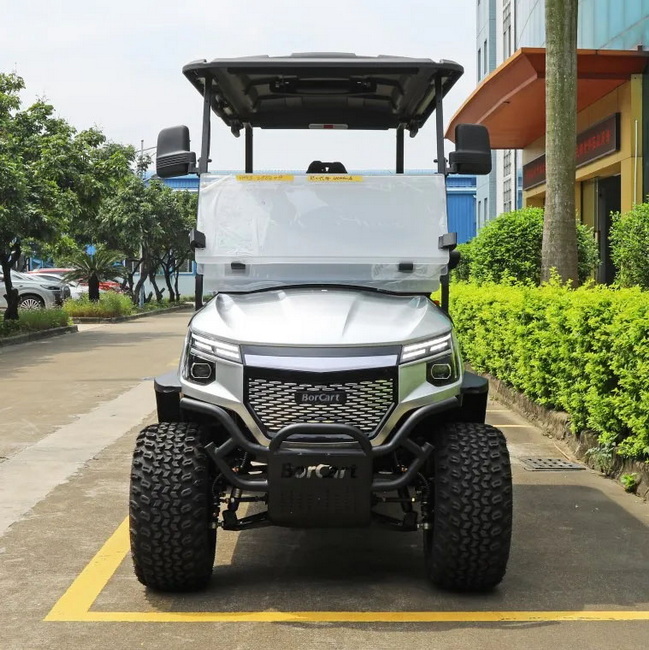
Many modern electric golf cart controllers include software tools and parameters that authorized technicians can adjust. By changing acceleration curves, current limits, and speed maps, it is possible to make an electric golf cart feel more responsive while staying within safe electrical boundaries.
However, aggressive settings can increase heat in the controller and motor, so temperature monitoring and proper cooling are important for any high‑performance electric golf cart. For large fleets, standardized controller settings that balance speed, battery life, and reliability are usually the best long‑term solution.
Some controllers also support multiple driving modes, such as “eco,” “standard,” and “sport.” This allows a single electric golf cart to adapt to different users and environments. For example, eco mode can be used on crowded golf paths to control speed, while a higher‑performance mode is available for open areas or light commercial work where extra speed is beneficial.
Basic maintenance can also influence the effective speed and efficiency of an electric golf cart over time. Worn bearings, dragging brakes, misaligned steering, or underinflated tires introduce drag that forces the power system to work harder just to reach normal speeds.
Regular inspection of brake components, lubrication points, and wheel bearings helps ensure that the electric golf cart can take full advantage of any electrical or gearing upgrades. For fleet operators, scheduled maintenance programs often pay back through better performance, reduced downtime, and longer component life.
Clean electrical connections are equally important. Corroded terminals or loose cables between the batteries, controller, and motor can create voltage drops that weaken acceleration and limit top speed. Periodic checks of these connections, together with proper torque on all major fasteners, help keep a high‑performance electric golf cart operating as intended.
As the top speed of an electric golf cart increases, comfort and stability become more critical. Suspension tuning, shock absorber quality, and chassis rigidity all influence how secure the vehicle feels when it travels faster over bumps, curves, and uneven surfaces.
Upgraded brakes may be needed when an electric golf cart is significantly faster than a standard fleet model. Stronger drums, discs, or hydraulic systems help the driver stop confidently even when carrying passengers or cargo. Enhanced braking performance is especially important for street‑legal electric golf carts and low‑speed vehicles that share roads with cars.
Ergonomics also matter at higher speeds. A comfortable steering wheel position, solid seating, and intuitive pedal response make it easier for drivers to control a fast electric golf cart precisely. For commercial fleets, this contributes to safety and reduces driver fatigue during long working days.
For overseas brands, wholesalers, and manufacturers, the most reliable way to obtain faster electric golf cart models is to define performance targets at the design stage and work directly with an experienced OEM. An integrated engineering approach can match motor type, battery voltage, controller capacity, gears, tires, and frame strength to a specific speed and duty cycle, instead of relying on piecemeal aftermarket modifications.
As a professional Chinese producer of electric golf carts, sightseeing buses, low‑speed vehicles, hunting vehicles, and utility vehicles, BorCart can design custom electric golf cart configurations with the desired speed, range, and load capacity for different markets. This OEM approach is especially useful for clients that need consistent, certified electric golf cart performance across large fleets for golf resorts, gated communities, campuses, and commercial projects.
By working closely with customers, BorCart can offer multiple performance packages under the same body platform, such as standard electric golf cart versions for golf courses and higher‑speed versions for resort shuttle or security use. With shared components and modular designs, clients can simplify maintenance and spare parts management while still addressing several different application scenarios.
Speeding up an electric golf cart is not just about one single upgrade; it is about balancing batteries, voltage, motor, controller, gearing, tires, and weight while respecting safety and legal limits. With smart choices and regular maintenance, an electric golf cart can deliver higher speeds, better acceleration, and smoother performance for golf courses, resorts, communities, and industrial users.
For overseas brands and wholesalers, partnering with a specialized manufacturer like BorCart allows these performance improvements to be built into the electric golf cart platform from day one. This OEM strategy supports consistent quality, reliable certification, and long‑term customer satisfaction in a wide range of electric golf cart applications.
Contact us to get more information!
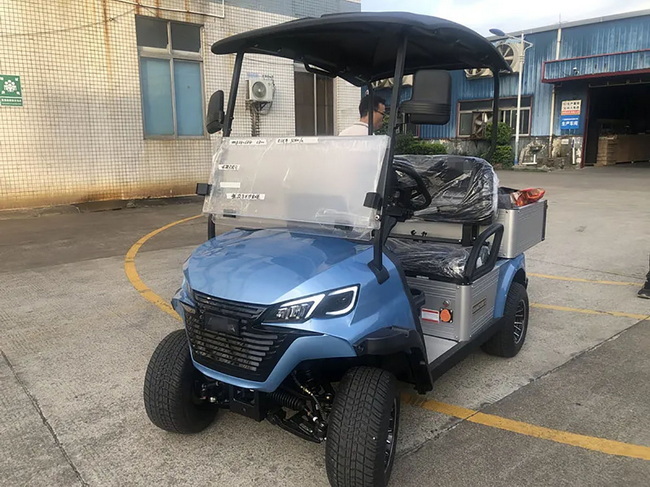
In many regions, golf carts operated on public streets are limited to about 20–25 mph, even if the electric golf cart itself is capable of more. On private property, higher speeds may be technically possible, but it is still wise to match electric golf cart speed to the terrain, load, and safety equipment available.
Switching from lead‑acid to lithium batteries often makes an electric golf cart feel quicker because the pack is lighter and maintains voltage better under load. The actual top speed improvement depends on whether the motor and controller can draw more power within their rated limits at the same or higher system voltage.
Minor speed increases can sometimes be achieved through controller reprogramming, proper tires, and weight reduction without changing the motor in an electric golf cart. For larger gains—especially when moving to higher voltage or high‑speed gears—a more powerful motor specifically designed for the new performance level is usually recommended.
Legality depends on local definitions of golf carts, low‑speed vehicles, and neighborhood electric vehicles, as well as the posted speed limits on the roads you use. Many jurisdictions require registration, lights, mirrors, and compliance with specific speed caps before an electric golf cart can operate legally on public streets.
Individual owners sometimes prefer aftermarket upgrades, but this route can be complex because every change must be checked for compatibility and safety. For brands, wholesalers, and fleet operators, ordering purpose‑built high‑speed electric golf cart models from an OEM like BorCart usually delivers better reliability, unified warranty coverage, and easier compliance with local regulations.
1. https://www.gcsuperstore.com/tips-to-boost-electric-golf-cart-speed/
2. https://leochlithium.us/replacing-golf-cart-batteries-with-lithium-what-you-need-to-know-before-upgrading-your-system/
3. https://taraelectricvehicles.com/blog/2025/05/26/understanding-golf-cart-top-speed-regulations-and-safety/
4. https://evtitan.com/boosting-the-speed-and-performance-of-your-electric-golf-cart-what-you-should-know/
5. https://vipbosspower.com/blogs/lithium-battery-guides/golf-cart-controller-lithium-upgrade
6. https://dmv.nv.gov/lowspeed.htm
7. https://www.kandiamerica.com/electric-golf-cart-speed-tips/
8. https://www.kandiamerica.com/what-is-a-street-legal-golf-cart/
9. https://golfcartsofatx.com/blog/how-to-make-an-electric-golf-cart-faster/


