


Views: 222 Author: Loretta Publish Time: 2025-12-22 Origin: Site


Content Menu
● Why night driving safety matters
● Safety Tips for Driving Your Electric Buggies at Night
● Prepare your buggy before every night trip
>> Check and upgrade your lighting system
>> Enhance visibility with reflective materials and slow‑moving signs
>> Inspect tires, steering and brakes
● Understand legal and site‑specific requirements
>> Required features for public roads
>> Internal policies for resorts and private communities
● Drive defensively: speed, route and behaviour
>> Control your speed and following distance
>> Stay fully focused and avoid distractions
● Protect drivers and passengers with safety equipment
>> Seat belts, windshields and mirrors
>> Passenger safety: seating and behaviour
● Manage energy and battery performance at night
>> Monitor state of charge before and during use
>> Reduce unnecessary power draw
● Train and supervise your night‑shift drivers
>> Build a structured night‑driving training module
>> Supervise, audit and improve
● Practical night‑driving checklist for buggy fleets
>> Sample pre‑departure checklist
● Recommended night‑safety configuration for electric buggies
● How BorCart supports safer night driving (OEM perspective)
● Build a safer night‑ready buggy fleet
● FAQs about driving electric buggies at night
>> 1. Can I drive my electric golf cart on public roads at night?
>> 2. What lights are essential for safe night driving?
>> 3. Why is a slow‑moving vehicle triangle recommended for buggies?
>> 4. How fast is too fast for a golf cart at night?
>> 5. What training should staff receive before driving buggies at night?
>> 6. Do LED lights really make a difference on electric buggies?
Night driving with electric buggies or golf carts can be smooth, efficient and enjoyable—if the right safety measures, lighting, and driving habits are in place. This enhanced guide combines best practices, legal considerations and practical equipment tips to help fleet owners, resort managers and community operators keep drivers and passengers safe after dark.[1][2][3][4]
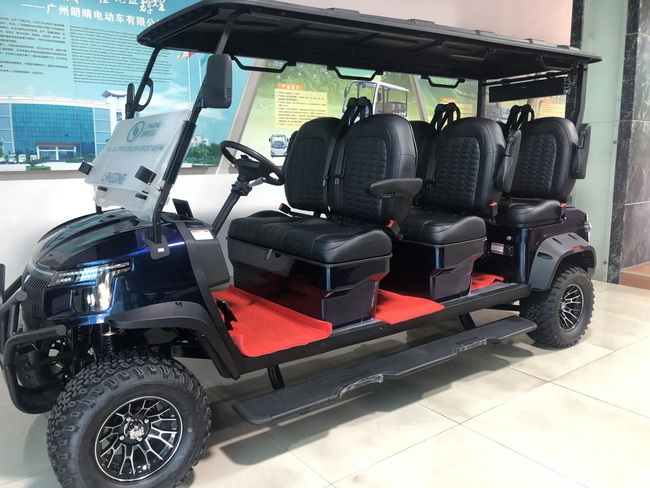
Night driving increases risk because visibility is lower, depth perception is reduced and drivers fatigue faster. For low‑speed vehicles like electric buggies and golf carts, this risk is amplified when sharing space with faster cars, pedestrians and cyclists.[3][4][6][7]
- Resorts and hotels often run buggies at night for guest transport, luggage, housekeeping and security patrols.
- Residential communities and campuses use golf carts in dimly lit streets, where other vehicles may not expect slow traffic.
Many incidents happen not because of high speed, but because other road users simply do not see the buggy in time or because drivers are unfamiliar with the route.[4][3]
This article provides a complete framework to safely operate electric buggies and golf carts at night, from compliant lighting and reflective equipment to driver training, route planning and fleet checklists.[1][3]
A short pre‑ride inspection greatly reduces the chance of incidents caused by poor lighting, low batteries or mechanical faults.[3][4]
Your buggy should never operate at night without a full, working light kit.[5][3]
Core elements:
- Headlights: To illuminate the path ahead and reveal obstacles, curbs, animals or pedestrians.[4][3]
- Taillights and brake lights: To let other drivers see you from behind and recognize when you are slowing or stopping.[2][3]
- Turn indicators: To communicate lane changes and turns clearly, especially where you share roads with cars.[5][3]
For modern fleets, consider upgrading to LED lights, which provide brighter illumination with lower energy consumption and longer service life.[8][1]
Recommended placement for visuals:
- Close‑up photo showing halogen vs LED buggy headlights at night.
- Diagram displaying correct positioning of front and rear lights on a golf cart.
Even with good lights, small vehicles can blend into the background at night. Improving passive visibility is critical:[9][10]
- Install reflective tape or decals along both sides and the rear of the buggy.
- Use a slow‑moving vehicle (SMV) reflective triangle on the back when traveling on roads under about 25 mph, as commonly required for low‑speed vehicles.[10][9]
- Encourage drivers and staff to wear reflective vests or bands when operating or walking near buggies at night.[11][8]
These simple additions significantly extend the distance at which drivers can spot the buggy under headlights.[9][10]
Reduced visibility makes it harder to avoid potholes, curbs and debris, so mechanical condition matters even more at night.[12][7]
Before operation:
- Check tire pressure and tread to maintain traction on wet or uneven surfaces.
- Test brake response in a safe area; any sponginess or pulling must be addressed before night operation.
- Confirm steering has no excessive play and all suspension components are secure.
For fleets, use a daily checklist sheet and require drivers to sign after each inspection.
Night use of low‑speed vehicles is often regulated, especially on public roads and mixed‑traffic areas.[13][2]
In many regions, golf carts or low‑speed vehicles must meet specific equipment standards to operate at night on public roads. Often required:[2][13]
- Headlights, taillights and brake lights
- Turn indicators
- Reflectors at the front, sides and rear
- Rearview mirrors (interior and exterior)
- Seat belts for all seating positions in street‑legal carts[7][3]
Speed limits also apply; for example, many states allow golf carts only on roads with posted limits of 25 mph or below.[13][2]
Even on private property, clear site rules help ensure consistent safety standards. Consider policies that:[3][4]
- Define which paths are approved for night buggy use.
- Set maximum speeds by zone (guest areas vs service roads).
- Require lights and reflective equipment for any travel after sunset.
- Restrict driving to trained staff or registered guests with valid orientation.
Publishing these rules on internal signage and staff handbooks improves compliance and reduces liability.[7][13]
Night driving is not only about hardware; driver behaviour is equally important.[4][7]
At night, drivers see obstacles later and have less time to react. For buggies and golf carts:[3][4]
- Keep speeds well below daytime limits, even on familiar routes.
- Leave extra space to the vehicle ahead; never tailgate larger vehicles.
- Slow down before curves, intersections, slopes and near pedestrian areas.
Installing speed limiters or telematics to log top speeds can help fleet managers enforce safe driving standards.[12][7]
When possible, choose well‑lit, familiar routes for night operation. Good practice:[8][4]
- Use designated buggy paths instead of mixed‑traffic roads whenever available.[1][3]
- Avoid steep slopes, sharp corners and damaged surfaces at night.
- Provide printed or digital route maps for staff, especially in large resorts and communities.
For new drivers, require a daytime route orientation before authorizing night driving.
Distractions that seem minor in daylight become dangerous at night. Electrical buggies are quiet, so drivers must pay extra attention to pedestrians who may not hear them approaching.[11][8]
Drivers should:
- Keep both hands on the wheel and eyes on the path.
- Avoid phone use, eating, loud music or conversations that pull attention away from the road.
- Never drive under the influence of alcohol or drugs.
A simple rule for staff: “If you wouldn't do it in a car, don't do it in a buggy.”

Proper safety accessories protect occupants if something unexpected happens.[5][3]
Key protective features for night driving include:
- Seat belts: Strongly recommended, and often required, for street‑legal carts; they reduce ejection risk in sudden stops or collisions.[5][3]
- Windshields: Automotive‑grade windshields protect against rain, insects and flying debris that can be hard to see at night.[3][5]
- Rearview and side mirrors: Provide constant awareness of vehicles approaching from behind, especially on community roads.[8][3]
Fleets should standardize these components across vehicles to create a consistent safety baseline.
Passenger behaviour is a frequent cause of buggy accidents, particularly at night when drivers need maximum focus.[12][7]
Simple rules to enforce:
- Passengers must remain seated with hands and feet inside the vehicle at all times.[7][12]
- Do not overload the buggy beyond rated capacity; excess weight affects braking and stability.
- Children should sit inside the passenger compartment, not on laps or cargo platforms.
Clear onboard signage—simple icons showing “Remain seated” and “No standing” —helps guests understand expectations quickly.
Lighting, cold temperatures and longer routes can all affect battery performance.[1][8]
Before each night shift or route:
- Confirm batteries are fully charged and chargers are disconnected.
- For lithium packs, verify state of charge on the display; for lead‑acid, check electrolyte levels as per manufacturer guidelines.
- Plan routes to stay well within expected range, leaving reserve capacity for unexpected detours.
Where possible, install on‑board battery gauges that are easy for drivers to read under low light.[6][8]
Even efficient LED lights consume energy, so fleets should minimize other unnecessary power use at night.[6][8]
- Dim or disable non‑essential interior lighting that can drain batteries and affect night vision.
- Turn off sound systems or high‑power accessories when not needed.
- Encourage smooth, gradual acceleration and moderate speeds to extend range.
For large fleets, telematics data can help compare consumption patterns and optimize routes and charging schedules.
E‑E‑A‑T for safety content depends on clear procedures and documented training, not just general advice.[4][7]
A short, standardized training for staff and regular contractors can include:
1. Vehicle familiarization: Controls, light switches, horn, mirrors and parking brake.
2. Pre‑trip checklist: Lights, brakes, tires, mirrors and battery status.
3. Route practice: Daytime run‑through of typical night routes.
4. Scenario training: Handling sudden pedestrians, animals, blind corners and wet surfaces.
Provide a simple competency checklist and record completion in HR or fleet systems for traceability.[13][7]
Continuous improvement keeps safety programmes effective. Techniques:[7][4]
- Periodic ride‑along assessments for new or high‑risk drivers.
- Spot checks on lighting, reflectors and seat belt usage.
- Incident and near‑miss reporting, with quick corrective action.
Use findings to update internal policies, signage and training materials.
Operators and drivers benefit from a simple, repeatable checklist that can be printed and placed at charging stations or dispatch points.[7][3]
Driver checks before every night trip:
1. Lighting
- Headlights, taillights, brake lights, indicators all working.
2. Visibility
- Reflective triangle or decals clean and clearly visible.
- Mirrors adjusted; windshield clean and clear.
3. Vehicle condition
- Tires visually OK and properly inflated.
- Brakes responsive; steering normal.
4. Energy
- Battery above minimum night‑use threshold for assigned route.
5. Safety and behaviour
- All passengers seated; seat belts on where provided.
- Phone stored away; driver fit, alert and not under influence.
A simple tick‑box paper or digital form encourages consistent application and supports audits.
Configuration level | Key features for night safety | Typical use cases |
Basic compliant setup | Headlights, taillights, brake lights, turn indicators; mirrors; standard windshield. | Internal resort paths, private estates with low traffic. |
Enhanced visibility setup | Basic setup plus LED light upgrade, reflective tapes, SMV triangle, driver reflective vest. | Communities, campus shuttles, mixed-traffic environments. |
Full fleet-safety package | Enhanced visibility plus seat belts, telematics/speed control, documented checklists and training modules. | Large resorts, commercial fleets, municipal/community services. |
For fleet managers, moving from “basic” to “enhanced” or “full” configurations is one of the most effective ways to reduce night‑time incidents.
As an OEM partner, a manufacturer can integrate many of these safety features directly into electric golf carts and multi‑purpose buggies for global buyers. Typical support offerings include:[2][4]
- Factory‑installed LED light kits, mirrors, windshields and seat belts tailored to destination regulations.
- Optional reflective packages, slow‑moving vehicle signs and pre‑wired harnesses for additional accessories.
- Custom fleet configurations for resorts, communities, campuses and industrial sites, aligned with local night‑driving rules.
Bundling these features from the factory simplifies compliance for overseas brands, wholesalers and fleet operators.
If your resort, community or business runs electric buggies after dark, now is the time to standardize night‑driving safety across your fleet.[3][7]
- Review your current vehicles, lighting, reflectors and seat belts.
- Formalize driver training and night‑route rules.
- Upgrade to modern, LED‑equipped electric golf carts or multi‑purpose buggies with integrated safety options.
Work with a specialized OEM manufacturer of electric golf carts and low‑speed vehicles to specify the right night‑ready configuration for your brand, including lighting, visibility, and compliance features for your target markets.[2][4]

In many regions, you can drive a golf cart at night on certain low‑speed roads if it has headlights, taillights, brake lights, turn signals and other required safety equipment, and if the road's speed limit is within legal limits for low‑speed vehicles. Always check local regulations before using public streets.[13][2]
At minimum, you need properly aligned headlights, bright taillights, brake lights and working turn indicators to drive safely and legally at night. For best visibility, many operators upgrade to LED lights and add reflectors or reflective tape.[5][3]
Because buggies and golf carts typically travel at or below 25 mph, a reflective slow‑moving vehicle (SMV) triangle helps faster drivers recognize them from a distance in low‑light conditions, as often required for vehicles operating at low speeds. This can significantly reduce rear‑end collisions.[10][9]
Even if a cart is street‑legal, night driving demands lower speeds than daytime use due to reduced visibility and reaction time. Operators should follow posted limits, internal site rules and, where possible, use speed limiters or telematics to keep speeds within safe thresholds.[4][3]
Staff should complete a brief module covering vehicle controls, pre‑trip inspections, night‑route familiarization, defensive driving techniques and passenger management, supported by checklists and supervised practice. Documented training demonstrates due diligence and strengthens your safety culture.[4][7]
Yes. Compared to older halogen lights, LED systems typically provide brighter illumination with lower power draw and longer lifespan, which is valuable for battery‑powered vehicles operating after dark. They enhance both driver visibility and the buggy's conspicuity to others.[8][1]
[1](https://www.rootsev.com/blog/safety-tips-for-driving-your-electric-buggies-at-night/)
[2](https://taraelectricvehicles.com/blog/2025/09/19/are-lights-required-on-golf-carts-essential-features-for-public-road-use/)
[3](https://www.golfcartgarage.com/blog/driving-your-golf-cart-at-night-a-safety-guide/)
[4](https://taraelectricvehicles.com/blog/2025/07/29/can-you-drive-a-golf-cart-at-night-safety-tips-and-equipment-you-need/)
[5](https://www.gowithgarretts.com/golf-carts-at-night/)
[6](https://justelectricbikes.com/articles/safe-nighttime-e-biking)
[7](https://amtrustfinancial.com/getmedia/32675e10-b562-4dbd-8da9-086b1fd34a90/Golf_Cart_Safety_Fundamentals.pdf)
[8](https://www.honbike.com/blogs/news/8-safety-tips-for-riding-electric-bikes-at-night)
[9](https://diygolfcart.com/slow-moving-vehicle-emblem-safety-triangle/)
[10](https://www.golfcartgarage.com/golf-cart-aluminum-slow-moving-vehicle-sign-reflective-triangle/)
[11](https://floridaebikes.com/2023/04/16/7-safety-tips-for-riding-your-electric-bike-at-night/)
[12](https://golfcarsofthedesert.com/blogs/news/10-golf-cart-safety-tips-and-best-practices)
[13](https://1800lionlaw.com/laws-for-driving-golf-carts-on-roads-in-the-us/)
[14](https://dashmoto.us/blog/safely-ride-electric-scooter-night)
[15](https://www.youtube.com/watch?v=yLsF_FyCOUE)
[16](https://www.shengmilo-bikes.com/blogs/news/safe-night-rides-top-10-e-bike-tips)
[17](https://www.romatlink.com/blogs/ebike-safety/10-tips-for-riding-electric-bikes-at-night)
[18](https://www.floridaebikes.com/2023/04/16/7-safety-tips-for-riding-your-electric-bike-at-night/)
[19](https://www.redway-tech.com/can-you-drive-a-street-legal-golf-cart-at-night/)
[20](https://www.mooncool.com/blogs/journey/riding-electric-trikes-a-focus-on-night-riding-safety)


