


Views: 222 Author: Leah Publish Time: 2026-01-27 Origin: Site


Content Menu
● How Voltage Control Works in an Electric Golf Cart
>> Main power path in an electric golf cart
>> Charging and “regulation” in an electric golf cart
● Voltage Regulators vs. Voltage Reducers on a Golf Cart
>> Classic voltage regulator (mainly gas golf carts)
>> Voltage reducer in an electric golf cart
>> Electronic speed controller as a “voltage manager”
● Do All Electric Golf Carts Have a Voltage Regulator?
● Why Voltage Management Matters for Your Electric Golf Cart
>> Protecting batteries in an electric golf cart
>> Protecting electronics and accessories
● Common Symptoms of Voltage‑Related Problems in Golf Carts
● How to Protect the Electrical System on an Electric Golf Cart
>> Use the correct charger for your electric golf cart
>> Install a quality voltage reducer for accessories
>> Maintain the battery pack in your electric golf cart
● When Should You Consider Upgrading Electrical Components on an Electric Golf Cart?
>> Upgrading chargers and reducers
>> Upgrading controllers and motors
● BorCart's Approach to Electric Golf Cart Electrical Design
>> OEM customization for electric golf cart projects
● Practical Example: Adding Accessories to an Electric Golf Cart
● Best Practices for Long‑Term Reliability of an Electric Golf Cart
>> Seasonal maintenance for fleets
>> Designing for harsh environments
● Future Trends in Electric Golf Cart Voltage and Power Systems
>> Smarter chargers and connectivity
>> Integrated accessory management
● FAQ
>> Q1: Does every electric golf cart need a separate voltage regulator?
>> Q2: How can I tell if my electric golf cart has a voltage reducer installed?
>> Q3: What are the signs of voltage‑related problems on an electric golf cart?
>> Q4: Can I add more 12 V accessories to my electric golf cart without changing the electrical system?
>> Q5: What should I ask an OEM manufacturer when ordering customized electric golf carts?
For most modern battery‑powered electric golf cart models, traditional engine‑style voltage regulators are not used; instead, the charging and power delivery are managed by the charger and the electronic controller. However, many people still use the term “voltage regulator” when they talk about protecting accessories or keeping the electrical system of an electric golf cart stable.
In this article, BorCart (a professional OEM manufacturer of electric golf carts and other low‑speed vehicles in China) will explain how voltage control really works in an electric golf cart, how it differs from gas carts, what components protect your batteries and electronics, and how to keep your electric golf cart running reliably in daily use.
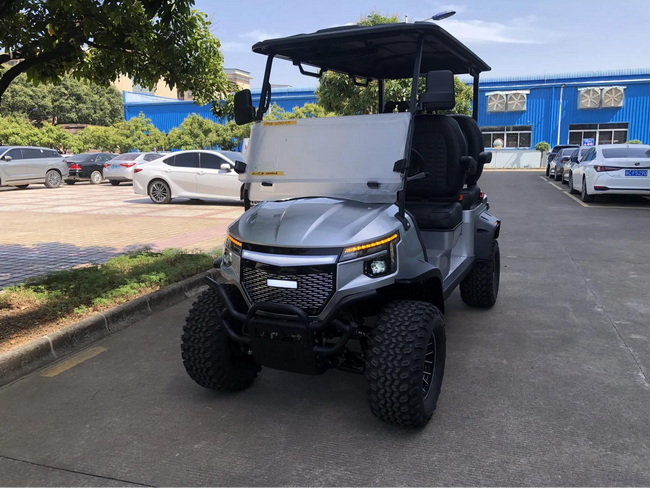
An electric golf cart does not have an alternator and engine like a gas vehicle, so the classic “alternator plus voltage regulator” arrangement does not exist. Instead, the electric golf cart uses a battery pack, an external charger, and an electronic controller to manage voltage and current.
The key idea is that your electric golf cart must keep voltage within safe ranges for its batteries (for example, 36 V or 48 V packs) and for any 12 V accessories such as lights, horns, or radios.
When you press the accelerator in an electric golf cart, power flows like this:
- Battery pack (for example, 36 V, 48 V, or higher depending on design)
- Main contactor and safety devices
- Electronic speed controller
- Electric traction motor
The electronic controller inside an electric golf cart carefully modulates voltage and current to the motor so that acceleration is smooth and the motor is protected from overload. Instead of relying on a simple mechanical regulator, the controller uses solid‑state electronics and software logic to manage the power delivery for the electric golf cart.
When you plug an electric golf cart into a dedicated charger, that charger monitors battery voltage, current, and often temperature. It regulates the charging profile (bulk, absorption, and float stages in lead‑acid systems or specific profiles for lithium packs) to prevent overcharging. In other words, the external charger acts as the regulating device for the battery pack in an electric golf cart.
Because of this architecture, a separate, stand‑alone voltage regulator unit is usually unnecessary in a pure electric golf cart drivetrain, although voltage reducers or converters may still be added for accessory circuits.
To understand why people are sometimes confused, it helps to separate three related but different concepts: voltage regulator, voltage reducer, and controller.
On a gas golf cart, a voltage regulator monitors the output of a generator or starter‑generator and keeps the charging voltage for the 12 V battery in a safe range, typically around 13.5–15.5 V. If the generator output climbs too high, the regulator limits it so the battery is not overcharged; if it is too low, the battery will not charge properly.
This type of regulator is essential because the mechanical generator has no intelligence by itself; it simply produces voltage proportional to engine speed, and the regulator must “trim” that voltage.
In an electric golf cart, the battery pack might be 36–60 V, but accessories like LED headlights, radios, USB chargers, or fans usually require 12 V. A voltage reducer is a solid‑state device that takes the higher pack voltage and converts it to a safe, stable 12 V output for accessories.
Many electric golf cart owners buy a reducer specifically to protect aftermarket lights and electronics, because without a reducer those devices would be exposed directly to the full pack voltage. In marketing language, this reducer is sometimes called a “regulator,” which adds to the confusion.
The speed controller in an electric golf cart can also be viewed as a kind of regulator for the traction system. It:
- Limits maximum current to protect the motor
- Smooths acceleration and deceleration
- Can shut down or reduce power in fault conditions
When your electric golf cart shows symptoms like jerky acceleration, inconsistent speed, or sudden loss of power, the problem often lies in the controller, not in a stand‑alone voltage regulator.
Because different manufacturers design their electric golf carts differently, the short answer is: most modern battery‑powered electric golf carts do not use a separate, engine‑style voltage regulator for battery charging, but they often use voltage reducers and intelligent controllers that perform similar protective functions.
Some important points:
- Traditional voltage regulators are standard on gas golf carts with starter‑generators, where they keep the 12 V battery charging correctly.
- Electric golf carts rely on external chargers and controllers to manage battery voltage, so a separate regulator is usually unnecessary in the main drive circuit.
- Voltage reducers are widely used on electric golf carts to safely power 12 V accessories from a higher‑voltage pack.
When you are talking to suppliers or reading manuals for an electric golf cart, pay attention to whether they mean a reducer for accessories or a regulator for a gas charging system.
Even without a traditional regulator, voltage management is crucial for the performance, safety, and service life of an electric golf cart.
Poorly controlled charging can overcharge batteries, leading to overheating, electrolyte loss, and shortened life, or undercharge them, which causes sulfation and permanent capacity loss in lead‑acid packs. A well‑designed charger and controller pair helps your electric golf cart avoid these extremes and keeps the pack in a healthy operating window.
For lithium‑ion packs used in some premium electric golf cart designs, a built‑in battery management system (BMS) continuously monitors cell voltages and balances them, providing additional protection beyond the external charger.
If there were no reducer or regulation, lighting and other accessories might see high pack voltage spikes, causing flickering, premature bulb failure, or even burned components in an electric golf cart. Voltage reducers and quality wiring help stabilize accessory voltage so that radios, displays, GPS units, and other add‑ons work reliably.
Because modern electric golf carts often carry more electronics than ever before, including controllers, displays, and safety sensors, clean and stable voltage is essential for avoiding unexpected shutdowns or error codes.
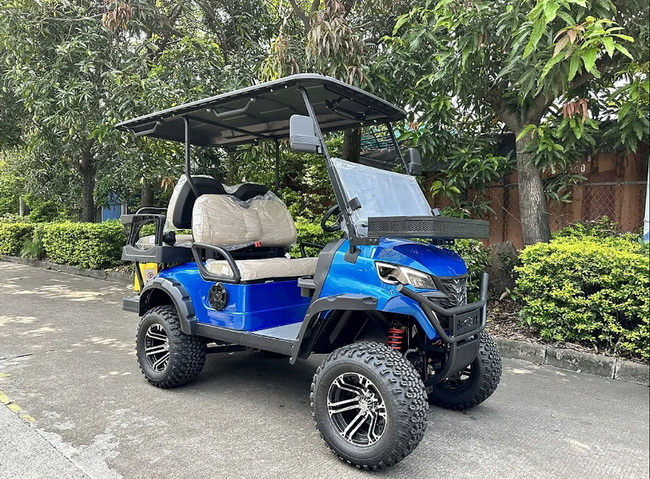
Whether you own a gas cart or an electric golf cart, voltage problems often show up as similar symptoms in daily use.
Typical warning signs include:
- Dimming or flickering headlights while driving
- Accessories that reset themselves or shut off unexpectedly
- Batteries that will not hold a charge or die quickly
- Strange odors (such as a sulfur smell) near the battery area after operation
- Cart that runs for a short time and then stalls or loses power
These issues may be caused by a failing voltage regulator on a gas cart, a faulty charger, a bad reducer, battery problems, or even a failing controller in an electric golf cart. Diagnostic steps usually include checking battery voltage at rest and under load with a voltmeter and inspecting wiring and connections.
Owners and fleet managers can take several practical steps to protect their electric golf cart from voltage‑related issues and extend its working life.
Always match the charger to the battery pack type, voltage, and chemistry (flooded lead‑acid, AGM, or lithium). A charger designed for 48 V lead‑acid batteries will not be suitable for a 36 V pack or a customized lithium system in an electric golf cart.
Many modern chargers include automatic shutoff and staging to prevent overcharging, so using the correct device is one of the simplest ways to protect your electric golf cart from voltage damage.
If you plan to add lights, a sound system, or other 12 V accessories to your electric golf cart, consider installing a high‑quality voltage reducer rated appropriately for your pack voltage and accessory load. This will help:
- Keep accessories running at a stable 12 V
- Protect delicate electronics from voltage spikes
- Avoid uneven discharge of batteries that sometimes occurs when only a few batteries in a series are tapped directly
Premium reducers are available that handle 20–30 A or more, making them suitable for heavily accessorized electric golf cart builds.
Good battery maintenance remains essential for any electric golf cart:
- Check water levels regularly in flooded lead‑acid batteries
- Keep terminals clean and torque them correctly
- Avoid running the pack excessively low before recharging
These practices, combined with proper charging and accessory management, help your electric golf cart deliver consistent performance and long service life.
As electric golf carts move from golf courses to resorts, campuses, industrial parks, and hunting or utility applications, the electrical demands on each electric golf cart increase. Many owners consider upgrades in several areas.
High‑quality chargers can charge faster, manage voltage more precisely, and offer diagnostics that help you spot battery issues early in your electric golf cart. Similarly, upgraded voltage reducers can deliver stable 12 V power under higher accessory loads, protecting expensive aftermarket electronics on your electric golf cart.
For customers who need more torque, higher speed, or smoother control, upgrading the controller and, when necessary, the motor can transform the driving experience of an electric golf cart. Professional OEM manufacturers like BorCart can design electric golf carts with controllers tuned to the specific application—golf, sightseeing, low‑speed logistics, hunting, or multi‑purpose use—while keeping voltage and current within safe levels for all components.
As a Chinese manufacturer specializing in electric golf carts, sightseeing buses, low‑speed vehicles, hunting vehicles, and multi‑purpose vehicles, BorCart focuses on robust and well‑protected electrical systems that meet international market demands.
For brand owners, wholesalers, and producers who require OEM electric golf cart solutions, BorCart can:
- Match controllers, motors, and battery packs to regional standards
- Configure chargers according to destination country voltage and plug types
- Integrate voltage reducers and accessory harnesses to support custom lighting, audio, and telematics
By paying close attention to voltage management at the design stage, BorCart helps customers launch electric golf cart fleets that are reliable, efficient, and easy to maintain in daily operation.
Imagine a resort that orders a fleet of electric golf carts and wants to add powerful LED headlights, a sound system, and USB charging ports for guests. Without proper planning, these accessories could overload a simple reducer or introduce voltage fluctuations.
A better approach is to specify from the start:
- A pack voltage (for example, 48 V) suitable for the expected range and terrain
- A reducer with enough current capacity (for example, 20–30 A) to supply all 12 V loads
- Correct wiring, fusing, and connectors to isolate and protect each circuit
With these decisions made during the OEM design phase, the resort receives electric golf carts whose electrical systems remain stable even under heavy accessory use.
To make an electric golf cart last longer and run more efficiently, you need a combination of good design, correct components, and disciplined daily use.
Operators should develop a routine to check:
- Battery charge level before and after use
- Any warning lights or error codes on the electric golf cart display
- The brightness of headlights and operation of turn indicators or brake lights
These simple inspections can reveal early signs of voltage instability, loose connections, or aging batteries in the electric golf cart before they turn into breakdowns.
For fleet operators using dozens or hundreds of electric golf carts in resorts, campuses, or industrial facilities, seasonal or quarterly maintenance plans are critical. Typical tasks include:
- Load testing batteries to confirm capacity and balance
- Inspecting and tightening main power connections and grounds
- Checking the operation and temperature of chargers during a full charging cycle
- Verifying output voltage and load capacity of reducers feeding 12 V circuits
By documenting these checks, maintenance teams can track trends in electric golf cart performance and plan component replacements proactively.
If an electric golf cart will be used in hot, cold, dusty, or humid environments, the electrical system must be designed to cope with these conditions. For example:
- Enclosures for controllers, chargers, and reducers should provide adequate sealing and ventilation
- Cable insulation and connectors must resist corrosion and UV exposure
- Mounting positions should protect components from water splash and road debris
For OEM projects, discussing operating conditions early allows BorCart to select suitable components and protection strategies for each electric golf cart model.
The electrical architecture of the electric golf cart is evolving as technology advances and user expectations rise.
Some modern light electric vehicles and advanced electric golf cart platforms are moving to higher pack voltages (beyond traditional 36 V or 48 V) to improve efficiency and reduce current levels. Higher voltage can allow smaller cables and better performance, but it also increases the importance of robust insulation, protection, and smart control of voltage and current.
Smart chargers that connect to the cloud, log charging history, and integrate with fleet management systems are becoming more common for electric golf cart fleets. These systems can:
- Monitor battery health for every electric golf cart
- Send alerts when charge times or voltages fall outside normal ranges
- Optimize charging schedules to extend battery life and reduce energy costs
As these technologies spread, the distinction between a simple voltage regulator and a complete battery and energy management system in an electric golf cart will continue to grow.
Future electric golf cart designs are likely to include more integrated accessory management, with dedicated outputs and programmable circuits controlled through the main controller or a body control module. This makes it easier to add, monitor, and protect lighting, infotainment, telematics, and work equipment without complex aftermarket wiring.
An electric golf cart does not usually contain the classic standalone voltage regulator used on gas carts; instead, it relies on an external charger, an electronic controller, and, where needed, a voltage reducer to manage voltage safely for both the traction system and accessories. For owners and fleet operators, this means that charger selection, correct configuration of controllers, and proper installation of reducers are more important than simply replacing a single regulator box on an electric golf cart.
By choosing quality components, maintaining the battery pack carefully, and designing accessory circuits with the right reducers, you can protect your electric golf cart from over‑voltage, under‑voltage, and electrical stress, resulting in longer battery life and more reliable operation. As an experienced OEM manufacturer, BorCart can help international customers specify and integrate these elements into customized electric golf cart, sightseeing bus, low‑speed vehicle, hunting vehicle, and multi‑purpose vehicle projects that serve demanding applications around the world.
Contact us to get more information!
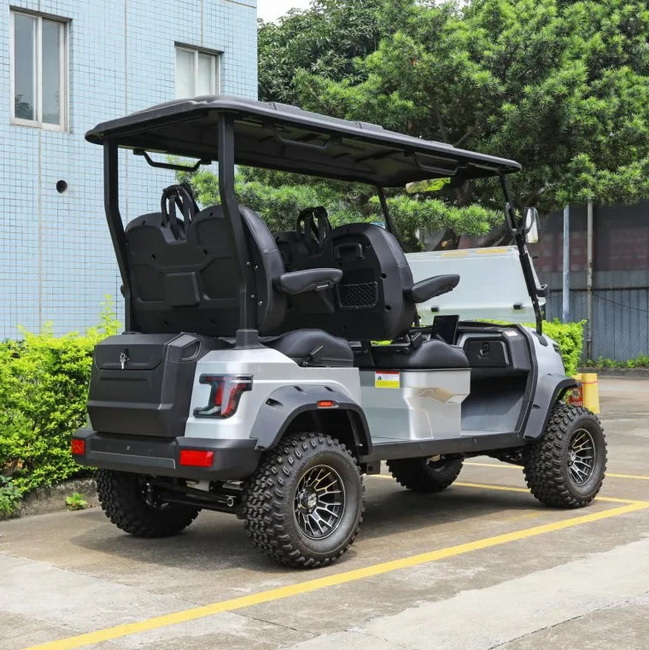
In a modern battery‑powered electric golf cart, a separate alternator‑style voltage regulator is usually not required, because the charging process is controlled by the external charger and, in some cases, by a battery management system. However, electric golf carts often use voltage reducers to supply stable 12 V power to accessories, and these may be labeled as regulators in some catalogs.
You can inspect the wiring under the seat or in the electrical compartment of your electric golf cart and look for a small electronic module marked as a voltage reducer or converter that connects between the main battery pack and the 12 V accessory circuits. If your accessories are wired directly to a subset of batteries instead of to a dedicated reducer, it is likely that no reducer is installed on your electric golf cart.
Common signs include dim or flickering lights, accessories that shut off or reset, batteries that will not hold a charge, strange odors near the battery area, or an electric golf cart that runs briefly and then loses power. These symptoms can point to issues with the charger, batteries, reducers, or controller rather than a classic voltage regulator in an electric golf cart.
Adding a few small accessories may be possible, but if you plan to install high‑power lights, sound systems, or multiple devices, it is safer to use a properly rated voltage reducer on your electric golf cart to protect the battery pack and electronics. OEM suppliers like BorCart can size reducers and wiring correctly during the design stage so that the electric golf cart can handle all planned accessories without voltage instability.
You should ask about pack voltage, charger type, controller capacity, and whether a dedicated voltage reducer and accessory harness are included for all planned 12 V loads on the electric golf cart. Discussing these topics early with an OEM supplier like BorCart ensures that every electric golf cart in your fleet has a stable electrical system and can support the required lighting, audio, and special equipment in real‑world use.
1. https://circuitbreakerspace.com/ar/blogs/news/the-importance-of-a-voltage-regulator-for-your-golf-cart
2. https://www.youtube.com/watch?v=1fe-1aH001k
3. https://www.carparts.com/blog/bad-voltage-regulator-symptoms-testing-replacement-cost-more/
4. https://carts-and-parts.com/ezgo-voltage-regulator/
5. https://diygolfcart.com/club-car-parts/voltage-reducer-and-regulator/
6. https://extremekartz.com/blogs/extreme-blogging/golf-cart-controller-troubleshooting-common-problems-and-how-to-fix-them
7. https://www.youtube.com/watch?v=W4GF1eFpZxY
8. https://www.golfcartgarage.com/golf-cart-voltage-reducers-regulators/
9. https://www.shopezgo.com/27739g01


