


Views: 222 Author: Leah Publish Time: 2025-12-25 Origin: Site


Content Menu
● Car Batteries vs. Golf Car Batteries
● Can You Technically Use Car Batteries in a Golf Car?
● Why Car Batteries Perform Poorly in a Golf Car
● Voltage and Compatibility Issues
● Safety Risks of Using Car Batteries in a Golf Car
● Recommended Battery Types for a Golf Car
● Lead‑Acid vs. Lithium in a Golf Car
● How to Upgrade or Replace Golf Car Batteries Correctly
● OEM Solutions for Golf Car Fleets
● Cost Considerations and Total Ownership in a Golf Car
● Environmental and Usage Benefits of Proper Golf Car Batteries
● FAQ
>> 1. Are car batteries and golf car batteries the same?
>> 2. What happens if I use car batteries in my golf car?
>> 3. Can I mix car batteries with golf car batteries in one golf car pack?
>> 4. Is it worth upgrading a golf car to lithium batteries?
>> 5. How do I choose the right batteries for my golf car?
Electric golf car owners often wonder if they can save money or solve an emergency by dropping regular car batteries into an electric golf car. In practice, using standard car batteries in a golf car is technically possible in some configurations, but it is not recommended because of voltage mismatch, poor performance, short lifespan, and safety risks.
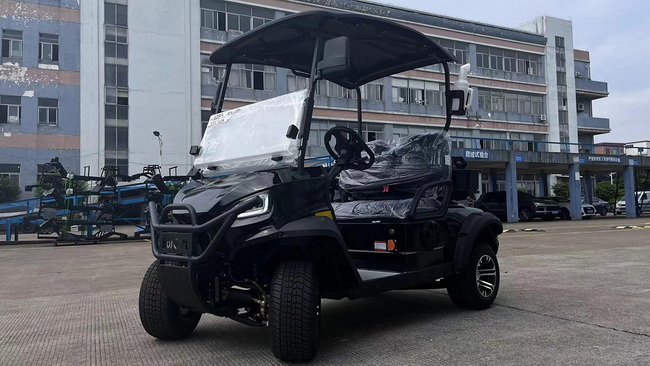
Golf car batteries are specialized deep cycle batteries designed to provide steady power over long periods rather than short bursts. An electric golf car draws continuous current while driving around the course, resort, or community, so it needs batteries that tolerate frequent deep discharges and recharges.
- Deep cycle golf car batteries use thicker plates and are optimized for high depth of discharge, often up to around 80% of capacity.
- These batteries usually come as 6‑volt, 8‑volt, or 12‑volt units that are wired in series to create a 36‑volt, 48‑volt, or 72‑volt golf car pack.
In real‑world use, a typical golf car might be driven for many short trips during a day, each requiring moderate bursts of power but over an extended total runtime. As a result, the energy system in a golf car has to be designed around durable cycling, not just one strong crank. Deep cycle golf car batteries are also built to accept repeated recharging from a dedicated golf car charger that often brings the pack back to full overnight.
Because a golf car is used in stop‑and‑go patterns, battery packs must maintain relatively stable voltage even when the state of charge drops. If voltage sags too early, the golf car feels slow, struggles with inclines, and may cut out under load. This is why pack layout, cable quality, and cell design all matter as much as raw amp‑hour numbers when choosing batteries for a golf car.
Car batteries and golf car batteries are built for different jobs even though they are both energy storage devices using related chemistries. A golf car depends on sustained power output, while a standard vehicle depends on instant cranking power.
Car batteries are starter batteries. Their internal structure is optimized to deliver a very high current for a very short time to crank an engine, and then they are kept near full charge by an alternator. In contrast, golf car batteries are designed to be discharged deeply as the golf car runs for miles before being recharged.
Key contrasts between car batteries and golf car batteries include:
- Purpose: Car batteries focus on cold cranking amps, whereas golf car batteries focus on amp‑hours delivered over time.
- Plate design: Starter batteries use thinner plates to increase surface area for quick bursts; golf car deep cycle batteries use thicker plates that better withstand cycling.
- Cycle life: In deep discharge conditions, golf car batteries are rated for hundreds or thousands of cycles, while starter batteries degrade quickly.
Because of these design differences, even a high‑quality car battery usually performs poorly and wears out fast if used as the main power source for a golf car.
From a purely electrical perspective, there are setups where multiple car batteries could be wired together to achieve the system voltage required by an electric golf car. For example, three 12‑volt car batteries in series can equal 36 volts, and four 12‑volt units can create 48 volts. On paper, this may appear to solve the problem.
However, technical possibility does not equal practical suitability for golf car use. A golf car is effectively a low‑speed electric vehicle that places different stresses on the battery pack than a starting system in a conventional car. Continuous draw, repeated deep discharge, and frequent recharging all expose the weaknesses of starter batteries when used in this environment.
When car batteries are installed in a golf car:
- The range per charge is often significantly reduced compared with proper golf car deep cycle packs.
- Voltage tends to drop rapidly under sustained load, making the golf car feel sluggish or unable to climb hills.
- The batteries heat up more under heavy draw, which can accelerate internal wear and increase maintenance issues.
Over time, the result is a golf car that delivers disappointing performance and requires early battery replacement, wiping out any short‑term saving the owner hoped to gain by choosing car batteries.
A golf car demands stable power while climbing small hills, moving over turf, and carrying multiple passengers or equipment, which stresses the wrong aspects of a car battery's design. The duty cycle involved in moving a golf car is fundamentally different from starting an engine.
Main reasons car batteries underperform in a golf car include:
- Wrong discharge profile: Starter batteries are intended for shallow discharge. In a golf car, they are pushed into deep discharge, which strips active material from the plates and causes capacity loss.
- Low deep‑cycle tolerance: A starter battery deep‑cycled repeatedly can lose much of its usable capacity in a relatively small number of rounds of golf.
- Higher internal resistance under load: As a car battery is drained deeply and ages, its internal resistance increases, causing more voltage sag when the golf car is accelerating or climbing.
Golf car owners often describe the symptoms as sluggish starts, fading power late in a round, and sudden cut‑outs when the pack is still believed to be part‑charged. These are all typical signs of starter batteries being forced into a role they were never designed to handle.
Voltage is one of the first compatibility checkpoints when evaluating whether a car battery could be used in a golf car. Electric golf car systems are typically 36 volts, 48 volts, or, in some performance applications, 72 volts. Conventional vehicles with internal combustion engines, on the other hand, rely on a single 12‑volt battery.
In a standard golf car:
- A 36‑volt system often uses six 6‑volt batteries wired in series.
- A 48‑volt system may use six 8‑volt deep cycle batteries, eight 6‑volt units, or four 12‑volt deep cycle units rated for golf car service.
- Some higher‑performance or specialty golf car platforms use a 72‑volt system built from six 12‑volt batteries or other combinations.
Although an owner could, in theory, wire sufficient 12‑volt car batteries to reach the desired voltage, other compatibility issues remain. Golf car chargers are designed for deep cycle batteries and specific chemistries, and they follow charging curves that may not suit starter‑type batteries. Additionally, the physical size and terminal arrangement of car batteries can make safe mounting in a golf car battery compartment difficult.
These mismatches create ongoing problems rather than a single one‑time compatibility hurdle. The golf car user ends up fighting both electrical and mechanical compromises every time the vehicle is used or charged.

Beyond the performance and longevity drawbacks, using car batteries in a golf car can introduce safety concerns. The environment inside a golf car is often harsher than many people expect. It includes constant vibration on rough paths, frequent bumps, and exposure to temperature swings and humidity.
Potential safety risks include:
- Mechanical stress and leakage: Battery cases and plate supports in starter batteries are not engineered for repeated deep cycling plus constant vibration, so they may crack, leak, or suffer internal damage over time.
- Charging and overheating issues: Mismatched golf car chargers can overcharge or undercharge starter batteries, increasing the risk of overheating, venting, or, in extreme cases, thermal events.
- Electrical imbalance: Series strings built from car batteries that age unevenly can lead to overcharging of the stronger units and over‑discharging of the weaker ones, compounding safety stresses.
When a golf car carries passengers, tools, or hunting equipment, any increase in battery‑related risk becomes more serious. For commercial fleets, unsafe battery behavior can also translate into liability issues and unexpected downtime.
To get the best mix of performance, safety, and total cost of ownership, a golf car should always run batteries specifically designed for golf car duty. The most common options are deep cycle lead‑acid and lithium‑ion packs tailored to this application.
Recommended choices for an electric golf car include:
- Flooded lead‑acid deep cycle golf car batteries: These offer the lowest initial cost and are widely available. They require regular maintenance, including checking electrolyte levels and cleaning terminals, but they are proven in millions of golf car applications.
- AGM and gel deep cycle batteries: These sealed batteries provide lower maintenance, reduced risk of acid spills, and better vibration resistance, making them attractive for some premium golf car builds.
- Lithium iron phosphate (LiFePO₄) golf car batteries: These advanced packs provide high cycle life, lighter weight, and fast charging, giving a golf car better acceleration, more range per charge, and lower lifetime cost for heavy users.
Choosing between these options depends on usage patterns. A private owner with a single golf car used casually each week may be satisfied with traditional flooded deep cycle batteries. A resort operating dozens of golf car units all day may justify lithium conversions to lower maintenance and increase uptime.
A major decision for many owners and fleet managers is whether to stay with lead‑acid deep cycle batteries or upgrade the golf car fleet to lithium. Each technology brings its own advantages and trade‑offs that must be weighed against the specific use case.
Lead‑acid deep cycle golf car batteries:
- Have lower upfront cost and are compatible with many existing golf car chargers and controllers.
- Are heavier, which can reduce efficiency but sometimes helps traction on certain surfaces.
- Require more routine maintenance, including watering and corrosion control, to reach their full service life.
Lithium golf car batteries:
- Offer significantly lighter weight, which improves acceleration, reduces wear on chassis components, and can extend range.
- Provide more usable capacity per cycle, so a golf car can travel farther between charges on the same nominal amp‑hour rating.
- Deliver much higher cycle life, often several times the number of cycles of lead‑acid packs, which can offset the higher initial purchase cost.
For many modern golf car applications, especially where vehicles are used intensively or carry heavy loads, lithium technology is becoming an increasingly attractive choice.
When upgrading or replacing the energy system in an electric golf car, careful planning protects both the vehicle and the investment in batteries. A systematic approach reduces the chance of mismatched components or unsafe configurations.
Consider these steps:
- Verify the golf car system voltage and controller specifications before ordering new batteries.
- Decide on the desired chemistry—traditional lead‑acid or lithium—based on budget, range requirements, maintenance capability, and expected years of use.
- Confirm that the golf car charger is compatible with the chosen chemistry and has the correct charging profile. If not, upgrade the charger as part of the battery project.
- Inspect and, if necessary, upgrade cables, lugs, and hold‑down hardware to handle the current and physical strain of the new pack.
For complex upgrades, such as converting an older lead‑acid golf car to lithium, working with a professional installer or OEM partner is strongly advised. This helps ensure proper integration of the battery management system, safe mounting, and accurate state‑of‑charge monitoring for the golf car's dashboard or display.
Fleet operators, such as golf courses, resorts, gated communities, industrial sites, and hunting grounds, often rely on tailored OEM solutions for their golf car platforms. An OEM‑focused manufacturer that specializes in electric golf car products can design vehicles and battery systems around real‑world operating profiles.
An experienced OEM supplier can:
- Provide different golf car models such as dedicated golf course cars, sightseeing shuttles, low‑speed neighborhood vehicles, hunting buggies, and multipurpose utility golf car units.
- Match the correct battery type, pack voltage, and controller programming to the expected load, terrain, and duty cycle.
- Offer ongoing support for maintenance, spare parts, and periodic upgrades, ensuring the golf car fleet remains efficient and safe throughout its life.
By choosing properly engineered golf car batteries, rather than car batteries, a fleet operator can reduce breakdowns, avoid premature battery replacement, and keep every golf car ready for daily use.
At first glance, car batteries may appear cheaper than dedicated golf car batteries, tempting some owners to experiment with them in an electric golf car. However, evaluating the total cost of ownership often leads to a different conclusion.
Important cost factors include:
- Replacement frequency: Starter batteries used in a golf car tend to fail sooner, so even if each unit is cheaper, the owner may pay more over a few years than with proper deep cycle or lithium golf car batteries.
- Performance downtime: A golf car that cannot complete a full round of golf or a full day of work because of weak batteries imposes indirect costs, such as lost rentals or disrupted operations.
- Maintenance requirements: Poorly suited batteries may require more attention or cause damage to cables and chargers, increasing maintenance labor.
When these factors are considered, dedicated golf car batteries—especially modern lithium packs for high‑use operations—typically prove to be the more economical choice over the service life of a golf car.
Selecting the correct battery type for a golf car also has environmental and user‑experience implications. Batteries that wear out quickly add to recycling streams and require more frequent manufacturing replacements.
Using true golf car batteries:
- Extends the time between replacements, reducing the number of battery sets consumed over the life of a golf car.
- Improves energy efficiency because deep cycle and lithium packs are optimized for the golf car's working pattern, reducing wasted energy through heat and internal resistance.
- Enhances user comfort and confidence, as the golf car feels stronger, quieter, and more predictable across a full day of use.
In settings where many golf car units are deployed, such as tourist resorts or large campuses, these benefits scale across the entire fleet, amplifying environmental and economic gains.
Using regular car batteries in a golf car is generally not advisable because car batteries are starter units designed for short bursts of power, not the deep, steady discharge demanded by an electric golf car drive system. Even when pack voltage can be matched by wiring several 12‑volt car batteries in series, the result in a golf car is reduced range, poor torque, shortened battery life, and increased safety risk.
For reliable performance, a golf car should always run dedicated deep cycle or lithium golf car batteries matched to the vehicle's system voltage, charger, and controller. Whether powering a single household golf car or a large commercial fleet of golf car vehicles, the correct golf car battery technology delivers smoother driving, longer life, and lower total cost of ownership than any improvised solution using car batteries. Owners and fleet managers who invest in proper golf car batteries protect both their vehicles and the people who rely on them every day.
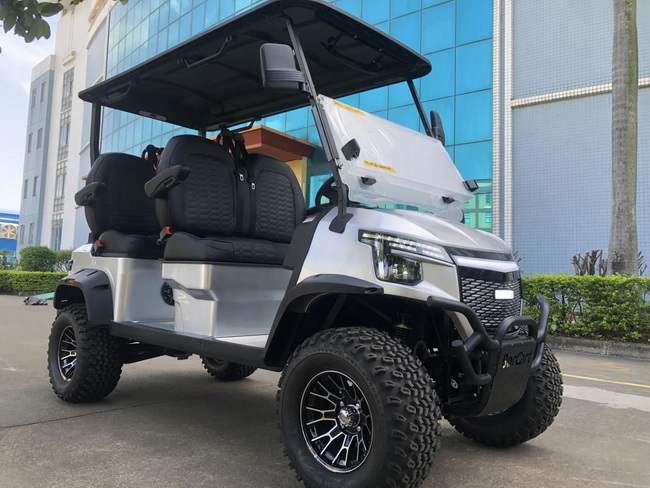
No, car batteries and golf car batteries are not the same. Car batteries are starter batteries designed for brief, high‑current bursts to crank engines, while golf car batteries are deep cycle units built for long, steady power delivery. Golf car batteries use thicker plates and higher amp‑hour ratings to survive repeated deep discharges in an electric golf car.
If car batteries are used as the main pack in a golf car, the vehicle may experience weak acceleration, limited range, early voltage drop, and rapid battery degradation. Over time, the pack becomes unreliable, and the golf car may fail to complete a full round of golf or a workday, forcing premature replacement of the starter batteries.
Mixing car batteries and golf car batteries in the same golf car pack is strongly discouraged because differences in capacity, internal resistance, age, and chemistry cause uneven charging and discharging. In a mixed golf car pack, some batteries will be overworked and fail early, which drags down the entire string and increases the risk of charging and safety issues for the golf car.
Upgrading an electric golf car to lithium batteries can be very worthwhile in many cases because lithium packs typically offer lighter weight, faster charging, more usable capacity, and far more charge cycles than lead‑acid. Although the upfront price is higher, a lithium‑powered golf car often delivers lower lifetime cost, longer daily driving range, and better overall performance, especially for heavy or commercial use.
Choosing the right batteries for a golf car starts with verifying the golf car system voltage and intended usage pattern. Then, select golf car‑rated deep cycle lead‑acid or lithium packs from reputable suppliers, and ensure that the charger, cables, and mounting hardware are compatible. When uncertain, consulting a golf car specialist or OEM partner helps guarantee that the new battery pack will deliver safe, long‑lasting performance in your specific golf car model.


