


Views: 222 Author: Leah Publish Time: 2026-01-20 Origin: Site


Content Menu
● How an Electric Golf Cart Actually Moves
● Is It Safe to Push an Electric Golf Cart?
● Common Situations Where You Need to Push an Electric Golf Cart
● Preparing an Electric Golf Cart Before Pushing
>> 1. Choose Safe Ground and Clear the Area
>> 3. Shift the Cart to Neutral
>> 4. Engage Tow or Maintenance Mode
>> 5. Release Any Motor or Parking Brakes
● Step‑by‑Step: How to Push a Non‑Running Electric Golf Cart
● Risks of Pushing or Towing an Electric Golf Cart Incorrectly
● Best Practices for Fleets, Resorts, and OEM Partners
● Pushing vs. Towing vs. Trailering an Electric Golf Cart
>> Pushing
>> Towing Behind Another Vehicle
>> Trailering or Transporting on a Truck
● How BorCart Designs Electric Golf Carts for Easier Handling
● FAQ
>> 1. Can pushing an electric golf cart damage the motor or controller?
>> 2. How far is it safe to push an electric golf cart by hand?
>> 3. Should I disconnect the battery pack before towing my electric golf cart?
>> 4. Is it safe to push an electric golf cart up or down a hill?
>> 5. What is the difference between neutral and tow/maintenance mode on an electric golf cart?
Can you push an electric golf cart? Yes, you can, but it must be done correctly to avoid damaging the vehicle's electrical system or putting people at risk. When handled the right way, pushing or towing an electric golf cart is a safe, practical solution in many real‑world situations.
As a professional electric vehicle and automotive parts manufacturer, BorCart frequently works with international OEM customers who operate fleets of electric golf carts in golf courses, resorts, campuses, industrial parks, and residential communities. Understanding the correct way to move a non‑running electric golf cart is essential for safety, efficiency, and long‑term reliability.
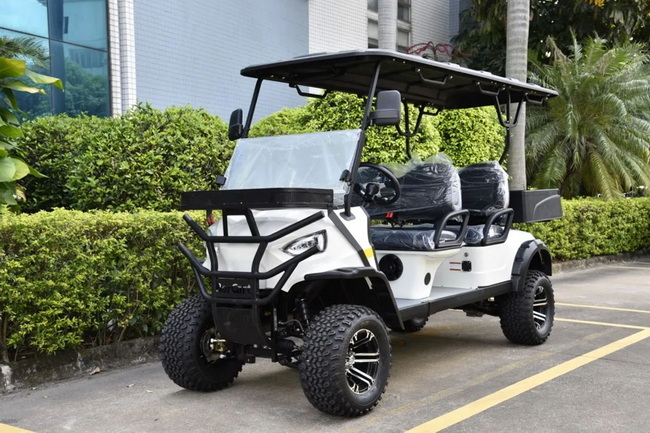
To understand whether you can safely push an electric golf cart, it helps to know how the vehicle moves in normal operation.
An electric golf cart typically includes:
- A battery pack that stores DC electrical energy
- A motor controller that regulates power delivery
- An electric drive motor connected to a differential and rear axle
- A forward/neutral/reverse selector to choose direction
- Optional electronic parking brakes or motor brakes on some models
When you step on the accelerator, the controller sends controlled power from the batteries to the motor. The motor turns the differential and axle, and the wheels rotate to move the electric golf cart. When the cart is switched off or in the wrong mode, the motor and drivetrain may resist movement or even generate electricity while being forced to turn.
This last point is critical: if you push an electric golf cart while its system is not prepared for free rolling, the motor can act like a generator, sending unwanted current back through the controller and wiring. That is where the risk of damage comes from.
In principle, it is safe to push an electric golf cart, provided:
- The cart is prepared for towing or free rolling
- The ground conditions are suitable
- The distance is reasonable
- Trained personnel follow clear safety procedures
Modern electric golf carts are designed with this scenario in mind. Most use one or more of the following features:
- Tow/maintenance mode (often labeled “Tow/Run”): This mode electronically prepares the controller and motor for being moved without power and may partially isolate sensitive electronics.
- Neutral selection: Placing the cart in neutral ensures the drivetrain is not actively held in forward or reverse, reducing resistance and stress.
- Mechanical or electronic brakes: Some electric golf carts use motor‑mounted brakes that must be released manually or electronically before pushing.
When these systems are used correctly, you can push an electric golf cart a short distance with minimal risk. Problems arise when the tow mode is ignored, the cart is left in “Run” or in gear, or staff try to push heavy carts up or down steep slopes.
In real operations, especially for fleets and OEM customers, pushing or towing an electric golf cart is often unavoidable. Typical scenarios include:
- Dead or deeply discharged batteries
The cart will not move under its own power, yet it must be relocated to a charger, workshop, or storage bay.
- Electrical faults or controller errors
A faulty controller, blown fuse, loose cable, or sensor problem may prevent normal driving, but the electric golf cart still needs to be moved out of the way or to a service area.
- Logistics in factories and warehouses
New electric golf carts shipped with partially connected batteries may have to be positioned for pre‑delivery inspection without driving them under power.
- Resort, hotel, or campus operations
A cart that stops on a path, near a loading dock, or at a gate may need to be cleared quickly to restore circulation.
In each of these cases, pushing the electric golf cart is a temporary solution to move it to a safer or more convenient location. The key is to treat pushing as a controlled, limited operation—not as a normal way to use the vehicle.
Proper preparation is the difference between safely moving an electric golf cart and accidentally damaging it. While different brands and models have their own instructions, the general preparation steps are very similar.
- Whenever possible, move the electric golf cart on flat, level ground.
- Avoid steep slopes, soft ground, gravel, or slippery surfaces.
- Clear obstacles, debris, and other vehicles from the intended path.
- Ask passengers to step off the cart and remove heavy cargo to reduce weight.
This reduces the effort required to push the electric golf cart and lowers the risk of losing control.
- Turn the key switch to the OFF position and remove the key.
- If the manufacturer recommends it, switch off the main disconnect or battery isolation switch.
This step prevents accidental acceleration and reduces the chance of electrical faults while you are pushing or towing the electric golf cart.
- Move the forward/reverse selector to the neutral position.
- For a rocker‑type switch, the center position is usually neutral.
- For a lever‑type shifter, neutral is typically marked between F and R.
Neutral ensures that the drivetrain is not locked into forward or reverse. It helps the electric golf cart roll more freely and protects gears from unnecessary strain.
Most modern electric golf carts include a dedicated tow‑run or maintenance switch. The location varies:
- Under the seat
- Near the battery compartment
- Close to the controller or motor
Placing the switch in tow or maintenance mode typically:
- Disables part of the controller logic
- Allows the motor to freewheel more safely
- Prevents the motor from feeding electricity back into sensitive electronics while being turned
Because designs vary, operators should always consult the user manual or the OEM's quick reference guide for the exact location and operation of this switch on each electric golf cart model.
Some electric golf carts, especially heavier multi‑passenger or security models, use:
- Motor‑mounted electric brakes that automatically engage when the cart is turned off
- Electronically controlled parking brakes
In these cases, you may need to:
- Pull a manual release lever near the motor
- Use a service procedure to release the brake
- Follow a specific sequence (for example, certain key positions) before the brake will release
Failing to release these brakes before pushing the electric golf cart will make movement very difficult and can damage brake components.
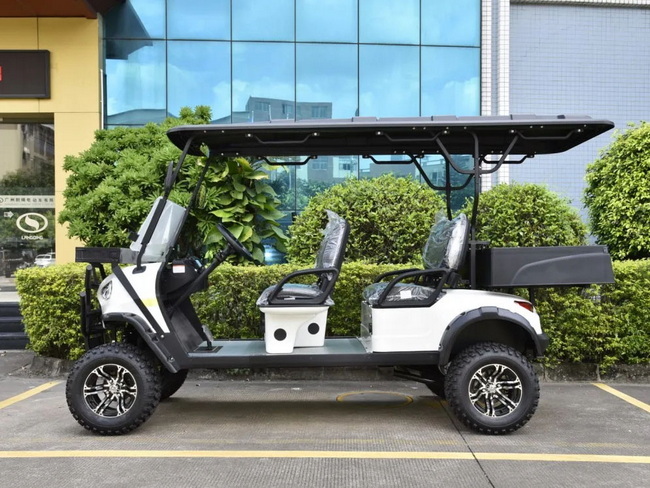
Once the electric golf cart is properly prepared, you can follow this practical procedure to push it safely:
1. Verify all safety conditions
- No passengers on the cart
- Ground is level or very gently sloped
- Path is clear and well lit
2. Confirm the settings
- Key OFF and removed
- Cart in neutral
- Tow or maintenance mode engaged
- Motor or parking brake released (if applicable)
3. Position helpers correctly
- Stand at the rear of the electric golf cart, facing forward
- Place both hands firmly on a solid structural part (not on weak trim pieces)
- Use at least two people when moving heavier, multi‑row or utility electric golf carts
4. Push smoothly and slowly
- Apply steady, even force
- Walk at a slow, controlled pace
- Avoid sudden turns or abrupt stops
5. Control the cart on mild slopes
- Keep the electric golf cart speed low
- If any slope is involved, place an additional person at the front or side to help steer and control movement
- Keep wheel chocks ready to secure the cart quickly if needed
6. Secure the cart at the new position
- Apply the parking brake
- Place wheel chocks if there is any slope
- Return tow mode to run mode only after you are finished pushing and ready for normal operation
This process focuses on short‑distance moves, such as repositioning an electric golf cart within a workshop, garage, or small outdoor area.
Pushing an electric golf cart might look simple, but doing it incorrectly can have serious consequences. Some of the main risks include:
- Back‑feeding voltage: When the motor is forced to turn with the system still in run mode, it can act as a generator and send high voltage into the controller.
- Controller failure: Sensitive electronics inside the controller may be damaged by unexpected current flow, leading to costly repairs.
- Wiring and connector stress: Repeated improper pushing or towing can heat wiring and stress connectors.
- Strain on the drivetrain: Forcing the electric golf cart to move while the gearbox or motor brake is engaged can damage gears, bearings, or the brake mechanism.
- Axle and suspension stress: Pushing or towing heavy loads over rough terrain or steep slopes can overload axles and suspension components.
- Runaway carts on slopes: An electric golf cart that is not properly controlled can roll downhill, leading to collisions or rollovers.
- Injuries to staff: Untrained personnel may strain themselves, trip, or get pinned between the electric golf cart and another object.
- Collisions in crowded environments: In resorts, campuses, or warehouses, uncontrolled movement can put pedestrians at risk.
For fleets and OEM buyers, these risks make it essential to define clear internal rules for when and how pushing or towing is allowed.
BorCart's international clients operate electric golf carts in a wide variety of environments, from golf courses and tourist attractions to industrial zones and residential communities. The following best practices help keep operations safe and efficient:
1- Create written procedures
Develop a simple, easy‑to‑follow procedure for moving a non‑running electric golf cart, including when pushing is allowed, how many people are required, and maximum distances.
2- Train all operators
Ensure drivers and maintenance staff are trained on:
- Using neutral and tow/maintenance mode
- Recognizing when an electric golf cart should not be pushed (for example, steep hills, heavy loads, or brake issues)
- Proper communication while moving the cart as a team
3- Use suitable equipment
For longer distances or frequent recovery tasks, use:
- Small tow vehicles
- Flatbed trailers
- Winches or recovery straps designed for electric golf carts
4- Respect load and towing limits
Never exceed the cart's rated passenger and cargo capacity, especially when pushing or towing. Overloading increases the risk of mechanical damage and accidents.
5- Inspect and maintain carts regularly
Well‑maintained electric golf carts are less likely to fail in remote locations. Routine checks of batteries, cables, brakes, tires, and steering reduce the number of times carts need to be pushed at all.
There are several ways to move an electric golf cart, and each method has its own ideal use case.
- Best for short distances on level or nearly level ground
- Useful when no additional equipment is available
- Should involve trained staff and follow the preparation steps already described
- Suitable for slightly longer distances within a facility or private property
- Requires a proper tow bar or hitch designed for electric golf carts
- The cart must still be in tow mode and neutral, and speed should remain low to avoid damage
- Best option for longer distances, public roads, or hilly terrain
- The electric golf cart is driven or winched onto a trailer or truck bed
- The cart is secured with tie‑downs and wheel straps, and is not rolling on its own wheels during transport
For OEM customers and large fleets, using trailers or dedicated recovery vehicles is often more efficient and safer than pushing electric golf carts over longer routes.
As a specialized Chinese manufacturer of electric vehicles and automotive components, BorCart focuses heavily on user‑friendly design for international customers. For electric golf cart platforms, this includes:
- Clearly labeled tow/run switches with intuitive icons
- Easily accessible neutral selectors
- Integrated safety labels and quick‑reference diagrams near the driver's area
- Options for enhanced brakes and suspension on multi‑purpose and utility models
- Compatibility with OEM‑specified chargers, towing systems, and fleet management tools
By integrating these design considerations, BorCart helps overseas brand owners, wholesalers, and manufacturers ensure that their electric golf carts can be moved, maintained, and operated safely throughout their full service life.
You can push an electric golf cart, but only if it is prepared for safe free rolling. That means turning off the power, placing the cart in neutral, engaging tow or maintenance mode, and releasing any motor or parking brakes before you start to move it. Pushing is best reserved for short distances on level ground and should always be done by trained personnel.
When used correctly, these procedures protect the electric golf cart's motor, controller, and drivetrain while also keeping staff and bystanders safe. For resorts, golf courses, campuses, industrial sites, and other locations where electric golf carts are an essential part of daily operations, clear rules, training, and appropriate equipment are critical.
BorCart works closely with international OEM partners to design electric golf cart platforms that are not only efficient and comfortable to drive, but also practical to service, move, and recover when problems arise. With thoughtful vehicle design and disciplined operational practices, fleets can enjoy the full benefits of electric golf carts while minimizing downtime, repair costs, and safety incidents.
Contact us to get more information!
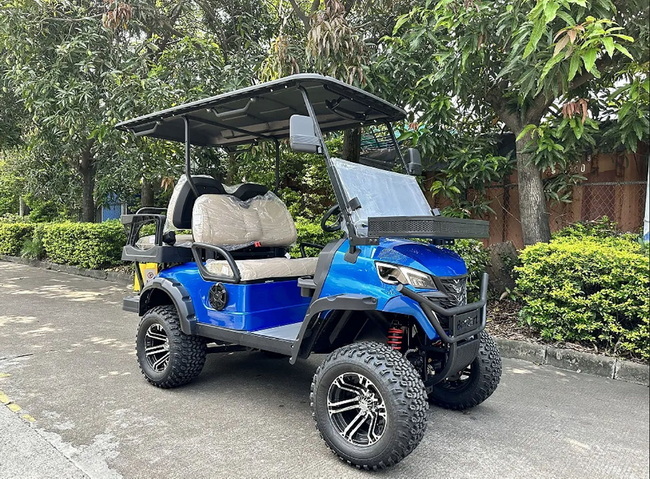
Yes. If you push an electric golf cart while it is still in run mode or in gear, the motor can act like a generator and send current back into the controller. Over time, this can overheat components, damage electronic circuits, and shorten the life of the system. Always use neutral and tow/maintenance mode before pushing the cart.
Manual pushing is best limited to short distances, such as moving an electric golf cart from a fairway to a nearby path, from a parking area into a workshop, or across a warehouse bay. For longer distances, slopes, or frequent recovery operations, it is safer and more efficient to use a tow vehicle, flatbed trailer, or other dedicated transport equipment.
For short, low‑speed moves inside a facility, engaging tow mode and turning the key off is usually sufficient. For longer‑distance towing or trailering, many manufacturers recommend switching off the main battery disconnect or otherwise isolating the battery pack. This reduces the risk of accidental operation, electrical faults from vibration, and unintended current flow through the controller.
Pushing an electric golf cart up or down a noticeable slope is generally not recommended. The cart is heavy, and if control is lost it can roll freely, posing a risk to people and property. If a slope cannot be avoided, use additional helpers, wheel chocks, and, ideally, a powered tow vehicle capable of controlling the cart's movement. Never attempt to push a heavily loaded electric golf cart on a steep incline.
Neutral is a mechanical or electronic position that releases the transmission or direction selector from forward or reverse, allowing the wheels to turn without active drive. Tow or maintenance mode is an electrical setting that prepares the controller and motor for being moved without power, often disabling certain functions and preventing damage from back‑feeding current. For safe pushing or towing, both neutral and tow/maintenance mode should be used together according to the manufacturer's instructions.
1. Can You Push Or Tow An Electric Golf Cart? – LANGQING
https://www.langqinggolfcart.com/can-you-push-or-tow-an-electric-golf-cart.html
2. How To Tow An Electric Golf Cart? – LANGQING
https://www.langqinggolfcart.com/how-to-tow-an-electric-golf-cart.html
3. What Will Happen If You Tow An Electric Golf Cart? – LANGQING
https://www.langqinggolfcart.com/what-will-happen-if-you-tow-an-electric-golf-cart.html
4. How to Move a Dead Electric Golf Cart: A Step-by-Step Guide – Tara Electric Vehicles
https://taraelectricvehicles.com/blog/2025/08/14/how-to-move-a-dead-electric-golf-cart-a-step-by-step-guide/
5. Do Golf Carts Fall Under OSHA Regulations? – Frank D. Butler, PA
https://www.golfcartattorney.com/do-golf-carts-fall-under-osha-regulations/
6. Golf Cart Safety Hazards When Used at Work Facilities – Weekly Safety
https://weeklysafety.com/blog/golf-carts
7. Golf Cart Safety Fact Sheet – Texas Department of Insurance (PDF)
https://www.tdi.texas.gov/pubs/videoresource/fsgolfcart.pdf
8. How To Move A Golf Cart With Dead Batteries? – The Golf Xpert (Video)
https://www.youtube.com/watch?v=5NGuOs9g440
9. How to TOW an Electric Golf Car! – YouTube Short
https://www.youtube.com/shorts/k6GQB9-pgDY
10. If Your EZ‑Go Electric Golf Cart Batteries Are Completely Dead – YouTube
https://www.youtube.com/watch?v=ypU1IFm_JiE


