


Views: 222 Author: Leah Publish Time: 2025-12-28 Origin: Site


Content Menu
● How Golf Car Electrical Systems Work
● Why People Want to Jumpstart a Golf Car
● Is It Safe to Jumpstart a Golf Car with a Car?
● Main Risks of Using a Car to Jumpstart a Golf Car
● Understanding Golf Car Battery Types
● Why Deep-Cycle Batteries in a Golf Car Hate Jumpstarts
● Safer Alternatives to Jumpstarting a Golf Car with a Car
>> Use the Correct Golf Car Charger
>> Consider a Golf Car-Rated Jump Pack or Booster
>> Use Slow Charging and Equalization
>> Call a Professional Golf Car Technician
● Emergency-Only Procedure (Conceptual Overview)
● Maintenance Tips to Prevent a Dead Golf Car
● Choosing the Right Voltage Golf Car
● Lead-Acid vs Lithium in a Golf Car
>> Lead-Acid Packs in a Golf Car
>> Lithium Packs in a Golf Car
● Operational Best Practices for Fleet Golf Cars
● When a Golf Car Dies on the Course
● FAQ
>> 1. Can a golf car jumpstart a car?
>> 2. Why is jumpstarting hard on a golf car battery?
>> 3. How do I know the voltage of my golf car?
>> 4. What should I do if my golf car dies on the course?
>> 5. Are lithium batteries better for my golf car?
You can jumpstart some golf car models with a car in a very narrow set of emergency situations, but it is generally not recommended because of the high risk of damaging the golf car's battery pack and electronics. The safer, long-term solution is always to use a proper golf car charger, a compatible jump device, and good maintenance practices.
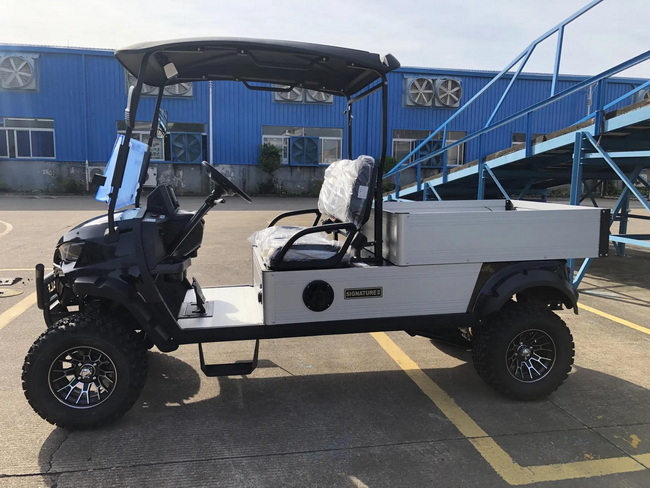
A modern golf car usually runs on a 36 V, 48 V, or even higher-voltage battery pack, while a typical passenger car relies on a 12 V starting battery and alternator system. This fundamental voltage difference makes a direct car-to–golf car jumpstart risky and often technically incompatible.
- A golf car uses deep-cycle batteries wired in series to form a pack that delivers steady power over many holes or transport cycles.
- A car battery is optimized for short, intense bursts of current to crank an engine, followed by rapid recharge from the alternator.
Because of these design differences, treating a golf car battery pack like a regular car battery can result in overheating, uncontrolled current flow, and damage to controllers, chargers, and accessories in the golf car.
Owners, fleet managers, and rental operators often face situations where a golf car suddenly loses power during a round or on a resort path. The most convenient nearby power source is usually a car or utility vehicle, prompting the question: “Can I just jump it like a car?”
Typical scenarios include:
- A golf car parked for weeks or months without charging, leaving the pack deeply discharged.
- A busy golf day where the golf car has been used back-to-back, and the pack was never fully recharged.
- A multi-purpose golf car doing heavy towing or hill climbing that drains the pack faster than expected.
In all of these cases, it is tempting to connect a car's battery to the golf car, but convenience must be weighed against serious technical and safety risks.
For most electric golf car systems, especially 36 V or 48 V packs, jumpstarting directly from a car is not considered safe or best practice. The car's 12 V system does not match the golf car's pack voltage, and the car's alternator output is not designed for deep-cycle battery charging.
However, there are a few narrowly defined situations where limited assistance might be possible:
- Some golf car manuals allow using a 12 V source on a single 12 V battery within a pack for a short time.
- Certain low-voltage utility or hunting golf car models designed around a single 12 V battery may be compatible with a careful car-to-golf car jump.
Even in these special cases, the procedure must follow the manufacturer's written instructions, and it should be viewed as an emergency step, not a routine method.
Jumpstarting a golf car with a car can damage both vehicles and create serious safety hazards. Understanding each risk helps owners and fleet managers make better decisions about their golf car equipment.
- Battery damage: Deep-cycle batteries in a golf car can suffer plate shedding, warping, or sulfation if hit with high current or inappropriate voltage.
- Electronics failure: The golf car's controller, onboard charger, and DC-DC converters are sensitive to spikes and reverse polarity, which can occur during improvised jump attempts.
- Cable and terminal overheating: Inadequate or worn cables, poor clamps, or corroded golf car terminals can overheat and melt when exposed to sudden high current.
- Hydrogen gas and explosion risk: Flooded lead-acid batteries in a golf car vent hydrogen; sparks near the pack can ignite this gas and cause an explosion.
- Personal injury: Misconnection, arc flash, or battery case rupture around a golf car battery bank can cause burns, eye injury, and acid exposure.
For a business that supplies OEM golf car units to overseas wholesalers and brand owners, these risks also translate into warranty disputes, liability issues, and damage to brand reputation.
The type of battery in a golf car determines how it behaves during discharge, charging, and any emergency jump procedures. Knowing what sits under the golf car seat is critical for safe operation.
- Flooded lead-acid batteries: Common in many classic golf car designs; they require periodic watering and vent gas during charging. These golf car batteries are sensitive to overcharging and require good ventilation.
- AGM and gel lead-acid batteries: Sealed variations that are more resistant to spills and vibrations, but still not designed for aggressive jumpstarting from a car. Many premium golf car fleets use these for lower maintenance.
- Lithium-ion battery packs: Increasingly popular in modern golf car models, often with integrated battery management systems (BMS) that control current and voltage. These BMS units can shut down when sensing unsafe conditions from a bad jump attempt.
Each battery chemistry has its own recommended charging profile, and using a car alternator as a crude “charger” for a golf car pack rarely matches those requirements.
Deep-cycle batteries in a golf car are engineered for repeated, controlled discharge over many hours. They are not built to be slammed with rapid, uncontrolled current from a car.
Key reasons jumpstarts are harsh on a golf car pack include:
- Deep-cycle plates are thicker and optimized for slower current flow, so rapid surges stress the active material.
- Sudden high current can create hot spots inside golf car batteries, leading to cracked plates or shedding of material that later settles at the bottom and shorts cells.
- Repeated “panic charges” or jump attempts push the golf car pack outside its intended charge curve, reducing overall cycle life.
Protecting the deep-cycle system in a golf car is essential for keeping operating costs low, especially in a commercial or resort fleet.
Rather than relying on a car, it is far better to build a charging and support setup tailored to golf car voltage and battery types. These options are safer and more cost-effective over time.
A dedicated charger matched to your golf car's voltage (36 V, 48 V, or higher) and battery chemistry is the most important investment. The charger is designed to:
- Follow proper bulk, absorption, and float stages for the golf car batteries.
- Prevent overcharging that can boil electrolyte or stress a lithium BMS.
- Bring a deeply discharged golf car pack back to life gradually and safely.
For OEM export customers, including a matched charger with every golf car shipment greatly improves user satisfaction.
Some modern portable power packs and smart chargers are specially rated for golf car systems, not just cars. When used correctly, they can:
- Supply controlled current at the correct voltage for a golf car pack.
- Offer built-in protections like reverse-polarity warning, over-temperature shutdown, and spark-proof clamps.
- Provide a compact tool that fleet staff can quickly use when a golf car is stranded.
Ensure any booster you choose clearly specifies compatibility with your golf car's voltage and chemistry.
When a golf car pack has been left discharged for a long period, a slow recovery process is safer than a harsh jump.
- A technician may connect an adjustable charger or smart charger to individual batteries in the golf car pack, raising them gently to a baseline voltage.
- An equalization charge, recommended by some lead-acid manufacturers, can rebalance the cells inside each golf car battery to restore performance.
These methods take more time but help prolong the life of the golf car pack instead of sacrificing it to speed.
When a golf car refuses to move, and the reason is not obvious, a trained technician should inspect:
- Individual battery voltage and state of charge across the golf car pack.
- Cable integrity, corrosion, and connection tightness in the golf car wiring.
- The controller, solenoid, and key switch operation within the golf car's electrical system.
Professional diagnostics prevent guesswork and protect both the golf car and the car that might otherwise be used for jumping.
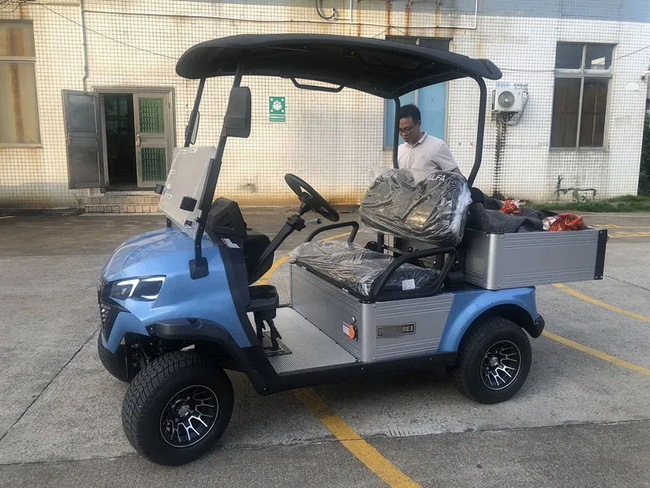
If a golf car manufacturer explicitly allows limited use of a car battery in an emergency, the procedure must be approached with caution. The steps below are a generalized, conceptual overview and not a substitute for the instructions provided with your specific golf car model.
- Park the car close to the golf car on level ground, making sure the vehicles do not touch. Engage both parking brakes and switch off all accessories in the golf car.
- Turn off the ignition in both the car and the golf car. Remove keys to avoid accidental movement or arcing when connecting cables.
- Identify the correct connection points. This might be a single 12 V battery within a larger golf car pack or a specific terminal labeled for auxiliary charging; never guess.
- Connect the positive clamp to the positive terminal of the car battery, then to the designated positive terminal on the golf car. Avoid contact between metal parts of the clamps.
- Attach the negative clamp to an approved ground or negative terminal on the golf car frame or battery system, well away from any fuel or hydrogen vents.
- Wait a short period to allow some charge transfer, then attempt to power up the golf car according to the manual. If it does not respond quickly, disconnect and switch to proper charging methods.
Again, this is not a recommended routine method. Overreliance on such emergency procedures is a sign that the golf car is under-maintained or that the charging system is not sized correctly for how the golf car is used.
The best way to avoid risky jumpstarts with a car is to keep every golf car in the fleet or household in healthy condition. A few basic checks dramatically reduce the odds of a dead pack.
- Inspect water levels in flooded lead-acid golf car batteries regularly, topping up with distilled water only to the recommended fill line.
- Clean terminals and cable ends on the golf car battery pack with appropriate tools and baking soda solution, then apply an anti-corrosion spray if recommended.
- Check that all cables, lugs, and bus bars in the golf car pack are tight; loose connections generate heat and waste energy.
- Charge the golf car after use rather than waiting until it is completely drained, and avoid storing the golf car with a nearly empty pack.
- Store the golf car in a cool, dry, and ventilated area, keeping it out of extreme heat or cold that accelerates battery aging.
In a commercial environment, a structured maintenance schedule for each golf car helps prevent downtime and reduces unexpected costs.
Selecting the proper voltage golf car for your environment and workload reduces the pressure to improvise with jumpstarts and emergency fixes.
- A 36 V golf car tends to be more budget-friendly and is often suitable for flat courses, gated communities, and light-duty use.
- A 48 V golf car offers stronger torque, better hill-climbing, and longer run times, making it ideal for resorts, campuses, and multi-purpose operations.
- Some industrial or hunting-style golf car models may use higher voltages or specialized battery packs tuned for heavy loads and rough terrain.
When working as an OEM supplier, clearly labeling each golf car's voltage and expected use case helps dealers guide end customers to the right model.
Battery choice has a big impact on reliability, maintenance needs, and charging flexibility in a golf car fleet. While both lead-acid and lithium have a place in the market, they behave differently under stress.
Lead-acid remains popular in many value-oriented golf car designs.
- Advantages: Lower upfront cost, proven technology, and relatively simple charging equipment.
- Drawbacks: Heavier weight in the golf car, higher maintenance (watering and cleaning), slower charging, and shorter cycle life compared with quality lithium packs.
Improper jumpstarting is especially damaging to lead-acid golf car batteries because they are more prone to sulfation and plate damage.
Lithium-ion solutions are increasingly common in modern, high-performance golf car platforms.
- Advantages: Lower weight for better acceleration and handling, faster charging, deeper usable capacity, and longer cycle life.
- Drawbacks: Higher purchase price and the need for a compatible lithium charger and BMS-aware equipment.
A lithium-equipped golf car is often more tolerant of occasional deep discharges, but the integrated BMS will usually block unsafe attempts to jump the pack with a car.
For golf courses, resorts, factories, and property developers operating many golf cars, process is as important as hardware. Good practices lower the chance that a golf car will be left stranded with a dead pack.
- Assign each golf car a unique ID and track charging times, usage hours, and maintenance history.
- Train staff on proper charging habits, including when to plug in each golf car and how to recognize signs of a failing battery.
- Keep at least one properly rated portable booster or spare battery on site that is compatible with your golf car systems.
- Establish a policy forbidding improvised jumpstarts from random cars or trucks to any golf car without technical approval.
These steps protect the fleet investment and ensure every golf car delivers consistent, reliable performance.
If a golf car stops moving midway through a round or while carrying passengers in a resort, safety and procedure matter more than speed.
- Move passengers to a safe area off the path if the golf car is blocking traffic or positioned on a slope.
- Switch the golf car to neutral or tow mode if provided, then use an appropriate tow vehicle or another golf car to bring it back to the maintenance area.
- Tag the golf car as “out of service” and record symptoms (strange noises, warning lights, sudden cutoff) before attempting any jumpstart.
This systematic approach prevents repeated failures and avoids making a minor golf car issue worse with a rushed jump from a car.
Jumpstarting a golf car directly with a car is technically possible only in very limited, manufacturer-approved situations, and it is rarely the safest or smartest choice. The differences in voltage, battery chemistry, and electronics between a golf car and a car mean that a quick fix can easily lead to permanent damage. Investing in the correct golf car chargers, using compatible portable boosters, and following solid maintenance routines will keep each golf car ready for work or leisure. Whether the golf car is used on a golf course, in a resort, in an industrial facility, or as a multi-purpose vehicle, avoiding risky car-to–golf car jumpstarts is an important part of responsible operation.
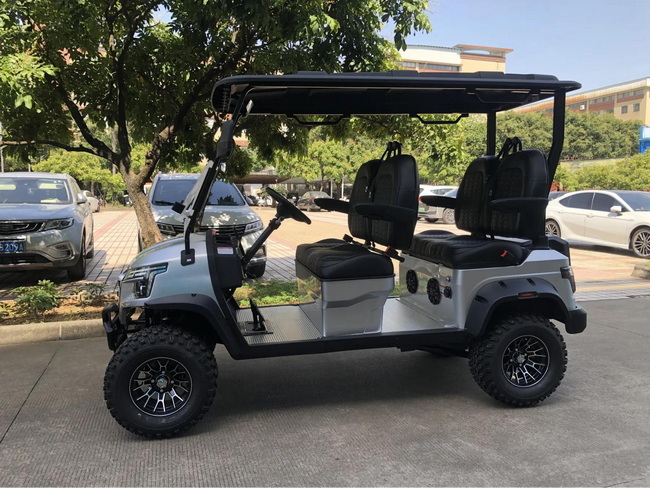
In theory, a sufficiently powerful golf car battery pack can provide enough current to help start a car, but this is rarely advisable outside controlled, manufacturer-approved procedures. The voltage configuration in the golf car pack may not match the car's system, and incorrect connections can damage both vehicles' electronics. Most experts recommend using a dedicated automotive jump pack for starting cars rather than relying on a golf car.
A golf car typically uses deep-cycle batteries that are optimized for slow, steady discharge instead of short bursts of very high current. When these golf car batteries are jumpstarted aggressively, the internal plates can overheat, warp, or shed material, which reduces capacity and overall lifespan. Repeated emergency jumps also push the golf car pack outside its designed charging profile, accelerating wear.
The easiest method is to count the batteries in the golf car and multiply by the voltage printed on each battery label. For example, six 6 V batteries usually indicate a 36 V golf car pack, while six 8 V batteries generally mean a 48 V golf car. Many dashboards, owner's manuals, or specification plates inside the golf car also clearly state the pack voltage.
If a golf car stops on the course, first ensure the key is on, the gear selector is in the correct position, and the parking brake is not engaged. Check for any obvious loose or damaged battery cables in the golf car, and look for warning lights on the display. If the golf car still will not move, contact the clubhouse or maintenance team to tow the golf car back for proper testing and charging instead of attempting an improvised jump.
Lithium batteries offer several advantages for a golf car, including lighter weight, faster charging, higher usable capacity per charge, and longer cycle life compared with traditional lead-acid options. They can reduce downtime and make the golf car feel more responsive, especially on hilly terrain or in multi-stop usage. However, lithium upgrades require compatible chargers and a suitable battery management system, and they usually cost more up front than lead-acid packs.


