


Views: 222 Author: Leah Publish Time: 2026-01-16 Origin: Site


Content Menu
● What “Street‑Legal” Really Means for an Electric Golf Cart
● Key Legal Requirements Before Driving on the Road
● Typical Road and Speed Limit Rules
● Driver Licensing and Age Requirements
● Electric Golf Cart vs. LSV: What's the Difference?
● Where You Can Safely Use an Electric Golf Cart
● Essential Safety Tips for Road Use
● Popular Upgrades to Make an Electric Golf Cart Road‑Ready
● Why Many Communities Choose Electric Golf Carts
● Choosing the Right Electric Golf Cart for Road and Off‑Road Use
● Battery Technology and Range Considerations
● Maintenance Best Practices for Road‑Going Electric Golf Carts
● How OEM Manufacturers Support Road‑Legal Electric Golf Carts
● Content Ideas: Interior and Exterior Views
● FAQ
>> 1. Is an electric golf cart automatically street‑legal?
>> 2. What is the maximum speed for a street‑legal electric golf cart?
>> 3. On which roads can you drive an electric golf cart?
>> 4. Do you need a driver's license to drive an electric golf cart?
>> 5. Can you drive an electric golf cart in Europe on public roads?
In many countries and U.S. states, you can drive an electric golf cart on public roads only if it is upgraded and registered as a street‑legal low speed vehicle (LSV) and the road speed limit is usually 35 mph (about 56 km/h) or less. On private property such as golf courses, resorts, factories, and gated communities, electric golf carts are generally allowed as off‑road vehicles under the owner's rules.[1][2][3]
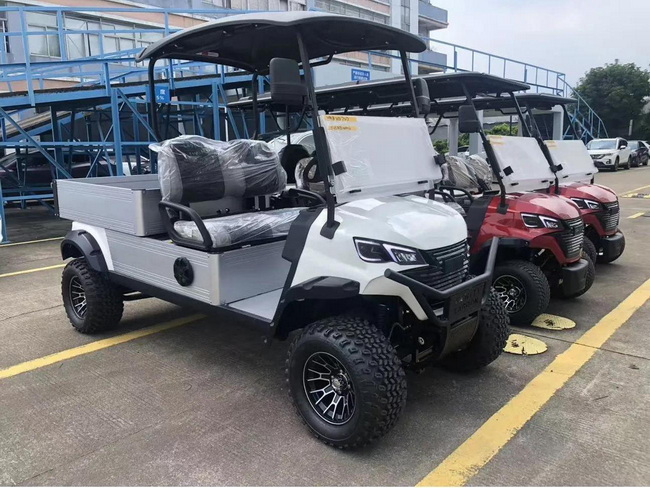
A standard electric golf cart from the course is not automatically street‑legal, even if it feels safe at low speed. Street‑legal status usually requires compliance with federal or regional vehicle standards plus local traffic regulations. That is why many owners convert or purchase purpose‑built LSV‑type electric golf carts designed specifically for neighborhood and city use.[2][4][5][1]
- Street‑legal electric golf carts are usually classified as LSVs or neighborhood electric vehicles (NEVs), with a typical top speed of 20–25 mph and a gross vehicle weight below 3,000 lb.[5][1][2]
- These vehicles are limited to roads where the posted speed limit is normally 35 mph or less, although exact limits vary by state or country.[6][7][1][2]
- Private‑use electric golf carts can operate freely on private land but need additional approvals to cross or use public roads.[3]
Before an electric golf cart can mix with regular traffic, most jurisdictions require basic safety equipment similar to a small car. These requirements are aimed at visibility, crash protection, and predictable behavior in traffic.[8][1][2]
- Mandatory safety items often include headlights, taillights, brake lights, turn signals, reflectors, mirrors, horn, and a compliant windshield.[1][2][8]
- Seat belts for each seating position and an assigned vehicle identification number (VIN) are standard elements of LSV safety rules in many U.S. states.[2][5][8]
- Registration, license plates, and liability insurance are normally required once the electric golf cart is treated as a motor vehicle on public roads.[8][1][2]
LSV‑class electric golf carts are designed for low‑speed urban and community environments, not highways. Regulations reflect that design by restricting where these vehicles can legally operate.[9][1][2]
- Most U.S. states only allow LSVs on roads with posted limits of 35 mph or below, though some states and localities set lower or slightly different limits.[6][9][2]
- The vehicle itself must be capable of at least 20 mph but not more than 25 mph to fit the LSV category in many markets.[10][5][1][2]
- In Europe, electric golf carts used on public roads must carry a registration plate, meet EU type‑approval under categories such as L6e or L7e, and comply with specific power and speed ranges.[4][3]
When an electric golf cart is street‑legal, the driver is usually treated like any other motorist. However, private‑property use can follow more flexible rules set by the landowner.[3][1]
- Most regions require a valid driver's license to operate an LSV‑type electric golf cart on public streets, with minimum ages typically 16 or higher.[7][3][6]
- Some European regulations allow operation of certain approved light quadricycle‑type golf carts with specific categories of license, such as AM or similar.[11][4][3]
- On private courses, resorts, or industrial sites, operators may be younger, but the responsibility and liability remain with the owner or fleet manager.[12][3]
Many buyers are confused by the terms “electric golf cart” and “low speed vehicle.” The main differences relate to regulation, equipment, and intended use, not just the electric drivetrain.[5][1][2]
Aspect | Typical Electric Golf Cart | Street-Legal LSV-Type Electric Golf Cart |
Primary use | Golf course, resort, private property only. | Neighborhood transport, campuses, gated communities, low-speed city streets. |
Top speed | Often below 20 mph, depends on controller and setup. | Usually 20–25 mph by regulation. |
Safety equipment | Minimal: basic lights (if any), no mandatory belts or mirrors. | Headlights, turn signals, brake lights, windshield, mirrors, seat belts, horn. |
Legal status | Generally not road-legal without modification and approval. | Registered motor vehicle or quadricycle class; allowed on certain public roads. |
Road type | Private roads only; public use often prohibited. | Public roads typically up to 35 mph speed limit. |
Paperwork | No VIN, registration, or plates in many cases. | VIN, registration, plates, and insurance usually required. |
Modern electric golf carts are extremely versatile and widely used far beyond the fairway. However, where they can operate legally and safely always depends on local traffic law and site rules.[1][3]
- Common environments include golf courses, hotels, resorts, airports, residential compounds, theme parks, university campuses, factories, and warehouses.[12][3]
- Local ordinances sometimes allow electric golf carts in defined “golf cart zones,” beach areas, or downtown corridors during specific hours when posted as such.[9][1]
- Industrial customers often use customized electric golf carts for maintenance, logistics, and shuttle services entirely within private facilities, avoiding road registration.[11][12]
Even when an electric golf cart is fully compliant and street‑legal, it is still a lightweight vehicle sharing space with heavier cars and trucks. Sensible safety practices make a major difference in risk level.[11][1]
- Always wear seat belts if installed and keep passengers seated facing forward to reduce injury risk in sudden stops or minor collisions.[11][1]
- Use lights at dawn, dusk, and in bad weather, and add reflective decals to improve visibility for other road users.[8][1]
- Avoid high‑traffic routes and steep grades, stay in the right lane or designated lanes, and maintain a predictable speed close to the road's normal flow.[9][1]
Fleet operators and private owners often start with a standard electric golf cart and upgrade it for mixed on‑road and off‑road use. Done correctly, this can turn a basic cart into a compliant LSV‑type vehicle where regulations allow.[8][1]
- Electrical upgrades usually include full lighting kits with indicators, improved batteries for longer range, and automotive‑style wiring harnesses for reliability.[1][8]
- Mechanical upgrades may cover better brakes, road‑rated tires, stronger suspension, and safety‑rated seats with integrated belts.[2][1]
- Documentation upgrades include adding a VIN, completing required inspections, and registering the electric golf cart as an LSV or quadricycle.[4][2][8]
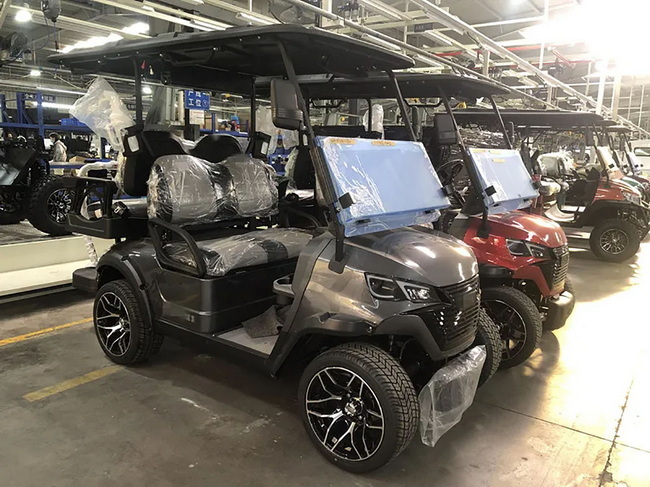
Neighborhoods, resorts, and campuses around the world are adopting electric golf carts as part of a broader micro‑mobility strategy. The combination of low noise, zero local emissions, and compact size fits modern sustainability goals.[12][11][1]
- Electric golf carts reduce local emissions and noise compared with traditional cars, which is valuable for residential and tourist areas.[11][1]
- Operating costs per kilometer are typically much lower thanks to efficient electric drivetrains and simple maintenance requirements.[12][1]
- Street‑legal LSV‑type electric golf carts can support “car‑light” lifestyles by covering short commutes, school runs, and last‑mile transport.[10][1]
For buyers who want both course performance and community driving, choosing the right specification of electric golf cart is essential. The decision should balance comfort, carrying capacity, safety features, and legal compliance in the target market.[2][1]
- Two‑seat and four‑seat electric golf carts are popular for residential owners who use them for short errands, while 6–8 seat configurations suit resorts and shuttle services.
- Buyers should clarify whether the electric golf cart is intended for private‑property use only or will be registered as a road‑legal LSV, because this choice affects equipment, paperwork, and cost.[8][1][2]
- For mixed‑use fleets, operators often maintain one group of electric golf carts optimized for the golf course and another group specifically designed for street‑legal duties within nearby communities.
Because an electric golf cart relies entirely on its battery system, range and charging strategy are central to real‑world usability. Road‑legal use typically involves longer daily routes than a traditional 18‑hole round.[12][1]
- Traditional lead‑acid battery packs remain common and cost‑effective for standard electric golf carts, but lithium‑ion options offer higher energy density, faster charging, and longer cycle life, which benefits road‑legal fleets.
- Buyers should calculate daily mileage, number of trips, passenger load, and terrain when selecting battery capacity, because steep climbs and frequent stops consume more energy.
- For community and resort applications, centralized charging infrastructure with dedicated chargers and clear scheduling keeps electric golf carts ready throughout peak hours.[1][12]
Once an electric golf cart regularly shares public roads with cars and trucks, maintenance standards should be closer to those of a passenger car. Preventive service reduces breakdowns, protects passengers, and preserves regulatory compliance.[11][1]
- Routine checks should cover tires, brakes, steering components, suspension bushings, light operation, and horn, in addition to the usual battery watering or state‑of‑charge monitoring.
- Street‑legal electric golf carts should follow a documented service schedule that records inspections, component replacements, and any accident repairs in case authorities request proof of roadworthiness.[1][11]
- Fleet operators can reduce lifetime operating costs by training staff on basic inspections and partnering with OEMs or certified dealers for more complex repairs.
Specialized OEM manufacturers in China and other production hubs supply customized electric golf carts to brands, distributors, and fleet operators worldwide. Many of these vehicles are engineered from the start to meet road‑legal standards in target markets.[12][11]
- OEM factories can develop electric golf cart platforms tailored to different regulations, such as U.S. LSV rules or EU L6e/L7e quadricycle standards.[4][11][12]
- International buyers often specify unique body styling, battery technology, seating layouts, and safety packages to match local expectations and laws.[10][12]
- Reliable after‑sales parts, technical support, and documentation are essential for smooth registration and operation of electric golf carts abroad.[11][12]
To help potential buyers imagine configuration options for an electric golf cart, consider adding more focused visual segments.
- Cabin‑focused clips showing steering wheel layout, dashboard display, speedometer, switches for lights and indicators, and seating for 2–8 passengers.
- Exterior shots highlighting different roof options, side enclosures, cargo beds, and utility racks on multi‑purpose electric golf carts.
- Charging demonstrations showing how to connect an electric golf cart to a charger, plus an explanation of safe charging habits and recommended schedules.
- Maintenance scenes where technicians check brake systems, suspension, and wiring harnesses on fleet electric golf carts in a service bay.
- Night‑driving sequences displaying the brightness and coverage of headlights and the visibility benefits of reflective stripes and LED signals in town streets.
Driving an electric golf cart on public roads is possible in many regions, but only when the vehicle meets street‑legal requirements and is registered in the appropriate category such as LSV or quadricycle. Most jurisdictions limit these vehicles to lower‑speed roads, require specific safety equipment, and insist on proper licensing and insurance to protect both drivers and other road users. For private property, resorts, and industrial sites, electric golf carts remain a flexible, quiet, and efficient transport solution, and OEM manufacturers can customize models to match local rules and application needs.[6][3][4][9][2][12][1][11]
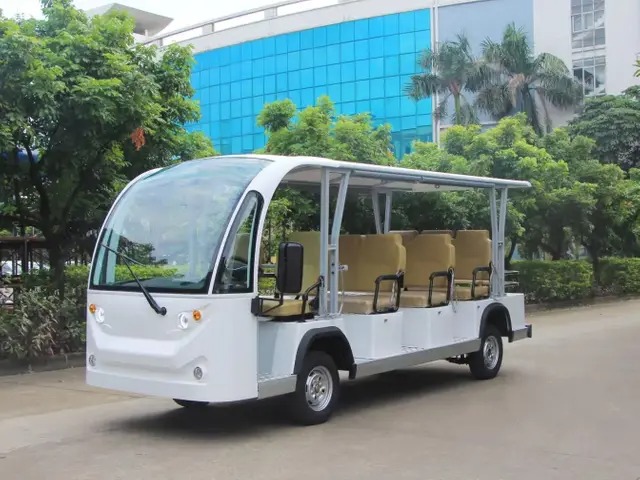
No, a standard electric golf cart is usually not street‑legal until it is upgraded with required safety equipment, inspected, and registered as an LSV or similar road‑approved vehicle.[6][8][1]
In many U.S. regulations, an LSV‑type electric golf cart must be capable of at least 20 mph but not more than 25 mph to qualify for street use on designated low‑speed roads.[5][10][2][1]
Street‑legal electric golf carts are generally limited to roads with posted speed limits of about 35 mph or less, and some local ordinances further restrict specific routes or zones.[6][9][2][1]
When an electric golf cart is registered for road use, most regions require the operator to hold a valid driver's license, although license categories and minimum ages vary between countries.[7][3][6]
Yes, but only if the electric golf cart has EU type‑approval in a suitable category, carries a registration plate, and meets power, speed, and safety requirements that allow it on specific road types.[3][4]
[1](https://www.motoelectricvehicles.com/blog/what-makes-an-electric-golf-cart-street-legal/)
[2](https://www.gregorypoolelift.com/blog/what-is-the-difference-between-low-speed-vehicle-and-a-golf-cart/)
[3](https://www.golfcart.at/en/serviceandhelp/q-a/)
[4](https://golfkarkopen.be/engels/nederlands-kenteken/)
[5](https://www.cartmart.com/content/what-is-an-lsv)
[6](https://fernandojlopez.com/are-golf-carts-street-legal/)
[7](https://smalltownev.com/are-ev-golf-carts-street-legal/)
[8](https://www.cengocar.com/news/what-makes-an-electric-golf-cart-qualify-as-street-legal/)
[9](https://sandiegogolfcart.com/street-legal-golf-cart-review-top-10-faqs-about-owning-a-golf-cart-in-southern-california/)
[10](https://solanaev.com/what-is-a-low-speed-vehicle/)
[11](https://www.trl.co.uk/uploads/trl/documents/XPR123-safety-of-four-wheeled-lightweight-electric-vehicles.pdf)
[12](https://dmv.alaska.gov/vehicle-services/low-speed-vehicle/)


