


Views: 222 Author: Leah Publish Time: 2026-01-05 Origin: Site


Content Menu
● Understanding UK Golf Buggy Law
● Where You Can Use a Golf Buggy in the UK
● When a Golf Buggy Can Go on the Road
● Making a Golf Buggy Road Legal in the UK
● Insurance, Tax and MOT for Golf Buggies
● Safety Rules When Driving a Golf Buggy
● Using a Golf Buggy to Reach the Course
● Everyday Scenarios for UK Golf Buggy Owners
● How OEM Manufacturers Help With Road-Legal Buggies
● Technical Features of Modern Electric Golf Buggies
● Environmental Benefits of Electric Golf Buggies
● Practical Tips Before You Drive a Golf Buggy on the Road
● FAQ
>> 1. Is a standard golf buggy road-legal in the UK?
>> 2. Do you need a driving licence to drive a golf buggy on the road?
>> 3. Can a golf buggy legally cross a public road between holes?
>> 4. What modifications are usually needed to make a golf buggy road-legal?
>> 5. Can an imported electric golf buggy from China be approved for UK roads?
In the UK, most standard golf buggy models are not automatically road-legal and cannot be driven on public roads unless they are specially modified, registered, insured and meet DVLA standards. However, some classified mobility-type buggies can be used on pavements and in very limited road situations, while fully road-legal buggies must comply with vehicle construction, tax and insurance rules just like a car.[1][2]
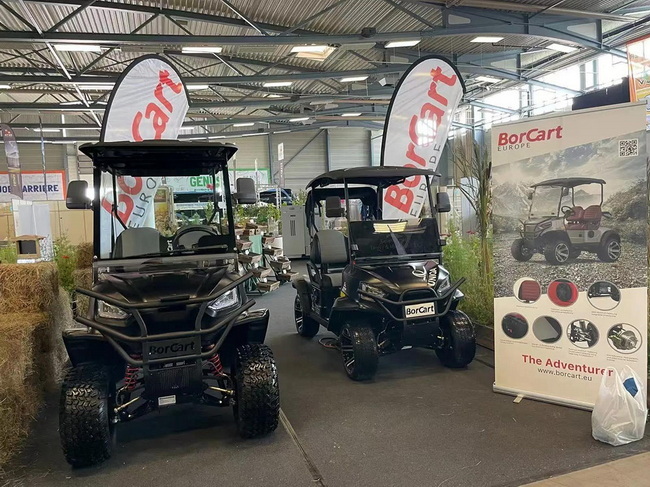
Golf buggy use in the UK is primarily designed for golf courses, private land and controlled environments rather than normal public roads. Driving one on public highways without the correct classification and paperwork can lead to fines, insurance issues and potential liability if an accident occurs.[2][1]
Key legal points:
- A basic golf buggy is not treated as a normal car; it needs to meet specific DVLA and construction requirements to become road-legal.[3][2]
- If a golf buggy is used only on private land with landowner consent, public road regulations generally do not apply.[1][3]
Not every golf buggy falls into a single legal category, and understanding the main types helps clarify what you can and cannot do on UK roads. Each category carries different expectations around speed, safety equipment and legal obligations.[4][2]
Common categories:
- Course-only golf buggy: Lightweight vehicles designed purely for turf use on golf courses and private estates, with minimal lighting and no registration.[5][1]
- Mobility-type buggy: Low-speed vehicles often used by disabled users, sometimes permitted on pavements and limited road sections under specific classifications.[1]
- Road-legal low-speed vehicle: A more robust golf buggy-style machine built or upgraded to meet road standards and registered with the DVLA.[2][3]
In normal form, a golf buggy is intended for off-road environments. The permitted use depends on whether the buggy is a standard course vehicle, a mobility-classified buggy, or a fully road-legal low-speed vehicle.[3][5][1]
Typical allowed locations:
- Golf courses and club grounds under local club policy and safety rules.[5]
- Private estates, resorts, leisure parks or industrial sites where the owner authorises golf buggy operation.[3][5]
- Pavements and footpaths may be allowed only for certain mobility-class buggies at low speed under Class 2 rules.[1]
A standard golf buggy cannot simply drive on a UK public road just because it has lights or indicators; it must meet DVLA standards. The only meaningful exceptions involve mobility-classified buggies and brief crossing movements.[2]
Situations to consider:
- Some Class 2 mobility-type buggies can use the road only when there is no pavement or when crossing between pavements, and must remain at low speed.[1]
- If a golf buggy travels along a road for any distance (not just straight across), it needs to be fully road-legal, taxed, insured and registered, with appropriate lighting and safety equipment.[6][2]
To legally drive a golf buggy on UK roads as a low-speed vehicle, it must be built or upgraded to meet road standards and then correctly registered. Many manufacturers, including specialist Chinese OEMs like BorCart, offer electric golf buggy platforms that can be engineered to satisfy these requirements for overseas brands and fleet buyers.[2][3]
Core requirements usually include:
- Compliance with construction and use regulations: headlights, brake lights, indicators, mirrors, horn, reflectors and suitable tyres.[3][2]
- Registration with the DVLA, assignment of a number plate, road tax (often low or zero-rated depending on class), and valid insurance and MOT where applicable.[7][8][2]
Once a golf buggy becomes road-legal and is used on public roads, it is treated much more like a small vehicle than a toy. That means the usual obligations for coverage, record-keeping and inspections come into play.[4][2]
Typical obligations:
- Motor insurance is required if a golf buggy is used on a road or other public place, to protect third parties and meet UK compulsory insurance law.[2]
- Vehicle excise duty (road tax) must be applied for in the appropriate tax class; some low-emission electric vehicles may have zero-rated duty but still require registration.[8][4]
- Depending on age and category, a road-legal golf buggy may need regular MOT tests unless it falls under a specific exemption.[7][4]
Even when fully road-legal, a golf buggy has different handling and crash protection than a conventional car, so safety discipline is critical. Lightweight construction, open sides and low speed mean drivers must compensate by driving cautiously and being highly visible.[5][3][1]
Practical safety recommendations:
- Always follow the Highway Code, obey speed limits and give clear signals well in advance.[3]
- Avoid fast roads with high traffic speeds where a golf buggy would be significantly slower than other vehicles, and take extra care in poor weather or darkness.[1][3]
- Ensure passengers remain seated properly, with hands and feet inside the golf buggy, and avoid overloading beyond the specified capacity.[5]
Many UK golfers dream of simply driving their golf buggy from home to the club instead of loading it into a car. In practice, this is only realistic if the route and the buggy meet strict conditions.[1]
Typical scenarios:
- If both home and club are on private land or within a gated community, a golf buggy can often be used freely under local rules.[5][3]
- If the journey involves public roads, the golf buggy must either be a mobility-classified pavement buggy with very limited road sections, or a fully road-legal low-speed vehicle.[2][1]
- Golf clubs sometimes allow a short, straight crossing of a minor public road between holes, but travelling along the carriageway in a non-road-legal buggy is usually prohibited.[9][6]
Understanding realistic use cases helps owners decide whether investing in a road-legal golf buggy is worthwhile. For some, a golf buggy is purely a course convenience; for others, it can play a wider role in local transport.[2]
Common scenarios:
- Course-only usage: The golf buggy stays at the club or in a nearby storage facility and is never driven on public roads, avoiding registration and insurance complexity.[5][1]
- Resort or park operations: Hotels, holiday parks and large campuses may use golf buggies for guest transport on internal roads that are not part of the public highway.[3][5]
- Mixed-use low-speed vehicles: A road-legal golf buggy can handle short urban or village trips to shops, marinas or community facilities, provided speed and range are sufficient.[10][2]
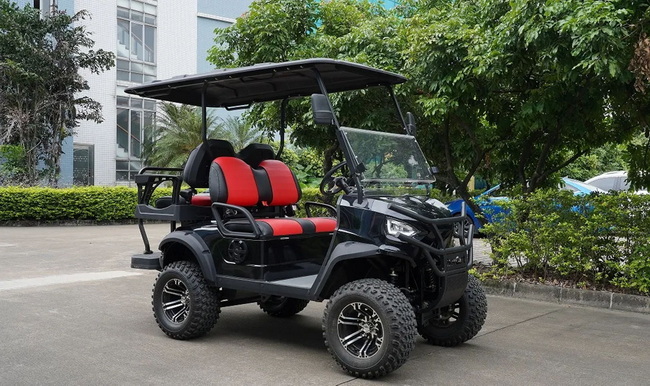
Professional OEM manufacturers in China, such as BorCart, design and build electric golf buggy models, sightseeing buses, hunting vehicles and multi-purpose vehicles that can be configured for different regulatory markets. For UK-oriented projects, these platforms are tailored so that importers and brand owners can obtain type approval and register the vehicles for specific road or private-site uses.[3]
OEM support may cover:
- Engineering a golf buggy to meet lighting, braking, speed and safety expectations of the target country, including UK low-speed vehicle norms.[3]
- Supplying documentation to assist overseas brands, wholesalers and local manufacturers in DVLA approval, tax classification and after-sales compliance.[3]
- Offering bespoke body designs, seating layouts and cargo options so that a golf buggy can serve roles from golf fleets to resort shuttles and utility tasks.[10][3]
Modern electric golf buggy platforms have evolved far beyond simple two-seat course shuttles. This technical progress makes it easier to adapt a golf buggy to road-legal standards when the legal framework permits.[10][3]
Typical features:
- High-efficiency electric drivetrains with improved battery chemistry, providing smoother acceleration and quieter operation on and off the course.[10]
- Modular chassis designs that support different body styles, from compact two-seat golf buggy layouts to multi-row sightseeing and low-speed utility vehicles.[10][3]
- Optional enhancements such as regenerative braking, digital dashboards and weather protection enclosures that improve comfort and usability.[3]
Electric golf buggy fleets support sustainability goals for clubs, resorts and communities. When used appropriately, they reduce emissions and noise pollution compared with conventional combustion-engine vehicles.[10]
Key environmental advantages:
- Zero tailpipe emissions during operation, which benefits air quality, especially in parks, campuses and residential communities.[10]
- Lower noise levels than small petrol vehicles, helping maintain a calm environment on golf courses and in leisure areas.[5][10]
- Potential integration with renewable energy charging setups at clubs and resorts to further reduce lifecycle emissions.[10]
Before taking any golf buggy onto a public road in the UK, it is essential to verify both the legal status of the vehicle and the route you plan. Cutting corners can result in enforcement action and could invalidate insurance in the event of a collision.[1][2]
Useful steps:
- Confirm whether your current golf buggy is road-legal, mobility-classified, or strictly off-road; if in doubt, check the V5C registration document (if any) and consult a specialist dealer.[2][3]
- Plan routes that prioritise low-speed roads, avoid fast A-roads, and minimise the distance that a golf buggy needs to travel alongside general traffic.[1][3]
- Speak with your insurer and local authority if using a golf buggy around villages, resorts or campuses that include both private and public sections.[4][2]
You cannot normally drive a basic golf buggy on public roads in the UK unless it has been engineered and registered as a road-legal vehicle that meets DVLA and safety rules. Some mobility-class buggies can operate on pavements and cross roads at low speed, but full road use requires registration, insurance, tax and often MOT, just like a small car. For brands, wholesalers and fleet buyers, working with an experienced OEM such as BorCart makes it possible to source electric golf buggy models that are designed from the outset to satisfy UK-orientated requirements, whether for private resorts, commercial fleets or specialised low-speed road environments.[7][2][1][3]
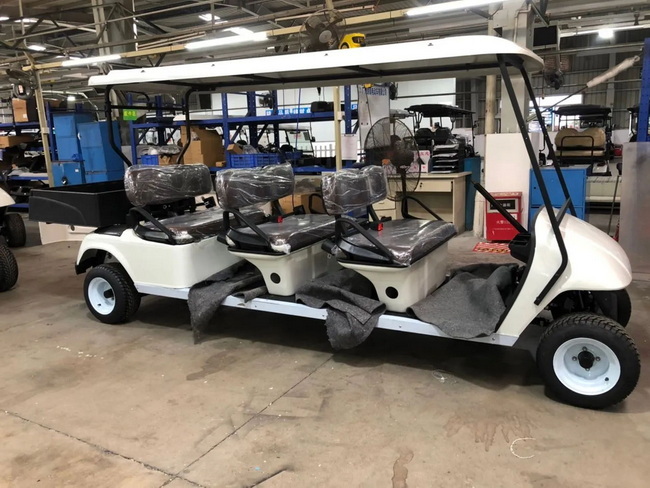
In general, a standard course golf buggy is not road-legal in the UK and cannot be driven on public roads in its factory off-road configuration. To become road-legal, the golf buggy must be upgraded with compliant equipment, correctly registered and insured, and must meet DVLA standards for the category under which it is licensed.[2][3]
If a golf buggy is fully road-legal and used on public roads, the driver will normally need an appropriate full driving licence for that vehicle category, just as with a small car. For mobility-class golf buggy vehicles restricted to pavements and limited road crossings, licence requirements may differ, but those buggies are tightly speed-limited and controlled.[2][1]
Many clubs allow players to cross a minor road directly from one part of the course to another in a golf buggy, as long as the manoeuvre is a straight crossing rather than travelling along the highway. However, local authorities or club policies may forbid even short public-road crossings in a golf buggy, so it is essential to check the specific rules at each venue.[6][9][5]
To make a golf buggy road-legal, it typically needs proper headlights, tail lights, indicators, mirrors, a horn, compliant tyres, a secure seating layout and possibly seat belts depending on classification. After meeting those technical standards, the golf buggy must be submitted for registration, given a number plate, insured and, where required, kept up to date with MOT testing.[8][7][2][3]
Yes, many electric golf buggy models produced by specialist Chinese OEM manufacturers can be engineered for UK compliance and then registered by importers and brand owners. The key is to work with a supplier experienced in low-speed vehicle exports, such as BorCart, and to follow the DVLA approval, tax class and insurance procedures specific to the chosen golf buggy configuration.[4][3]
[1](https://bugg-ease.com/drive-a-golf-buggy-on-the-road/)
[2](https://www.golfcaruk.com/frequently-asked-questions/)
[3](https://www.borcart.com/how-to-make-a-golf-buggy-road-legal-uk.html)
[4](https://www.gov.uk/government/publications/vehicles-statistics-guidance/vehicle-licensing-statistics-notes-and-definitions)
[5](https://www.englandgolf.org/resource-detail/buggies-and-transportation)
[6](https://www.pistonheads.com/gassing/topic.asp?h=0&f=10&t=1664978)
[7](https://www.gov.uk/getting-an-mot/vehicles-exempt-from-mot)
[8](https://assets.publishing.service.gov.uk/media/67ea506bb79d8c9841eade3a/v355x1-notes-about-tax-classes.pdf)
[9](https://www.brentwood.gov.uk/media/486)
[10](https://www.taragolfcart.com/news/exploring-golf-car-options-in-the-uk-a-complete-guide/)


