


Views: 222 Author: Leah Publish Time: 2026-01-09 Origin: Site


Content Menu
● How Golf Car Battery Systems Work
● How Car Chargers Differ from Golf Car Chargers
● Why Using a Car Charger on a Golf Car Is Risky
● Charging a Golf Car Without the Correct Charger
● Best Practices for Safe Golf Car Charging
● Special Considerations for Lithium Golf Cars
● How to Select the Right Golf Car Charger
● The Role of OEM Golf Car Manufacturers
● Practical Tips for Everyday Golf Car Owners
● Why a Car Charger Is the Wrong Long‑Term Choice
● FAQ
>> 1. Can I ever safely use a car charger on a golf car?
>> 2. What happens if I keep using the wrong charger on my golf car?
>> 3. How do I know whether my golf car is 36 V or 48 V?
>> 4. Is it safe to leave my golf car on the charger overnight?
>> 5. What kind of charger should I use for a lithium‑powered golf car?
No, you generally should not charge a golf car with a regular car battery charger, because the voltage, amperage, and charging profile are different and this can damage the batteries or cause safety hazards. In emergency conditions, certain improvised methods may temporarily “wake up” a deeply discharged golf car pack, but they are risky and never a substitute for a proper golf car charger.
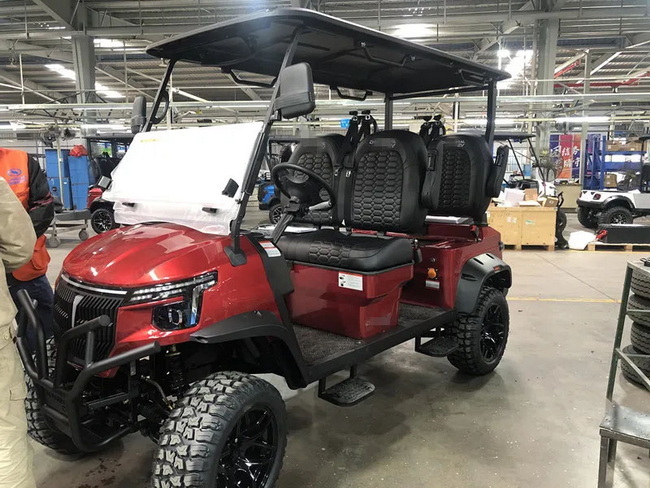
Electric golf cars typically use 36 V, 48 V, or sometimes 72 V battery systems made by connecting several deep‑cycle batteries in series. These batteries are designed to deliver steady power over many holes or working hours rather than short bursts of current like car starter batteries.
In a 36 V golf car, the pack might consist of six 6 V batteries connected in series; a 48 V golf car might use eight 6 V, six 8 V, or four 12 V batteries. The pack behaves as one large battery, and the golf car charger must “see” the entire system voltage and manage charging accordingly.
Deep‑cycle batteries used in a golf car require a multi‑stage charging process: bulk, absorption, and float or storage. During bulk charging, the charger delivers current until the golf car pack reaches a target voltage. In the absorption phase, the voltage is held relatively constant while current tapers off to fully saturate the plates. Finally, a float or storage mode maintains the golf car batteries without overcharging during long rest periods.
A car battery charger is designed for a single 12 V starting battery rather than a multi‑battery deep‑cycle pack in a golf car. Automotive chargers typically focus on higher currents over shorter times to restore a partially discharged starter battery quickly, because the car's alternator then maintains the charge while driving.
A 48 V golf car pack, however, needs a charger that can safely deliver a higher system voltage and is tuned to deep‑cycle behavior. The charging profile is different in three important ways:
- Voltage: A car charger normally outputs for 12 V (and some units offer 6 V settings), while a golf car pack requires 36 V, 48 V, or more.
- Current: The current suitable for a single starter battery may be too high for individual deep‑cycle batteries if incorrectly connected, or too low for the entire pack if only partially connected.
- Charge profile: A simple car charger might not adjust voltage and current in stages appropriate for deep‑cycle use, increasing the risk of chronic undercharging or overcharging.
Because the design assumptions are different, using a car charger on a golf car is usually inefficient, unsafe, or both. In many cases, the charger will not properly recognize the pack, and owners may be tempted to improvise with series or parallel hook‑ups that create new dangers.
The biggest concern when attempting to charge a golf car with a car charger is safety. During charging, lead‑acid golf car batteries can release hydrogen gas. If the batteries are overcharged or charged in an enclosed, poorly ventilated space, this gas can build up and ignite.
In addition to gas buildup, several other problems may occur:
- Overheating and plate damage: An incorrect charging profile can warp battery plates, dry out electrolyte, and cause the batteries in a golf car to lose capacity quickly.
- Swelling and leaks: Excess heat and gas production may cause cases to bulge, crack, or leak electrolyte, creating both performance loss and chemical burn risks.
- Electrical hazards: Improvised wiring between a car charger and a multi‑battery golf car pack increases the chances of short circuits, sparks, and shock hazards.
Even when no immediate accident occurs, repeated misuse of a car charger shortens the life of the golf car battery pack. The owner may notice reduced range, longer charging times, and more frequent breakdowns on the course or in daily use.
Some owners look for alternative ways to charge a golf car when the original charger fails or when the pack is so deeply discharged that the charger will not start. In those cases, people sometimes consider car chargers, jumper cables, or other power sources.
There are a few emergency concepts that technicians sometimes use:
- “Waking up” a dead pack: If the golf car pack voltage is extremely low, a brief boost from another source may raise the voltage just enough for the dedicated golf car charger to recognize the pack and begin a normal cycle.
- Charging individual batteries: In some cases, a car charger may be connected to a single 6 V, 8 V, or 12 V battery at an appropriate setting, one at a time, to partially recover them before reconnecting the whole golf car pack.
These methods are inherently temporary and risky. They require knowledge of battery wiring, careful timing, and constant supervision. They are not recommended for everyday users and should never replace a compatible golf car charger designed for the system voltage and battery chemistry.
To keep a golf car reliable and safe, a few simple charging practices go a long way. Owners and fleet managers should treat the charger as a core component of the golf car rather than an optional accessory.
Key practices include:
- Use a dedicated golf car charger that matches the pack voltage and battery chemistry (flooded lead‑acid, AGM, or lithium).
- Charge the golf car in a dry, well‑ventilated area, away from open flames, sparks, or exposed ignition sources.
- Keep cables, connectors, and receptacles clean and free from corrosion to reduce resistance and heat during charging.
- Avoid stacking items on or around the charger and the golf car batteries, which can trap heat or interfere with airflow.
- Follow a regular charging routine so the golf car returns to near full charge soon after use rather than sitting deeply discharged.
By following these practices, a golf car owner gets better range, more consistent power, and a longer service life from the battery pack. The charger and the batteries work as a system, so thoughtful care benefits the entire golf car.

Lithium‑powered golf cars are becoming more common in resorts, communities, and commercial fleets, and they have different needs from traditional lead‑acid golf cars. The internal structure and chemistry of lithium cells are more sensitive to overvoltage and overcurrent.
Some important points about lithium golf car charging:
- Lithium batteries usually integrate a battery management system (BMS) that monitors cell voltages and temperature. The golf car charger must be compatible with the BMS so that it can safely start, charge, and stop at the right thresholds.
- Using a generic lead‑acid or car charger on a lithium golf car battery may cause the BMS to shut down, or in the worst case, allow conditions that increase fire risk.
- A lithium‑specific golf car charger uses a precise voltage cutoff and current profile to protect the pack while still providing the fast charging and long cycle life that attract many owners.
Because of these factors, matching the charger to a lithium golf car system is even more critical than for lead‑acid packs. Owners should always follow the recommendations provided by the golf car and battery manufacturer.
Choosing a suitable golf car charger is straightforward when a few basic details about the golf car are known. The right charger supports both performance and battery longevity.
Important steps in selection:
- Confirm system voltage: Identify whether the golf car uses a 36 V, 48 V, or 72 V system by checking the owner's manual, data plate, or counting individual battery voltages.
- Identify battery chemistry: Determine whether the golf car uses flooded lead‑acid, AGM, gel, or lithium batteries, since each chemistry benefits from a specific charging curve.
- Choose an appropriate current rating: Higher amperage chargers reduce charging time but may create more heat, while lower amperage chargers are gentler but slower. Finding a suitable balance for the golf car's daily use is helpful.
- Prefer smart chargers: Modern golf car chargers often include microprocessor control, multi‑stage charging, temperature compensation, and storage modes, all of which protect batteries and improve long‑term reliability.
For fleet owners, golf course operators, and brand customers, working with an experienced OEM supplier helps ensure the charger specification is correct for every golf car delivered. This approach reduces support issues and leads to more consistent performance across a fleet.
Professional OEM manufacturers that focus on electric vehicles design complete solutions, not just individual components. For example, a manufacturer specializing in golf cars, sightseeing buses, low‑speed vehicles, hunting vehicles, and multi‑purpose vehicles will typically integrate the golf car frame, drive system, battery pack, and charger as a coordinated package.
In this context, the charger is carefully matched to:
- The voltage and capacity of the golf car battery pack.
- The intended duty cycle of the golf car, such as golf course use, resort shuttle work, or industrial transport.
- The expected lifetime and service intervals promised to distributors and fleet customers.
Such manufacturers often provide OEM and ODM services for overseas brands, wholesalers, and other vehicle producers. A brand can specify aesthetics, seating, accessories, and performance targets, while relying on the OEM's technical expertise to ensure that every golf car in its range charges safely and efficiently.
For buyers, following the OEM's recommendations on chargers and charging procedures is the most reliable way to keep each golf car in safe, daily operation.
Beyond technical specifications, everyday golf car users benefit from a few habits that prevent common problems. A well‑maintained golf car charger and battery pack can serve reliably for many seasons.
Helpful habits include:
- Plug in after use: When the golf car returns from the course or a trip around the community, connect it to the correct charger rather than letting it sit discharged for days.
- Inspect batteries periodically: Check for loose terminals, corrosion, damaged cables, or signs of swelling and address any issues before the next charge.
- Monitor charge sessions: Instead of leaving the golf car unattended for very long periods, check occasionally for unusual smells, sounds, or heat around the batteries and the charger.
- Keep records: For fleet operators, tracking charge times, battery replacements, and any charger errors can reveal patterns and support timely maintenance.
By thinking of the charger as part of the golf car instead of a separate tool, owners naturally build these habits into routine care.
Despite the convenience of a car charger, it is not suited to the long‑term needs of a golf car. The core issues are compatibility, safety, and cost over time.
- Compatibility: Car chargers are built to maintain and recover starter batteries, not deep‑cycle packs used in a golf car. The mismatch affects both efficiency and battery health.
- Safety: Improvised adapters, partial connections, and other shortcuts needed to use a car charger with a golf car add risk that a dedicated golf car charger deliberately avoids.
- Cost: Batteries for a golf car represent a major share of the vehicle's cost. Shortening their life by using the wrong charger often costs more than buying a proper golf car charger in the first place.
For anyone who relies on a golf car for business, transportation, or recreation, a dedicated golf car charger is a practical investment rather than a luxury.
A regular car battery charger is not a safe or effective solution for charging a golf car, because it is designed for different voltages, different battery types, and a different duty cycle. While some emergency techniques may temporarily help a severely discharged golf car pack, they involve risk, require expertise, and should never replace a properly matched golf car charger. To protect both people and equipment, owners and fleet managers should always pair each golf car with a charger specified for the correct system voltage and battery chemistry and follow the charging guidance provided by experienced manufacturers.

In normal use, a car charger should not be used on a golf car, because its voltage and charging profile do not match what deep‑cycle golf car batteries require. At best, it may undercharge the pack; at worst, it can overheat batteries, damage plates, and create safety risks. Any emergency attempt to “wake up” a dead golf car battery with a car‑type charger should be brief, supervised, and followed immediately by proper charging with a dedicated golf car charger.
Repeatedly using an incorrect charger on a golf car causes cumulative damage. The batteries may lose capacity faster, show signs of swelling, require more frequent watering in lead‑acid systems, and deliver less range on each outing. Over time, the golf car may struggle on hills, run slowly, or shut down unexpectedly, forcing a premature and costly pack replacement.
To identify system voltage, open the battery compartment of the golf car and count the batteries, then multiply by their individual voltage. For example, six 6 V batteries indicate a 36 V system, while eight 6 V or six 8 V batteries typically indicate 48 V. Many golf cars also list system voltage on a data plate near the pedal area or in the owner's manual, which is the most direct way to confirm.
Modern smart chargers designed for golf cars often include automatic shutoff and maintenance modes that can safely manage overnight charging in a well‑ventilated area. However, no system is completely fail‑proof, and older or manual chargers may not stop at the correct time, increasing the risk of overcharging. As a precaution, it is wise to avoid very long unattended charge sessions, keep the area ventilated, and periodically check the charger and the batteries for unusual heat, smell, or noise.
A lithium‑powered golf car should always use a charger designed for the specific lithium battery system and its built‑in management electronics. Such chargers apply a precise cutoff voltage and current profile that fits the lithium chemistry and works in harmony with the battery management system. Using a generic lead‑acid or car charger on a lithium golf car pack can trigger shutoffs, reduce performance, or in extreme cases compromise safety, so a compatible lithium‑specific golf car charger is essential.


