


Views: 222 Author: Leah Publish Time: 2026-01-16 Origin: Site


Content Menu
● Understanding Hill‑Climbing Capability
>> Typical Gradients an Electric Golf Cart Can Handle
● Core Technical Factors That Affect Climbing
>> Motor Power, Torque, and Control
>> Battery Voltage, Type, and Capacity
>> Weight, Load, and Passenger Capacity
>> Tires, Traction, and Surface Conditions
● Real‑World Hill Scenarios for Electric Golf Carts
>> Golf Courses and Country Clubs
>> Resorts, Hotels, and Sightseeing Services
>> Residential Communities and Low‑Speed Road Networks
>> Hunting, Utility, and Multi‑Purpose Use
● Safety Considerations on Slopes
>> Stability and Rollover Risk
>> Braking Performance and Speed Control
>> Operational Best Practices for Drivers
● Maintenance Impact of Frequent Hill Use
>> Battery Life and Charging Strategy
>> Drivetrain, Tires, and Brakes
● OEM Strategy for Hill‑Optimized Electric Golf Carts
>> Configurable Platforms and Options
>> Documentation, Training, and After‑Sales Support
● FAQ
>> 1) How steep a hill can a standard electric golf cart climb?
>> 2) Why does my electric golf cart slow down on hills?
>> 3) Will lithium batteries make my electric golf cart climb better?
>> 4) Do I need a high‑torque motor if my course or community is hilly?
>> 5) How can I drive my electric golf cart more safely on hills?
Modern electric golf carts are widely used on golf courses, in resorts, gated communities, low‑speed road systems, and even light off‑road environments where hills are common. When correctly specified and driven, an electric golf cart can climb most practical inclines in these scenarios without sacrificing comfort or safety.[2][3]
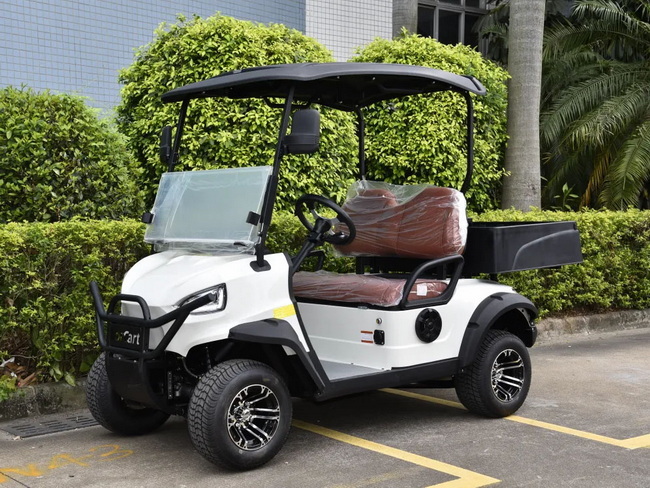
The hill‑climbing capability of an electric golf cart is not determined by a single factor; it is the result of multiple engineering and usage variables working together. For professional buyers, this makes it important to evaluate the complete system rather than only looking at published top speed or battery type.[4][5]
Most mainstream electric golf carts are designed to operate on the kinds of slopes commonly found on golf courses and residential paths. Under normal load with good traction, a standard electric golf cart will generally handle inclines in the range of about 15–20% grade (approximately 9–11 degrees) without serious performance loss.[1]
Specialized or upgraded electric golf carts that use high‑torque motors and robust battery packs can tackle steeper hills, often up to around 25% grade in controlled conditions. Beyond this level, traction, stability, and safety become more critical than raw power, so careful design and usage guidelines are essential.[3][5][1]
Several key technical parameters define how a specific electric golf cart will behave on a hill. Matching these parameters to the target environment is a major responsibility for OEM manufacturers and brand owners when designing product lines.[2][4]
The motor is the heart of every electric golf cart, and its torque output is especially important for climbing. While power (measured in kW or HP) provides an overview of performance, torque is the rotational force that allows an electric golf cart to push forward against gravity on an incline.[5][4]
- Entry‑level motors around 3–5 HP are suitable for flat courses and gentle hills, where the electric golf cart is used mainly for short transfers.[6]
- Motors around 7 HP and higher are better for hilly environments, resort shuttles, and utility applications, where an electric golf cart may carry more passengers or cargo up repeated slopes.[5][6]
The motor controller also plays a crucial role because it regulates current and protects the system. A controller designed to deliver higher peak current lets an electric golf cart generate strong torque at low speeds, which is exactly what is needed for hill starts and steep climbs.[7][4]
The battery pack supplies the energy that the motor converts into torque. Higher system voltage and suitable capacity ensure that an electric golf cart maintains performance when it climbs, without severe voltage sag or overheating.[8][6]
- Many modern electric golf carts use 48 V systems, which provide better hill performance than older 36 V configurations due to improved power delivery and efficiency.[6][8]
- Lithium‑ion batteries offer higher power density and more stable voltage under load than typical lead‑acid batteries, so an electric golf cart equipped with lithium packs can generally climb hills more smoothly and sustain speed better.[3][8]
Battery capacity (often expressed in amp‑hours) directly influences range and endurance on hilly routes. Because climbing requires more energy than level travel, electric golf carts used on steep courses or hillside communities benefit from larger packs that cushion range loss and reduce deep cycling stress.[9][8]
The total weight of an electric golf cart – including chassis, body, batteries, passengers, and cargo – directly affects its climbing performance. The heavier the loaded electric golf cart, the more torque and energy are required to climb a given slope.[9][2]
- Tourist shuttles and sightseeing vehicles often carry many passengers or luggage, so their electric golf cart platforms must be specified with higher‑torque motors, stronger controllers, and adequate braking systems.[5]
- Overloading the electric golf cart beyond its rated capacity not only slows climbs but can cause overheating, accelerated wear, and potential safety issues on steeper hills.[3][9]
Proper structural design, load distribution, and seating layout help the electric golf cart maintain stability while climbing and descending. OEM manufacturers can adjust frame design, axle placement, and suspension to optimize balance for different vehicle types based on the core electric golf cart platform.[3][5]
Traction is often the limiting factor before motor power when an electric golf cart climbs hills. Even a powerful motor cannot deliver effective torque if the tires are slipping on wet grass, loose gravel, or mud.[10][3]
- Tires with suitable tread patterns and correct inflation provide better grip and reduce rolling resistance, which helps the electric golf cart climb with less energy loss.[3]
- Over‑inflated tires reduce the contact patch and can lead to wheel spin, while under‑inflated tires increase drag and heat, both of which hurt the climbing efficiency of the electric golf cart.[8][3]
Surface conditions, including moisture, temperature, and debris, also affect traction and braking distance. In areas with heavy rain, snow, or dust, the electric golf cart may need more aggressive tread and careful speed management on hills to maintain safety.[10][3]
Different applications impose different demands on an electric golf cart when it climbs. By segmenting the key markets, OEM manufacturers can develop targeted configurations that make every electric golf cart suitable for its environment.[2][5]
Golf courses usually have moderate slopes and well‑maintained paths, which make them a friendly environment for electric golf carts. Many 48 V models with mid‑range motors and standard traction setups can cover a full round of golf, including modest hill sections, on a single charge.[2][3]
Clubs that feature more dramatic elevation changes may choose higher‑torque models to ensure that each electric golf cart can carry two or four golfers and their bags without slowing excessively on long climbs. Course operators also pay attention to braking performance and path design to support safe descents for every electric golf cart in the fleet.[5][3]
Resorts, theme parks, and large hotel complexes often use extended electric golf cart platforms as shuttles and sightseeing vehicles. These vehicles may run on internal roads and access paths with varied gradients throughout the day.[2]
Because they handle multiple passengers and luggage, resort electric golf carts typically require:
- Stronger motors for comfortable acceleration and climbing with full load.[6][5]
- Larger battery packs to ensure the electric golf cart can maintain service throughout the day without frequent charging breaks.[8]
When the resort is built on hillsides, coastal cliffs, or mountain views, safety‑focused design and driver training become especially important to keep electric golf cart operations smooth and reliable.[10][3]
In gated communities and low‑speed neighborhoods, residents often use an electric golf cart as a primary local transport solution. Some of these communities are built on slopes where roads can be long and relatively steep.[3]
For these markets, buyers usually prioritize:
- Sufficient hill torque to ensure the electric golf cart can carry families, groceries, or equipment up to homes positioned on higher streets.[5]
- Strong brakes and parking functions to keep the electric golf cart stable when parked on inclines or at roadside stops.[10][3]
Because these vehicles are used daily over long periods, durability and easy maintenance are essential, especially for batteries, motors, controllers, and brake systems in the electric golf cart fleet.[11][9]
Hunting and utility vehicles often evolve from electric golf cart platforms but are specially reinforced for off‑road use. These electric golf carts work on dirt tracks, forest roads, farm fields, and construction sites, where short, steep climbs and uneven surfaces are common.[7][10]
To perform well in these conditions, off‑road electric golf carts often feature:
- High‑torque motors and high‑amp controllers tuned for low‑speed pulling and climbing.[4][7]
- All‑terrain tires and raised suspension to help the electric golf cart maintain traction and ground clearance over rocks and ruts.[10][3]
Utility‑focused electric golf carts may also carry tools, materials, or towing loads, so the design must combine hill performance with structural strength and safety features that support daily professional use.[7][5]
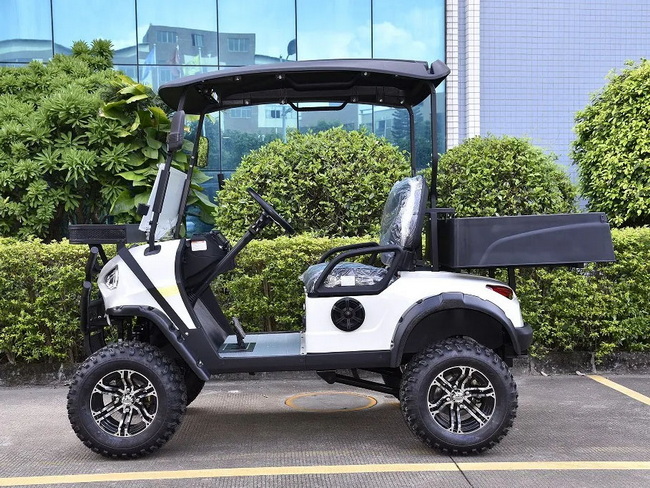
Beyond raw capability, safe behavior on hills is critical for every electric golf cart operator. Safety depends on the vehicle's design, the condition of its components, and the driving habits of users.[10][3]
Climbing or descending at improper angles can increase the risk of instability. To keep the electric golf cart stable, operators should always approach slopes head‑on rather than diagonally, especially when the path is narrow or the side slope is significant.[3]
A low center of gravity, wide track width, and carefully tuned suspension all help reduce rollover risk on hills. OEM manufacturers can adapt these parameters to ensure that each electric golf cart platform meets local regulations and safety expectations.[5][3]
Effective braking is essential when an electric golf cart travels downhill. Many modern systems use mechanical brakes combined with regenerative features to slow the electric golf cart while returning some energy to the batteries.[4][3]
Drivers should reduce speed before entering a steep descent and avoid sudden braking that might cause wheel lock or loss of traction. Regular inspection of brake pads, cables, hydraulic lines, and parking brake mechanisms keeps the electric golf cart safe for repeated use on hills.[11][10]
Correct driving habits greatly reduce stress on the electric golf cart and improve safety.[10][3]
- Use a smooth, steady throttle when climbing and avoid abrupt acceleration, which increases current draw and can cause wheel spin.[4][10]
- Avoid stopping midway on steep slopes whenever possible, because restarting places extra load on the electric golf cart motor and controller.[12][3]
- Respect passenger and cargo limits and do not overload the electric golf cart, especially in hilly environments.[9][3]
Training programs and clear usage guidelines help fleets ensure that every driver handles the electric golf cart responsibly on hills.[10]
Operating on hills does not only change driving behavior; it also influences maintenance cycles and component lifespan for an electric golf cart.[11][8]
Repeated climbing draws higher currents, causing deeper discharge cycles. Without appropriate capacity and proper charging, this can shorten the service life of the electric golf cart's battery pack.[8][9]
To support long‑term performance, operators should:
- Choose adequate capacity and, when possible, higher‑performance chemistries for electric golf carts in hilly environments.[8][3]
- Follow consistent charging routines that avoid frequent complete depletion, helping the electric golf cart maintain capacity over many cycles.[9]
Monitoring tools that track voltage, temperature, and cycle count also help fleet managers optimize battery usage for each electric golf cart.[4]
Frequent hill work places more load on motors, controllers, gearboxes, tires, and brakes. Over time, this leads to more heat, wear, and the need for closer inspection.[11][3]
- Motors and controllers should be checked for overheating signs, unusual noise, or performance drops in any electric golf cart that climbs hills regularly.[11][4]
- Tires and suspension components experience higher forces on slopes and uneven ground, so both should be inspected and replaced according to conservative schedules for hill‑going electric golf carts.[3]
- Brake maintenance is especially important; worn or misadjusted brakes can dramatically reduce downhill safety for an electric golf cart.[11][3]
With a planned preventive maintenance program, fleets can keep every electric golf cart in safe working order even under demanding hill conditions.[9]
For international wholesalers, brand owners, and fleet operators, working with a professional OEM manufacturer makes it possible to configure electric golf carts specifically for hilly markets.[2][5]
A flexible platform allows one core electric golf cart chassis to be delivered in multiple versions tailored to different terrains and applications. Options typically include:[5]
- Several motor power levels and torque ratings to match expected slopes and payloads for each electric golf cart.[6]
- Lead‑acid or lithium battery choices, with varied voltages and capacities for different range and hill‑climbing requirements.[8][3]
- Multiple tire and suspension packages to adapt each electric golf cart to golf courses, paved communities, or off‑road trails.[3][10]
By combining these options, an OEM can supply golf, sightseeing, low‑speed vehicle, hunting, and utility configurations from the same electric golf cart family.[2][5]
Technical documents and training support are crucial for markets that rely on electric golf carts in hilly environments.[10][3]
- Clear manuals describe recommended slopes, maximum loads, and safe driving practices for each electric golf cart model.[3]
- Training resources help dealers explain proper usage and basic troubleshooting to end users so that each electric golf cart is operated within its design envelope.[10]
- After‑sales support offers spare parts, upgrade paths, and maintenance guidance to keep electric golf carts performing reliably on hills over many years.[9][11]
With these elements in place, overseas partners can confidently promote electric golf carts as capable, safe, and efficient solutions for hillside resorts, communities, and working environments.[2][5]
A modern electric golf cart can absolutely climb hills, provided it is specified, loaded, and driven according to clear engineering and safety principles. Motor torque, controller capacity, battery voltage and chemistry, total weight, tire traction, and terrain conditions all interact to define the real‑world climbing ability of an electric golf cart. By collaborating with a specialized OEM and selecting appropriate configurations for golf courses, resorts, residential communities, hunting, and utility tasks, overseas brands can offer electric golf carts that handle hills with confidence, comfort, and long‑term reliability.[1][4][8][5][2][3]
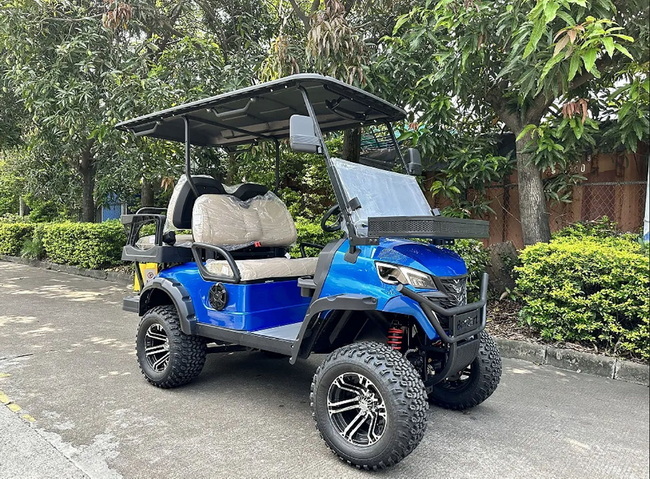
Most standard electric golf carts are designed for moderate slopes and can typically manage inclines in the range of about 15–20% grade when properly loaded and maintained. Steeper slopes may be possible only for short distances or with upgraded motors and batteries in a hill‑optimized electric golf cart.[1][5][3]
An electric golf cart slows down on hills because the motor faces higher resistance from gravity and must draw more current from the battery pack. To protect the system from overheating or overload, the controller often limits current, which reduces speed as the electric golf cart climbs.[4][8][11]
Lithium‑ion batteries maintain voltage more consistently under heavy load, so an electric golf cart equipped with lithium packs usually climbs hills with less sag and more stable acceleration. Lithium batteries also handle frequent deep cycling better than traditional lead‑acid options when properly managed, which benefits electric golf carts that frequently operate on steep routes.[8][9][3]
In environments with frequent or long inclines, a high‑torque motor greatly improves the ability of an electric golf cart to accelerate and maintain speed while carrying passengers or cargo. High‑torque setups reduce strain on the system and provide more predictable performance and safety for hill‑going electric golf carts.[7][6][4][5]
Safe hill driving includes approaching slopes straight on, using smooth throttle inputs, and reducing speed before descending. Avoid sudden braking, respect load ratings, and ensure regular inspection of brakes, tires, and suspension so that your electric golf cart remains stable and controllable on inclines.[3][10]
[1](https://evolutionelectricvehicle.com/how-steep-can-an-electric-golf-cart-climb-lets-break-it-down-with-evolution/)
[2](https://taraelectricvehicles.com/blog/2025/08/22/can-electric-golf-carts-climb-hills/)
[3](https://www.langqinggolfcart.com/how-steep-can-an-electric-golf-cart-clime.html)
[4](https://evtitan.com/electric-golf-carts-understanding-motor-power-and-performance/)
[5](https://taraelectricvehicles.com/blog/2025/06/13/best-electric-golf-cart-for-hills-top-models-for-climbing-steep-terrain/)
[6](https://www.langqinggolfcart.com/what-size-electric-motor-for-golf-cart.html)
[7](https://petesgolfcarts.com/product/electric-motors-controllers-switches-and-solenoids/motors/club-car-golf-cart-electric-motor-torque-series/)
[8](https://www.langqinggolfcart.com/what-incline-can-a-electric-golf-cart-climb.html)
[9](https://www.aykinland.com/electric-golf-cart-climbing-ability/)
[10](https://www.kandiamerica.com/electric-off-road-golf-cart-riding-tips/)
[11](https://jsgolfcarts.com/blog/golf-cart-loses-power-going-uphill/)
[12](https://www.buggiesgonewild.com/showthread.php?t=88556)


