


Views: 222 Author: Leah Publish Time: 2026-01-16 Origin: Site


Content Menu
● How Wet Can an Electric Golf Cart Safely Get?
● What Happens When an Electric Golf Cart Gets Wet?
● Key Vulnerable Components in an Electric Golf Cart
>> Batteries and Battery Compartment
>> Wiring Harnesses, Connectors, and Accessories
● Safe Operating Practices in Wet Weather
>> Before Driving in Wet Conditions
>> While Driving in Light Rain
● How to Protect an Electric Golf Cart from Water Damage
>> Product Configuration and OEM Design
● What to Do If an Electric Golf Cart Gets Very Wet
● OEM Opportunities for Weather‑Ready Electric Golf Carts
● FAQ About Electric Golf Carts and Water
>> 1) Can an electric golf cart be driven in the rain?
>> 2) Is an electric golf cart waterproof?
>> 3) What should I do if my electric golf cart goes through a deep puddle?
>> 4) How can I protect my electric golf cart from rain damage?
>> 5) Does rain affect the performance and range of an electric golf cart?
An electric golf cart can safely tolerate light rain and surface moisture, but it is not fully waterproof and should never be used in deep water, heavy storms, or flooding environments. To protect the investment and ensure long‑term reliability, owners, fleet managers, and OEM buyers must understand how water interacts with batteries, motors, controllers, and wiring in an electric golf cart and apply clear protection and maintenance strategies.[1][2]
BorCart, as a professional Chinese manufacturer of electric vehicles and automotive components, focuses on electric golf carts, sightseeing buses, low‑speed vehicles, hunting vehicles, and multi‑purpose vehicles, providing OEM service to overseas brands, wholesalers, and manufacturers that require safe and durable electric golf cart solutions for wet environments.[3]
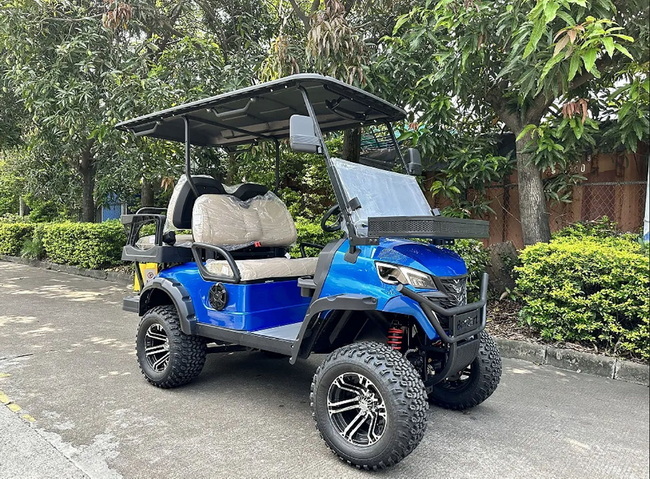
Most electric golf carts are engineered to withstand everyday outdoor exposure such as light drizzle, wet grass, or splashes from shallow puddles encountered during normal driving. However, this water resistance has strict limits, and an electric golf cart should not be treated as a waterproof vehicle that can drive through deep water or stand in heavy rain for long periods.[4][1]
1- Conditions generally acceptable for an electric golf cart:
- Light rain while driving back to the clubhouse, villa, or parking shed.[1]
- Brief exposure to damp fairways, garden paths, or community roads.
- Occasional splashes from shallow puddles that do not reach the motor or battery compartment.[5]
2- Conditions that should be avoided:
- Intense, long‑lasting rainfall or thunderstorms, especially with strong winds and lightning.[4]
- Water levels high enough to touch the bottom of the chassis, motor casing, or battery tray.[1]
- Flooded golf course areas, deep drainage channels, or off‑road creeks that submerge parts of the electric golf cart.[2]
In practice, the user should think of an electric golf cart as water‑resistant for light rain, but never as a marine or amphibious vehicle, and OEM product documentation should clearly describe these limitations.[5][1]
When water reaches key components of an electric golf cart, the damage may not appear immediately but can develop over time through corrosion, insulation breakdown, and intermittent electrical faults. Understanding the short‑term and long‑term effects of moisture helps both users and OEM partners to manage risk more effectively.[2][1]
1- Short‑term effects:
- Light rain may cause minor discomfort for passengers but usually does not affect performance if the electric golf cart is moved promptly to shelter.[4]
- Reduced visibility, slippery surfaces, and longer braking distances can increase accident risks even if components remain electrically safe.[2]
2- Long‑term effects:
- Repeated spraying and splashing under the chassis allows moisture to accumulate on wiring, terminals, and mechanical parts, accelerating rust and corrosion.[6]
- Water entry into the motor or controller can gradually damage insulation and circuit boards, resulting in unexpected shutdowns or reduced power after weeks or months.[1][2]
- Persistent moisture in the battery area promotes oxidation of terminals and connectors, which increases resistance, reduces capacity, and may shorten the life of the electric golf cart battery pack.[5][2]
As a result, even if an electric golf cart seems to “survive” heavy rain once or twice, incorrect use in wet conditions can sharply reduce its service life and increase warranty claims for distributors.[2][1]
The overall safety of an electric golf cart in wet conditions depends largely on how well the most sensitive components are protected from water. When designing or selecting an electric golf cart for commercial fleets or OEM branding, special attention should be given to these areas.[6][2]
The battery pack is the heart of every electric golf cart and is particularly sensitive to water intrusion.[2]
1- Risks:
- Water on terminals and bus bars can create conductive paths, causing small leakage currents or, in severe cases, short circuits.[2]
- Corroded terminals and oxidized connectors lead to voltage drops and unstable performance in the electric golf cart.[5]
2- Design and maintenance countermeasures:
- Use well‑sealed battery trays and covers while still ensuring proper ventilation.[2]
- Apply anti‑corrosion coatings or protective sprays on terminals and regularly clean oxidation.
The traction motor and its controller provide the driving force for the electric golf cart and are critical for safe operation.[1]
1- Risks:
- Water that reaches the motor through open vents or damaged seals may degrade insulation and cause internal shorts.[1]
- Moisture in the controller housing can corrode circuit boards, connectors, and power electronics, leading to erratic throttle response or complete failure.[2]
2- Design and maintenance countermeasures:
- Specify housings with appropriate sealing and protective covers for off‑road or rainy‑region electric golf cart models.[2]
- Keep drain paths under the vehicle clear so that water does not pool around the motor or controller mounting area.
The wiring network is the communication and power distribution system of an electric golf cart, and many of its parts are exposed beneath the body.[6]
1- Risks:
- Unsealed connectors facing upward or in splash zones collect water and dirt, which slowly penetrate to the conductor surfaces.[6]
- Accessories such as lights, horns, displays, and USB ports sometimes use low‑cost connectors that are less resistant to moisture.[7]
2- Design and maintenance countermeasures:
- Use automotive‑grade or IP‑rated sealed connectors, especially in external and under‑body positions.[8][7]
- Fix wiring harnesses securely to prevent chafing and cracking that may expose copper conductors.
Even with good component protection, user behavior is a major factor in the wet‑weather safety of an electric golf cart. Simple operating rules greatly reduce the risk of both accidents and water damage.[9][6]
1- Inspect the electric golf cart briefly:
- Check tire tread depth and pressure; worn tires hydroplane more easily on wet grass, asphalt, or concrete.[10][5]
- Confirm that the brakes feel consistent and responsive in a short test at low speed.
2- Prepare for reduced traction:
- Advise drivers or renters that stopping distance will be longer and cornering must be more gentle in wet weather.[2]
- For fleet operators, add warning labels or dashboard reminders to each electric golf cart used in rainy seasons.
1- Adjust driving style:
- Drive more slowly than usual and avoid sudden acceleration or sharp steering inputs with the electric golf cart.[9]
- Increase following distance behind other carts or vehicles to allow more time to brake.[11]
2- Avoid critical hazards:
- Do not drive across obvious puddles, drainage ditches, or low‑lying turf sections that appear glossy or muddy.[9][5]
- Avoid steep slopes and side‑tilts, as wet surfaces increase the chance of sliding or tipping.
1- Seek shelter promptly:
- As rainfall intensifies, bring the electric golf cart back to a garage, shed, or covered parking area as soon as it is safe.[4]
- If no building is available, park under a carport or use a protective cover, making sure water does not pool around the wheels and chassis.[6]
2- Do not force the electric golf cart through deep water:
- If the path ahead is clearly flooded, turn around or stop and wait instead of attempting to cross.[1][2]
These practical rules can be converted into safety instructions, stickers, and training materials for any electric golf cart fleet in resorts, communities, campuses, or industrial parks.[9][4]
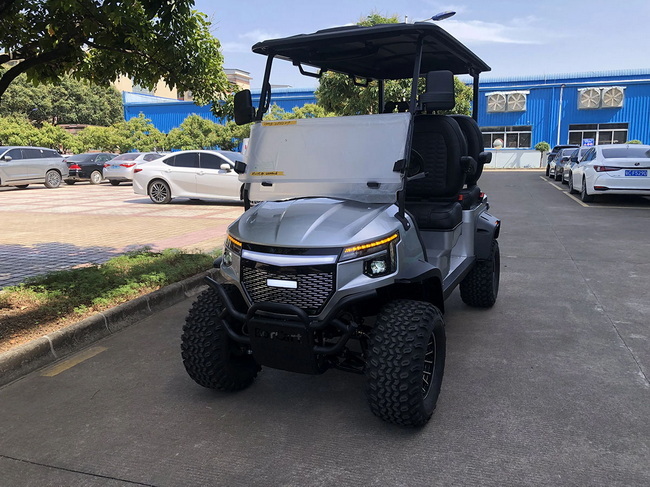
Protection strategies can be divided into product configuration, daily use habits, and storage methods, all of which are important for long‑term reliability of an electric golf cart.[3][6]
For brands working with OEM manufacturers, wet‑weather performance should be considered at the specification stage.[2]
1- Recommended configuration items:
- Sealed battery boxes and controller housings specified for regions with frequent rain or coastal humidity.[2]
- IP‑rated switches, lights, and connectors for electric golf carts used in seaside resorts or rainy climates.[7][8]
- Optional rain curtains, enclosures, and windshields with wiper systems for passenger comfort and visibility.[11][6]
A manufacturer like BorCart can adjust harness layouts, sealing materials, and component brands according to the target market to enhance protection for each electric golf cart model.[3]
1- After light or moderate rain:
- Wipe down the exterior surfaces and seating areas so moisture does not sit on metal fasteners and exposed hardware.[6]
- Pay special attention to the battery area and dashboard of the electric golf cart, where small water droplets may linger.[4]
2- Electrical and mechanical checks:
- Regularly inspect visible connectors and cables for cracking, discoloration, or greenish corrosion deposits.[6]
- Listen for unusual noises from the motor or wheel bearings after the electric golf cart has been used in wet conditions.[2]
Good storage and charging practices are essential for any electric golf cart fleet operating in humid or rainy regions.[3]
1- Storage:
- Store electric golf carts indoors whenever possible, or at least under covered structures that reduce direct rain exposure.[9][4]
- Use breathable covers designed for electric golf carts to avoid trapping condensation while still blocking rain and UV radiation.[3]
2- Charging:
- Keep chargers on shelves or stands instead of directly on the floor to prevent water contact.[3]
- Arrange charging cables with a “drip loop” so rainwater runs down and away from the plug rather than into it.[3]
Despite precautions, situations may arise where an electric golf cart encounters more water than intended, such as unexpected flooding or accidental driving through deep puddles. A quick, structured response minimizes the damage and increases the chance of successful repair.[1][2]
1- Stop the electric golf cart:
- Switch off the ignition and, if trained, disconnect the main power or battery pack connection.[1]
- Do not repeatedly attempt to start or drive an electric golf cart that has clearly been submerged or heavily sprayed.[1]
2- Move to a safe, dry place:
- If the electric golf cart can still roll safely, push or tow it to a covered, ventilated area.[2]
1- Visual inspection:
- Check the battery compartment, motor area, and controller for standing water, mud, or debris that may hold moisture.[1]
- Examine exposed wiring and connectors for obvious water droplets, cracks, or damage.
2- Drying steps:
- Allow adequate time for the electric golf cart to dry naturally before attempting to power it again.[1]
- In serious cases, qualified technicians may need to open enclosures and use controlled airflow to dry internal parts.[2]
1- Diagnostic evaluation:
- After heavy water exposure, an electric golf cart should undergo professional testing for insulation resistance, controller integrity, and battery health.[2]
- Fleet managers and distributors should have clear service protocols to handle such incidents across their electric golf cart fleets.[1]
For overseas brands, wholesalers, and rental operators, differentiating products with better wet‑weather capability can be a competitive advantage in the electric golf cart market. Working with a dedicated OEM manufacturer allows this performance to be built into the product from the beginning.[3][2]
1- Customizable wet‑weather features:
- Enhanced sealing designs for high‑rainfall regions and coastal resorts using electric golf carts.[2]
- Reinforced anti‑corrosion coatings on frames, under‑body parts, and fasteners.[6]
- Upgraded electrical systems with high‑grade connectors, harness protection, and IP‑rated accessories for demanding environments.[8][7]
2- Application‑specific solutions:
- Golf courses and resorts: focus on passenger comfort, clear visibility, and reliable operation on wet fairways for each electric golf cart used in the fleet.[9]
- Residential communities and campuses: prioritize safety features, braking performance, and minimal downtime in rainy seasons.[4]
- Hunting and multi‑purpose vehicles: emphasize enhanced ground clearance, splash protection, and ruggedized components for off‑road use of electric golf carts.[2]
By specifying these features, brands can market their electric golf cart lines as durable, all‑weather mobility solutions that still respect the limits of water resistance.
An electric golf cart can get wet to a limited extent, particularly in light rain and normal outdoor humidity, but it is not fully waterproof and should never be treated like a vehicle designed for deep water or flooding. Understanding how water affects batteries, motors, controllers, wiring, and accessories enables safer operation, better maintenance, and a longer lifespan for every electric golf cart in personal or fleet use. For overseas brands, wholesalers, and OEM partners, working closely with a specialized manufacturer to design moisture‑resistant electric golf carts and to educate end users is the key to delivering reliable performance in all seasons.[4][3][6][1][2]
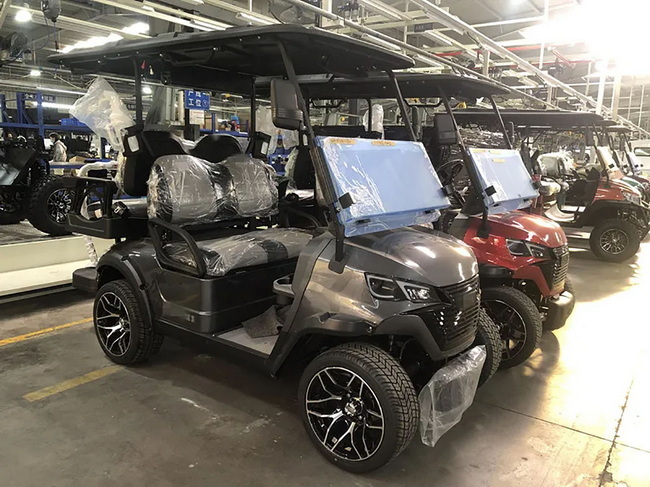
Yes, an electric golf cart can usually be driven in light rain if the driver reduces speed, avoids puddles, and returns to shelter as soon as practical. However, operation in heavy rain, storms, or standing water should be avoided because it increases the risk of accidents and water damage to the electric golf cart.[9][4][1][2]
No, an electric golf cart is not fully waterproof; it is typically designed to be water‑resistant for light rain and splashes. While certain components like batteries or accessories may carry higher IP ratings, the complete electric golf cart system is not intended for immersion or continuous water exposure.[7][8][5][1]
If an electric golf cart passes through water that reaches the chassis or higher, stop as soon as it is safe, switch off the power, and move it to a dry location. Then inspect key areas such as the battery compartment, motor, and controller for water, allow everything to dry thoroughly, and seek professional service if any unusual behavior appears.[1][2]
To protect an electric golf cart, store it under cover, use a quality rain cover when outdoors, and keep electrical connections clean and secure. For fleets or demanding environments, choose electric golf carts with sealed components, anti‑corrosion treatment, and weather‑resistant accessories specified at the OEM level.[8][3][6][2]
Rain can indirectly reduce the effective performance of an electric golf cart by reducing traction, increasing rolling resistance, and, in cold wet weather, lowering battery efficiency. Drivers may notice slower acceleration, longer braking distances, and slightly shorter practical range when using electric golf carts in wet, cold, or windy conditions.[3][2]
[1](https://taraelectricvehicles.com/blog/2025/08/22/can-an-electric-golf-cart-get-wet/)
[2](https://evtitan.com/how-weather-affects-electric-golf-cart-performance/)
[3](https://taraelectricvehicles.com/blog/2025/11/06/how-to-protect-your-electric-golf-cart-in-bad-weather-a-complete-guide/)
[4](https://www.grahamgolfcars.com/blog/using-your-golf-cart-in-the-rain--58347)
[5](https://jsgolfcarts.com/blog/can-a-golf-cart-get-wet/)
[6](https://etto.com/blog/using-your-golf-cart-in-the-rain/)
[7](https://www.facebook.com/groups/GolfCartsModified/posts/3988087304797628/)
[8](https://electrictrolleys.com/products/motocaddy-m1-dhc-lithium-2025)
[9](https://www.revel42.com/driving-your-electric-golf-cart-in-the-rain/)
[10](https://www.devergolfcars.com/blog/using-your-golf-cart-in-the-rain--34788)
[11](https://www.powerequipmentsolutions.com/blog/best-practices-for-driving-a-golf-cart-in-the-rain?Year=2024&Month=11)


