


Views: 222 Author: Leah Publish Time: 2026-01-09 Origin: Site


Content Menu
● Club Car's Manufacturing Footprint
● What “Made in USA” Means for a Golf Car
● USA Assembly vs Global Sourcing
● How the Global Golf Car Industry Works
● Chinese Golf Car Manufacturers' Role
● BorCart: A Chinese OEM Golf Car Partner
● BorCart's Golf Car Product Range
● How BorCart Serves Overseas OEM Clients
● Club Car vs Imported OEM Golf Cars
● Key Advantages of U.S.‑Assembled Club Car Golf Cars
● Where Imported OEM Golf Cars Excel
● How Buyers Can Evaluate Golf Car Options
● Future Trends in Golf Car Manufacturing
● FAQ
>> 1. Are all Club Car golf cars made in the USA?
>> 2. Does “Made in USA” mean every golf car part is American?
>> 3. Can foreign brands create their own golf car line with BorCart?
>> 4. Why do some buyers prefer U.S.‑assembled Club Car golf cars over imported options?
>> 5. What types of golf car products can BorCart provide as an OEM manufacturer?
Club Car is one of the most established names in the golf car industry, and many buyers want clear answers about where its vehicles are built. In reality, the story involves American assembly, a global supply chain and an increasingly competitive landscape in which Chinese OEM golf car manufacturers play a major role.[2][5][6]
This article looks at Club Car's manufacturing footprint, explains what “Made in USA” really means for a modern golf car, and shows how Chinese OEM partners like BorCart support foreign brands, wholesalers and manufacturers with electric golf car solutions.[3][4][1]
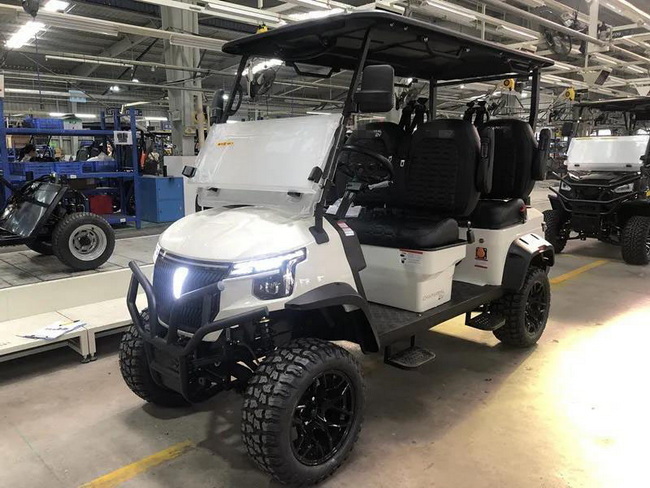
Club Car is headquartered in Evans, Georgia, where it operates its main production and assembly facilities for golf cars, utility vehicles and low‑speed vehicles. This site has been the core of the company's operations for decades, and it is where most golf car models for North America are assembled.[7][1][2]
To serve overseas customers, Club Car also maintains manufacturing operations in Wujiang, China, primarily focused on vehicles for the Asia‑Pacific market. This combination of U.S. and Chinese facilities lets the brand stay close to key customer regions while balancing logistics and cost.[6][1]
Many consumers assume that a “Made in USA” label on a golf car means every component is domestic, but this is rarely the case in a global industry. In most situations, the term refers to where final assembly happens rather than to the origin of each part in the golf car.[8]
Golf car manufacturers routinely source components such as motors, controllers, wiring harnesses, plastics and hardware from a network of international suppliers. With Club Car, the final assembly of many golf car models occurs in Georgia, yet some parts in each golf car may come from overseas factories, which is standard practice in vehicle manufacturing.[1][6][8]
When evaluating a golf car, it helps to distinguish between where the vehicle is assembled and where its parts are produced. For Club Car, key points include:[8]
- Golf cars for the U.S. market are generally assembled in Evans, Georgia.
- Some vehicles are made in China for regional markets, particularly in Asia‑Pacific.[1]
- Sub‑components in the golf car can be sourced worldwide, including from Asian and European suppliers, like many other electric vehicle products.[6][8]
This mixed model allows Club Car to deliver high‑quality golf car products with consistent assembly while still benefiting from global component sourcing.[7][6]
The golf car market has grown into a global ecosystem of brands, suppliers and OEM producers that serve courses, resorts, residential communities and industrial users.[5][6]
- Long‑established brands such as Club Car, E‑Z‑GO and Yamaha Golf‑Car dominate the premium segment and maintain strong networks of dealers and service centers.[2][6][7]
- Chinese electric vehicle manufacturers produce a vast number of electric golf car and utility models, often at lower unit costs, for export worldwide.[9][5][7]
- OEM factories can design and build complete golf car lines for foreign brands, giving importers and distributors the ability to launch “their own” golf car models quickly.[4][6]
This ecosystem means buyers can choose between a U.S.‑assembled Club Car golf car and a range of imported OEM golf car alternatives, each with different strengths in price, customization and support.[6][7]
China has rapidly become one of the leading production centers for electric golf car vehicles and related low‑speed transportation solutions. Chinese factories manufacture not only their own branded golf car ranges but also private‑label fleets that are sold under foreign brand names in overseas markets.[5][9][7][6]
These manufacturers focus heavily on electric golf car technologies, experimenting with different battery types, motor configurations and body designs to target golf courses, resorts, campuses and industrial users. As a result, many new golf car brands that appear in Western dealerships are actually built in Chinese OEM plants and marketed with local badges.[10][9][5][6]
Guangzhou BorCart Electric Vehicle Co., Ltd. represents the new generation of specialized Chinese golf car and low‑speed vehicle manufacturers. The company focuses on electric golf car products, sightseeing buses, hunting vehicles, low‑speed vehicles and multi‑purpose utility vehicles for global customers.[11][3][4]
BorCart provides OEM and customization services, enabling foreign brand owners, wholesalers and manufacturers to develop full golf car lineups without building their own factories. The company designs and manufactures 2‑seater and 4‑seater golf car models, utility golf car vehicles and other electric golf car products that can be branded, styled and configured to match each client's market positioning.[12][13][3][4]
BorCart offers a diverse portfolio of electric golf car models to suit different applications and end‑users. Key categories include:[3][4]
- Standard golf course golf car vehicles with 2 seats, 4 seats or more, suitable for daily course use and private communities.
- Sightseeing and shuttle golf car style vehicles capable of transporting multiple passengers around resorts, campuses, parks and tourist attractions.[4][11]
- Utility‑focused golf car units equipped with cargo beds, racks and tow options for maintenance teams, warehouses and industrial parks.[13][3]
- Hunting and off‑road oriented golf car configurations featuring lifted suspensions, all‑terrain tires and accessory mounting options for outdoor enthusiasts.[3][4]
Each of these golf car types can be tailored with different bodies, colors, seating layouts, roofs and accessories, allowing partners to target diverse niches under a unified brand image.[4][3]
For overseas businesses that want to launch or expand golf car offerings, BorCart positions itself as a one‑stop OEM solution provider. Its services typically cover:[11][3][4]
- Design and engineering for new golf car bodies, dashboards and lighting systems based on client specifications.
- Powertrain selection, including lead‑acid or lithium batteries, AC motors and controllers optimized for the target golf car application and terrain.[3][4]
- Branding integration, so the finished golf car carries the client's logo, model names and color schemes, aligning perfectly with existing product lines.[4][3]
- Compliance and testing support to help golf car fleets meet regulations in destination markets, such as braking performance, lighting rules and electrical safety.[3][4]
This approach lets foreign companies concentrate on marketing, sales and after‑sales support while relying on BorCart for the design and production of the golf car hardware.[4][3]
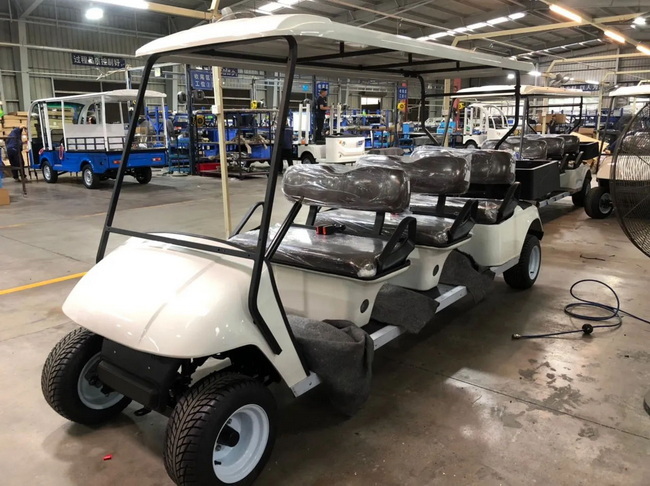
When comparing a Club Car golf car with an imported OEM golf car, buyers should look beyond country‑of‑origin labels and examine practical factors. Important aspects include:[10][7]
- Build consistency and quality control over large fleets of golf cars.
- Availability of spare parts and experienced technicians.
- Warranty terms and long‑term service commitments.
- Fit with local regulations and road‑use rules for golf car or low‑speed vehicles.[14][7]
Club Car's long track record and established dealer base give it a strong position for fleets that demand high uptime and predictable maintenance. At the same time, serious OEM suppliers in China, such as BorCart, continue to invest in engineering, testing and quality programs to improve the long‑term reliability of their electric golf car offerings.[9][2][7][3]
Many buyers still lean toward U.S.‑assembled Club Car golf car models, especially for high‑usage fleets at golf courses and resorts. Some of the main perceived advantages are:[2][7]
- Reputation: Club Car has decades of experience producing golf car vehicles, and its name recognition reassures decision‑makers at courses and clubs.[7][2]
- Dealer and service network: An extensive network of authorized dealers can supply genuine parts, perform repairs and support fleet management over many years.[2][7]
- Resale value: Established brands with strong reliability records often maintain higher resale prices than lesser‑known imported golf car brands.[14][7]
These benefits matter most to operators who view each golf car as a long‑term asset rather than a short‑term cost.[7]
Imported OEM golf car products from reputable Chinese manufacturers can be particularly attractive in certain situations. They often excel in areas such as:[5][9][3]
- Pricing flexibility for large fleets, which can be crucial for new developments, real‑estate communities or emerging‑market resorts.
- Custom styling and layout options for golf car vehicles, allowing brands to differentiate themselves visually from legacy competitors.
- Niche configurations, such as specialized hunting golf car units or multi‑purpose utility golf car vehicles, created quickly at OEM factories.[3][4]
For foreign brands that do not own factories, working with an OEM like BorCart provides a way to compete effectively in the golf car space while staying asset‑light.[4][3]
When choosing between a Club Car golf car and an imported OEM golf car, buyers can follow a few practical steps.[10][7]
1. Clarify usage scenarios
- Determine whether the golf car will be used on a golf course, in a resort, on public streets as a low‑speed vehicle, or in industrial environments.
- Estimate daily operating hours, passenger loads and terrain to identify the right golf car powertrain and configuration.[6]
2. Compare technical specifications
- Review motor power, battery type, range, charging time and braking systems for each golf car model under consideration.
- Assess chassis construction, suspension design and corrosion protection, especially for coastal or humid environments.[6][7]
3. Investigate service and support
- Check local availability of trained technicians for the chosen golf car brand.
- Confirm parts supply channels, warranty coverage and response times for repairs.[14][7]
4. Consider total cost of ownership
- Look at long‑term energy costs, maintenance needs and expected lifespan of the golf car rather than just initial purchase price.[7][6]
- Evaluate potential resale value and demand for used golf car units of each brand in the local market.[14][7]
Taking these steps helps ensure that a chosen golf car—whether a Club Car or an imported OEM golf car—delivers real value over its full lifecycle.[6][7]
The golf car sector is closely tied to broader trends in electric mobility and low‑speed transport. Manufacturers in the U.S. and China are investing in technologies that affect both performance and sustainability for every type of golf car.[7][6]
Key trends include:
- Increased use of lithium battery packs in golf car models, which can reduce weight, shorten charging times and extend service life compared with conventional lead‑acid batteries.[6][7]
- Smarter controllers and connectivity features that allow remote diagnostics, fleet management and optimized energy use for large golf car fleets.[6]
- Greater emphasis on design differentiation, with more stylish bodies and interior options to appeal to private owners who use a golf car as a lifestyle vehicle in gated communities and resorts.[5][6]
Both Club Car and leading Chinese OEMs like BorCart are aligning product development with these trends to stay competitive in global golf car markets.[3][4][6]
Most Club Car golf cars for the North American market are assembled in Evans, Georgia, giving them a solid claim to U.S. assembly even though parts come from a global supply chain. At the same time, Club Car operates production in China for regional markets and competes directly with a growing wave of Chinese OEM golf car manufacturers that export electric golf car fleets worldwide. For buyers and brand owners, the key is to look beyond labels and carefully match each golf car choice—whether a U.S.‑assembled Club Car or an OEM golf car from a partner like BorCart—to their requirements for quality, customization, price and long‑term support.[8][1][5][4][7][3][6]
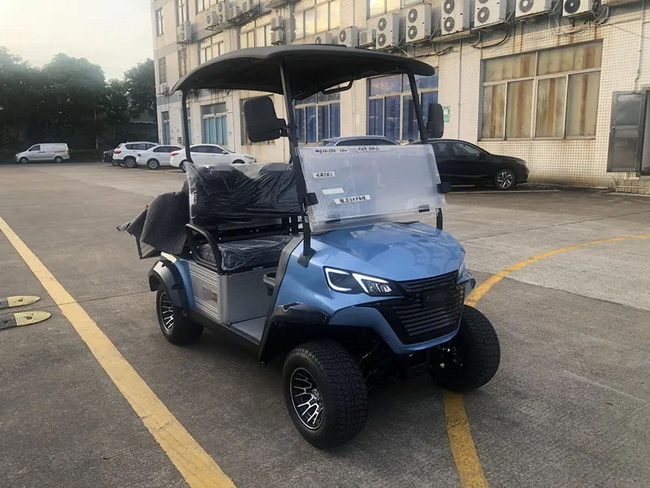
No, not all units are made in the USA. Most Club Car golf cars for North America are assembled in Evans, Georgia, while some vehicles for Asia‑Pacific and other regions are produced in Wujiang, China as part of the brand's global strategy.[1]
In the golf car industry, “Made in USA” usually refers to final assembly, not to the origin of every component. Manufacturers such as Club Car commonly use internationally sourced parts in golf car production, including electronics and structural components, while assembling the golf car in U.S. plants.[8][6]
Yes, BorCart offers OEM services that allow foreign brands, wholesalers and manufacturers to develop custom‑branded golf car product lines. Partners can specify design, performance, colors and logos, and BorCart will engineer and manufacture the finished electric golf car models in its Chinese facilities for export.[11][4][3]
Many buyers value the long history, proven reliability and extensive service network associated with U.S.‑assembled Club Car golf cars. These factors can translate into dependable performance, easier maintenance arrangements and stronger resale value compared with less established imported golf car brands.[2][14][7]
BorCart can supply a wide range of electric golf car solutions, including 2‑seater and 4‑seater golf car models, sightseeing shuttles, hunting golf car vehicles and multi‑purpose utility golf car units. Each golf car can be customized for seating, body styling, accessories and branding to meet the specific needs of OEM customers in different global markets.[12][13][11][4][3]
[1](https://www.clubcar.com/en-us/resources/faq)
[2](https://www.clubcar.com/en/homepage)
[3](https://www.borcartev.com/chinese-golf-cart-brands/)
[4](https://www.borcart.com/golf-carts.html)
[5](https://ecoplaneta.com/golf-cart-brands-and-manufactures/)
[6](https://finance.yahoo.com/news/global-golf-cart-oems-market-060000587.html)
[7](https://intermountaingolfcars.com/the-battle-for-american-greens-how-chinese-golf-cart-imports-challenge-industry-standards/)
[8](https://buggiesgonewild.com/showthread.php?t=136146)
[9](https://www.kinghike.com)
[10](https://www.clearcreekgolfcar.com/blog/choosing-american-made-over-chinese-made-golf-cars--67316)
[11](https://www.borcart.com)
[12](https://www.borcart.com/top-10-4-seater-golf-cart-manufacturers-in-china.html)
[13](https://www.borcart.com/top-10-utility-golf-carts-manufacturers-in-china.html)
[14](https://www.reddit.com/r/golfcarts/comments/1m3h110/usitcs_july_17_ruling_on_imported_chinese_golf/)


