


Views: 222 Author: Leah Publish Time: 2026-01-12 Origin: Site


Content Menu
● How Speed Is Defined for Golf Carts
● Top Speed: Gas vs Electric Golf Cart
● Acceleration and Driving Feel
● Speed Over Distance and Runtime
● Regulations, Programming, and Safety Limits
● Upgrading Speed on Electric and Gas Carts
● Terrain, Load, and Real‑World Speed
● Comfort, Noise, and Perceived Speed
● Operating Costs Across Different Speed Profiles
● Environmental Considerations and Access
● Choosing the Right Cart for Your Application
● Practical Scenarios Where Electric Feels Faster
● Summary: Which Is Faster Overall?
● FAQ About Gas vs Electric Golf Cart Speed
>> 1. Are electric golf carts faster than gas carts?
>> 2. How fast does a standard electric golf cart go?
>> 3. Can I safely increase the speed of my electric golf cart?
>> 4. Does battery charge level affect electric golf cart speed?
>> 5. Which is better for steep hills: gas or electric golf cart?
Gas and electric golf carts offer very similar top speeds in everyday use, but modern electric golf cart designs often match or slightly exceed gas carts, especially in street‑legal low‑speed vehicle configurations. For most players, resort guests, and community users, the real difference is not only the number on the speedometer but how quickly each cart accelerates, how it behaves on hills, and how consistently it maintains speed under load.[1][2]
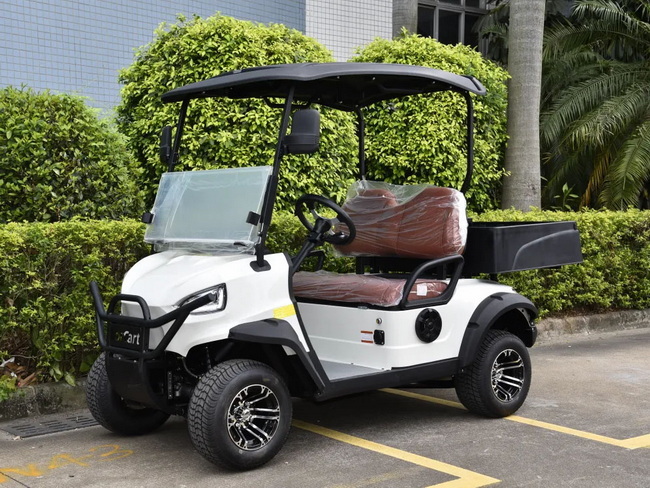
When comparing gas and electric platforms, it is helpful to separate several aspects of performance instead of focusing only on top speed. Key speed‑related concepts include:[3]
- Maximum governed speed (what the cart is programmed to reach)
- Typical operating speed on golf courses or streets
- Acceleration response from standstill and at low speeds
- Ability to maintain speed with passengers, cargo, or hills
Most standard golf carts, regardless of powertrain, are engineered for a top speed around 12–15 mph in stock form. This speed range is sufficient for pace of play on a course and for safe travel in residential and resort environments.[4][3]
On traditional golf courses, both gas and electric golf cart fleets are usually delivered with similar top speeds, typically around 12–14 mph, so there is little practical difference in outright speed. Course operators frequently adjust programming or governor settings to keep both types within this narrow band to protect turf and ensure safety for golfers.[5][3]
In modern street‑legal low‑speed vehicle classes, the situation changes slightly in favor of the electric golf cart. High‑end electric models from major brands often reach about 23–25 mph from the factory, while equivalent gas models are commonly specified closer to 19 mph in many line‑ups. That means, within regulated categories, an electric golf cart can be objectively faster on paper while still remaining compliant with road rules.[1]
The area where an electric golf cart clearly stands out is acceleration. Electric motors deliver maximum torque from zero rpm, which translates into:[2]
- Strong initial launch from a standstill
- Smooth, quick response when the driver presses the pedal
- Confident performance when re‑accelerating after slowing for pedestrians, curves, or intersections
This immediate response makes an electric golf cart feel livelier and more agile, even when its official top speed is similar to a gas cart. Gas models generally build power more gradually as the engine revs up through the transmission or clutch system, so they can feel less responsive at very low speeds, particularly on inclines or with heavier loads.[6][2]
For shuttle applications in resorts, hotels, campuses, airports, and theme parks, this quick, predictable acceleration helps drivers maintain schedules and improves passenger comfort. When a fleet operator wants both smoothness and a sense of brisk performance, choosing an electric golf cart platform provides a very noticeable upgrade in driving feel.[2][1]
Speed is not just about how fast a cart can go once; it is also about how consistently it can maintain that performance throughout a day. In this area, gas and electric golf carts behave differently:[7]
- Gas carts maintain performance as long as there is fuel in the tank.
- Traditional lead‑acid electric systems can experience minor speed drops as the battery discharges.
- Modern lithium electric golf cart packs keep voltage more stable, helping maintain speed for a larger portion of the charge.[8]
For very long duty cycles on large campuses, industrial facilities, or agricultural settings, gas carts still appeal because refueling is quick and runtime can be extended simply by carrying more fuel. Nevertheless, as lithium technology becomes more common, many operators find that a properly sized electric golf cart fleet can cover typical daily routes comfortably between overnight charges.[7][8]
This means that, in real‑world conditions, the electric golf cart is often perceived as just as quick throughout the shift, while still providing the quiet and smooth character that users appreciate.[1]
Golf cart performance is tightly shaped by regulations in many regions. Authorities typically define:[4]
- Maximum speed for golf‑course or private‑property use
- Maximum speed for low‑speed vehicles on public roads
- Equipment requirements such as lights, mirrors, and seat belts for higher‑speed use
Most standard golf carts are limited to about 15 mph for safety, and many are programmed even lower for specific courses. Road‑legal low‑speed vehicles are often capped around 20–25 mph, which sets a hard ceiling on how fast a compliant gas or electric golf cart can travel on public streets.[8][4]
Manufacturers therefore adjust controllers, gearing, and engine governors to keep both gas and electric golf carts within these ranges, regardless of their theoretical capabilities. For a buyer comparing speed specs, it is crucial to remember that these figures are often regulatory, not purely mechanical, which is one reason why electric and gas carts appear so similar on paper.[4]
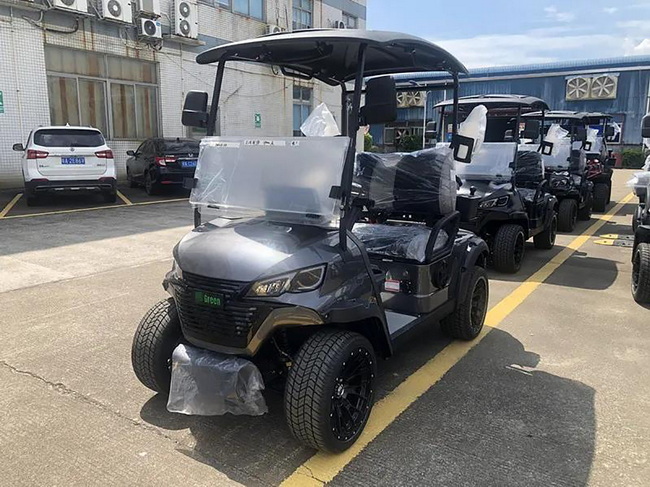
Many owners and fleet managers eventually explore performance upgrades for their vehicles to gain more speed, stronger hill‑climbing, or better towing capacity. The upgrade pathways differ between gas and electric platforms:[9]
- Electric golf cart upgrades typically focus on controllers, motors, and battery systems.
- Gas cart upgrades emphasize engine tuning, intake and exhaust changes, clutches, and final‑drive gearing.
On the electric side, adjusting controller programming can raise the governed speed within safe limits, and higher‑voltage or higher‑capacity packs (especially lithium) can support stronger acceleration without excessive heat or stress. In some configurations, modified electric carts can reach 35–40 mph, though such speeds are usually suitable only for private property and require enhanced braking, suspension, and safety equipment.[10]
Gas models can also be modified to achieve higher speeds through engine and drivetrain work, but these modifications are often more mechanical and labor‑intensive. As a result, for owners seeking straightforward, software‑assisted speed gains, the electric golf cart is commonly the more flexible platform.[9][10]
Real‑world performance depends on more than flat‑ground speed tests. Hills, surfaces, and payloads strongly influence how fast a cart can actually travel:[8]
- An electric golf cart with a robust motor and lithium batteries tends to handle hills well because its torque is available instantly at low speeds.[1]
- A gas golf cart relies on engine rpm and gearing; it can climb steep grades, but may require more throttle and can feel less smooth in transitions.[6]
When fully loaded with passengers, luggage, tools, or equipment, the electric golf cart's linear torque delivery makes it easier to get moving without jerks or hesitation. In hunting, sightseeing, or resort applications, where vehicles stop frequently and face varied terrain, these characteristics make electric fleets highly attractive.[2][1]
On extremely long or remote routes where fuel resupply is easier than charging, gas carts can still be the preferred choice for maintaining speed over many hours. However, for the majority of modern community and commercial use cases, especially where daily mileage is predictable, an electric golf cart provides a more refined and responsive experience.[7][8]
Perceived speed is heavily influenced by comfort factors and noise levels. A quiet vehicle often feels smoother and “faster without effort,” while a loud engine can feel busy even at moderate speeds.[2]
Electric golf carts operate with very low noise and minimal vibration. This offers several advantages:[1]
- Conversations between passengers are easier, even at higher speeds.
- Early‑morning or late‑evening use disturbs fewer residents or guests.
- Long rides feel more relaxing, which is important for sightseeing and shuttle operations.
Gas carts produce engine noise and exhaust smell, which some users associate with power and durability but which can be intrusive in quiet neighborhoods or premium resorts. For operators who want a modern, upscale feel, the calm, smooth behavior of an electric golf cart enhances perceived performance and user satisfaction at any given speed.[6][2]
How a cart is driven can affect its running costs, and those costs, in turn, influence how operators use speed. Electric golf carts generally offer:[2]
- Lower energy cost per mile, because electricity is often cheaper than gasoline.
- Reduced maintenance, with no oil changes and fewer moving engine parts.[1]
- Less wear on brakes when regenerative systems are available in some configurations.
These characteristics make it economical to run an electric golf cart at legal top speeds all day without worrying excessively about fuel bills or frequent servicing. Gas carts, by contrast, bring higher fuel and maintenance costs, especially when driven aggressively or used for long periods daily.[7][2]
For commercial fleets—such as resorts, campuses, logistics parks, and rental operations—these factors add up over time, often favoring a transition to electric golf cart solutions for both economic and performance reasons.[1]
Environmental performance indirectly affects how and where speed can be used. An electric golf cart produces no exhaust emissions at the point of use, which makes it suitable for:[8]
- Indoor or semi‑indoor spaces like large warehouses or exhibition centers (where local regulations allow)[8]
- Protected natural areas or eco‑resorts focusing on low‑impact transportation
- Urban districts with strict emissions rules
Gas carts emit exhaust and depend on fossil fuels, which can limit access in some environmentally sensitive zones. As more communities, resorts, and industrial parks adopt sustainability goals, they increasingly prefer electric golf cart fleets that deliver both performance and environmental benefits.[6][1]
This broader regulatory and environmental landscape reinforces the practical advantages of the electric golf cart, which can access more locations at permitted speeds with fewer restrictions.[8]
The decision between gas and electric should always consider how and where the cart will be used. Important questions include:[8]
- What is the typical daily distance and duty cycle?
- Is charging infrastructure available and convenient?
- How steep is the terrain, and how heavy are typical loads?
- Are there local regulations or environmental policies favoring low‑emission vehicles?
- Is a quiet, premium passenger experience a priority?
For short‑ to medium‑range applications with predictable routes—such as golf courses, gated communities, university campuses, hotels, resorts, sightseeing lines, and low‑speed logistics—the electric golf cart is often the strongest overall solution. In these environments, it combines quick acceleration, competitive top speed, low noise, and favorable running costs.[2]
For very remote areas, rough industrial sites, or operations where refueling is far easier than installing charging stations, a gas golf cart can still be attractive, especially if it must run long hours without interruption. Even in those scenarios, however, operators are increasingly considering hybrid strategies and gradual electrification as technology and infrastructure continue to improve.[7][8]
There are several real‑world usage patterns where an electric golf cart not only is fast enough but actually feels faster than gas alternatives.[2]
- Resort shuttle loops with frequent stops: Regular start‑stop cycles enable the electric motor's instant torque to shine, making trips brisk yet smooth for guests.[2]
- Residential and community transport: Quiet, quick response gives drivers confidence at intersections and pedestrian crossings without disturbing residents.[1]
- Campus and industrial park mobility: Electric fleets efficiently move staff and goods between buildings at regulated speeds while keeping operating costs under control.[8]
- Golf and country clubs: Controlled top speed for turf protection is combined with refined acceleration and quiet operation, enhancing the premium feel of the club.[5]
In each of these scenarios, the speed question is less about maximum mph and more about how that speed is delivered, managed, and experienced by passengers and operators.[2]
When regulations and stock programming are considered, gas and electric carts often share similar speed limits, especially in the 12–15 mph range common on golf courses. At the same time, modern electric golf cart platforms increasingly lead the way in acceleration, smoothness, and top speed within the 20–25 mph low‑speed vehicle segment.[3][1]
Taken as a whole, the electric golf cart is now one of the most compelling choices for users who care about both speed and refinement. It delivers rapid response, competitive top speeds, strong hill‑climbing with the right configuration, and quieter, cleaner operation for today's resort, community, and commercial environments.[2]
In everyday use, especially on golf courses and in gated communities, gas and electric carts are usually limited to similar governed speeds, so neither type dominates purely on top speed. However, when considering acceleration, smoothness, noise, and performance in modern low‑speed vehicle classes, the electric golf cart frequently emerges as the more dynamic and enjoyable option.[5][2]
While gas carts retain advantages in extended runtime and rapid refueling for remote or very intensive operations, the wider market trend is moving toward electric golf cart fleets that combine responsive performance with lower operating costs and improved environmental credentials. For most owners, fleet managers, and brand partners, choosing a well‑engineered electric golf cart provides the best balance of speed, comfort, and long‑term value.[8]
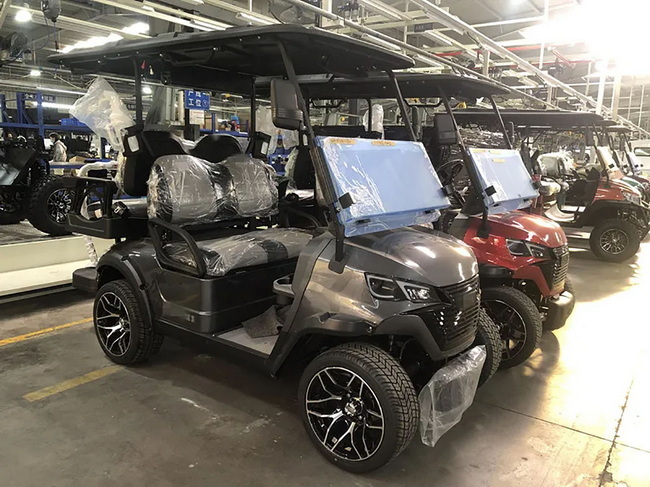
In stock golf‑course configurations, both gas and electric carts typically run at about 12–15 mph, so there is little difference in top speed. In many modern street‑legal and performance models, however, an electric golf cart can reach around 23–25 mph, while comparable gas models often top out closer to 19 mph, making electric slightly faster in that segment.[3][1]
Most standard electric golf cart models used on courses are programmed for a maximum of roughly 12–14 mph to meet safety and course‑management requirements. Low‑speed vehicle versions intended for public roads are commonly configured between 20 and 25 mph, depending on local regulations and equipment.[3][8]
Yes, many owners increase speed by upgrading controllers, motors, and battery systems, or by reprogramming speed settings where permitted. It is essential to ensure that brakes, tires, suspension, and safety equipment are capable of handling higher speeds, and to comply with all local laws when modifying any electric golf cart.[10][9]
With older lead‑acid batteries, an electric golf cart can lose a bit of speed as the charge drops and voltage declines. Lithium battery systems hold voltage more consistently, allowing an electric golf cart to maintain near‑peak performance through most of the discharge cycle.[3][8]
A lithium‑equipped electric golf cart usually offers excellent hill‑climbing performance thanks to strong low‑rpm torque and efficient controller management. Gas carts can also climb steep grades, but their response depends on engine rpm and gearing, so they tend to feel less immediate and refined than a well‑configured electric golf cart in demanding terrain.[6][1]
[1](https://ecoplaneta.com/gas-vs-electric-golf-carts/)
[2](https://diamondgolfcars.com/are-electric-or-gas-golf-carts-better/)
[3](https://www.gowithgarretts.com/how-fast-do-golf-carts-go-5-faqs-about-golf-carts-speed/)
[4](https://taraelectricvehicles.com/blog/2025/05/26/understanding-golf-cart-top-speed-regulations-and-safety/)
[5](https://www.golfcartsandtrailers.com/check-out-our-golf-carts-trailers-dealership--WhattoKnowaboutGolfCartSpeedinFlorida)
[6](https://blog.acmetools.com/electric-vs-gas-golf-carts-which-is-right-for-you/)
[7](https://www.reddit.com/r/golfcarts/comments/15ljtid/an_indepth_look_at_the_pros_and_cons_of_gas_and/)
[8](https://taraelectricvehicles.com/blog/2025/05/26/how-fast-golf-carts-go-and-where-you-can-drive-them/)
[9](https://www.weizeus.com/blogs/weize/how-fast-can-a-golf-cart-go-effective-ways-to-make-it-faster)
[10](https://www.golfcarttiresupply.com/blog/how-fast-can-a-golf-cart-go/)


