


Views: 222 Author: Leah Publish Time: 2026-01-30 Origin: Site


Content Menu
● Main Spanish Terms for “Golf Buggy”
>> “Carrito de golf” (most common)
>> Which term should a global OEM choose?
● How Spanish Golfers Actually Talk
● Using “Golf Buggy” in B2B Communication
>> Product catalogs and landing pages
>> Technical sheets and OEM documentation
>> Emails, quotations, and contracts
● How Spanish Terms Affect SEO for Golf Buggy
>> Targeting Spanish-speaking markets
>> Long-tail keywords combining English and Spanish
>> On-page structure and internal linking
● How BorCart Can Present Golf Buggy Products in Spanish
● Practical Phrase List: From “Golf Buggy” to Spanish Sentences
● Applications of Golf Buggy (Carrito de Golf) in Spanish-Speaking Markets
● Key Features to Highlight When Selling a Golf Buggy in Spanish
● Maintenance and After-Sales Service for Golf Buggy Fleets
● FAQ
>> 1. Is “golf buggy” the same as “carrito de golf” in Spanish?
>> 2. Do Spanish speakers ever use the English term “golf buggy”?
>> 3. Which is better for my product page: “carrito de golf” or “carro de golf”?
>> 4. How should an OEM manufacturer describe an electric golf buggy in Spanish?
>> 5. Can I mix English and Spanish terms in the same golf buggy catalog?
When you sell or rent a golf buggy to Spanish-speaking customers, the most common and natural translation is “carrito de golf.” In some regions and in more formal contexts, people may also say “carro de golf” or “coche de golf,” but “carrito de golf” is the phrase golfers actually use in everyday conversation. For a manufacturer or OEM supplier, understanding these variations helps you create product pages and catalogs that sound local and professional.
For an international Chinese manufacturer like BorCart, which focuses on electric vehicles and especially golf buggies, using accurate Spanish terminology can directly influence trust, and conversion rates.
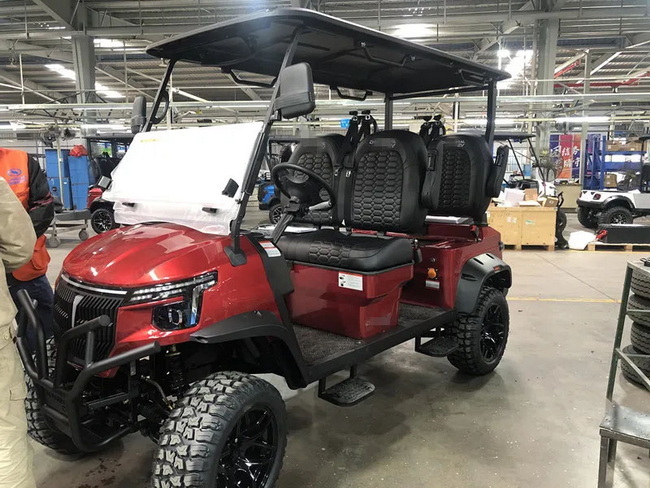
“Carrito de golf” is the standard phrase on Spanish golf courses, in tourism areas, and on rental price lists. The word “carrito” literally means “little cart,” which sounds light, convenient, and easy to drive, matching the image of an electric golf buggy used to move players and clubs between holes. If you are localizing your product page, main banners, or catalog headings for Spain or Latin America, this is usually the best first choice.
In on-course communication, staff may say things like “Los carritos de golf están listos” (the golf buggies are ready) or “El carrito de golf está en el hoyo 1” (the golf buggy is on hole 1). These expressions show that “carrito de golf” is not just a dictionary translation but a living phrase used by real golfers and course employees. When your catalog and marketing copy use “carrito de golf,” they align instantly with familiar language.
“Carro de golf” appears more often in Latin American countries where “carro” is the common word for “car.” It carries a slightly more robust feeling than “carrito” and can be useful if you want to emphasize the power and durability of an off-road style golf buggy. For example, a hunting or multipurpose golf buggy used on farms, estates, or rugged terrain may be described as “carro de golf para caza” or “carro de golf utilitario.”
For rental fleets in resorts or rural tourism in Latin America, you can test both “carrito de golf” and “carro de golf” in your SEO strategy and advertising. Some pages can use “carrito de golf eléctrico” while others highlight “carro de golf 4x4” or “carro de golf todoterreno.” Combining both variations helps you capture slightly different search habits among local users.
“Coche de golf” is used mainly in Spain, where “coche” is the usual everyday word for car. Many golf courses still prefer “carritos de golf” in public communication, but customers in Spain will understand “coche de golf” without confusion. This term can sound a bit more technical or formal in some contexts, which may be helpful in legal documents, insurance texts, or safety regulations.
A practical strategy on Spanish websites is to use “carrito de golf” in titles and headings, then include “coche de golf” once or twice in the body text. This way, you cover both possible search terms while keeping your language natural and consistent. Search engines recognize both expressions, and human readers see wording that matches how they speak about vehicles.
For a global OEM manufacturer, the safest and most effective approach is:
- Use “golf buggy” as the main English keyword.
- Use “carrito de golf” as the primary Spanish term in titles, headings, and product category names.
- Include “carro de golf” and “coche de golf” naturally in body text, meta descriptions, and FAQs to capture regional variations.
This mix helps your pages feel local in Spanish while keeping a strong connection to the English trade term “golf buggy.” It also ensures that professional buyers who search in English and end users who search in Spanish both find your products.
On the course, Spanish-speaking golfers rarely use the English term “golf buggy” in daily conversation. Instead, you will hear phrases such as “alquilar un carrito de golf” (to rent a golf buggy) or “vamos en el carrito” (let's go in the buggy). Staff might ask “¿Va a necesitar carrito de golf?” when checking in players or “Devuelva el carrito de golf al terminar” when they give instructions.
Clubs and resorts often use similar language in their signage and printed materials. You may see phrases like “Alquiler de carritos de golf,” “Carritos de golf eléctricos disponibles,” or “Uso obligatorio de carrito de golf en este hoyo” on posters, brochures, or websites. The repeated use of “carrito de golf” reinforces that this phrase is the natural default in many Spanish-speaking markets.
For your product copy and on-site communication, this means you should:
- Prefer “carritos de golf” for general references to the vehicles.
- Include practical phrases such as “alquiler de carritos de golf,” “flota de carritos de golf eléctricos,” and “carritos de golf para socios y visitantes.”
- Keep English terms mainly for technical contexts, brand names, or global marketing messages.
If you create short promotional videos or tutorials, adding Spanish subtitles that use “carrito de golf” instead of “golf buggy” makes the content look more local and customer-friendly.
For a professional OEM like BorCart that focuses on electric golf buggy design and production, it is important to separate clearly between English and Spanish usage while keeping both connected. Your English category might be titled “Electric Golf Buggy OEM Manufacturer,” while the Spanish version of the same page could read “Fabricante OEM de carritos de golf eléctricos.”
Within that structure, you can organize your golf buggy models with bilingual headings such as:
- “2-Seater Electric Golf Buggy / Carrito de golf eléctrico de 2 plazas”
- “4-Seater Golf Buggy for Resort / Carrito de golf para resort de 4 plazas”
- “Utility Golf Buggy for Maintenance / Carrito de golf utilitario para mantenimiento”
This approach ensures that international brand owners, wholesalers, and local Spanish-speaking managers all understand the same product without ambiguity. They see the English professional term “golf buggy” and the clear Spanish equivalent “carrito de golf” side by side.
In technical documentation, manuals, and OEM agreements, clarity and consistency are essential. A good practice is to introduce the Spanish term the first time you mention a product and then use it consistently.
For example:
- “This electric golf buggy (carrito de golf eléctrico) is designed for low-speed, high-torque operation on golf courses and resort pathways.”
Once you have established that “golf buggy” equals “carrito de golf,” your Spanish-speaking counterparts can read all subsequent sections without confusion. In detailed specifications, you can describe battery type, motor power, braking system, suspension, and seating layout while continuing to refer to the vehicle as a “carrito de golf.”
In B2B communication, especially when you negotiate OEM contracts or wholesale orders, it is common for Spanish-speaking partners to write in English but still refer to local concepts. If you respond using both “golf buggy” and “carrito de golf,” you show that you understand both the international and local dimensions of their business.
Typical sentence structures include:
- “We supply this golf buggy model as an OEM carrito de golf eléctrico under your brand.”
- “The quotation covers 50 units of 4-seater golf buggy (carro de golf de 4 plazas) including batteries and chargers.”
- “Our standard warranty applies to all electric golf buggy units (carritos de golf eléctricos) delivered under this contract.”
This dual wording reduces misunderstandings, especially when your customer later translates documents for internal use.
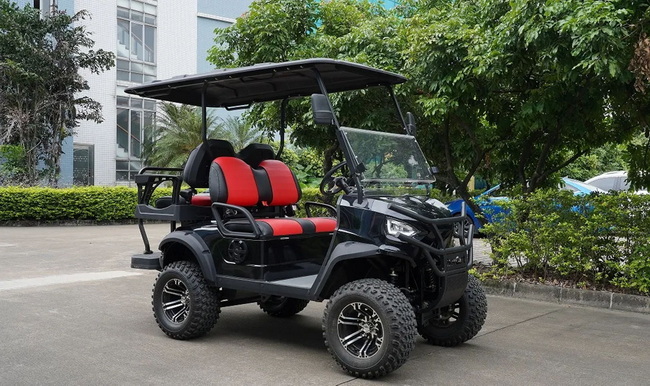
If you are building landing pages to promote your golf buggy OEM service in Spain, Mexico, or Latin America, treat “golf buggy” and “carrito de golf” as strategic keyword partners. The English term helps you connect with international buyers, while the Spanish term reaches local users searching in their own language.
Effective title and meta description examples include:
- Title: “OEM Electric Golf Buggy Manufacturer | Carritos de golf eléctricos personalizados”
- Meta description: “Fabricamos golf buggy eléctricos (carritos de golf) para marcas, mayoristas y fabricantes internacionales con servicio OEM completo.”
By placing both terms naturally in key positions, you increase the chance that search engines show your pages to users typing either “golf buggy” or “carrito de golf eléctrico.”
You can also develop long-tail content that connects “golf buggy” and Spanish phrases in realistic scenarios. Some ideas include:
- “What is golf buggy in Spanish (carrito de golf) and how to choose the right model for your resort?”
- “Electric golf buggy OEM manufacturer for Spanish golf courses and hotels.”
- “Golf buggy rental vs. buying carritos de golf eléctricos for your club.”
Each of these phrases naturally repeats “golf buggy” and “carrito de golf” without sounding artificial. They address real questions that buyers, managers, and distributors might ask when planning fleets or comparing suppliers.
A well-structured golf buggy page in Spanish can use headings such as:
- “Ventajas del carrito de golf eléctrico”
- “Aplicaciones principales del carrito de golf en campos de golf y resorts”
- “Cómo elegir el mejor carrito de golf para su club”
Throughout the text, you continue to use “golf buggy” in English occasionally, for example in bilingual phrases or technical names. Internal links can connect related articles, such as one page focused on “carrito de golf para resorts” and another on “carrito de golf utilitario para mantenimiento y jardinería.” This internal network strengthens your overall visibility around both language versions.
BorCart is a Chinese manufacturer specializing in electric vehicles such as golf buggies, sightseeing buses, low-speed vehicles, hunting vehicles, and multipurpose vehicles. Golf buggy models are a key product line, serving resorts, golf courses, residential communities, hotels, and private estates worldwide. When BorCart speaks to Spanish-speaking customers, a careful adaptation from “golf buggy” to “carrito de golf” can significantly increase trust.
On Spanish-facing product pages, BorCart can:
- Highlight its role as a professional OEM provider: “Fabricante OEM de carritos de golf eléctricos para marcas internacionales.”
- Show a full range of configurations such as “carritos de golf de 2 plazas, 4 plazas y 6 plazas,” and specialized versions for resorts, hotels, and gated communities.
- Emphasize safety features, battery technology, and customization options using Spanish technical wording that remains clear to engineers and purchasing teams.
Because BorCart also produces sightseeing buses, hunting vehicles, and other low-speed vehicles, it can group all these products under a broader Spanish category such as “vehículos eléctricos para turismo y ocio.” Within that family, the golf buggy or “carrito de golf” has its own section, demonstrating how the same manufacturing experience supports multiple vehicle types.
To make your daily communication easier, here are practical examples that link “golf buggy” with its Spanish equivalents in real business situations:
- “We are a professional golf buggy OEM manufacturer.”
→ “Somos un fabricante OEM profesional de carritos de golf eléctricos.”
- “Our electric golf buggy is ideal for golf courses and resorts.”
→ “Nuestro carrito de golf eléctrico es ideal para campos de golf y resorts.”
- “This golf buggy model supports custom colors, seats, and logos.”
→ “Este modelo de carrito de golf admite colores, asientos y logotipos personalizados.”
- “Please contact us for wholesale golf buggy prices.”
→ “Póngase en contacto con nosotros para conocer los precios al por mayor de carritos de golf.”
- “We can develop new electric golf buggy designs according to your drawings.”
→ “Podemos desarrollar nuevos diseños de carritos de golf eléctricos según sus planos.”
You can use these sentences in emails, brochures, quotations, and specification sheets. Over time, you will build your own library of bilingual sentences that combine “golf buggy” and “carrito de golf” in a natural way.
Beyond golf courses, many Spanish-speaking regions use golf buggy style vehicles in a wide range of applications. Resorts and hotels use electric golf buggy fleets to move guests between reception areas, rooms, pools, and restaurants, often describing them as “carritos de golf para transporte interno.” Large residential communities, retirement villages, and private estates also deploy carritos de golf to provide comfortable, quiet mobility over short distances.
Industrial parks and logistic centers may use utility versions of a golf buggy as maintenance vehicles, calling them “carritos de golf utilitarios” or “carros de golf para mantenimiento.” These units often include cargo boxes, tool racks, and reinforced suspensions. Tourist operators in coastal towns and island destinations sometimes adapt the golf buggy concept for guided tours, promoting them as “rutas turísticas en carrito de golf eléctrico.”
For each of these scenarios, using the correct Spanish name helps. A resort that invests in a new fleet of golf buggy vehicles will prefer documentation that speaks about “carritos de golf” rather than only using English. Local managers, drivers, and technicians feel more comfortable when manuals, safety labels, and maintenance instructions appear in their native language.
When you present a golf buggy to Spanish-speaking customers, focus on the features that matter most to them and describe those features clearly in Spanish. Typical selling points include:
- Electric powertrain: “motor eléctrico de alto par,” “batería de larga duración,” and “cargador inteligente” are common expressions that sound technical and trustworthy.
- Comfort and design: “asientos ergonómicos,” “suspensión suave,” “techo protector,” and “diseño moderno del carrito de golf” emphasize user experience.
- Safety features: “frenos hidráulicos,” “luces LED,” “cinturones de seguridad,” “señal acústica de marcha atrás,” and “velocidad limitada para mayor seguridad” are all relevant descriptions.
- Customization options: “colores personalizados,” “logotipo del cliente,” “configuración de 2, 4 o 6 plazas,” and “accesorios opcionales para el carrito de golf” allow for tailored solutions.
By framing these features in Spanish while still referencing the product as a “golf buggy” for international context, you build a bridge between global trade and local usage.
Another area where language matters is maintenance and after-sales service. Clubs, resorts, and communities in Spanish-speaking markets need clear instructions for keeping each golf buggy in good condition. Consider producing concise guides in Spanish that cover:
- Daily checks: “revisión diaria del nivel de carga,” “inspección visual de neumáticos y frenos,” “comprobación de luces y señales del carrito de golf.”
- Battery care: recommendations on charging cycles, storage temperature, and avoiding deep discharges, all explained with vocabulary that technicians understand.
- Periodic service: schedules for “mantenimiento preventivo” where you inspect cables, lubrication points, suspension components, and braking systems.
When customers see that you support them not only with a high-quality golf buggy but also with clear Spanish documentation, they are more likely to choose your brand for their next fleet expansion.
In Spanish, the most natural equivalent of “golf buggy” is “carrito de golf,” with “carro de golf” and “coche de golf” acting as additional regional variations that many people understand. For a global OEM manufacturer like BorCart, which specializes in electric golf buggy production, using both the English term “golf buggy” and the Spanish term “carrito de golf” in catalogs, landing pages, emails, and technical documents is the smartest approach. This bilingual strategy helps you communicate clearly with brand owners, wholesalers, and end customers across Spanish-speaking markets.
Contact us to get more information!
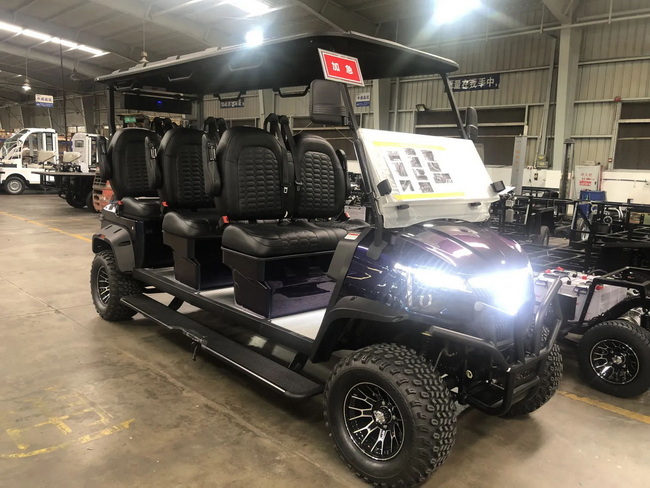
Yes. In everyday Spanish, “carrito de golf” is the normal way to refer to a golf buggy, especially on golf courses, in resorts, and in rental advertisements. It is widely understood and sounds natural to local players and staff, so it should be your default translation.
Sometimes. In technical catalogs, international trade shows, or bilingual websites, you may see the English term “golf buggy,” especially when speaking to international buyers. However, local golfers and employees still usually say “carrito de golf” in conversation, so you should prioritize the Spanish wording in customer-facing materials.
For most markets, “carrito de golf” is the best first choice because it is widely recognized and sounds friendly. “Carro de golf” works well in some Latin American regions where “carro” is the usual word for car, so you can include both terms naturally in your text if you want to cover regional preferences.
A clear and professional phrase is “carrito de golf eléctrico OEM.” This wording tells Spanish-speaking buyers that you design and produce electric golf buggies under their brand, offering customization in seating, colors, batteries, accessories, and other specifications. It connects the global concept of a golf buggy with a precise Spanish explanation.
Yes. Many B2B companies use “golf buggy” in titles and for international trade visibility, while using “carrito de golf” in Spanish product descriptions, subtitles, and FAQs. This combination allows you to rank for English and Spanish searches and helps both global buyers and local users feel comfortable with your content.
1. https://www.youtube.com/watch?v=0qiA8KuGOfQ
2. https://www.borcart.com/products/Golf-Buggy.html
3. https://www.youtube.com/watch?v=rY_MtZW2MoM
4. https://www.borcart.com/products/Electric-Golf-Buggy.html
5. https://turftech.jjsea.com/blog/role-of-buggy-cars-in-modern-golf-courses/


