


Views: 222 Author: Leah Publish Time: 2026-02-11 Origin: Site


Content Menu
● Why Electric Golf Cart Speed Needs Adjustment
● How Speed Is Controlled on an Electric Golf Cart
● Safety and Legal Considerations Before You Adjust Speed
● Step‑by‑Step: Adjusting Speed on Electric Golf Cart via Controller
>> Locate the Controller and Access Interface
>> Adjusting DIP Switch Speed Settings
>> Programming Speed, Acceleration, and Braking
● Using Speed Codes on Branded Electric Golf Carts
● Mechanical Ways to Influence Electric Golf Cart Speed
>> Tire Size and Final Drive Ratio
>> Motor Power and Battery Voltage
● How to Make an Electric Golf Cart Faster Without Major Upgrades
● When You Should Slow an Electric Golf Cart Down
● OEM Perspective: Designing Speed for Different Markets
● Practical Testing After Any Speed Adjustment
● FAQ
>> 1. How do I increase the top speed of my electric golf cart safely?
>> 2. Can I adjust electric golf cart speed without special tools?
>> 3. Will changing tire size make my electric golf cart faster?
>> 4. Does adjusting speed affect my electric golf cart warranty?
>> 5. How can OEM buyers specify speed requirements when sourcing from BorCart?
Adjusting the speed on an electric golf cart comes down to how its controller, motor, batteries, and tires are configured, and whether the speed is limited by factory software or hardware. For brands, wholesalers, and OEM buyers working with BorCart, understanding these speed‑control basics makes it easier to define the right electric golf cart performance for each target market and application.
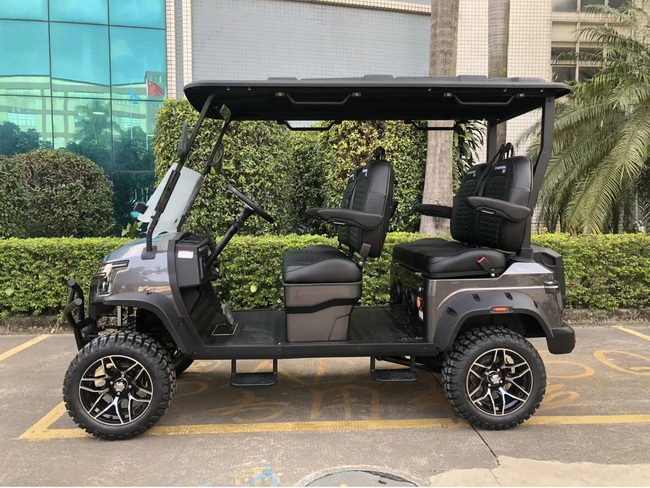
Most factory electric golf cart models are set up with conservative speed limits to protect batteries and motors, reduce accident risk, and comply with local regulations for golf courses and communities. An electric golf cart that is too slow can frustrate users on hilly courses or in 20–25 mph neighborhoods, while a cart that is too fast can become unstable or illegal on public roads.
For private owners, minor speed adjustments improve comfort, hill‑climbing, and usability, especially when the electric golf cart is used for more than just golf. For fleet operators and brand owners, controlling speed is part of standardizing user experience, reducing liability, and matching each electric golf cart to its environment, such as resorts, campuses, or industrial parks.
On a modern electric golf cart, speed is usually controlled by the electronic controller, which regulates the power sent from the battery pack to the motor based on throttle input. The controller often includes programmable limits for forward speed, reverse speed, acceleration, and braking strength that can be adjusted with DIP switches or software tools.
Some electric golf cart models also use “speed codes” or preset RPM limits that cap maximum speed at specific levels such as 8, 14, or 19 mph with stock tires. In addition, the effective speed of the electric golf cart depends on tire diameter, final drive ratio, motor design, and battery voltage, so mechanical changes can also alter real‑world speed.
Before you change any settings on an electric golf cart, you must confirm whether local rules treat the cart as a low‑speed vehicle (LSV) or a simple golf cart, and what top speed is allowed on public roads or in private communities. Many regulations cap electric golf cart or LSV speed around 20–25 mph, and exceeding that can reclassify the vehicle, adding legal and insurance requirements.
You should also consider braking capacity, chassis strength, tire load rating, and passenger safety when increasing the speed of an electric golf cart. For OEM configurations, BorCart can integrate appropriate braking systems, lighting, and warning labels so each electric golf cart remains safe and compliant at its specified top speed in overseas markets.
On many popular electric golf cart platforms, you can adjust speed through the controller using switch banks or programming tools. The exact method depends on the controller brand and the electric golf cart model, but the general approach is similar.
To start, locate the speed controller, which is typically mounted under the seat, behind a panel, or in the engine compartment area of the electric golf cart chassis. After disconnecting the main battery power for safety, you can access the controller cover, wiring harness, and any visible DIP switch bank.
For programmable controllers, you may need a handheld programmer or a laptop‑based software tool supplied by the controller manufacturer or dealer. Once connected, the tool lets you navigate through menus for forward speed, reverse speed, acceleration, braking, and motor current, and then save the new settings to the electric golf cart controller.
If your electric golf cart uses a DIP switch bank for speed control, you must refer to the controller or cart manual for the correct on/off patterns. Typical instructions describe which switch combinations correspond to different speed or torque profiles and how to change them safely without damaging the controller.
After changing the DIP switches to the desired setting, you reconnect the battery pack and test the electric golf cart in a safe open area, using a GPS speedometer app on a smartphone to verify the new top speed on flat ground with a fully charged battery. If the electric golf cart feels unstable, you should step back to a more conservative DIP configuration.
On programmable electric golf cart controllers, you can directly adjust forward speed percentage, reverse speed percentage, acceleration rate, and regenerative braking strength. Recommended best practice is to make small incremental changes and then test drive the electric golf cart, rather than applying extreme settings in one step.
Reducing reverse speed improves safety in tight areas, while moderating acceleration and braking can protect driveline components and prevent wheelspin, especially on wet grass or gravel. Careful tuning allows the electric golf cart to feel more responsive without sacrificing control, component life, or battery range.
Some mainstream brands use locked “speed codes” that can only be changed by a dealer or with a manufacturer‑specific programmer, especially on fleet electric golf cart models. Common factory codes may set speed around 8 mph, 13–15 mph, or about 19 mph on flat ground with stock 18‑inch tires.
Dealers can often upgrade the electric golf cart from a lower speed code to a higher one for a fee, which unlocks a higher RPM limit in the controller. However, these codes usually do not increase torque, so hill‑climbing speed may not change noticeably unless you upgrade the motor or controller hardware.
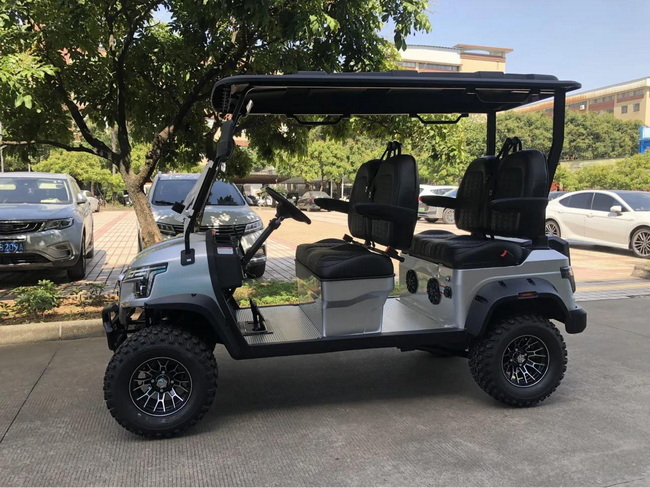
While controller programming is the most controlled way to adjust speed, several mechanical factors also affect how fast an electric golf cart actually travels. Understanding these factors helps you decide whether to change hardware or keep adjustments purely electronic.
When you install larger‑diameter tires, each motor revolution moves the electric golf cart further forward, effectively increasing top speed at the same RPM. For example, going from 18‑inch to 23‑inch tires on certain models can push real‑world speed beyond the nominal factory rating, even if the controller settings remain unchanged.
However, bigger tires can reduce low‑speed torque, stress the motor and controller, and raise the electric golf cart’s center of gravity, affecting stability and braking distance. In contrast, changing the gear ratio in the differential can trade torque for speed or vice versa, but this is more complex and generally better handled at the OEM or professional workshop level.
A higher‑voltage system, such as upgrading from a 36 V to 48 V configuration, can significantly improve acceleration and potential top speed of an electric golf cart when matched with the correct motor and controller. High‑torque motors focus on hill‑climbing, while high‑speed motors increase maximum RPM; some designs aim for a balance of torque and speed.
Any major change to motor or voltage should be designed as an integrated package so the controller, wiring, contactors, and batteries are all rated for the higher power. BorCart’s engineering team can configure factory electric golf cart models with optimized motor and controller sets for resort, community, hunting, or utility applications in overseas markets.
If you prefer not to replace hardware, a few maintenance and setup steps can help an electric golf cart reach its existing potential speed. These steps are especially useful for fleet operators who want quick improvements without large capital investment.
Well‑charged, healthy batteries are essential; sulfated or mismatched batteries limit voltage under load and make even a high‑spec electric golf cart feel slow and weak. Keeping terminals clean and connections tight reduces resistance and preserves controller performance, while inflated tires at the correct pressure minimize rolling drag and protect range on every electric golf cart in the fleet.
Removing unnecessary weight, such as unused accessories or heavy cargo, also improves acceleration and climbing ability. Combined with properly tuned controller settings, these simple steps can make a stock electric golf cart noticeably more responsive without compromising safety, reliability, or warranty.
Not every adjustment is about going faster; many fleets need the opposite. For rental fleets, resorts, senior communities, and industrial facilities, limiting the top speed of each electric golf cart reduces accident severity and helps keep mixed traffic safe.
In these cases, lowering forward speed, cutting reverse speed significantly, and softening acceleration can create a smoother, more controlled driving experience. For OEM buyers working with BorCart, it is common to request specific speed limits for different markets, such as lower speeds for resort fleets and higher, but still legal, speeds for street‑legal community carts.
From an OEM point of view, speed adjustment is part of the overall product strategy for each electric golf cart model. A golf‑course‑focused electric golf cart might be factory‑set around 12–15 mph for safety on narrow fairways, while a community or resort electric golf cart may be configured closer to 20–25 mph where regulations allow it.
BorCart can work with overseas brand owners and wholesalers to define controller maps, speed limits, torque curves, and tire specifications that match local laws and user expectations. This ensures each electric golf cart leaves the factory with the correct speed profile, minimizing the need for risky aftermarket modifications and simplifying after‑sales support for large fleets.
After changing controller settings, speed codes, or mechanical components, you should always road‑test the electric golf cart in a safe, open area away from traffic and obstacles. Using a GPS speedometer app gives more accurate readings than dash meters and lets you compare before‑and‑after speeds on the same route.
Test with a fully charged battery, normal load, and both flat and slightly inclined terrain so you can see how the electric golf cart behaves under real‑world conditions. Make additional fine adjustments if necessary, always balancing speed with comfort, noise, braking distance, and battery life.
Learning how to adjust speed on an electric golf cart is mainly about understanding its controller, speed codes, motor, and tires, then making careful, incremental changes within safety and legal limits. For individual owners, controller programming, healthy batteries, and proper maintenance can unlock smoother, faster performance, while for fleets and brands, factory‑defined speed settings ensure consistent, compliant operation across many units.
As a professional Chinese manufacturer specializing in electric golf cart production and OEM services, BorCart can integrate customized speed profiles, motor and controller packages, and safety features into each electric golf cart platform for overseas partners. By planning speed requirements at the design stage instead of relying on risky aftermarket hacks, you get an electric golf cart that is safer, more durable, and better suited to its intended course, community, or worksite.
Contact us to get more information!
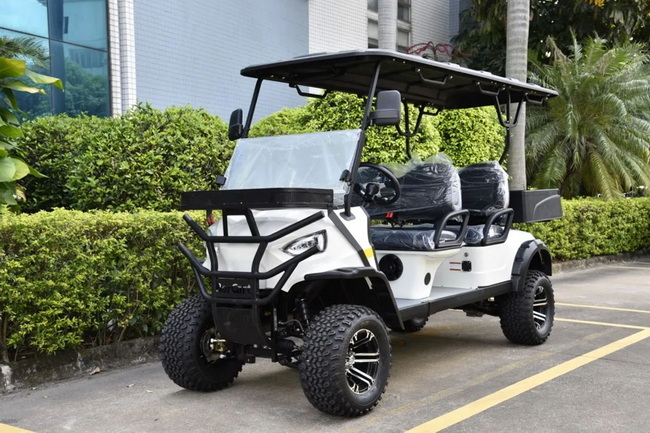
To safely increase the top speed of an electric golf cart, first optimize batteries, tire pressure, and maintenance, then consider adjusting controller speed settings or speed codes using approved tools or dealers. If you need more than a small increase, upgrade motor, controller, and possibly voltage as a matched system, while ensuring the chassis, brakes, and tires are rated for the higher speed and local regulations still permit the configuration.
On some electric golf cart models, you can change DIP switch positions on the controller to alter speed profiles without advanced tools, provided you follow the manufacturer’s instructions and safety steps. Other models lock speed through software codes that require a dealer programmer or OEM‑supplied interface, so in those cases you will need specialized equipment or professional service.
Installing larger‑diameter tires can increase the effective top speed of an electric golf cart because each wheel rotation covers more distance at the same motor RPM. However, it can reduce torque, stress the drivetrain, and affect handling, so it should be combined with appropriate controller and motor settings and, ideally, designed into the cart by the OEM rather than done randomly after purchase.
Unauthorized modifications to controller settings, speed limiters, or voltage may void warranty coverage for the electric golf cart, especially if they exceed documented specifications. To protect warranty and liability, owners should follow the official adjustment procedures, work with authorized dealers, or specify required speed settings directly with OEM partners like BorCart when ordering electric golf cart fleets.
OEM buyers can provide target top speed, typical terrain, legal classification, and use scenarios so BorCart’s engineers can select appropriate controller maps, motor power, gear ratios, and tires for each electric golf cart model. This cooperative approach creates consistent, market‑ready electric golf cart configurations that balance speed, torque, range, and safety for golf courses, resorts, communities, and utility fleets.## Citations:1. https://www.langqinggolfcart.com/how-to-adjust-the-governor-on-a-electric-golf-cart.html 2. https://www.langqinggolfcart.com/how-to-adjust-ezgo-electric-golf-cart-controller.html 3. https://www.kandiamerica.com/electric-golf-cart-speed-tips/ 4. https://caddiewheel.com/blogs/golf-content/a-guide-to-electric-golf-cart-speed-control 5. https://golfcarts.org/golf-cart-speed-controllers-a-beginners-guide/


