


Views: 222 Author: Leah Publish Time: 2026-01-21 Origin: Site


Content Menu
● What “Length” Really Means for a Club Car Golf Car
● Typical Club Car Golf Car Lengths by Category
>> Standard 2‑Passenger Club Car Golf Car
>> 4‑Passenger and Extended Club Car Golf Car
>> Lifted and Limo‑Style Club Car Golf Cars
● Practical Examples of Club Car Golf Car Dimensions
● How Golf Car Length Affects Maneuverability
● Storage and Garage Fit for Club Car Golf Cars
● Trailer Size and Transport Considerations
● How Golf Car Length Affects Capacity and Use Cases
● BorCart: OEM Partner for Custom Golf Car Lengths
● Choosing the Right Golf Car Length for Your Needs
● Summary
● FAQ
>> 1. How long is a typical 2‑seat Club Car golf car?
>> 2. How long are 4‑seat and stretch Club Car golf cars?
>> 3. Does a lift kit change the length of a Club Car golf car?
>> 4. Will a Club Car golf car fit in a standard home garage?
>> 5. Can BorCart customize golf car length for OEM or private‑label orders?
A typical Club Car golf car is around 7.5–8 feet long for a standard 2‑passenger model, while extended and multi‑row Club Car golf cars can reach 9–12 feet in overall length, depending on configuration. Understanding these golf car dimensions is essential for storage, transportation, fleet planning, and for specifying OEM golf car projects with manufacturers such as BorCart.
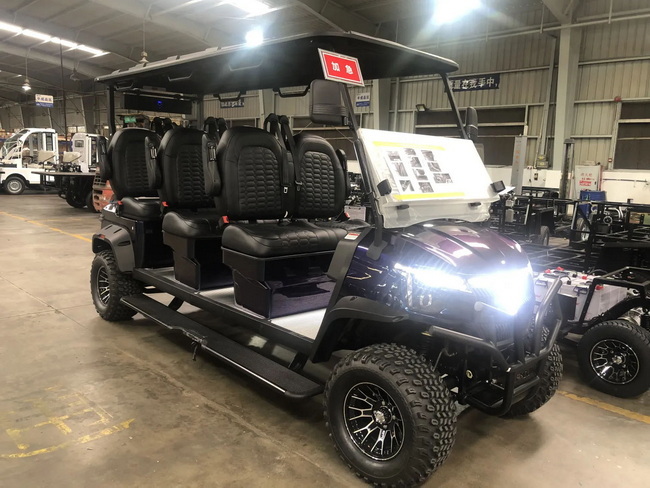
When people ask “How long is a Club Car golf cart?”, they usually want more than just a number; they want to know how that dimension affects everyday use. For a Club Car golf car, length is generally measured from the foremost point of the front bumper to the rearmost part of the rear bumper or accessory. This full bumper‑to‑bumper length determines how easily a golf car fits in a standard garage, on a trailer, or in a storage bay.
Most Club Car golf cars, like many standard golf car models on the market, fall near an average size of roughly 92 x 48 x 75 inches for a 2‑seat configuration, with the length varying the most as seats and accessories are added. In practice, the majority of 2‑passenger Club Car golf cars land in the 90–96 inch range, while 4‑passenger or stretch versions extend well beyond that. For golf clubs, resorts, and real estate communities, this specification helps decide parking layouts, path widths, and loading procedures.
Different types of Club Car golf cars are designed with specific applications in mind, and each category has a typical length range. This also provides a useful benchmark for comparing Club Car products with OEM golf car solutions from Chinese manufacturers such as BorCart, which produces similar vehicles for international branding.
Standard 2‑passenger Club Car golf cars are the classic vehicles used on golf courses and in residential communities. These models are built to carry two occupants plus golf bags and are designed for narrow paths and tight turns.
A widely referenced example is the Club Car Precedent or DS, which has an overall length of about 91.5 inches, a width around 47–48 inches, and a height close to 68–69 inches with a roof. This size is representative of many fleet‑style golf cars and aligns well with the common industry average of roughly 92 inches in length for a 2‑seat golf car. Most standard Club Car golf cars used on courses sit firmly within this band, making them easy to park in typical home garages or within dedicated golf car sheds.
When you move from 2‑passenger to 4‑passenger or extended Club Car golf cars, overall length grows substantially. These vehicles often add a rear‑facing seat or a longer chassis, allowing them to carry more people without dramatically increasing width.
One example is the Club Car Onward 4 Passenger Electric, which is listed at a length of about 108 inches with a width around 48.75 inches and a roof height around 71 inches. Other extended models, such as the Precedent Stretch PTV, reach around 144 inches in length while maintaining a similar width and height to standard models. As a result, these longer golf cars are better suited to resort transport, hotel shuttles, and community tours than tight fairway paths alone.
Lifted Club Car golf cars and limo‑style versions push the length envelope even further. A Club Car Precedent with a back seat can extend to about 104 inches in length, and some 6‑passenger “limo” configurations can span around 142 inches or more. Lift kits themselves mainly increase height and ground clearance rather than official length, but when combined with oversized tires, body kits, and custom bumpers, the effective footprint can feel larger.
Limo‑style golf cars are often used for sightseeing, airport transfers, large campus shuttles, or VIP transport in closed communities. The increased overall length demands more generous turning space, wider parking spots, and larger transport trailers, which must be considered when planning a fleet.
To make these numbers more concrete, it helps to look at some typical Club Car models and their key dimensions as commonly reported by distributors and technical spec sheets:
1- Club Car Precedent / DS standard 2‑passenger:
- Length: about 91–91.5 inches
- Width: roughly 47–48 inches
- Height with roof: about 68–69 inches
2- Club Car Villager 2 Gas:
- Length: 92 inches
- Width: 47 inches
- Height with roof: about 69 inches
3- Club Car Villager 2 Electric:
- Length: around 110.1 inches
- Width: about 50.8 inches
- Height with roof: close to 69–70 inches
4- Club Car Onward 2‑Passenger:
- Length: approximately 92 inches
- Width: near 48 inches
- Height with roof: in the low 70‑inch range
5- Club Car Onward 4 Passenger Electric:
- Length: roughly 108 inches
- Width: about 48.75 inches
- Height with roof: around 71 inches
6- Club Car Precedent Stretch PTV and limo‑type variants:
- Length: roughly 142–144 inches
- Width: about 47–48 inches
- Height: about 69–77 inches, depending on roof type
These examples show that length is the variable that most clearly reflects how many passengers a Club Car golf car can carry, while width and height remain relatively stable across the lineup.
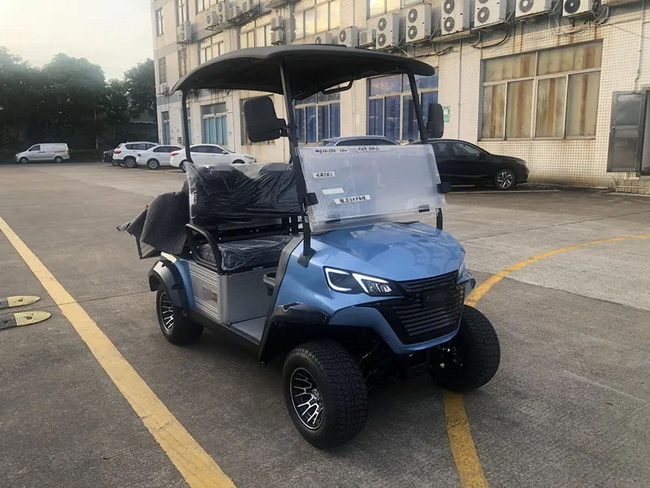
The length of a Club Car golf car has an immediate impact on how the vehicle feels on the road or on the course. Shorter golf cars are easier to maneuver, especially in tight areas like narrow paths, small parking bays, or crowded resort walkways. A standard 2‑seat Club Car golf car around 91–92 inches in length has a compact footprint that balances stability and nimble steering.
Most compact golf cars have a turning radius in the vicinity of 3–3.5 meters, though exact numbers depend on tire size, steering geometry, and load. That turning circle allows drivers to make U‑turns on typical cart paths and navigate around obstacles without multiple backing maneuvers. Longer stretch and limo‑style Club Car golf cars require wider turns, meaning that path design, intersection layouts, and turning pads must be planned more generously.
Manufacturers such as BorCart, which design OEM golf car platforms for global brands, pay careful attention to wheelbase and front‑to‑rear overhang to preserve manageable turning behavior even as length increases. A well‑engineered long golf car still feels controlled, but the driver must anticipate corners slightly earlier than with a compact golf car.
Length is one of the first numbers to check when deciding whether a Club Car golf car will fit in a garage or storage room. Many home garages are built to accommodate passenger cars in the 14–18 foot range, so a golf car of 7.5–9 feet generally fits easily, provided there are no unusual obstructions.
A common rule of thumb is that a standard 2‑seat golf car around 92 inches in length will fit inside most single garages, leaving additional room for walking, storage, and charging equipment. Golf car owners should measure internal garage depth and keep a small buffer—often 12–24 inches—so that the Club Car golf car can be parked without the bumper touching the wall.
For commercial facilities storing multiple Club Car golf cars, the combined effect of length and quantity becomes important. Aligning a row of 92‑inch golf cars side by side or nose‑to‑tail requires precise planning of bay size, aisle width, and charger placement. Courses and resorts often mark floor lines or use wheel stops to make sure each golf car occupies a consistent position, maximizing space usage.
Beyond static storage, golf car owners and fleet managers must also think about transport. A frequent question is whether a Club Car golf car will fit on a 5×8 or 5×10 trailer. In most everyday scenarios, a standard golf car—around 92 inches long—fits comfortably on a 5×10 utility trailer with a bit of room to spare.
Many guides suggest that a 5×8 trailer can also hold a standard 2‑seat golf car, but the fit may be tighter, and careful attention must be paid to ramp angle and rear overhang. For 4‑seat or stretch golf cars, larger trailers such as 6×10, 6×12, or larger sizes are usually recommended to accommodate increased length and keep the weight properly centered over the axles.
Some transport tips for Club Car golf cars include:
- Measure overall bumper‑to‑bumper length before choosing a trailer or transport vehicle.
- Account for rear seat footrests or cargo racks, which may extend beyond the main body.
- Check maximum trailer payload and balance the golf car's weight over the axle to avoid sway.
- For lifted or roofed golf cars, verify that total loaded height will clear bridges, doors, or enclosed trailer roofs.
These practices apply equally to Club Car golf cars and to OEM golf cars produced by manufacturers like BorCart, which are regularly shipped via containers and flatbed trailers.
As a Club Car golf car becomes longer, its potential applications expand. Shorter vehicles focus on basic transport, while longer models are optimized for additional passengers or specialized tasks.
- Short standard golf cars (around 92 inches):
Ideal for golf courses, residential communities, and small resorts. They offer enough room for two passengers and gear without occupying excessive space.
- Mid‑length 4‑passenger golf cars (around 104–108 inches):
Suited for family use, hotel shuttles, and short‑distance community rides. The added rear seat or cargo area provides more versatility while still remaining manageable in most garages and on mid‑sized trailers.
- Long stretch and limo golf cars (around 142–144 inches or more):
Designed for sightseeing tours, campus transport, airport shuttles, and VIP events in closed environments. They maximize passenger count per trip but demand wider roads, larger trailers, and more careful driving.
BorCart mirrors this structure in its own product range, producing compact golf cars for fairways, larger multi‑purpose golf cars for industrial or resort use, and extended sightseeing or hunting vehicles for specialized clients. By understanding common Club Car golf car lengths, BorCart can align its OEM models with customer expectations or deliberately differentiate with custom sizes.
BorCart is a professional Chinese manufacturer focused on electric golf cars and related low‑speed vehicles, offering OEM and ODM services for overseas brand owners, wholesalers, and manufacturers. The company develops golf cars, sightseeing buses, low‑speed vehicles, hunting vehicles, and multi‑purpose vehicles with flexible configurations that can match or improve on typical Club Car golf car dimensions.
On specific product lines such as the ES‑C2 series, BorCart openly lists detailed size data. For example, one ES‑C2 electric golf car is specified at approximately 2520 × 1340 × 1895 mm (about 99.2 × 52.8 × 74.6 inches), while extended ES‑C2+2 models reach about 2950 mm in length (around 116.1 inches). These numbers fall neatly within the general ranges of 2‑seat and 4‑seat Club Car golf cars, making it simple for OEM clients to integrate BorCart golf cars into existing fleets.
In addition to length and overall size, BorCart's technical sheets cover wheelbase, front and rear wheel track, minimum turning radius (around 3.15 m for some models), ground clearance, maximum speed, climbing ability, braking distance, and suspension type. This level of detail allows international customers to tune every aspect of the golf car, from basic dimensions to handling behavior, while BorCart manages R&D, assembly, and export logistics from Guangzhou.
For brand owners positioning their own private‑label golf car line against established Club Car golf cars, partnering with BorCart for OEM production provides the freedom to:
- Match standard Club Car golf car lengths for easy replacement or integration.
- Adjust wheelbase and overhang to optimize comfort, turning, and aesthetics.
- Create unique body shapes or seating arrangements that stand out in the market.
This approach is particularly attractive for wholesalers and manufacturers who want to offer a full golf car portfolio without building their own factory.
Selecting the ideal Club Car golf car length (or an equivalent OEM golf car from BorCart) starts with clarifying use cases and constraints. When evaluating options, consider the following points:
- Where will the golf car operate?
Tight golf course paths and narrow resort walkways favor shorter golf cars, while wide campuses and closed streets can handle longer vehicles.
- How many passengers or how much cargo is needed?
Two‑seat golf cars are sufficient for personal use on a course, but resort shuttles and tour operations benefit from 4‑seat or 6‑seat layouts and extended length.
- What storage and transport options exist?
Measure garage depth, doorway height, and available trailer size before choosing a longer golf car, especially if you are considering a stretch or limo model.
- Do you plan to customize or rebrand?
OEM partnerships allow tailoring length and layout to match brand identity or create unique golf car silhouettes that still fit within standard storage and transport patterns.
By thinking beyond the basic question “How long is a Club Car golf car?” and focusing on how length interacts with your actual environment, you can choose a vehicle that feels natural to drive, simple to store, and easy to maintain.
Most 2‑passenger Club Car golf cars measure around 91–96 inches in length, with widths near 47–48 inches and heights around 68–75 inches with a roof. Once rear seats or extended chassis are added, lengths of 104–108 inches are common, and stretch or limo models can span roughly 142–144 inches or more. These dimensions determine how a golf car parks, turns, and rides on trailers, and they form a reference point for OEM golf car manufacturers like BorCart, which design customized vehicles to align with or strategically exceed typical Club Car golf car sizes.
Contact us to get more information!

A typical 2‑seat Club Car golf car is about 91–96 inches long, which translates to roughly 7.5–8 feet from the front bumper to the rear bumper. This length is widely regarded as the standard size for course‑ready golf cars and makes it straightforward to store the vehicle in a single garage, small shed, or standard golf car bay without consuming excessive space.
Most 4‑seat Club Car golf cars equipped with a rear seat measure around 104–108 inches in length, depending on the exact model and accessories. Stretch or limo‑style versions designed to carry more passengers can reach approximately 142–144 inches or even longer, requiring more generous turning space, larger parking spots, and bigger trailers for safe transport.
A lift kit primarily increases a Club Car golf car's ride height and ground clearance rather than its official length. The bumper‑to‑bumper dimension usually remains the same, but large off‑road tires, custom bumpers, and rear seat kits can slightly extend the effective footprint. Owners of lifted golf cars should still verify clearances in garages, trailers, and under carports to ensure safe and convenient use.
In most cases, yes. A standard home garage is long enough to accommodate a passenger car, so a 2‑seat Club Car golf car of about 92 inches usually fits comfortably. The key steps are to measure the interior depth of the garage, compare it with the published length of your golf car model, and leave some extra margin for walking space, chargers, and any shelves or equipment installed at the back wall.
Yes. As a specialized OEM and ODM manufacturer of electric golf cars and related low‑speed vehicles, BorCart can customize overall length, wheelbase, seating configuration, and body style to suit different markets and brand positions. International customers can choose sizes that match typical Club Car golf car dimensions or request longer, higher‑capacity designs for sightseeing, shuttle, or industrial applications, all while benefiting from BorCart's integrated R&D, production, and export expertise.
1. https://jsgolfcarts.com/blog/golf-cart-dimensions/
2. https://ecoplaneta.com/golf-cart-dimensions/
3. https://www.clubcar.com/en-us/personal/golf-carts/onward-2-passenger
4. https://4hornind.com/product/196-1966316-club-car-precedent-club-car-golf-cart-hd/
5. https://www.vatrerpower.com/blogs/news/how-wide-is-a-golf-cart
6. https://www.taragolfcart.com/news/golf-cart-dimensions-a-complete-guide-to-sizing-your-ride/
7. https://wis-tek.com/blogs/knowledge/comprehensive-guide-to-golf-cart-dimensions-width-length-and-height-explained
8. https://www.borcart.com/top-10-electric-golf-buggy-manufacturers-in-china.html
9. https://m.made-in-china.com/product/Borcart-OEM-ODM-Manufacturer-Electric-Golf-Car-Newly-Golf-Cart-2088633095.html
10. https://www.golfcartgarage.com/blog/golf-cart-dimensions-and-their-importance/
11. https://kingofcarts.net/faq/q-golf-cart-length-width-height-lifted-and-non-lifted.html
12. https://kingofcarts.net/faq/q-what-size-of-trailer-do-i-need-for-my-golf-cart.html
13. https://www.borcartev.com/golf-cart/
14. https://hartvillegolfcarts.com/how-long-is-a-golf-cart/


