


Views: 222 Author: Leah Publish Time: 2026-01-13 Origin: Site


Content Menu
● Understanding Gas Golf Car Electrical Systems
● Gas Versus Electric Golf Car Basics
● Is It Really Safe to Jumpstart a Gas Golf Car with a Car?
● Step‑by‑Step Procedure to Jumpstart a Gas Golf Car
>> Preparation and Safety Check
>> Correct Cable Connection Sequence
>> Charging and Cranking the Gas Golf Car
● Why a Dedicated Jump Pack Is Better for a Golf Car
● Electric Golf Cars: Different Rules and Risks
● Routine Maintenance to Avoid Emergency Jumpstarts
● When a Gas Golf Car Battery Should Be Replaced
● Safety Tips for Jumpstarting Any Gas Golf Car
● How BorCart Golf Cars Benefit from Professional OEM Support
● FAQ About Jumpstarting a Gas Golf Car
>> 1. Can I always safely jumpstart a gas golf car with any car?
>> 2. What happens if I connect the cables wrong on my gas golf car?
>> 3. Can I use a gas golf car to jumpstart a car?
>> 4. Is it safe to jump an electric golf car pack with a car?
>> 5. How can I avoid needing to jumpstart my gas golf car?
A gas golf car relies on a small gasoline engine, but that engine still needs a 12‑volt battery to power the starter and ignition, so a weak or dead battery will leave the golf car unable to crank. Many owners naturally wonder if a passenger car can rescue a stranded gas golf car, especially during busy days on a golf course, in a resort, or at an industrial facility. The short answer is that jumpstarting a gas golf car with a car is usually possible when both systems share the same voltage and when cable connections are made in the correct order with strict attention to safety.
For a professional OEM manufacturer like BorCart, which designs and produces golf cars, sightseeing vehicles, hunting vehicles, and multipurpose low‑speed vehicles, explaining correct jumpstarting practices is part of delivering complete technical support. Customers who understand how to treat a gas golf car battery in emergencies are more likely to protect their investment, extend component life, and maintain safe conditions for drivers and passengers.
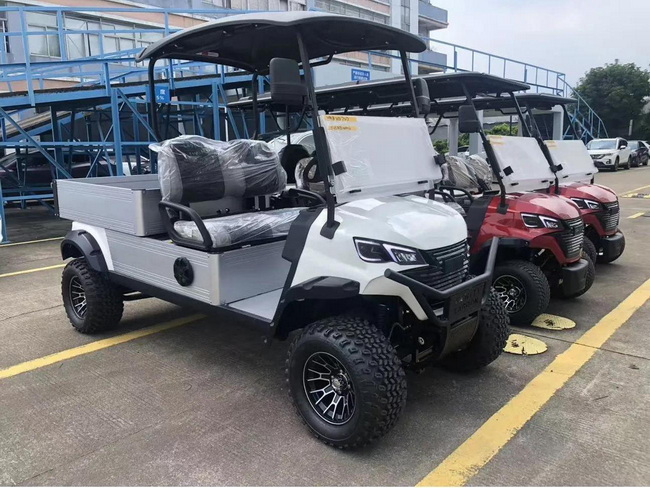
A gas golf car combines a compact gasoline engine with an electrical system built around a single 12‑volt battery, a starter or starter‑generator, ignition components, and basic accessories. When the battery is fully charged, turning the key or pressing the accelerator engages the starter, spins the engine, and allows the gas golf car to come to life. If the battery has discharged below a certain threshold, the starter cannot turn fast enough, and the gas golf car will simply click or remain silent.
From the outside, this looks similar to what happens when a car battery is weak, which is why owners often think about using a car to assist the golf car. However, the golf car's battery is typically smaller in capacity and the wiring may be lighter than in a full‑size vehicle. That means the golf car system can be more sensitive to high charging currents or long cranking periods. Recognizing those limits is essential before connecting a car to a gas golf car in any way.
Confusion often arises because people use the phrase “golf car” or “golf cart” for both gas and electric vehicles. A gas golf car has a fuel tank and engine, while an electric golf car relies entirely on a multi‑battery pack. Mistaking one for the other can lead to serious problems if someone attempts an incorrect jumpstart.
- A gas golf car typically uses a single 12‑volt starting battery.
- An electric golf car usually operates at 36 volts, 48 volts, or higher using several batteries in series.
- A 12‑volt car system cannot properly or safely “jump” a 36‑volt or 48‑volt electric golf car pack.
Before any cables touch, confirm whether the vehicle is a gas golf car or an electric golf car and verify the battery configuration. For BorCart or any OEM, clear labeling on the vehicle and in the owner's manual helps operators quickly identify which type of golf car they are dealing with in an emergency.
Jumpstarting a gas golf car with a car can be safe when done for a short time and with careful attention, but it is not completely risk‑free. The alternator on a modern car can deliver high current designed for a larger battery and heavier wiring, while a gas golf car battery and cable system are usually more modest. If the connection is left in place for too long, or if the golf car is cranked continuously, overheating and damage can occur.
Key concerns include:
- Overloading the small golf car battery with a strong charging current.
- Overheating or melting the golf car's cables or connectors if they are old or corroded.
- Creating sparks near the gas golf car battery, where hydrogen gas may accumulate.
- Accidentally reversing polarity, which can damage starters, ignition modules, or other electronic parts.
For this reason, many technicians recommend that jumpstarting a gas golf car from a car should be an emergency‑only measure, not a routine solution. In normal circumstances, a dedicated booster pack or a proper charger matched to the golf car battery is the better option.
If there is no alternative and the situation truly calls for an emergency jump, the following step‑by‑step approach helps reduce risk. This assumes both the car and gas golf car use 12‑volt systems and that the golf car's battery is accessible and dry, with no visible damage or leaks.
Before bringing the car close to the gas golf car, make sure both drivers understand the process and agree on the steps. Preparation is not just about convenience; it is a central part of staying safe and preventing damage to either vehicle.
- Park the car close enough to the gas golf car for the jumper cables to reach, but do not allow the vehicles to touch.
- Turn off both ignitions completely, set parking brakes, and place transmissions in park or neutral as appropriate.
- Check the gas golf car battery for cracks, severe swelling, or obvious leaks; do not attempt a jump if the battery looks unsafe.
- Ensure there are no open flames, lit cigarettes, or other ignition sources near the gas golf car, because batteries can emit flammable gas.
- Identify the positive (+) and negative (‑) terminals on both the gas golf car battery and the car battery.
Spending a few extra seconds on this visual inspection can prevent accidents later. If anything appears badly corroded or damaged on the gas golf car, consider towing or professional service instead of attempting a jump.
The order in which the jumper cables are attached matters, both for safety and for protecting the golf car's components. Always use high‑quality, insulated jumper cables long enough to reach without pulling or stretching.
1. Attach one red (positive) clamp to the positive (+) terminal of the gas golf car's dead battery.
2. Attach the other red clamp to the positive (+) terminal on the car's good battery.
3. Attach one black (negative) clamp to the negative (‑) terminal of the car's battery.
4. Attach the remaining black clamp to a solid, unpainted metal part of the gas golf car's frame or engine block, away from the battery and fuel lines.
Using the frame or engine as the final ground connection helps reduce the chance that any small spark occurs right above the gas golf car battery. At this stage, visually confirm that the red clamps are on positive posts and the black clamps are on negative or ground points. If anything looks wrong or unclear, stop and double‑check rather than guessing.
With the cables secure, the car can now be started. Letting the car run for a short period before cranking the golf car allows a little energy to flow into the dead battery.
- Start the car and let it idle for a couple of minutes.
- After this brief period, attempt to start the gas golf car using its normal key or pedal.
- Use short cranking attempts of a few seconds, then pause to keep the starter and cables from overheating.
- If the gas golf car does not start after several careful attempts, stop and reconsider; more cranking may not help and could damage components.
If the gas golf car does start and runs smoothly, let it idle or drive gently for a while so its own charging system can replenish the battery. Then disconnect the cables in the reverse order:
1. Remove the black clamp from the gas golf car's frame or engine.
2. Remove the black clamp from the car's negative terminal.
3. Remove the red clamp from the car's positive terminal.
4. Remove the red clamp from the gas golf car battery's positive terminal.
Make sure the clamps do not touch each other or any moving parts during removal. Once the golf car is running independently, it can usually be driven back to a charging area or maintenance shop for further checks.

While a car can provide a quick rescue, a portable jump pack or booster designed for 12‑volt systems usually offers a gentler, more controlled current. These devices are compact, easy to carry on a golf car fleet service vehicle, and do not rely on another car being nearby. For a professional manufacturer and OEM supplier like BorCart, recommending appropriate jump packs for gas golf car customers helps reduce warranty claims and increases customer satisfaction.
Advantages of using a dedicated unit on a gas golf car include:
- Lower risk of overcharging the small golf car battery.
- Less chance of accidentally damaging a car's alternator or electronics.
- Safer operation around fuel and battery gases since most packs are designed with built‑in protections.
- More convenient for golf car fleets, resorts, and industrial sites that must keep many golf cars ready at all times.
Dealers and distributors can also bundle these jump packs with BorCart gas golf cars as part of a maintenance package, providing a complete solution for end users who may not have easy access to a service vehicle.
Electric golf cars are a completely different story. Instead of a single 12‑volt battery, an electric golf car often uses a series of batteries that create a high system voltage. Trying to “jump” such a pack directly with a car's battery is unsafe and can quickly lead to expensive damage.
Important points for electric golf car owners:
- Never connect a 12‑volt car battery across the entire electric golf car pack.
- Use only chargers designed for the golf car's specific system voltage and battery type.
- If the pack is deeply discharged, specialized charging procedures may be needed to bring the batteries back within a normal operating range.
- Any uncertainty should be handled by qualified service technicians rather than improvised jumpstarting attempts.
For BorCart electric golf cars, clear documentation, battery labels, and training materials can help customers avoid misuse. Separating procedures for gas golf cars and electric golf cars in manuals and online guides prevents mistakes when users are stressed by a non‑starting vehicle.
The best way to avoid jumpstarting a gas golf car is simple: keep the battery and charging system in good condition. Emergency jumps often happen because the golf car has been stored for too long without charging or because basic maintenance has been neglected.
Effective habits for gas golf car owners and fleet managers include:
- Regularly checking the battery voltage and state of charge, especially before peak usage seasons.
- Cleaning battery terminals and cable ends to prevent corrosion that restricts current flow.
- Inspecting cable insulation and clamps for cracks or looseness and replacing them before failure.
- Making sure the golf car's charging system is functioning properly, so the battery is replenished after each use.
- Storing the gas golf car in a dry, sheltered area and using a maintenance charger if the vehicle will sit for weeks.
For fleets, creating a simple maintenance checklist for each golf car ensures consistent attention. BorCart and other OEMs can support this by supplying clear maintenance schedules and easy‑to‑follow battery care instructions.
Jumpstarting can get a gas golf car moving for the day, but repeated reliance on a jump is a warning sign. Eventually, replacement becomes the only reliable solution for that golf car's starting system.
Symptoms that suggest a failing battery in a gas golf car include:
- Slow cranking even after the battery has been fully charged.
- Needing frequent jumps to start the same golf car.
- Visible swelling, cracks, or heavy corrosion around the battery case or posts.
- A battery age that already exceeds typical service life expectations for the climate and usage pattern.
Testing the battery under load provides more precise information. If voltage drops sharply during a test, the internal plates may be damaged or sulfated. Replacing the battery with a unit that matches the original specifications of the gas golf car is usually the best long‑term decision. In some cases, especially when many accessories have been added, an upgraded battery with higher capacity may help the golf car handle its electrical load more comfortably.
To further protect both the gas golf car and the assisting vehicle, keep the following general safety practices in mind whenever jumpstarting is considered:
- Never lean directly over the golf car battery while making the final cable connection.
- Keep metal tools, jewelry, and other conductive objects away from battery terminals.
- Avoid jumpstarting in enclosed spaces without ventilation, since gases may accumulate.
- Stop immediately if cables begin to smoke, smell hot, or feel excessively warm to the touch.
- Train all staff who operate or maintain golf car fleets so the correct procedure is followed consistently.
For professional applications, such as resorts or industrial campuses, documented procedures for dealing with non‑starting gas golf cars are particularly valuable. BorCart and its partners can provide these procedures to ensure that each golf car is handled correctly under pressure.
As a specialized manufacturer serving overseas brands, wholesalers, and other producers, BorCart brings OEM‑level engineering to every golf car, sightseeing vehicle, hunting vehicle, and multipurpose low‑speed vehicle. That engineering includes not only robust mechanical structures but also carefully designed electrical systems that balance performance, safety, and reliability.
By supplying detailed manuals, clear labels, and optional accessories such as chargers and jump packs, BorCart helps customers manage their golf car fleets efficiently. The more thoroughly owners understand topics like jumpstarting a gas golf car, the better they can protect each golf car's components, minimize downtime, and ensure a positive experience for drivers and passengers. Whether the application is a golf course, hotel, theme park, or industrial facility, a well‑maintained gas golf car fleet reflects directly on the operator's professionalism.
Jumpstarting a gas golf car with a car is possible when both systems use 12‑volt batteries, the cables are connected in the correct order, and the process is kept brief to avoid overheating and overcharging. However, it remains an emergency technique rather than a preferred routine practice, because the car's powerful alternator and the smaller wiring of the gas golf car introduce real risks if used carelessly. For long‑term reliability and safety, gas golf car owners and fleet managers should rely on dedicated jump packs, proper chargers, and consistent maintenance rather than repeated jumps. Electric golf cars require entirely different handling and should never be jumped directly from a car battery. By combining sound battery care, clear safety procedures, and professional OEM support, brands like BorCart can help ensure that every golf car in the fleet starts reliably and operates safely.

No, you cannot assume every combination is safe. Jumpstarting is generally limited to situations where the gas golf car uses a 12‑volt battery, the car also has a 12‑volt system, and the golf car wiring is in good condition. If there is any doubt about battery type, voltage, or obvious damage, it is safer to use a dedicated jump pack or call a professional service to protect both vehicles.
Reversing the cables places positive voltage where negative should be and can cause immediate, severe damage. Components at risk include the golf car's starter, ignition parts, electronic modules, and even the assisting vehicle's alternator or control units. Sparks, melted cables, and battery damage are also possible, so it is critical to identify the positive and negative terminals on the golf car and the car accurately before attaching any clamps.
In theory, a strong 12‑volt battery in a gas golf car can sometimes provide enough current to help start a small car, but this is not an ideal arrangement. The golf car battery is generally smaller and can be stressed or drained quickly if multiple attempts are required. Most experts suggest using a proper jump pack or another full‑size vehicle instead of relying on a gas golf car to rescue a car, especially in professional settings.
It is not safe to jump an electric golf car pack directly with a car, because the electric golf car typically runs at 36 volts, 48 volts, or higher, while the car battery is only 12 volts. Connecting these systems incorrectly can damage controllers, chargers, cables, and other electronics on the electric golf car. Only use chargers and service procedures designed specifically for the electric golf car's voltage and battery type.
You can avoid most emergency jumps by focusing on preventive maintenance. Keep the gas golf car battery fully charged with a proper charger, clean the terminals, check cables regularly, and test the charging system if the golf car ever seems slow to crank. For fleets, implementing a routine inspection schedule for every golf car before and after busy periods ensures that weak batteries or loose connections are detected early, long before a jumpstart becomes necessary.


