


Views: 222 Author: Leah Publish Time: 2026-01-05 Origin: Site


Content Menu
● What Counts As A Golf Buggy?
● Golf Buggy Use On Private Property
● Public Roads, LSVs, And License Rules
● Age Limits And Young Drivers
● Regional Differences In Golf Buggy Laws
● Safety, Liability, And Insurance Considerations
● Converting A Golf Buggy To Road-Legal Use
● Best Practices For Driving A Golf Buggy
● How OEMs And Fleet Buyers Should Think About Licensing
● FAQ
>> 1. Do I need a license to drive a golf buggy on a golf course?
>> 2. Can I drive a golf buggy on public streets without a license?
>> 3. What is the difference between a golf buggy and a low-speed vehicle for licensing?
>> 4. Can tourists drive a rented golf buggy abroad?
>> 5. Are parents allowed to let children drive a golf buggy?
Can you drive a golf buggy without a license? In many places you can operate a golf buggy on private land or within golf facilities without holding a driver's license, but the moment a golf buggy goes onto public roads, a valid license and full compliance with traffic law are usually required. Whether a license is necessary depends on where you are, how fast the golf buggy can travel, how it is classified in local regulations, and whether it is treated as a low-speed vehicle (LSV) or a similar road-legal category.[1][2][3]
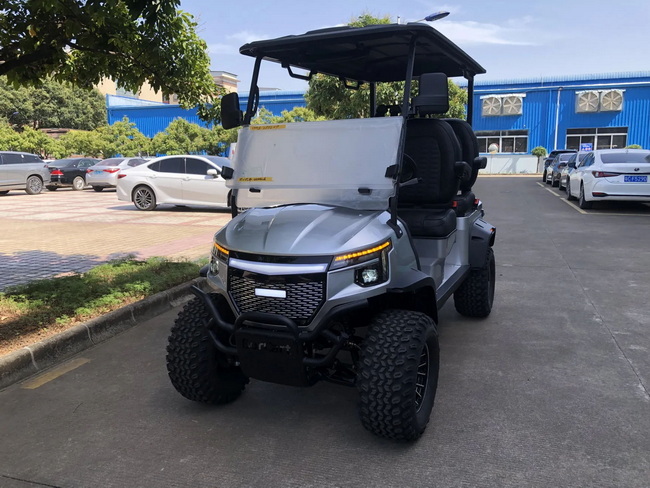
For manufacturers and OEM partners, understanding these differences is essential when designing and sourcing golf buggy platforms for international markets, because the same vehicle might be license-free on a golf course but tightly regulated when used in a resort community or residential neighborhood. This article explores the legal basics, practical safety issues, and typical scenarios in which a golf buggy can or cannot be driven without a license, so buyers, fleet managers, and end users can make informed decisions.[4][5]
A golf buggy is typically a compact electric or gasoline vehicle designed to carry golfers, passengers, and clubs around a golf course at relatively low speeds, often below 15–20 mph. It generally features a simple open or semi-enclosed body, basic seating, and a lightweight chassis, optimized for short trips over smooth paths rather than high-speed road travel.[2][1]
Key characteristics that often define a golf buggy in law include:[6][1]
- Top speed usually limited to under 20 mph.
- Seating for 2–8 passengers depending on configuration and intended use.
- Basic or optional safety features, which may include seat belts, headlights, and turn signals, especially on newer models or OEM-upgraded platforms.
When a golf buggy is modified to exceed around 20–25 mph, or is fitted with additional safety equipment, many jurisdictions reclassify it as a low-speed vehicle or neighborhood electric vehicle. Once reclassified, it is no longer treated as a simple golf buggy for legal purposes and becomes subject to stricter rules that look much closer to those for a small car or light utility vehicle.[1][6]
On private property, a golf buggy is often treated more like equipment than a road vehicle, which is why many people first encounter it without any formal training or licensing process. Golf courses, resorts, private estates, industrial parks, and gated communities frequently rely on fleets of golf buggies for internal mobility, logistics, and guest transport.[2][1]
Common private-property scenarios where a license may not be required include:[7][1][2]
- Golf courses: When a golf buggy is used only within the boundaries of the course, to move between holes or transport equipment, a driver's license is usually not required by law, though the club can impose its own rules.
- Resorts and hotels: Many resorts run internal shuttle services using golf buggies to move guests and luggage around the site, sometimes allowing staff or adult guests to drive without verifying a formal license.
- Private farms and estates: Landowners often use a golf buggy as a light utility vehicle to move across fields or paths on their own land, again typically without a licensing requirement.
However, even if the law does not demand a license in these private environments, property owners and risk managers may introduce internal policies, such as minimum age limits, mandatory safety briefings, or operator training, to reduce accidents and liability. A responsible approach is to treat a golf buggy as a real vehicle capable of causing injury or damage, rather than as a toy.[8][2]
The legal situation changes dramatically when a golf buggy leaves private land and enters public streets, even briefly. Many drivers do not realize that crossing a public road to reach another part of a golf course or resort can technically bring their golf buggy under full road-traffic legislation.[3][2]
Typical public-road requirements for a golf buggy or LSV include:[8][1][2]
- Valid driver's license: Where a golf buggy is registered as street-legal or classed as a low-speed vehicle, the driver usually must hold a standard car license or equivalent.
- Vehicle registration and plates: Road-going versions may need registration documents, license plates, and sometimes periodic inspections.
- Mandatory safety equipment: To qualify for road use, a golf buggy generally needs headlights, brake lights, turn signals, mirrors, reflectors, seat belts, and often a windshield and horn.[9][1]
- Speed and road-type limits: Regulations often confine road-legal golf buggies or LSVs to streets with posted speed limits of 25–35 mph or less, sometimes restricting them to daylight hours.[9][8]
In many U.S. states and comparable jurisdictions, a standard golf buggy confined to a course or private property might not involve any licensing at all, but the same vehicle, once upgraded and registered for street use, will usually require a licensed driver, insurance, and full adherence to traffic law. This distinction is crucial for owners who want the flexibility of driving a golf buggy both on- and off-road.[3][1][2][8]
A golf buggy is often seen as an easy first vehicle for teenagers or even younger children, especially in controlled environments, but legal systems still set boundaries. Where a golf buggy is allowed on public roads, age rules tend to track the minimum age for a driver's license, because the vehicle is sharing space with cars, trucks, and motorcycles.[10][8]
Key age-related patterns include:[7][10][8]
- Designated road areas: Some regions allow younger drivers (for example, 14–16 years old) to operate a golf buggy on specific roads or within defined zones, but only under strict conditions.
- Private-property use: On private land, parents and property owners may permit children to drive a golf buggy, yet remain fully responsible for supervision and safety.
- School and campus policies: Schools, universities, and large campuses that use golf buggies for maintenance and security often restrict driving to trained staff or older students with explicit authorization.
Even if a jurisdiction does not legally require a license for a particular golf buggy setting, good practice is to consider a driver's maturity, ability to follow instructions, and understanding of basic vehicle control before allowing them to drive. This is especially important for commercial operators, fleet owners, and OEM partners whose reputation may be affected by misuse of a golf buggy supplied to clients.
Golf buggy regulations are highly local, sometimes varying not only by country but also by state, province, municipality, or even specific resort zones. As a result, a golf buggy that can be driven without a license in one place might require a fully licensed driver just a short distance away.[5][3][8]
Examples of differing approaches include:[6][1][8]
- U.S. state-level rules: Many states allow golf buggies or LSVs on low-speed roads with clear signage and local ordinances, but they specify whether a license, registration, or insurance is mandatory and may limit operation to certain times or zones.
- European frameworks: When a golf buggy is registered under EU categories for road use, the driver generally needs an appropriate license, and the vehicle must comply with EU type-approval and safety standards.[6]
- Tourist destinations: Some islands and resort towns build their mobility systems around golf buggies, encouraging visitors to rent and drive them; in such cases, a valid foreign license usually suffices, but special local quirks may still apply.[7]
For manufacturers exporting golf buggy fleets, these differences affect configuration decisions such as maximum speed, standard safety equipment, and whether to offer an optional road-legal package to support markets that want both on-course and on-road capability. Buyers should always verify details with local authorities or legal advisers before assuming a particular golf buggy can be used without a license in their jurisdiction.[4][5]
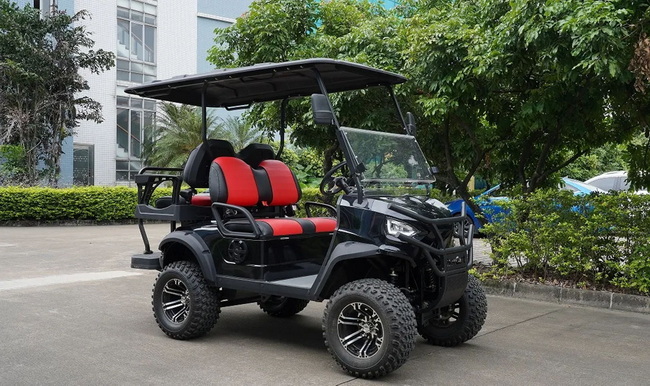
License requirements are only one part of the bigger picture; safety, liability, and insurance are just as important when using or operating a golf buggy. Even at low speeds, a collision involving a golf buggy can cause serious injury, particularly to pedestrians, cyclists, and unrestrained passengers.[2][8]
Important safety and risk-management points include:[3][8][2]
- Insurance coverage: Standard auto policies may not cover a golf buggy unless specified, and separate golf buggy or LSV insurance might be needed for public-road use.
- Passenger behavior: Sudden turns or driving on slopes can throw unbelted passengers from a golf buggy, making seat belt use and sensible speed essential, even off-road.
- Alcohol and impairment: Driving a golf buggy while impaired can still lead to charges similar to drunk driving in some jurisdictions, especially if the vehicle is used on public roads or common areas.
For golf courses, resorts, and industrial sites, clear internal policies on who may drive, how a golf buggy should be parked and secured, and what to do after an incident help reduce legal exposure. OEM manufacturers that integrate better braking systems, lighting, and stability features into advanced golf buggy models also contribute to safer operation across different use cases.[8][2]
Many owners and fleet operators want the flexibility of driving a golf buggy beyond the boundaries of a course or private site, which raises the question of converting a basic vehicle into a compliant low-speed vehicle. While the specifics vary, the general process follows a similar pattern in many regions.[1][4]
Typical steps when seeking road-legal status for a golf buggy include:[1][6][8]
1. Confirm local classification rules
Before modifying anything, owners should confirm how local authorities classify low-speed vehicles and what thresholds (speed, weight, equipment) trigger reclassification from a standard golf buggy to an LSV.
2. Upgrade safety equipment
Most regulations require headlights, tail lights, brake lights, turn signals, rear-view and side mirrors, seat belts for all seating positions, reflectors, and a horn for a golf buggy to qualify as road-legal. Some markets also require laminated windshields, wipers, or specific tire types.[9][1]
3. Verify performance limits
Authorities often set both minimum and maximum speed ranges for LSVs; the golf buggy must be capable of reaching a set speed (for example, 20–25 mph) but not be able to exceed a higher threshold. This may call for motor, controller, or gearing updates.[1]
4. Inspection, registration, and insurance
After modifications, the golf buggy usually needs an official inspection, a vehicle identification number, and registration documents, plus insurance appropriate for road use. Once approved, it becomes subject to ordinary traffic rules and license requirements like any other road-going vehicle.[8][1]
For OEMs and B2B buyers, offering a golf buggy platform designed from the outset with optional road-legal packages simplifies compliance, enabling the same base vehicle to serve golf courses, resorts, and street-legal community mobility roles with minimal re-engineering.[5][4]
Regardless of legal classification, certain best practices make operating a golf buggy safer, more comfortable, and more professional, especially when used for commercial or fleet purposes. These practices apply both on private land and, where permitted, on public roads.[2][8]
Recommended habits for anyone driving a golf buggy include:[3][2][8]
- Perform a quick pre-drive check: Verify brakes, steering, tires, battery or fuel level, and essential lights before moving.
- Control speed and cornering: Drive at a moderate pace, especially on slopes, wet surfaces, or near pedestrians, and avoid sharp turns that could cause instability.
- Respect capacity and load limits: Do not exceed passenger or cargo limits; overloading can stress the chassis and affect stopping distance and balance.
- Use designated paths: Stick to golf buggy paths, lanes, or zones when provided, and avoid mixing with faster traffic if not strictly necessary.
Companies that build or operate fleets of golf buggies for customers can reinforce these habits via brief training sessions, onboard labels, and safety documentation, which helps protect both drivers and brand reputation.[4][8]
For OEM manufacturers, wholesalers, and international buyers, the question “Can you drive a golf buggy without a license?” is not just a legal curiosity; it directly influences product design, marketing, and after-sales support. The categories and use-cases a golf buggy must satisfy determine which combinations of speed, range, and safety equipment are appropriate.[5][4]
Key considerations for OEMs and B2B customers include:[4][5][1]
- Target environments: Decide whether the golf buggy will be limited to golf courses and private land or also serve gated communities and low-speed public roads.
- Compliance options: Offer both standard and road-legal variants, ensuring each configuration complies with the laws of the markets being served.
- Documentation and labeling: Provide clear documentation on the intended use, maximum speed, and legal expectations for each golf buggy model, helping end users understand when a license is required.
By planning with these factors in mind, manufacturers and buyers can deploy golf buggy fleets that meet local licensing rules while delivering safe, efficient mobility in golf, tourism, and utility applications.[5][4]
A person can often drive a golf buggy without a license on private property or within golf course boundaries, because many legal systems treat such use as low-risk and leave detailed control to property owners and operators. As soon as the same golf buggy enters public streets or is upgraded and registered as a low-speed vehicle, however, most jurisdictions require a valid driver's license, appropriate safety equipment, registration, and insurance, just as they would for a small car.[2][3][8][1]
Because regional rules differ significantly, golfers, tourists, resort managers, and fleet buyers should always verify local requirements before assuming a golf buggy can be driven without a license in a particular setting. For OEM manufacturers and their international partners, designing flexible, compliant golf buggy platforms that can be configured for purely private use or full road-legal operation helps meet this diversity of legal environments while supporting safe, sustainable mobility.[5][8][2]
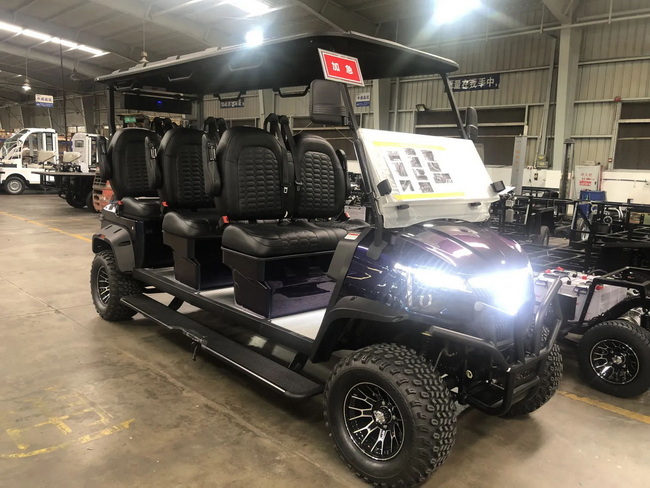
In many regions, a license is not required to drive a golf buggy on a golf course because use is confined to private grounds under the club's rules. However, the course may set its own minimum age, training, and supervision requirements for anyone operating a golf buggy on the property.[1][2]
On public streets, most jurisdictions require a valid driver's license if a golf buggy is street-legal or classified as a low-speed vehicle, since it is sharing space with regular traffic. Even in towns that permit golf buggies in designated zones, local regulations often specify age limits and conditions that effectively assume licensed drivers.[3][8][1]
A standard golf buggy is typically limited to lower speeds and used on golf courses or private land, where licensing rules may be relaxed or left to property owners. When the vehicle is upgraded with safety equipment and capable of around 20–25 mph, it may be reclassified as a low-speed vehicle, which generally triggers full licensing, registration, and insurance requirements.[6][2][3][1]
In many tourist destinations that rely on golf buggies for local transport, visitors can drive a rented golf buggy using a valid license from their home country, without needing a separate local license. Tourists must still obey local traffic rules, respect any golf buggy zones or road restrictions, and comply with rental company policies on age and experience.[7]
On private property, parents may allow children to drive a golf buggy, but they remain responsible for supervision, safety, and any damage or injuries that occur. Where a golf buggy is used on public roads or in regulated areas, age limits and license rules usually apply, and underage drivers may be prohibited or allowed only under strict conditions.[10][8]
[1](https://www.kandiamerica.com/golf-cart-licensing-state-regulations-guide/)
[2](https://www.geico.com/golf-cart-insurance/do-you-need-a-license-to-drive-a-golf-cart/)
[3](https://www.phantomgogo.com/blogs/the-social-benefits-of-e-scooters/do-you-need-a-license-to-drive-a-golf-cart)
[4](https://www.taragolfcart.com/news/importing-golf-carts-internationally-what-golf-courses-need-to-know/)
[5](https://www.lexsong-ev.com/do-you-have-to-have-a-drivers-license-to-drive-a-golf-cart)
[6](https://golfkarkopen.be/engels/nederlands-kenteken/)
[7](https://onelovegolfcartsbelize.com/golf-cart-regulations-in-belize/)
[8](https://1800lionlaw.com/laws-for-driving-golf-carts-on-roads-in-the-us/)
[9](https://banderasbaycarts.com/best-practices-legislation/)
[10](https://www.progressive.com/answers/golf-cart-driving-requirements/)


